

Episode 2067 · 7am
'Biggest cut in history': What Angus Taylor’s migration cuts would do to Australia
6 Oct 2026 · 15 min
Episode 2067 · 7am
6 Oct 2026 · 15 min
Angus Taylor has promised “the biggest cut to immigration in the history of this country” – vowing to cut net overseas migration to one hundred thousand for two years if he wins office, slashing Australia’s temporary migration intake by 650 thousand over four years. Temporary graduate visas would be scrapped and new international students capped at 240 thousand. Australia’s humanitarian intake to be halved at ten thousand a year. In a press conference which saw classic Coalition slogan “stop the boats” make a comeback, a new catch cry made an…
Speaker 1:And what we are proposing today is the biggest cut to immigration in the history of this country.
Speaker 2:Angus Taylor has vowed to cut net overseas migration to 100,000 for two years if he wins office, slashing Australia's temporary migration intake by 650,000 people over four years.
Speaker 1:What we're announcing today will bring the numbers down to below the levels they were at under the Howard Act.
Speaker 3:Liberal National Government.
Speaker 2:Temporary graduate visas would be scrapped and new international students capped at 240,000. Australia's humanitarian intake to be halved at 10,000 a year.
Speaker 1:Australia should be a home, not a hotel.
Speaker 2:In a press conference which saw a classic Coalition slogan make a comeback.
Speaker 3:Two times before, we've had to stop the boats.
Speaker 2:a new catch-cry made an appearance as Angus Taylor tried to out-muscle Labor and One Nation.
Speaker 1:Lowering the numbers and raising the standards.
Speaker 4:Raising the standards and reducing the numbers.
Speaker 1:Lowering the numbers while lifting the standards isn't just a slogan.
Speaker 4:I'm Ruby Jones and you're listening to 7am.
Speaker 2:Today, Director of the ANU Migration Hub, Professor Alan Gamlin, on what the Coalition's drastic cuts would actually mean for Australia, why this debate is happening now, and the dangers when migration rhetoric reaches fever pitch.
Speaker 4:It's Wednesday, October 7th.
Speaker 2:Alan, the opposition has given us the detail now on what would be its migration strategy should it win government.
Speaker 4:This, of course, follows Labor and One Nation's announcements in recent weeks.
Speaker 2:So Angus Taylor, he said he would cut migration to 100,000 people a year for two years.
Speaker 4:Listening to him outline his plan.
Speaker 2:And the way that he did it, the rhetoric around losing control of the borders, our way of life being under threat.
Speaker 1:The reality is that immigration policy under Labor is threatening our.
Speaker 3:Way of life.
Speaker 4:What were your initial thoughts?
Speaker 3:I think it's a bit of a fizzle of a policy, if I'm honest. It's based on some false premises and it risks proposing the wrong solution to the wrong problem. That is not to say that everything about it is bad. There are some sensible parts to it. But on the whole, I think it reflects a political challenge that the coalition has. As you said in kind of your opening framing, Ruby, the need to strike a position that differentiates them from both Labour and One Nation. rather than, I think, really getting to the nub of the policy question or the policy questions that need to be answered here. So in that sense, it's a bit of a missed opportunity, but it's kind of understandable given the tight spot they're in.
Speaker 4:So when you say it's based on false premises, what.
Speaker 3:Do you mean? Well, there are a number. One is it's based on the premise that Labour has caused this all.
Speaker 1:Labour has lost control of our borders and has lost control of our immigration policy in this country. Under Labour, the numbers are too high and the standards are too low.
Speaker 3:In actual fact, this is a response to a global migration shock. You know, the same pattern of net migration with a big dip in the pandemic and then a big spike afterwards has happened across the rich world, including in countries that not only are not controlled by the Albanese Labour government, but which have very different migration systems like Austria, the Czech Republic, Netherlands. So it would be fallacious to say that it's just the Australian government that has caused this pattern. It's also based on the premise that a net migration target is going to solve things.
Speaker 1:The net overseas migration numbers will be 100,000 year one, 100,000 year two, going to 160,000 in year four. That will take pressure off roads, off schools, off infrastructure, off houses.
Speaker 3:Now, net migration is just a rough measure of all migration, but it can be quite confusing because it's arrivals minus departures, so it can grow significantly. either because arrivals have grown or because departures have shrunk. And in the case that we're in now, the post-pandemic period, the reason the net migration has grown is mainly because departures have shrunk. So we've got a departures problem. If we say net migration is a problem, it doesn't matter how we get it down. Arrivals, departures, you can cut them both. In reality, it does matter.
Speaker 3:If we cut arrivals, we're not going to solve the actual problem we have, which is departures. And then it's also, this policy is kind of premised on a quite simplistic and deterministic relationship between migration and housing, which doesn't really exist.
Speaker 1:When you have 550,000 people come into the country in a single year and your housing construction is going backwards, it's no wonder Australians can't get into a home.
Speaker 3:It's no wonder. This is simple supply and demand. It's certainly not the case that one migrant comes into the country and needs a new house. Not a one-to-one relationship, that's for sure, but it's more complex than that. So yes, population growth does create demand for more housing. However, we really have a shortage of housing, and we're not going to build more houses unless we get more labor in the construction supply chain, and that requires more migration. So migration continues to both demand and supply for housing. It's not a simple relationship. Housing is a complex puzzle. Migration is just one small part of it, and we need to be careful that we don't. in trying to bring net overseas migration down by any means possible, create problems that we don't have by not fixing problems that we do have.
Speaker 2:And one of the Coalition's big claims here is that this cut to migration, it wouldn't weaken the economy.
Speaker 1:We've been working closely with the Parliamentary Budget Office on analysis of our initiatives and we are confident that this package is budget neutral.
Speaker 4:Labor claims the opposite. They say it would be catastrophic.
Speaker 2:Business groups seem likely to agree. So what is the economic risk of a policy like this? What would it actually mean to cut immigration by this much?
Speaker 3:Yeah. So, well, if they focus on cutting arrivals, which is a big part of what they're doing, someone is going to hurt. There are losers. Arrivals are sort of normalizing. They're almost normal. you know, back to sort of pre-pandemic levels. And if we cut them too much and then departures start rising, we might get into this roller coaster of net migration. And cutting the arrivals means that you cut into the revenues of businesses. So the rural and regional industries are often represented by candidates in the nationals or the liberal nationals tend to rely quite a lot on the backpacker visas. That's the second biggest temporary migrant flow into Australia. And then the biggest temporary migration flow is the students. And of course, the higher education sector is dependent on the students. That's a long-term structural issue. So the higher education system is kind of a sovereign capability.
Speaker 3:That's something we need to do ourselves, is to have a higher education system. And if we're reliant for the stability of that system on a fickle flow of international students, that's problematic. Cuts like this would show that problem up majorly because we are dependent on it but it's not just the universities is the thing it's that the whole economy you know this has become a massive industry that's the money that international students spend on their accommodation on their food on everything they do is feeding a whole range of industries and meanwhile their labor has also become a lifeline for many industries as well so they're going to hurt going after arrivals whoever you go for is going to make somebody.
Speaker 2:Scream Still to come, what happens when parties play politics with immigration policy? Alan, all major parties are now promising cuts to migration.
Speaker 4:The difference is a matter of degree.
Speaker 2:One Nation has been very successful at pushing this issue to the centre of the political conversation. Why do you think that it has had the cut through that it does right now?
Speaker 3:Well, we're living in an age of disruption. There are multiple intersecting crises in globalization happening. We had sort of this long period where globalization was seen as inevitable. But then we had 9-11. We had the global financial crisis. We had the refugee crisis, which sort of showed up the cracks in this edifice of globalization. And people started questioning it. And, you know, we live in a much more turbulent world now, partly as a result of those shocks and the geopolitical instability that they've caused and climate change is a sort of a backdrop, the growing anxiety around that. So people are really fearful and anxious about a lot of change going on in the world. It's more than people can comprehend. And what traditionally happens in periods of complex poly crises, multiple crises intersecting, What people do is they want a simple solution, preferably one with a bad guy. It's always the outsiders, the infidels, the witches, the foreigners. the migrants who get blamed for the crop failures or the plague of locusts or the black death.
Speaker 3:It's the foreigners. So it's a sort of a scapegoating story that's happening at the moment. And it's not just unique to Australia. It's happening around the world. It's happening in Europe. And as the evidence grows... The evidence grows. We've come to realize this is not about race, but it is about culture. So the far right party is surging back into the mainstream. It's happening in the USA. The Trump social movement was built on this kind of politics.
Speaker 3:They're bringing drugs. They're bringing crime.
Speaker 1:They're rapists.
Speaker 3:And some, I assume, are good people. So when you look at Donald Trump's presidency in the USA and the policies that they're implementing, they're broadly anti-global. in many ways, reintroducing tariffs. But people don't connect with a story about why globalization is bad when it's framed in terms of tariffs. It just doesn't connect with people. If you say, well, you lost your job because of an extension in the supply chain and the outsourcing of jobs because of globalization, it just goes over people's heads. But if you say, look, globalization is bad and In order to understand that, all you've got to do is look at that migrant. They look different. They talk different. They worship different gods. They eat different foods. They wear different clothes. They sound different.
Speaker 3:They look different. You should be afraid of them, and you should give control to me, and I will shut down the borders and stop globalization. So it becomes the poster child for a wider set of anti-global changes, and that's the period we're in.
Speaker 2:And so this debate we're having in Australia right now on immigration is What's the impact and the danger here when policy and politics become so intertwined?
Speaker 3:Well, it's good that there is a connection between policy and politics. That means democracy is working well. The people feed into the formation of policy. But you also need technical expertise in there as well. You wouldn't want to hand over the tools of the operating theatre to the mob to do the brain surgery. there are some areas of policy where it gets quite technical, you know, it requires technical knowledge. So just getting into a kind of loud populist debate, which is kind of blaming migrants for every problem that we have and blaming all migration rather than identifying the bits of migration that are problematic. This is kind of akin to that, handing over the operating theater tools to the mob. And, you know, if we, if we want to get through the surgery successfully, that's probably not a good idea. This sort of targeting of net overseas migration as a result of a populist move is a very blunt instrument to address what is a much more nuanced problem and probably needs more like a surgical approach of going into certain parts of the temporary migration program and responsibly and sensitively regulating those parts of
Speaker 3:the program so there's a long-term balance between temporary and permanent migration and there's not a constantly mushrooming temporary population and also stabilizing net overseas migration since the pandemic but not by taking a hacksaw to arrivals but by processing the cohort of delayed departures that has built up since the pandemic We're using a bludgeon where a scalpel was required.
Speaker 4:Well, Alan, thank you so much for speaking with me.
Speaker 3:You're welcome, Ruby.
Speaker 4:Also in the news.
Speaker 2:Executives from OpenAI and Anthropic have been questioned about how they would handle future accidental hacking incidents, such as OpenAI's Medicare hack earlier this year. OpenAI has told a parliamentary inquiry that it will promptly and directly notify organisations of any future unauthorised access by its AI agents, and Anthropic has said it would support laws requiring AI companies to report incidents to Australian authorities. OpenAI has also conceded its response to the June breach was inadequate after the government was not told about the.
Speaker 4:Incident until September.
Speaker 2:And two Australian soldiers remain critically injured after a vehicle rollover during a training exercise in the Northern Territory that killed one other soldier. Three other soldiers also suffered minor injuries in the crash at Mount Bundy training area. Northern Territory police are assisting a coronial investigation into the incident.
Speaker 4:I'm Ruby Jones. This is 7am. Thanks for listening. Thank you.
Transcript supplied by the publisher with the episode.


E2070 · 9 Oct 2026 · 16 minNew
The Coalition is under pressure from One Nation, and its response is becoming increasingly clear. Angus Taylor is pushing a much harder line on immigration, borrowing language that echoes populist movements overseas. At the same time, One Nation is escalating its own rhetoric as it tries to capitalise on the anger and discontent spreading across the electorate. It’s part of a broader fracturing in Australian politics, as the major parties try to confront a more volatile electorate – and as the government faces renewed pressure over interest rates, inflation and the cost of…

E2069 · 8 Oct 2026 · 16 min
The Greens’ official think-tank has a new proposition — a national chain of 624 publicly owned supermarkets. To make that a reality would cost more than $25 billion, and involve the forced sale of 200 Coles and Woolworths supermarkets. But the Institute, which took its inspiration from New York mayor Zohran Mamdani, says it would cut grocery bills by 22 per cent. Today, former MP and now Green Institute Executive Director Max Chandler-Mather on his proposal for a publicly owned supermarket chain. If you enjoy 7am , the best way you can support us is by making a contribution at…
E2068 · 7 Oct 2026 · 17 min
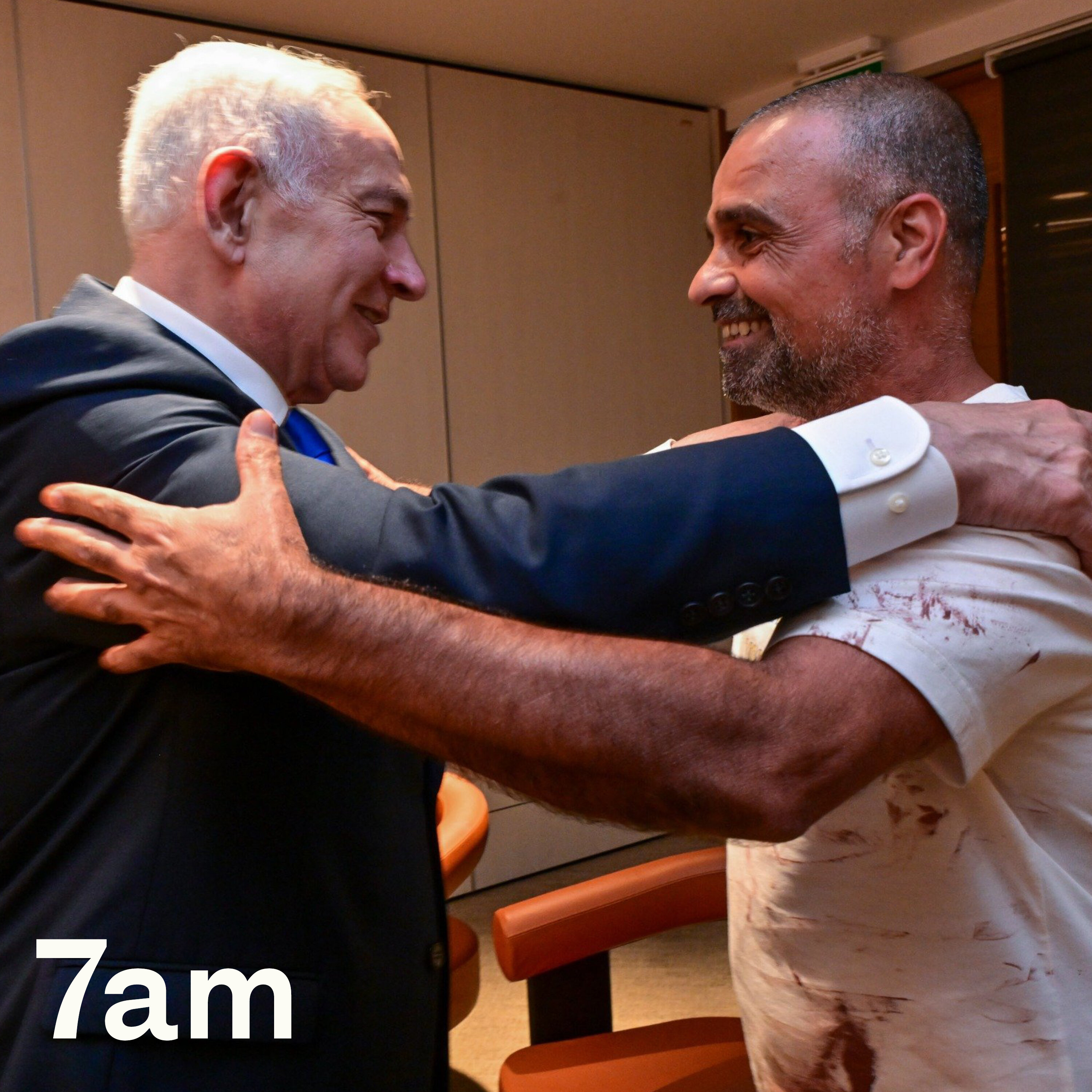
Big events have always had the power to shape elections: from John Howard and the Tampa affair, to the attempted assassination of Donald Trump. And it doesn’t get much bigger than a foiled attempt to bring down a plane mid-flight. One week on from the Flydubai incident, details are continuing to filter out about the co-pilot accused of stabbing his colleague in an effort to crash the Tel Aviv-bound plane. And as investigations continue, Israeli Prime Minister Benjamin Netanyahu has been front and centre – with the country’s election just weeks away. Today, Middle East…

E2066 · 5 Oct 2026 · 17 min
The United States is once again tightening its grip on Cuba. New travel and economic restrictions are adding to a brutal oil blockade that has already pushed the country deeper into crisis, leaving Cuba increasingly isolated both politically and economically. But behind the decades of hostility between Washington and Havana, there’s a human cost that can be easy to lose sight of. Power cuts stretch through the night. Food and medicine are scarce and millions of people are struggling with water shortages. Today, SBS reporter for Dateline, Colin Cosier takes us inside Cuba, where he…

E2065 · 4 Oct 2026 · 19 min
Last week, Britain’s new Prime Minister Andy Burnham stood in front of the Labour Party conference and promised to break politics as usual. In an emotional speech, he took aim at privatisation, austerity and Brexit, arguing that Britain’s departure from the European Union had done more harm than good. Alastair Campbell was in the room and he sees Burnham’s speech as part of a much bigger political moment, as populist parties gain ground, America redraws its alliances and China is asserting more power abroad. For countries like Britain and Australia, that means old…

E2064 · 3 Oct 2026 · 17 min
If you listen to podcasts, and let’s be honest, there’s a fair chance that you do, it’s likely that you’ve heard ads for a thing called Better Help. It’s an app offering flexible, affordable therapy whenever you need it. Kind of an “Uber for therapy”. Since we first brought you this story two years ago, app-based therapy has continued to grow – and now AI chatbots are increasingly being used for mental health support too. So are we actually better off with BetterHelp and apps like it? Today, we’re returning to our conversation with…

E2072 · 11 Oct 2026 · 14 minNew
Kath Madgwick has been to hell and back. One of the most recognisable faces of the Royal Commission into Robodebt, her only son Jarrad took his own life after being told he owed Services Australia nearly two thousand dollars. Kath has been fighting ever since. The royal commission report dedicated more than a page to her story. But now, Kath says she’s experiencing injustice of another kind. Booted out of the $475 million robodebt class action – her compensation claim over Jarrad’s death has been denied by the Commonwealth. Today Kath Madgwick, on how – even as one of…
E2071 · 10 Oct 2026 · 17 minNew
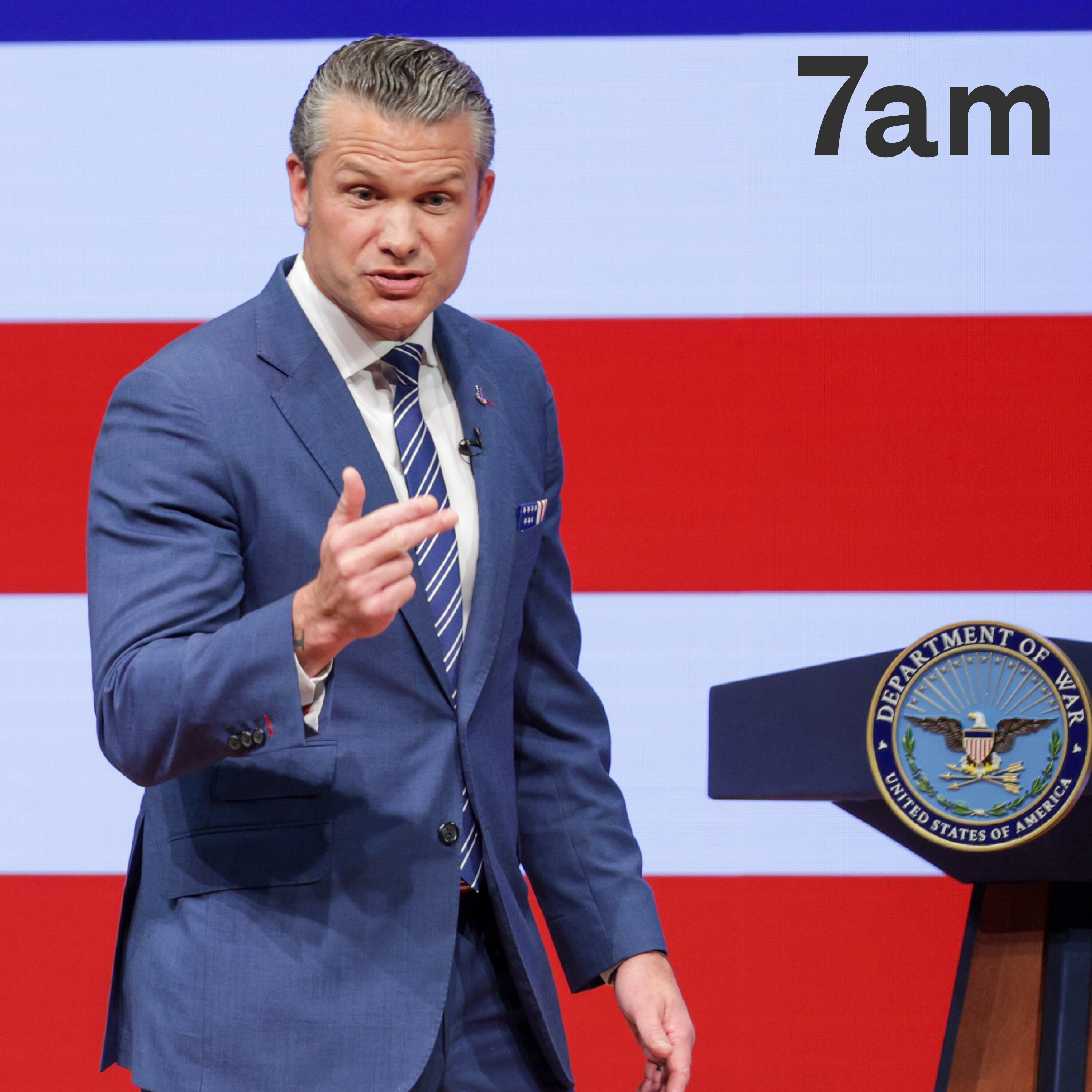
Last week, US Defence Secretary Pete Hegseth gathered hundreds of service members at a base in Virginia to lay out his vision for the American military. Alongside sweeping changes to the way it fights and trains, Hegseth announced a new Office of Religious Affairs – reporting directly to him – aimed at putting what he calls “spiritual health” on the same level as physical health. It’s the clearest sign yet of how Hegseth’s evangelical Christianity is shaping the Pentagon and religious policy across the armed forces. Earlier this year, we looked at the…
E2063 · 2 Oct 2026 · 17 min
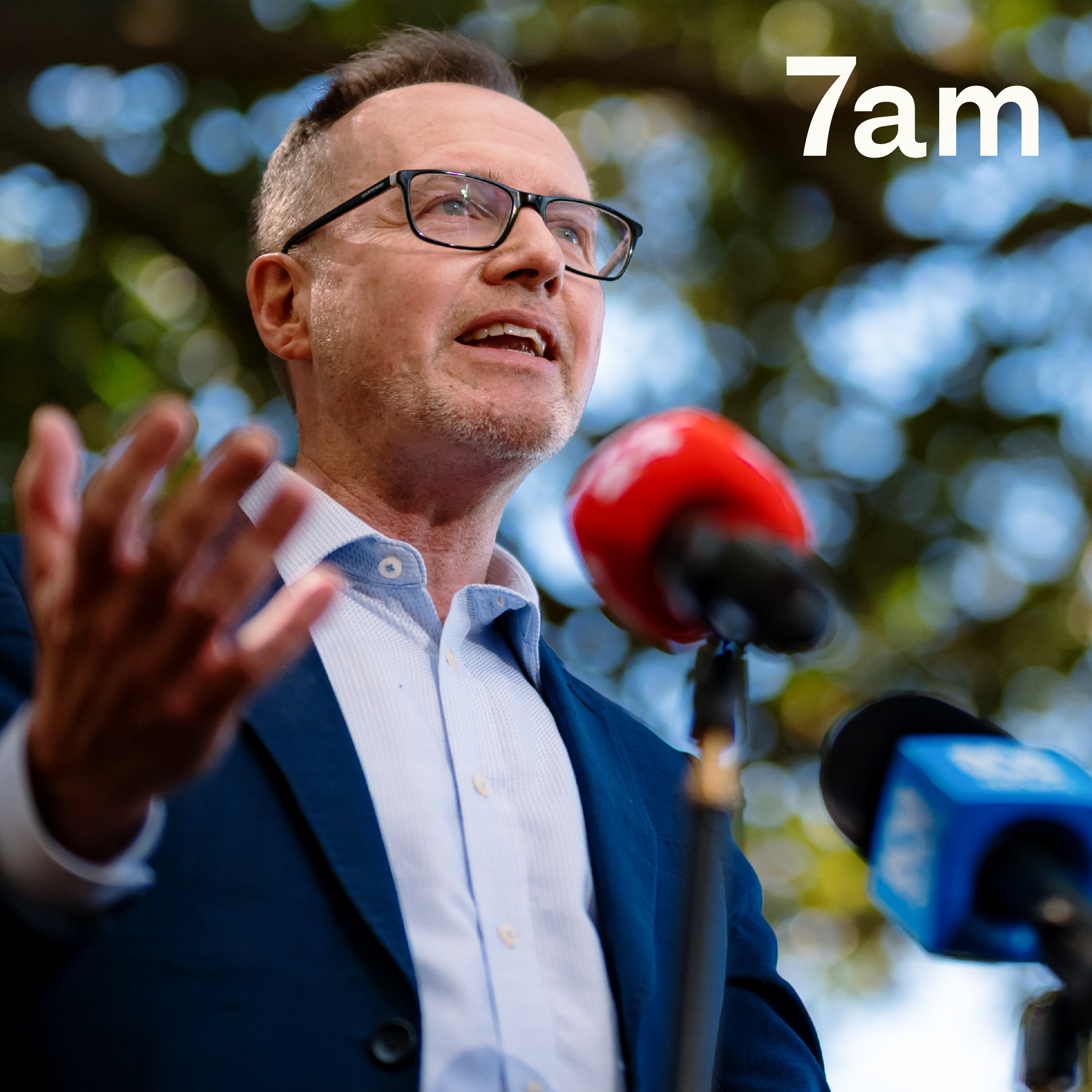
David Shoebridge has taken over the Greens leadership with a big ambition: to replace Labor. He’s doing it at a time when Australians are becoming less attached to the major parties, and less trusting of the people who run them. But so far, it’s Pauline Hanson’s One Nation that has made the most of that anger, while the Greens, after losing seats at the last election, have stagnated in the polls. Their challenge now is to convince disillusioned voters that the Greens can be more than a bit player in the halls of parliament. Today, Greens leader David Shoebridge on his plan…
E2062 · 1 Oct 2026 · 15 min
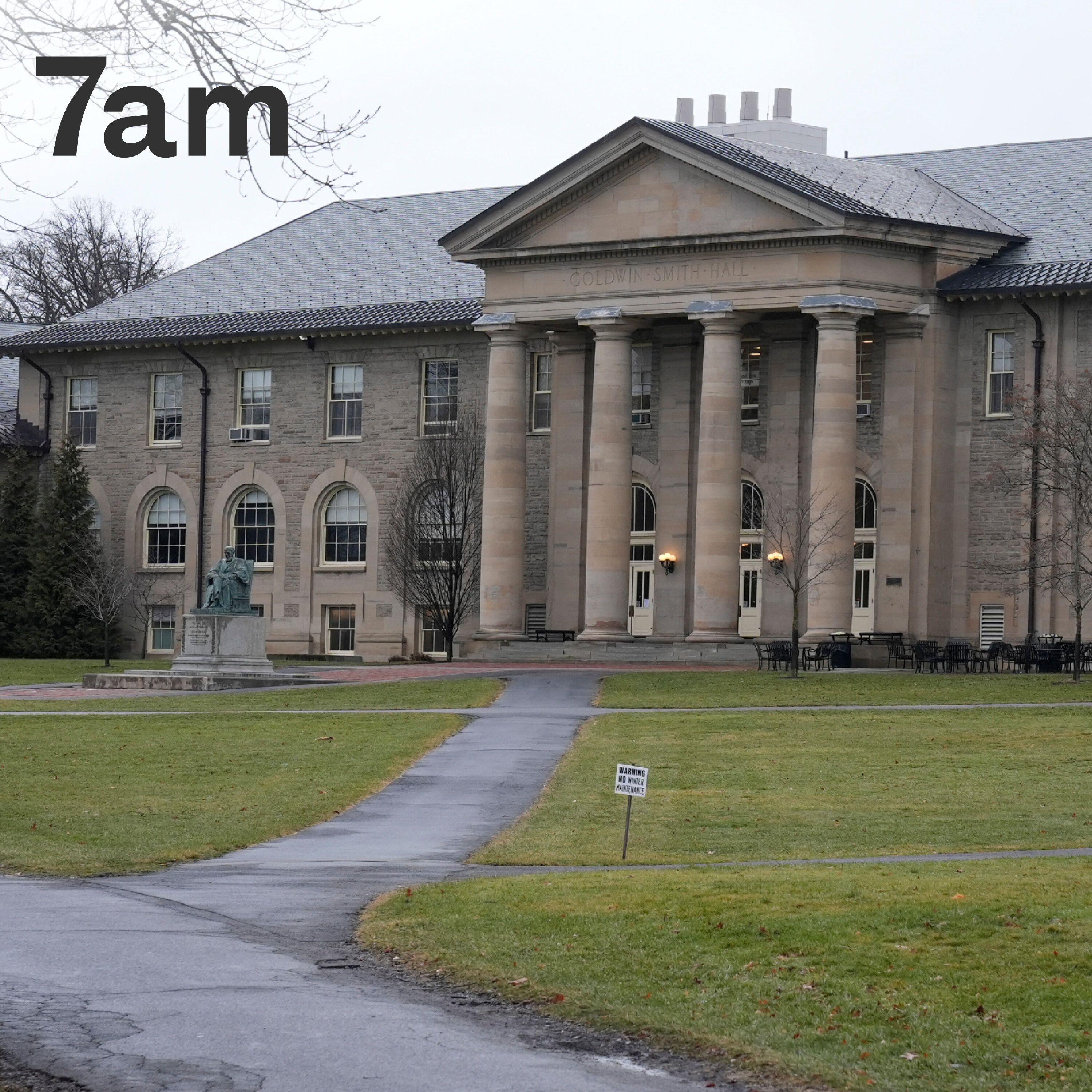
News of an alleged rape involving seven men at an elite university – a case being called the ‘Cornell 7’ – is reverberating across the US. For many people, the case – and the way the men and the institutions involved responded at the time – echoes high profile incidents here in Australia. So what responsibilities are our institutions failing to live up to? And what should they be doing differently? Today, advocate Tarang Chawla on the so-called Cornell 7, and what the case tells us about misogyny at home. And a warning – while we try not to get too…

The Melo app keeps playing with the screen off, works in the car and on your watch, wakes you to your station, and browses the whole catalogue offline. Free, no ads, no account.


