
Episode notes
A whole new galactic battleground has just opened up. The United States has declared it has weapons in space, and it’s ready to use them. So, are we entering a new era where the opening moves of a war could happen hundreds of kilometres above us? Today, Senior analyst at the Australian Strategic Policy Institute, Dr Malcolm Davis on the space weapons now at the ready, and the likelihood of an orbital offensive. If you enjoy 7am , the best way you can support us is by making a contribution at 7ampodcast.com.au/support . Socials: Stay in touch with us on Instagram Guest: Senior analyst…
Transcript
Read the transcript · about 2,400 words, follows along as you listen
Speaker 1:The United States now has on-orbit space control weapons capable of defending the joint force against hostile adversary action.
Speaker 2:And with that, a whole new galactic battleground just opened up.
Speaker 1:It is critically important that we maintain our dominance not only in the air but in space.
Speaker 2:The United States has declared it has weapons in space and it's ready to use them.
Speaker 1:We've had to take steps to make sure that that when we're threatened, we can take care of that.
Speaker 2:So we're entering a new era where the opening moves of a war could happen hundreds of kilometres above us. I'm Daniel James, and you're listening to 7am. Today, senior analyst at the Australian Strategic Policy Institute, Dr Malcolm Davis, on the space weapons now at the ready and the likelihood of an orbital offensive. It's Monday, September 21. Malcolm, it's long been suspected, but we now have seen the US come out and admit it, that it has weapons in space. What's the significance of that and why now?
Speaker 3:Essentially, what the US has done is respond to developments by China and Russia, who have been developing weapons in space for many decades.
Speaker 1:We continue to ensure we remain ready to meet the challenges of evolving threats wherever they exist.
Speaker 3:China first tested an anti-satellite missile in 2007. Russians did the same thing in 2021. Both countries have been doing what's known as co-orbital operations, essentially, which demonstrate the capabilities and the technology for co-orbital anti-satellite weapons. So the U.S. has been observing this And I think they've now recognized that they can no longer passively look on as the Chinese and the Russians develop counter-space weapons.
Speaker 1:Space Force launch sites have already hosted 116 orbital launches this year. I think it was actually 117 after yesterday, and it'll be 118 tomorrow. Nearly 60% of all launches on the planet. This is allowing us to maintain and build our commercial and military space advantages.
Speaker 3:And this is really about deterrence. It's about strengthening deterrence in space to send the message to China and Russia not to use these counter space weapons.
Speaker 2:And what kind of weapons do you think we're talking about here?
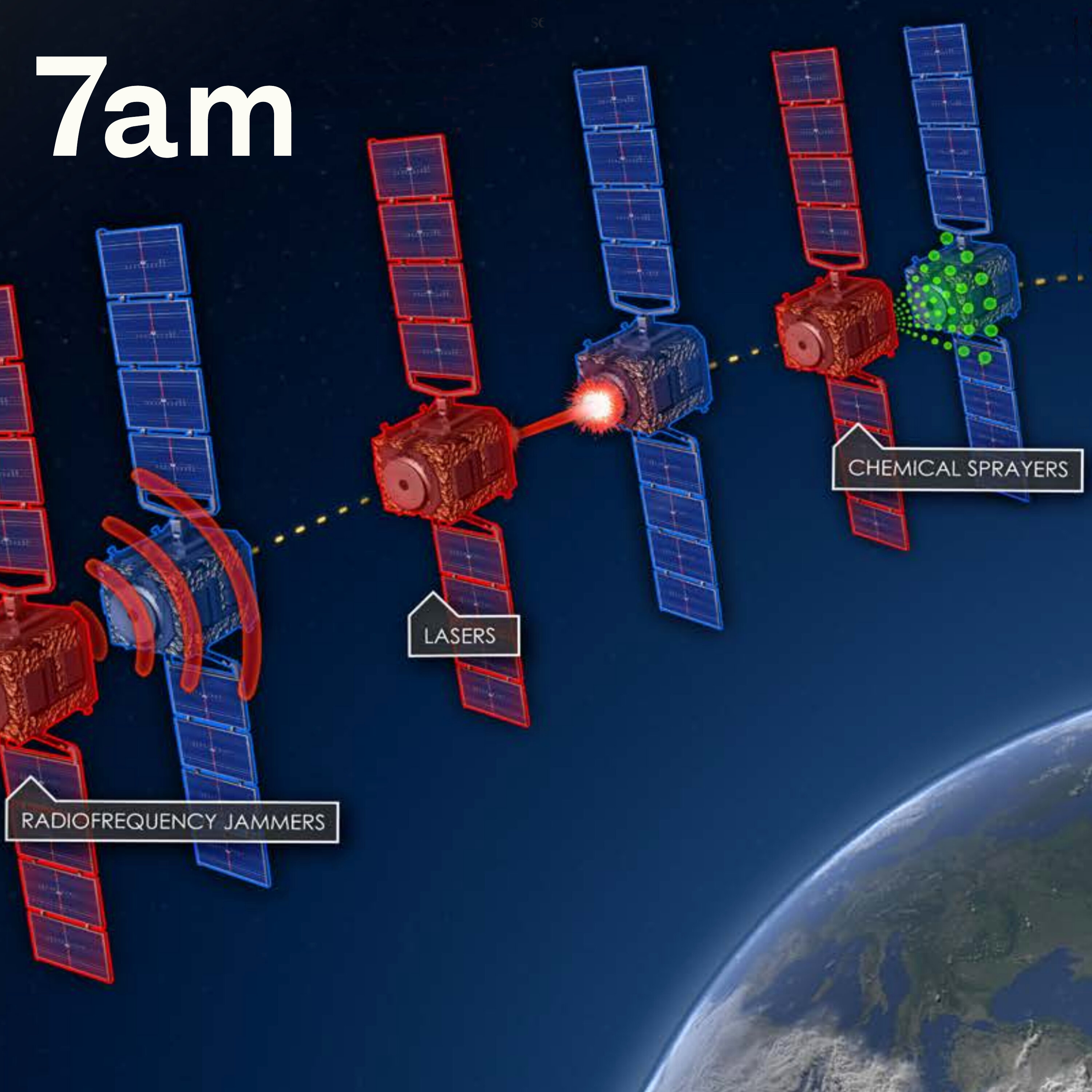
Speaker 3:Probably talking about what's known as soft kill weapons. So the missiles that the Chinese and the Russians tested were hard kill. They were physically destroyed a satellite, created a huge cloud of space debris each time. I think the Americans don't want to do that. What they want to do is disable rather than physically destroy. So we're talking about jamming capabilities. We're talking about electronic warfare, potentially directed energy weapons, such as high energy laser or high power microwave systems. Also the ability to do cyber attacks on satellites could be something that could be done from the ground.
Speaker 3:But in terms of these orbital space weapons, I think we are talking electronic warfare and directed energy weapons.
Speaker 2:And so strategically, how would these weapons be used? Because it's not like Star Wars or Star Trek up there. We're not talking battles in space. It's more about blinding enemy satellites to achieve the advantage for battles here on Earth.
Speaker 3:It's a concept called orbital warfare. And essentially what the system is, is that the US has counter space capabilities that are designed to prevent the Chinese or the Russians launching attacks on our critical satellite technologies. We depend on satellites for everything we do, whether it's war fighting or economies or societies. And it's not like Star Wars. It's not like Star Trek where you basically have necessarily fighters shooting around dogfighting in space. It's a much more slow and deliberate process to be able to prevent an adversary from attacking our satellites or to utilize our counter space capabilities to deny the adversary the use of their satellites in a war situation. So that's the sort of thing we are talking about.
Speaker 2:What are the laws governing the weaponization of space?
Speaker 3:1967 Outer Space Treaty Article 4 says that the deployment of nuclear weapons in space is banned, okay? It says nothing about the deployment of non-nuclear weapons. So there's nothing legally that prevents the US, China, or Russia from deploying non-nuclear weapons in space. But you cannot deploy nuclear weapons in space, and the Russians are moving towards that goal.
Speaker 2:A lot of people may not realise this, but there's actually been quite a long history of militarisation in space. Can you tell us a little bit about that?
Speaker 3:Well, certainly space has been militarised since the beginning of the space age, really, certainly back to the early 1960s.
Speaker 4:In the middle of the 20th century, for the first time in history, man reached beyond his planet and began to probe the mysteries of space.
Speaker 3:Satellites have been used to support military forces on Earth. Going all the way back to the Vietnam War, for example, and during the Cold War, we used satellites for missile early warning.
Speaker 4:Signals from satellite instruments are received as a kind of electronic shorthand, or code. The various signals are identified by changes in their length, in the time intervals between them, and in their frequency.
Speaker 3:What we're talking about now is weaponization, which is different from militarization in the sense that we are talking weapons in space. Now, space weapons, anti-satellite weapons, counter-space capabilities have really been in development since the days of the Cold War. Both the Soviet Union and the United States had anti-satellite weapons, but they refrained from deploying them. Since the end of the Cold War, you've seen a different dynamic emerge whereby China and Russia have both been moving much more aggressively.
Speaker 5:CBS News, the United States has been tracking Russia's development of a nuclear-capable anti-satellite weapon in space. The White House has not confirmed if the weapon would have nuclear capabilities, but a spokesman did say it would not be used against humans nor cause physical destruction on Earth.
Speaker 3:And now you have a situation where the US is recognising that The space domain is a warfighting domain. It's no longer a peaceful global commons. And so therefore, you know, the US has to respond to that challenge. And that's what they've done this week with this announcement about deploying space weapons.
Speaker 2:And how is America's interest in space more broadly ramped up under Donald Trump?
Speaker 3:I think it's actually one of the very few things that Trump has done well, in the sense that you have seen Trump make clear a strong interest in going back to the moon and not just going to essentially visit, but to stay and establish a lunar base.
Speaker 4:Before the end of my term, American astronauts will return to the lunar surface, and we're looking forward to that.
Speaker 2:We'll do it, and we're then going to the next step.
Speaker 4:And when we do, they'll plant this very important flag to mark the site of the first permanent American settlement on the moon.
Speaker 2:They're going to have a settlement. They're building a settlement up in the moon.
Speaker 3:You've seen the Trump administration support the development of nuclear-powered and propelled spacecraft, which will be essential if humanity wants to explore beyond the moon and go to Mars or even beyond. And you've seen, you know, the Trump administration really support NASA, really support commercial space, be very supportive of the US Space Force. So out of all the areas of policy where Trump tends to make a mess of things, space is one of the areas where he doesn't.
Speaker 2:Still to come. Australia's plans for space warfare. Malcolm, where does Australia fit into all of this? Is space warfare part of our defence force?
Speaker 3:Yes, in the sense that if you look at the National Defence Strategy, which was released earlier this year, and the early iterations of that, they both make very clear that space control, which is what we're talking about, is an important task for the ADF. We do what's known as space domain awareness, where we have ground-based facilities, including out at Exmouth in Western Australia, that look up into space and monitor what's happening in space. That gives us some sort of early warning about hostile activities in space.
Speaker 3:But at the moment, we have no means to defend satellites in orbit. So that's the next task for the ADF in space, which is to develop space control capabilities alongside the Americans, but also with other regional partners, such as the Japanese in particular, and develop the means whereby we can work together to strengthen deterrence in space, to strengthen resilience in space. And part of that will be space control, including soft-kill capabilities.
Speaker 2:You mentioned that this move from America comes after China and Russia's own developments in space. What's been their response to this announcement from the U.S.
Speaker 3:Well, the Chinese and the Russians quite understandably are exploiting this to try and claim that the Americans here are being the aggressor, that they are the ones that are causing a space arms race. And so therefore, America should step back. And the Chinese are claiming that they only see the space in peaceful terms.
Speaker 2:We urge the U.S.
Speaker 5:To stop expanding its military preparations in outer space and take concrete actions to safeguard global strategic stability.
Speaker 3:In actual fact, all the evidence suggests the Chinese and the Russians have been very active in developing space weapons over the last decades, and they've been the ones that have tested space weapons. So I think that the Chinese and the Russians have seen this as a political opportunity to push a particular line. An awful lot of people will believe that line and sense that the Americans are the ones at fault here. But I really have to emphasize the Americans are only responding to a clear threat and they're responding in a way that's designed to strengthen deterrence rather than necessarily become aggressive.
Speaker 2:So obviously there's a risk that this could escalate tensions between the three countries and lead to military action in space. Is that a real possibility?
Speaker 3:Look, I don't think this announcement will necessarily cause that scenario. But what certainly I think the Americans are anticipating is that in the next war, at the outset of that war, or even prior to that war, You will see what's known as gray zone operations in space where adversaries utilize counter space capabilities to try and attack our critical space systems. So the Americans want to be ready for that. And this is part of the process. So I don't think this announcement will lead to escalation per se. I think what the risk is, is that it's highlighting the risk that space war will happen in the next war.
Speaker 2:You mentioned America will be looking to use weapons that disable rather than destroy satellites because of the risk of space debris. What's the risk there? What are the flow and effects if debris is set loose?
Speaker 3:Well, certainly, if you physically destroy a satellite, you create a massive cloud of space debris. In 2021, the Russians tested a direct anti-satellite weapon on one of their satellites and destroyed it, creating a huge cloud of space debris that is still up there today, still threatening satellites. And at the time, the debris was threatened not only the International Space Station, but also the Chinese space station as well. So both space stations had to alter their orbit to avoid space debris created by that test. If the Chinese and the Russians were to make extensive use of these kinetic kill ASATs, then you would have massive amounts of debris in space to the point whereby you couldn't even access space. You couldn't deploy stuff into space. That's what's known as a Kessler syndrome. and essentially it takes decades to clear space of all that debris before we can start using space again. So this is why I think that the Americans certainly, ourselves and other Western countries, but also I would have to say the Chinese, are probably going down the path of this soft kill rather than
Speaker 3:necessarily the hard kill. The Russians, however, are still probably persisting with the hard kill, and more worryingly, the Russians are developing a nuclear weapons-based anti-satellite capability that would be, if it's deployed, would be a direct violation of the 1967 Outer Space Treaty.
Speaker 2:I mean, the Kessler Cascade, if it was to come into effect, would serve no one, wouldn't it? Yeah, absolutely.
Speaker 3:And I think this is why, you know, one of the things we probably can work towards in terms of space law and space arms control is a prohibition on kinetic kill ASATs, a prohibition on destructive ASATs that that create space debris. And if we could get China on side on this, they could then pressure Russia both to step back from that and also the nuclear weapons-based ASAT program the Russians are developing, because it's certainly not in China's interest to see that particular capability deployed either. The best we can do is constrain space weaponization to make sure that countries don't use kinetic kill ASATs and certainly try and put pressure on on the Russians not to deploy their nuclear weapons based ASAP, which would be a direct violation of the 1967 Outer Space Treaty.
Speaker 2:Malcolm, it's a fascinating and terrifying area, but thanks for telling us about it. My pleasure.
Speaker 3:I was happy to help.
Speaker 2:Also in the news, three women have been killed in separate domestic violence-related incidents in New South Wales, in a spate of just 24 hours. A 90-year-old woman was stabbed to death in Bondi Beach, where a 47-year-old man, known to the woman, was arrested and charged with her murder. A 23-year-old woman was also fatally stabbed in Wagga Wagga, while a 70-year-old woman was found dead at a home in the state's Northern Tablelands region. And Ed Sheeran has called the situation in Gaza catastrophic and unjustifiable. As he returned to the stage for the first time since the McLemore controversy, Sheeran, who was heavily criticised for failing to back his opening act's Free Palestine comments, says he had to take and make difficult decisions and has made mistakes apologising at a concert in Philadelphia. I'm Daniel James. Thanks for listening to 7am. We'll be back tomorrow.
Speaker 3:Thank you.
Transcript supplied by the publisher with the episode.
More from 7am All episodes →
-

E2056 · 25 Sep 2026 · 19 min
Is liberal democracy running out of answers?
For decades, liberal democracy came with a promise: that with each generation we would become freer, wealthier, and have more control over our lives. But after years of economic shocks, war and political upheaval, more and more people seem to have stopped believing that promise. And in its place, we’re seeing political movements emerge that don’t just want different policies – they’re questioning some of the fundamental ideas our democracies were built on. In his new Quarterly Essay, Time of Monsters , writer and broadcaster Waleed Aly argues this is part of something…
-

E2055 · 24 Sep 2026 · 17 min
Could Australia’s media survive Trump-style attacks?
For years, Donald Trump’s attacks on the media were treated as part of the spectacle of his politics. Now, three major news organisations have had their White House passes revoked – and Trump says others could follow. Here in Australia, we’re seeing Pauline Hanson follow the same playbook – with One Nation repeatedly deciding which news organisations can attend its press conferences. But unlike America, press freedom in Australia has remarkably few legal protections backing it. So what happens when politicians stop respecting the rules we’ve simply assumed they…
-
E2054 · 23 Sep 2026 · 16 min
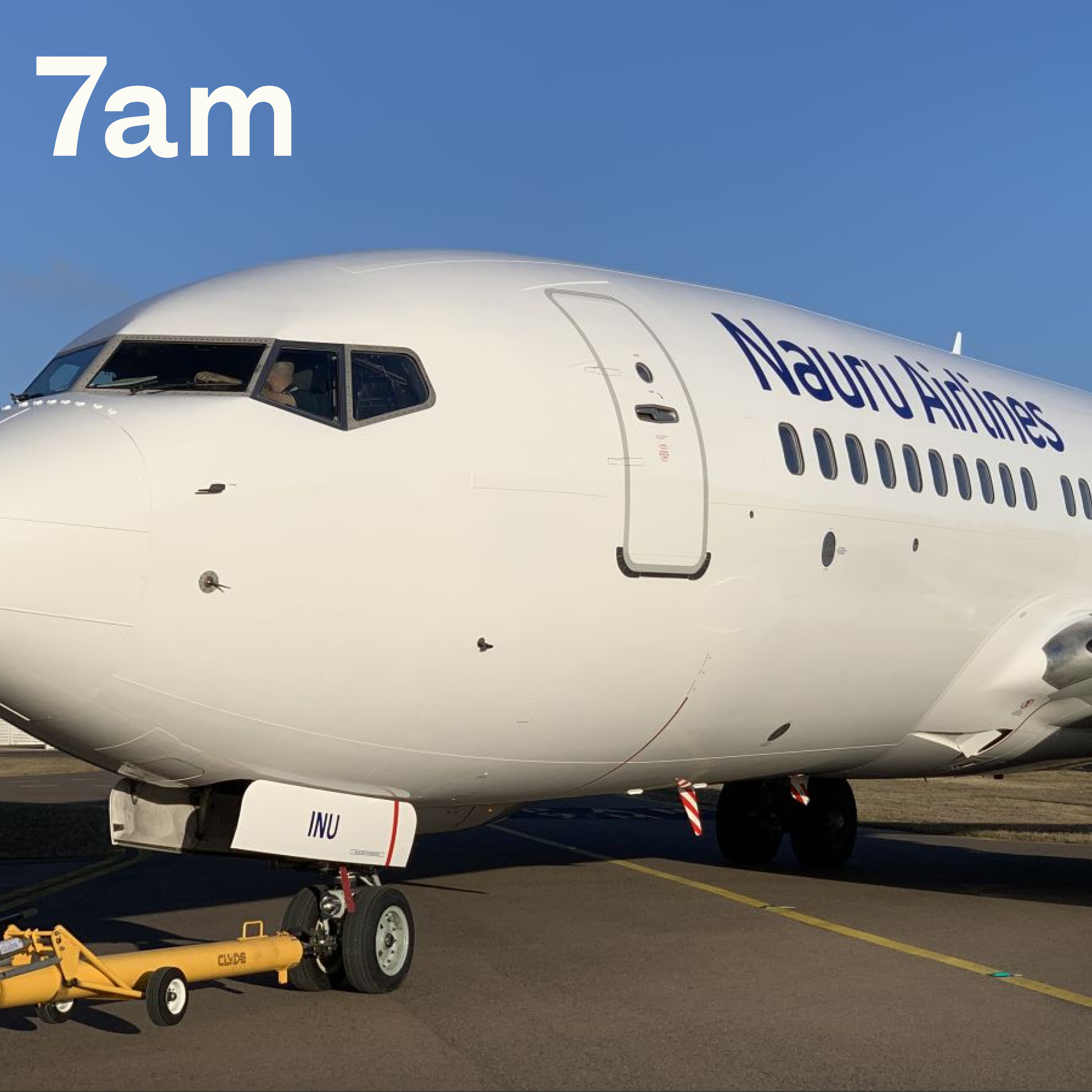
The absurd lengths Australia goes to keep Nauru Airlines flying
It’s an uncomfortable fact our government doesn’t like to face: 25 years on from the Tampa affair, we’re still paying a tiny island micro-nation hundreds of millions of dollars to keep immigration detention alive. One of the ways we’re doing that is by helping to prop up Nauru Airlines – a company riven with financial, governance and safety issues. Today, independent journalist Nick Feik on how our relationship with a foreign commercial airline is compromising the Australian government’s own regulators, departments and procurement processes in the name of…
-

E2053 · 22 Sep 2026 · 16 min
Trump and Murdoch: The enemies who need each other
One of the defining themes of Donald Trump's presidencies has been his war against the media. Last week, he banned journalists from three media outlets from the White House, saying he’s had enough of the negative stories about him. This week, those outlets sued him over the ban. And just last year he proved no one’s off limits, taking media mogul Rupert Murdoch to court in a ten-billion-dollar lawsuit that’s still playing out – all over another story he didn’t much like. Today, journalist and author Gabriel Sherman on the battle of the titans between Donald…
-

E2052 · 21 Sep 2026 · 14 min
A richer Australia in 2066 – but for who?
Australia in 2066 will be older, richer, and – according to the treasurer – transformed by artificial intelligence. The latest intergenerational report says, despite an aging population, our real incomes will be 55 percent higher by 2066. And Jim Chalmers says AI will get us there. But the same report says younger Australians aren’t seeing the same gains in income, wealth and home ownership as the generations before it. So what does this report really say about our future – and how much of it is political wishful thinking. Today, Vice Chancellor’s professor and…
-
E2050 · 19 Sep 2026 · 14 min
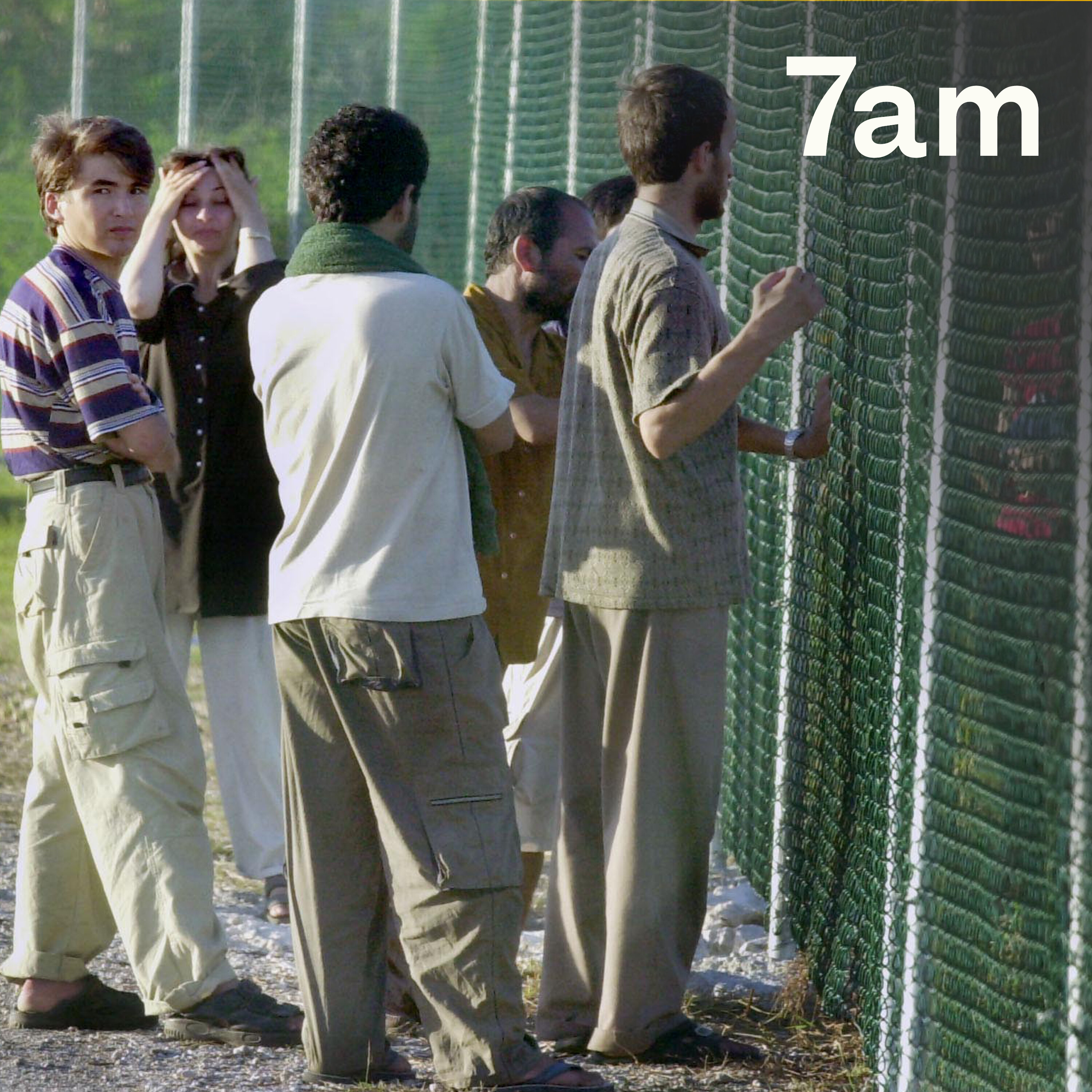
Serco’s ugly legacy in Australia’s immigration detention system
Last year, the company that ran Australia’s immigration detention network for over a decade, British conglomerate Serco, lost its contract, but not before helping build what’s been called one of the world’s ‘most extreme and secretive’ detention regimes. The question at the time was whether its replacement – American private prison operator MTC – would be any better. Eighteen months later, we have an answer. Recorded incidents across the detention network have more than doubled – from almost 800 to over 1,600 – since MTC took over. At the…
-

E2049 · 18 Sep 2026 · 17 min
Albo’s mum and “primitive” first Australians: has Pauline finally gone too far?
Migration is shaping up to be the next big battleground in federal politics as Labor desperately tries to wrestle back control of the narrative from One Nation. But does this week’s long-awaited plan leave the government stronger or weaker politically? And could going harder on Pauline Hanson hold the key to tackling One Nation? This week, the major parties gave it a try as some of Hanson’s nasty comments came back to bite her. Today, Contributing Editor at The New Daily, Amy Remeikis on immigration politics and whether some things are off limits, even for Pauline Hanson. If you…
-
E2048 · 17 Sep 2026 · 18 min
Is Labor’s migration plan tackling a real problem or a political one?
After one false start and a hell of a lot of political pressure from the right, Labor has finally unveiled its long-awaited immigration plans. Backpackers, students and visa overstayers will all be targeted by the measures – designed to bring net overseas migration down from around 300 thousand, to 225 thousand by 2028. So what impact will the overhaul have on our economy, our communities, and on Labor’s re-election prospects? Today, journalist Peter Mares – who writes extensively on immigration for Inside Story magazine – on what’s in store, and whether the…
-

E2047 · 16 Sep 2026 · 18 min
Why is Australia going soft on settler sanctions?
Last week, countries including the UK, Canada and France announced plans to restrict trade with Israeli settlements in the West Bank. In the past, Australia has joined its overseas allies in actions on Israel. This time it’s different – with Foreign Affairs Minister, Penny Wong, saying Australia isn’t considering joining the ban. So – why not? Today, Commissioner on the UN’s Commission of Inquiry into the Occupied Palestinian Territories and Israel, Chris Sidoti, on Australia’s responsibilities, and its failures. If you enjoy 7am , the best way you can…
-

E2046 · 15 Sep 2026 · 18 min
A big-tech defector’s AI warning for the world
In the last week, AI bosses around the world have suddenly grown a conscience – urging a global slowdown amid fears the race to develop artificial intelligence could outstrip humanity’s ability to control it. For Dex Hunter-Torricke, that realisation came a little sooner. The big-tech insider walked away last year, disillusioned, after spending 15 years inside the belly of the beast. He wrote speeches for Mark Zuckerberg at Facebook, worked with Elon Musk at SpaceX, and most recently helped Google DeepMind explain the rise of artificial intelligence to the world. Now, he says…

Take it with you
The Melo app keeps playing with the screen off, works in the car and on your watch, wakes you to your station, and browses the whole catalogue offline. Free, no ads, no account.


