
Episode notes
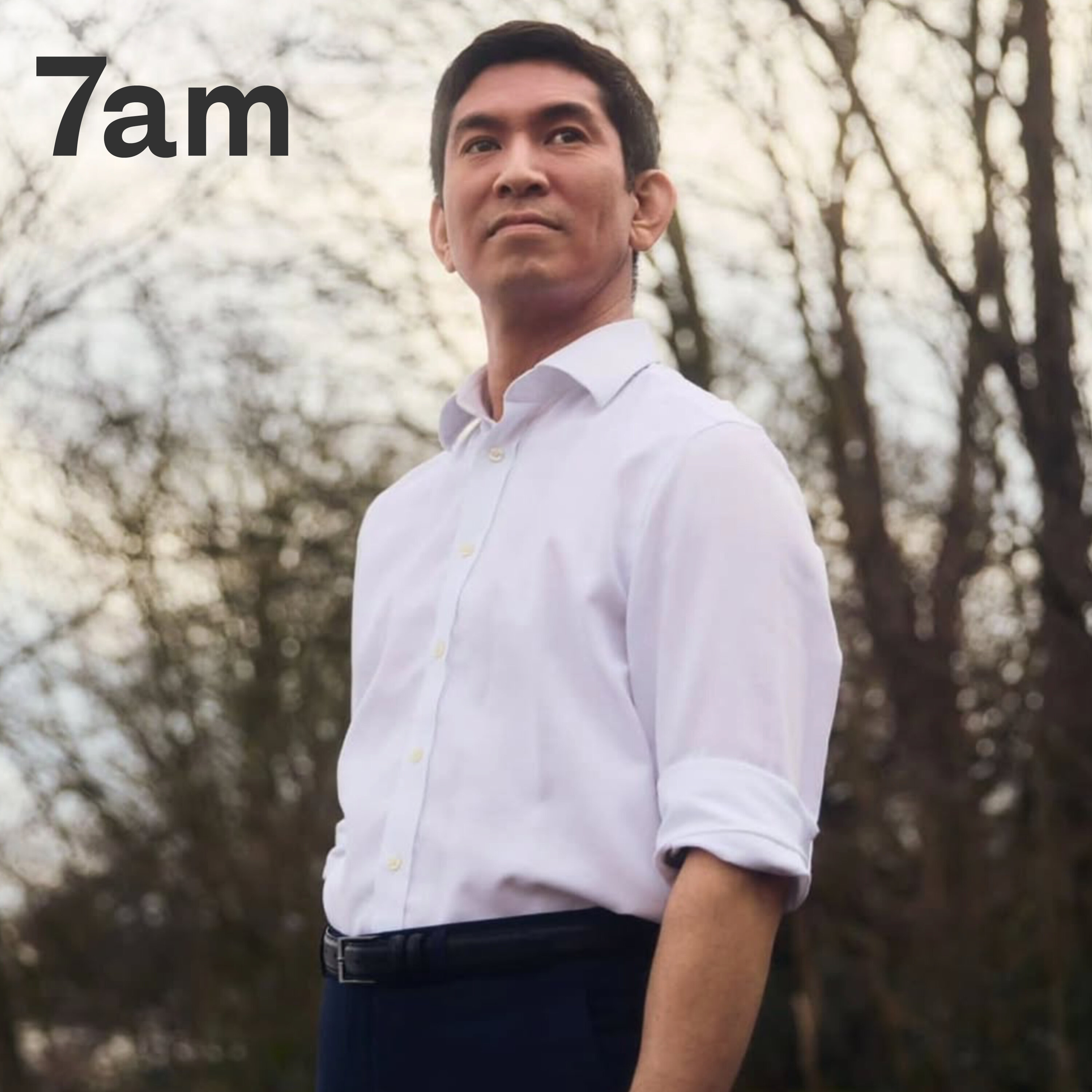
In the last week, AI bosses around the world have suddenly grown a conscience – urging a global slowdown amid fears the race to develop artificial intelligence could outstrip humanity’s ability to control it. For Dex Hunter-Torricke, that realisation came a little sooner. The big-tech insider walked away last year, disillusioned, after spending 15 years inside the belly of the beast. He wrote speeches for Mark Zuckerberg at Facebook, worked with Elon Musk at SpaceX, and most recently helped Google DeepMind explain the rise of artificial intelligence to the world. Now, he says…
Transcript
Read the transcript · about 3,010 words, follows along as you listen
Speaker 1:I'm Daniel James, and you're listening to 7am. In the last week, AI bosses around the world have suddenly grown a conscience, urging a global slowdown amid fears the race to develop artificial intelligence could outstrip humanity's ability to control it. For Dex Hunter Torek, that realisation came a little sooner. The big tech insider walked away last year. disillusioned after spending 15 years inside the belly of the beast. He wrote speeches for Mark Zuckerberg at Facebook, worked with Elon Musk at SpaceX, and most recently helped Google DeepMind explain the rise of artificial intelligence to the world. Now he says society is making the same mistakes with AI as it did in the social media era, sleepwalking into what comes next. Today, founder and president of the Centre for Tomorrow, Dex Hunter-Torik. gives us a glimpse inside the big tech firms shaping our future. It's Wednesday, September 16. Dex, thanks so much for joining us. You spent 15 years helping some of the most powerful people in tech sell the promise of technology. When did you stop believing technology?
Speaker 2:I've never actually stopped believing in the promise of technology. Technology can and should be something deeply hopeful. What I did, though, was I stopped believing that a bunch of those leaders, a bunch of those companies are configured to really serve the interests of most people in our societies or around the world. I think, you know, connecting people, that is a good thing, but you have to manage it well. You get a lot of new challenges that come along with building this totally new form of human community in the online realm in a world of eight and a half billion people at this moment in history. And it puts responsibilities on platforms to ensure that they're meeting their obligations to protect users, that they're really providing the kind of ecosystem in which healthy discourse can unfold. And I think after 2016, when we saw the arrival of Donald Trump as president, we saw increasing political populism and volatility.
Speaker 2:We saw this huge spike in disinformation, hate speech online. And I went on to work after Meta for an organization called the Oversight Board. which was a body that was set up to actually scrutinize content decisions on Facebook and Instagram. And there you really saw at scale all the mistakes that meta was making all over the world. And it's impossible not to pay attention to that stuff once you've seen it.
Speaker 1:Did Mark Zuckerberg and the Facebook execs you worked with have any regard for the power they held and some of the adverse effects that started to emerge with things like addiction and the disinformation that we've seen explode?
Speaker 2:You know, often these were problems that people paid attention to. But then there was just a woeful lack of response and a lack of investment in truly treating these things as the priorities they should have been. Perfect example, right? How is it that Facebook 20 plus years later doesn't have any effective customer support team or function? Every day there are millions of people on Facebook, businesses all over the world, communities who have problems with Facebook, and they find it impossible to get in touch with a real human.
Speaker 2:at this company, which is one of the world's wealthiest, you know, it's absolutely staggering. So for me, even if you have leaders who say, yeah, this is a real problem, we should solve it, clearly the commitments didn't live up to the reality.
Speaker 1:Let's move on to AI, because you joined Google DeepMind in 2023, just as ChatGPT had exploded and generative AI suddenly became something everyone was talking about. You said you were brought back to Google to fix Google's storytelling on AI. What was the story Google wanted to tell people about what was coming?
Speaker 2:I think all the big tech labs love to tell the story. They love telling it up to the present day, which is we're inventing this amazing technology which will allow us to solve basically all of our problems. For decades, mathematicians have been working to solve this problem. They haven't been able to crack it.
Speaker 3:But AI, it just did it easily.
Speaker 4:OpenAI sending this out saying we're sharing a solution.
Speaker 2:It doesn't matter what they are, you know, pick the most heroic ones because, of course, you know, that's the best way to tell a story often. A lot of the focus would be on things like science and on health care, on medicines. because those are things that are really important for people's lives.
Speaker 5:Melbourne researchers have developed a tool to detect the risk of breast cancer using an AI algorithm. The breakthrough program can provide.
Speaker 2:One out of two of us is going to get cancer in our lives. Everybody wants to, you know, live in good health for as long as possible. We want our children to have healthy lives. If you could use AI to discover new drugs that cure cancers, that would be a very good thing for the future, right? So I think in their minds, that was a story that was sufficient to get people excited about the trajectory of this technology and all the things they were building. Of course, it left out all sorts of other massive questions about what does a future shaped by the most powerful technology in history really look like?
Speaker 1:That was the story they were telling us. What were they telling each other inside these companies about generative AI?
Speaker 2:I mean, in all the companies... The way that the last few years has been presented has been as a race. It is a race to achieve more and more advanced AI against the other companies. So it's OpenAI, Google, Anthropic, and so on. But it's also about nations.
Speaker 1:We're leading China in AI.
Speaker 5:We're the most sophisticated country in the world.
Speaker 4:And frankly, I want to keep it that way because whoever wins AI wins.
Speaker 2:It's about the ecosystems of the United States. versus China competing to be the leaders in global AI without thinking, what is this truly in the service of? Is this really going to serve the interests of most people, not just the few people in these labs and in the tech industry?
Speaker 1:You said the way that we talk about governing AI is fundamentally broken. So what are governments getting wrong?
Speaker 2:Governments working with big tech have scoped most of the problems of AI over the last few years as mostly technical. with mostly technical solutions. So for example, this week, there's a researcher at Anthropic who's been making global headlines.
Speaker 4:Anthropic AI researcher, Jacob Coxon, who previously worked at OpenAI, arguing that both companies are, quote, gambling with our lives. But it's this post about his reason for stepping down that's going viral, racking up more than 100 million views. It reads in part, the people building AI earnestly believe it could kill us all by the end of the next decade.
Speaker 2:This is nonsense. This is the kind of view that comes from organizations where there's a very small number of generally young men who are obsessed with science fiction trying to peddle their fringe sci-fi thinking and turn that into a full-scale agenda for how AI should be managed. Actually, the real way we should be thinking about AI and the true risks from AI is these are societal challenges and societal choices that are at stake. There's no clever algorithmic fix that's coming for the fact that AI will end up displacing large numbers of jobs. It is not a technical problem, the fact that AI is being used now to turbocharge warfare.
Speaker 3:Advances in technology are making it possible to develop autonomous weapon systems that can pick and attack their targets without human guidance. Around 200 autonomous weapon systems have been deployed across Ukraine, the Middle East and Africa.
Speaker 2:We are already seeing the huge effects, including in places like Australia, of AI on consumption of resources and on the environment, on our natural world.
Speaker 6:This forecast from the Australian Energy Market Operator is saying that in 10 years' time, these data centres, and there are just dozens and dozens of them popping up around the country, will consume 13% of the energy supplied into the grid, the national electricity market, up from 3%, so a massive jump.
Speaker 2:So those are not technical problems. These are really choices about how we choose to manage these things, about who's paying the bills for these things, how we choose to ensure that communities and their interests are respected. It's much easier for the tech industry to say, these are all technical problems. We can solve that if we just do some unspecified things behind the scenes. Because surprise, surprise, that puts power back in the hands of those very small number of tech labs.
Speaker 1:Still to come. Dex's warning for Australia. Dex, if we look at the power balance here, you've worked very closely with people running these companies. How much power do a very small number of executives actually have over the direction this technology takes? And do you think governments are in a position to challenge them?
Speaker 2:I think those small number of leaders have a huge amount of influence over the technology. I mean, when you look at some of the individual leaders, right, you can see publicly the kind of capricious decision making by people like Elon Musk being turned into product decisions for X almost in real time. But, you know, when it comes to the power that governments and regulators and communities have over all of those companies, I actually think we have a tremendous amount of power, much greater power than big tech.
Speaker 2:We've simply chosen in many cases to exaggerate big tech's power. or not to exercise the power that we do have. Power is ultimately an illusion. It resides where people think it resides. For a long time, a lot of political leaders have tricked themselves into thinking big tech is untouchable, and that's not true at all. They have to work with regulators and decision makers all over the world if they want to access our markets, if they want to comply with regulations so that they can serve users in lots of communities, if they want to work with advertisers and partners. Ultimately, we've just got to be tougher in asking for the things that we want to see reflected.
Speaker 1:You say society is at risk of making the same mistakes with AI as it did in the social media era. What do you mean by that, Dex?
Speaker 2:Well, here's the question. We're now more than a decade and a half into the social media boom. I think we've had just more time to learn how is social media working and how is it not working, we have spent years arguing over social media before we then very quickly brought in these age restrictions for young people on social media. Things which, in many cases, have yet to be enforced well, so they are imperfect regulations. Nobody, or very few people certainly that I'm aware of, have made the case yet for, should we be exploring having age restrictions on generative AI for young people? if you concede that AI is going to be the most powerful technology ever, this could have huge effects on the way young people think, the way their brains develop, the way they process information, the way they learn. Should we be just letting a whole generation be guinea pigs for these tools, or should we proactively bring in those restrictions now and then try to understand what the effects are before we simply open the floodgates?
Speaker 1:Australia is actively courting the same AI companies you used to work for. What should our government be demanding from them before that technology becomes deeply embedded here, particularly given we're talking about a handful of foreign companies that may actually impact our national sovereignty?
Speaker 2:I think government should be absolutely demanding transparency in how their systems are operating, the things that will impact our lives, communities, the interests of our communities in which this tech will be operating. I think absolutely everything Governments should be also shopping around. It is a true buyer's market. It is an era in which the technology is being commoditized very, very rapidly. When governments get obsessed with trying to cut deals with just a very small number of hyperscalers, going for these multi-billion dollar commitments in spending. These are things where I think there's actually a massive global ecosystem out there.
Speaker 2:There's plenty of other companies, there's plenty of great Australian startups and companies who are building great bits of technology, which in many cases are free from the kind of baggage that comes from US big tech. So these are all some of the big strategic questions. There's obviously a whole lot of very practical questions around things like data sovereignty, privacy, security, IP, infrastructure. But certainly, I think in general, decision makers should be pretty tough in saying that we need you to abide by certain things if you want to serve us. And if you can't reach agreement on those, it's okay. You can go your own way and we'll do business with somebody else who respects our values and our interests.
Speaker 1:And finally, Dex, you spent years helping these companies tell us what the future could look like. You've said too few people have a say in helping shape that future. So how do we give workers and ordinary people a real say in how AI changes their jobs and their lives?
Speaker 2:I would like to see every decision maker, every leader have a genuine open conversation now, put their cards on the table about what they think is going to happen with AI. AI is still largely a very elite conversation. It's not a thing I think most people are talking about. People will sort of hear the headlines and think, oh, there's some stuff in the news. Every big tech leader premises the vision of this AI future on the idea that AI will make us all much wealthier. The world will become more prosperous, economies will grow, there'll be more jobs.
Speaker 2:Lots of people don't believe it. I'm very skeptical that's how it will unfold in the current way it's being organized. But certainly, if your vision is that this will help grow Australia's economy, then as a country, as communities, we should get a question asked. What do we want to do with all that wealth? How should we be using it? What should we be allocating it for? How should it be distributed? And so fundamentally, there are massive choices now about our futures, about our children's futures. And we've got very little time in which we might get to make some very big choices about what kind of country we want to live in, what kind of people do we want to become in the future. And so this is genuinely a conversation. We've just got to have it. Somebody has to lead it. Um, and I think, um, anyone who can help shape that and open it up, I think has a responsibility to do that.
Speaker 1:How much time do we have to have that conversation?
Speaker 2:We have very little time for it because of course, uh, every, you know, major AI lab will tell you, and I do agree with them on this, that we will arrive at a much more advanced form of AI, artificial general intelligence, essentially human level intelligence and machines sometime in the next 10 years. Most of those leaders believe it could be closer to five years from now. OpenAI's leadership has just been signaling in the last few days they believe they may have already achieved it. Lots of disagreement about that.
Speaker 2:Many people, including myself, think that's just marketing hype. And yet, when that arrives, if we have not fundamentally reassessed some of our thinking about our economies, about our societies, about our institutions, our governance, then we will be out of time and the technology will end up deciding for us. Which is exactly what happened with social media when we sleepwalked through a whole generation of technology, but we hadn't taken it seriously before we entered that new era. And I just don't want us to make that same mistake again.
Speaker 1:Well, Dex, we're out of time for this conversation, but thank you so much for yours.
Speaker 2:Thanks for having me.
Speaker 1:Dex Hunter-Torrick has been in Australia for the Philanthropy Australia Conference. Also in the news, Pauline Hanson has offered a half apology for her comments describing Indigenous Australians as primitive. saying she's sorry if she's offended people.
Speaker 5:We need to be united as a nation and stop the division that's happening by politicians.
Speaker 1:But the argument is that you're worsening it by saying things like that they were the most primitive race on earth at the time.
Speaker 6:That that upsets a lot of Indigenous Australians.
Speaker 5:I don't... Well, then I regret saying that because I don't want to upset people. That's not my intentions. That wasn't my intentions to hurt people.
Speaker 1:Hanson also offered a half apology to the Prime Minister, if he's taken offence, to her comments about his mum living in a housing commission. Gold Coast Mayor Tom Tate has sworn at a journalist and stormed out of a press conference and made questions over a dinner he claims to have had with Donald Trump earlier this year.
Speaker 5:Why are you so aggressive?
Speaker 1:Are you from the ABC?
Speaker 2:Yes.
Speaker 6:Yeah, f * * * off.
Speaker 1:Excuse me?
Speaker 2:F * * * off. I'm serious. I'm serious.
Speaker 1:A statement from the Trump organisation claims the mayor's account of what occurred is a complete fabrication. I'm Daniel James. Thanks for listening to 7am. We'll be back tomorrow.
Transcript supplied by the publisher with the episode.
More from 7am All episodes →
-

E2051 · 20 Sep 2026 · 15 min
The race to put weapons in space
A whole new galactic battleground has just opened up. The United States has declared it has weapons in space, and it’s ready to use them. So, are we entering a new era where the opening moves of a war could happen hundreds of kilometres above us? Today, Senior analyst at the Australian Strategic Policy Institute, Dr Malcolm Davis on the space weapons now at the ready, and the likelihood of an orbital offensive. If you enjoy 7am , the best way you can support us is by making a contribution at 7ampodcast.com.au/support . Socials: Stay in touch with us on Instagram Guest: Senior analyst…
-
E2050 · 19 Sep 2026 · 14 min
Serco’s ugly legacy in Australia’s immigration detention system
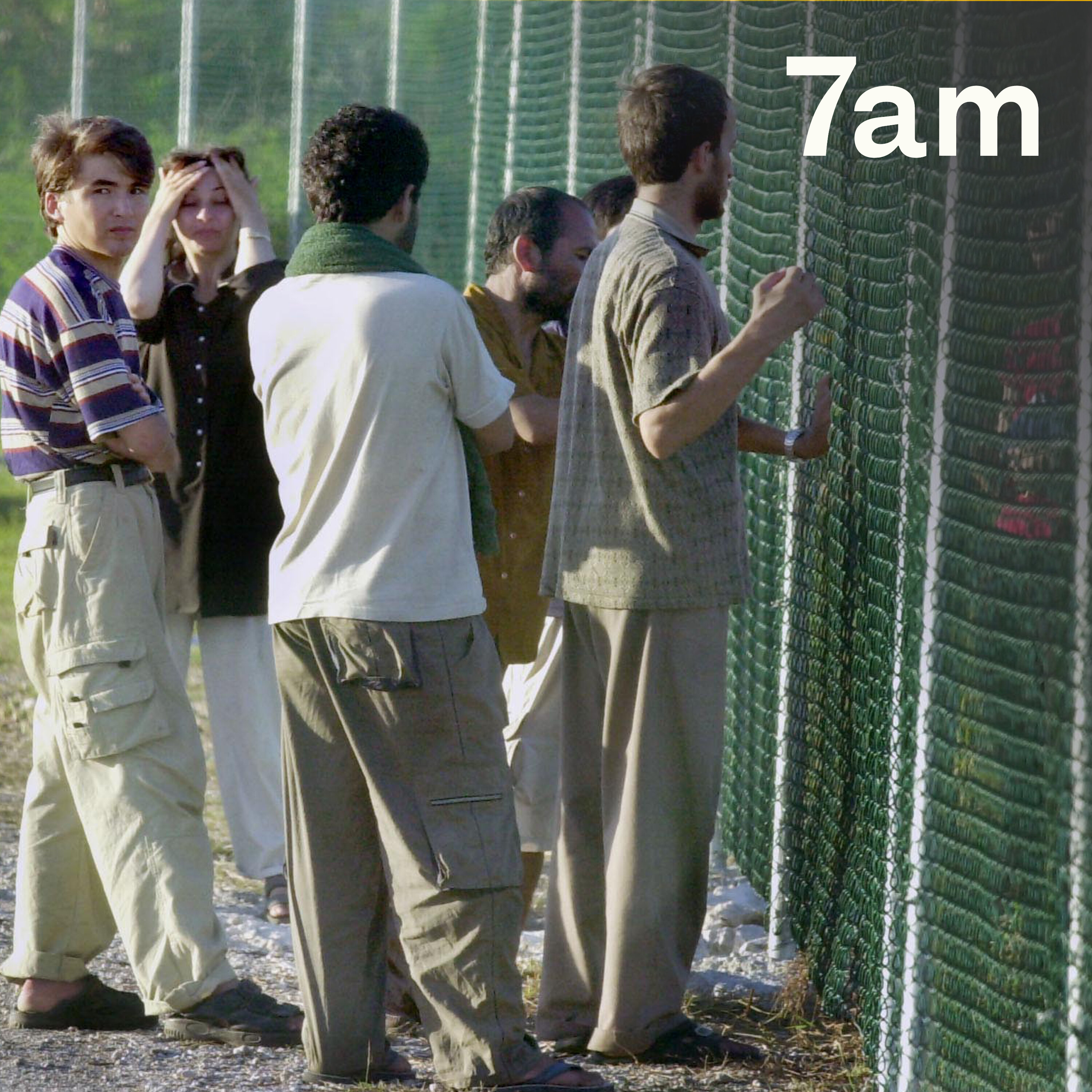
Last year, the company that ran Australia’s immigration detention network for over a decade, British conglomerate Serco, lost its contract, but not before helping build what’s been called one of the world’s ‘most extreme and secretive’ detention regimes. The question at the time was whether its replacement – American private prison operator MTC – would be any better. Eighteen months later, we have an answer. Recorded incidents across the detention network have more than doubled – from almost 800 to over 1,600 – since MTC took over. At the…
-

E2049 · 18 Sep 2026 · 17 min
Albo’s mum and “primitive” first Australians: has Pauline finally gone too far?
Migration is shaping up to be the next big battleground in federal politics as Labor desperately tries to wrestle back control of the narrative from One Nation. But does this week’s long-awaited plan leave the government stronger or weaker politically? And could going harder on Pauline Hanson hold the key to tackling One Nation? This week, the major parties gave it a try as some of Hanson’s nasty comments came back to bite her. Today, Contributing Editor at The New Daily, Amy Remeikis on immigration politics and whether some things are off limits, even for Pauline Hanson. If you…
-
E2048 · 17 Sep 2026 · 18 min
Is Labor’s migration plan tackling a real problem or a political one?
After one false start and a hell of a lot of political pressure from the right, Labor has finally unveiled its long-awaited immigration plans. Backpackers, students and visa overstayers will all be targeted by the measures – designed to bring net overseas migration down from around 300 thousand, to 225 thousand by 2028. So what impact will the overhaul have on our economy, our communities, and on Labor’s re-election prospects? Today, journalist Peter Mares – who writes extensively on immigration for Inside Story magazine – on what’s in store, and whether the…
-

E2047 · 16 Sep 2026 · 18 min
Why is Australia going soft on settler sanctions?
Last week, countries including the UK, Canada and France announced plans to restrict trade with Israeli settlements in the West Bank. In the past, Australia has joined its overseas allies in actions on Israel. This time it’s different – with Foreign Affairs Minister, Penny Wong, saying Australia isn’t considering joining the ban. So – why not? Today, Commissioner on the UN’s Commission of Inquiry into the Occupied Palestinian Territories and Israel, Chris Sidoti, on Australia’s responsibilities, and its failures. If you enjoy 7am , the best way you can…
-

E2045 · 14 Sep 2026 · 18 min
Is another GFC brewing?
The numbers are almost incomprehensible – last month US debt hit 40 trillion dollars. With an interest bill of more than three billion dollars a day. And that’s before Donald Trump’s trillion dollar promise to hand every adult in America a cheque for five thousand bucks! Now, as global debt levels rise to record highs, and the cost of paying that debt rises too – experts are sounding the alarm – warning the economic storm that’s brewing is starting to look an awful lot like the 2007 global financial crisis. Today, Senior Economics Correspondent at the Age…
-

E2044 · 13 Sep 2026 · 19 min
Something is seriously wrong in the Northern Territory
One by one, the Aboriginal leaders, organisations and watchdogs the Northern Territory government is supposed to work with are walking away. The Children’s Commissioner has resigned. An Indigenous MP has left parliament after more than a decade. And now almost the entire Aboriginal side of the Territory’s Justice Policy Partnership has suspended its involvement. They’re all making a remarkably similar complaint – that the government isn’t listening, and that the structures supposedly designed to give Aboriginal people a say have become meaningless. Today,…
-

E2043 · 12 Sep 2026 · 31 min
This is Alice Springs: Children of the Intervention
From afar, Alice Springs is a whirlpool of myth and truth. A town with competing interests and few solutions, marked by chaos and decades of government overreach. In cities and towns across Australia, we read about a “crisis” about “rampages”. One newspaper described the children of Alice Springs as “tiny menaces stuck on a turnstile of trouble”. In this first episode of our three part series This is Alice Springs , Daniel James visits the town at the heart of our nation, to find out how all the interventions, big and small, by governments of all…
-
E2042 · 11 Sep 2026 · 15 min
Did the PM dabble in pork barrelling?
In 2020 Anthony Albanese called for the sacking of then-sports minister Bridget McKenzie over her involvement in the infamous sports rorts – which he labelled a farce. Not long after, she resigned. But now that similar pork barrelling claims have been levelled at the Prime Minister, he’s come out swinging – refusing to admit any wrong-doing over his failure to declare membership at a golf club which received a six million dollar grant. Also coming out swinging this week was Andrew Hastie. The Liberal MP delivered a masterclass in how to take on One Nation as he labelled…
-

E2041 · 10 Sep 2026 · 18 min
“Nerd Reich”: Are big tech billionaires at war with democracy?
When Donald Trump was sworn in for a second time, some of the most powerful men in the tech world had the best seats in the room. Elon Musk, Jeff Bezos, Mark Zuckerberg – a display of just how close silicon valley had aligned itself to the administration. But within that world, journalist Gil Durán says, is a smaller, more radical group with a much bigger ambition: get rid of democracy, and use technology to build a new order in its place, controlled by a wealthy elite. And in his new book, The Nerd Reich , Gil traces how these once-fringe ideas have moved closer to the White…

Take it with you
The Melo app keeps playing with the screen off, works in the car and on your watch, wakes you to your station, and browses the whole catalogue offline. Free, no ads, no account.


