

Season 1, Episode 117 · Behavioral Science For Brands: Leveraging behavioral science in brand marketing.
Interview: Robert West, creator of the COM-B model, on the three forces behind every human behavior
20 May 2026 · 1 hr 2 min
Season 1, Episode 117 · Behavioral Science For Brands: Leveraging behavioral science in brand marketing.
20 May 2026 · 1 hr 2 min
In this episode, MichaelAaron and Richard sit down with behavioral scientist Robert West, creator of the COM-B model, to explore the three forces behind every human behavior: capability, opportunity, and motivation. They discuss why behavior change so often fails, how environments shape decisions more than we realize, and how businesses and governments can design more effective interventions.
Robert West: [00:00:00] When we're looking at people's behavior, all our attention and our focus is on the person, and therefore we think, "Oh, g- okay that's where the source of the behavior, what's causing the behavior lies." interestingly though , when we're looking at our own behavior, particularly when our behavior is not necessarily up to a standard that we would wish it to be, we're looking outwards. We're not looking at ourselves, and therefore we're much more likely to attribute the causes of behaviors, and particularly failures, to external events. MichaelAaron Flicker: That was a clip from Dr. Robert West, professor emeritus at University College London, and one of the world's leading experts on behavior change. He's best known for developing the COM-B model, a simple but powerful idea that for any behavior to happen, three things need to be in place: C, the capacity to do it; O, the opportunity for it to happen; and M, the [00:01:00] motivation that drives the choice in the moment. In our conversation, we went much deeper than just unpacking COM-B. We got into how it can be a tool that analyzes the major factors that drive behavior change, and also how this COM-B system can be used to help bring stakeholders and leaders along to support your behavior change initiative. With over 900 scientific papers to his name, he spent decades studying what actually drives human behavior, both at the individual level and at a population level. It was a truly fascinating conversation. And now, here's our episode. Welcome back to Behavioral Science for Brands, a podcast where we bridge the gap between academics and practical marketing. Every week, we sit down and go deep behind the science that's powering some of America's most successful brands. I'm MichaelAaron Flicker. Richard Shotton: And I'm Richard [00:02:00] Shotton. MichaelAaron Flicker: And today we're sitting with Professor Robert West, one of the world's leading experts on behavior change and the science of motivation. Let's get into it. Professor West, welcome to today's show. We're so excited to have you with us. Robert West: Thank you for having me. I'm looking forward to our conversation. MichaelAaron Flicker: Richard and I have been very excited about our conversation. And to ease you in to the episode that we have today, we thought we might start with a few quick-fire questions to warm up the conversation. And before we started the show, this one was... We were almost leading into it. Dr. West, what do your friends and family members think about your passion for behavioral science? Robert West: Okay. Yeah they are I think like most of the-- my family, they're mildly skeptical. We're a rather skeptical [00:03:00] family, I have to say. But they put up with it. And in fact with my three sons, we work together closely. I work with my son Jamie, and I work with my other two sons on websites and stuff like that. Richard Shotton: Family business, fantastic. Moving on. What is something that you once believed strongly, but now you've changed your mind on? Robert West: Oh, that the world is a fair place. I would love to believe that the world is just and fair. Unfortunately, my experience over the decades has led me to believe that it's seriously not. MichaelAaron Flicker: More on this later, friends. Outside of the COM-B model, which behavioral science model do you have a lot of respect for? Robert West: I think that my all-time favorite [00:04:00] model is I guess it's not really called a model, but people will know it, anyone who knows anything about psychology, and it's operant learning theory. It's it's operant conditioning. I think it is incredibly powerful. It's, it's-- At its very s- heart, it's around the ef-effect of reward and punishment. But what I think has been so important is that in developing the model, the the scientists working on it have figured out some really important details about how reward and punishment work, and how you can make them most effective. Richard Shotton: And then if you had a magic wand, what preconception about behavioral change would you erase from people's minds? Robert West: That it's all common sense. That there's nothing to see here because we all know how people behave, and all our common sense ideas are perfectly fine, despite getting [00:05:00] it wrong so often. Richard Shotton: Yeah. We, w-we did an interview with Dan Ariely reasonably recently, and he said something fascinating, which was he used to present his experiments, and then afterwards people say, "Oh that was obvious. Doesn't everyone know this?" So what he started to do was he would present the methodology of the experiment, ask people to predict the results, and of course they were wildly wrong. It's only common sense after you've been told the results. Robert West: Absolutely. I'm a big fan of his, actually. I think that he's got he's got some terrific ideas, and he expresses them really well. And I have in a sort of informal way done that myself with people. And what's really interesting, and he will have experienced this themselves, is when you go, "Oh I'm s- actually, that's not the case," you get two responses. One is, " you're wrong. It is the case despite the fact that the evidence points in that direction." And the other one is, "Oh [00:06:00] yeah. I knew that, yeah, already." So it's very hard to defeat this particular problem. MichaelAaron Flicker: Final question. What insight from behavioral science do you think is criminally underused? Robert West: Wow. I would say probably that the environment in which we operate has way, way more influence on our behavior than we give credit for. And unfortunately, this has been something which actually psychologists have somewhat been guilty of over the years but are now really, I think addressing rather better than we did. If you look at the sort of psychological theories, they really focus on what goes on inside people's heads. When in when you really look at the variance [00:07:00] accounted for, to use a technical term the environment, both the wider environment and your immediate environment plays so much greater role than we give credit for. Richard Shotton: Why do you think people underestimate that so much? What-- Is there a theory you've got? Robert West: There is a theory about it actually, which is called the fundamental attribution error, which I think is rather good. Which essentially its argument is that when we're looking at people's behavior, all our attention and our focus is on the person, and therefore we think, "Oh, g- okay that's where the source of the behavior, what's causing the behavior lies." Interestingly though, when we're looking at our own behavior, particularly when our behavior is not necessarily up to a standard that we would wish it to be, we're looking [00:08:00] outwards. We're not looking at ourselves, and therefore we're much more likely to attribute the causes of behaviors, and particularly failures, to external events. But when we're studying behavior and when we're even as laypeople we it's the focus of our attention is on what's going on inside someone's head, so that's where we think the causes must lie. Richard Shotton: Yeah. So if we're driving down the road and someone cuts us up, we believe it's 'cause they're a rude person, an idiot. But if we made a mistake driving, we put it down to this particular stress we're under or the interplay of the l- the light or something on the windscreen, so yeah. Robert West: Absolutely. Yeah. Absolutely. And and not only do, especially when it's something bad that someone does, not only do we make a, what they call an internal attribution, we attribute it to the person, we think it's something about them that's what they call stable. It's inherent. They are that kind of person. They're the sort of person who does that. And we [00:09:00] make-- we don't make sufficient allowance, not only for the external factors influencing the behavior, but to the instability of the internal factors. We think if someone has a belief or if someone has a desire, this characterizes them as people. We don't give enough attention to the fact that our desires go up and down and our beliefs come and go. MichaelAaron Flicker: I can't help but ask, based on that jumping off point, going back to our quick round, quick-fire questions, you used to believe the world was fair. You now think it is a whole lot less fair. How does that connect to your life's work in behavioral science? How does that connect to what you've, y- what you've focused on over the years? Robert West: I think the connection arises from the the fact that the more you study behavior and what causes [00:10:00] it what leads people to do things and be successful or unsuccessful, and I think this is something that famously Woody Allen has commented on, the more you realize that, oh my goodness luck has played a huge role in it. And so when in our society and I think some societies do this more than others and not wishing to cast any aspersions, but I think the US society tends to do this more than, let's say many countries in Europe You say if someone's successful, it's 'cause of them and what they did and how they are and they deserve it. And if someone's unsuccessful, it's because, it's 'cause of their failings and and it's and they gotta buck up. Now, you can see why although that is it's not a, it's [00:11:00] not a justified position from a scientific standpoint you can see why it's part of how a society can operate. Because one of the things you want to do with- within a certain person's capabilities is to motivate them to maximize the the outcomes given those capabilities, and so put more effort in and so on. The problem lies in the fact, then in the fact that when because there are huge limits to that, and because the our circumstances so much dictates what we achieve even little things can make huge differences that it causes a lot of stress and a lot of punishment social punishment and other kinds of punishment to people which is unnecessary and unhelpful and actually to the detriment of society. I think it's the [00:12:00] more you understand the causal networks that lead to things like human behaviors, the more you think, "Wow," there but for the grace of God," as it were. MichaelAaron Flicker: In our podcast, we talk about a wide range of things, but we also talk about the application to commercial implications. So we understand, we have an enthusiasm to understand behavioral science and human behavior, and then we ask the commercial application question. Hearing you talk about that makes me think about what is a company's role in driving not just people to buy their products, but to try to use all of the media that they spend or all of the impact they have on reaching lots of people in a more positive way. Y- if you have the microphone to change human behavior, [00:13:00] based on what you just said is there a positive thing you can do to also make a good outcome for society? I, it just, it strikes me that for people who have large budgets and lots of money, both can happen. Robert West: Yeah. My value system is that I think that the things that matter most to me are human wellbeing and and long-term prosperity and the kind of environment in-- our habitat, the environment in which we operate. And other things that other people value, money, profit, whatever are, are-- would always in, in my value system be secondary to that. And what I think is quite interesting, I d- I mainly deal with the public sector and governments and NGOs and so on. [00:14:00] But when I work with communications agencies and so on who are working for the private sector, one of the things I find quite interesting is that the stereotype is of this idea, " we just gotta make money," it's all about shareholder value and so on. But when you dig a bit deeper into what motivates people to do something, it's often a passion for the thing they're doing whether it's a startup i- in tech or whatever or it could be anything, some new invention or it could be something very prosaic, but a passion for something they're doing. But also, most people do actually want to do some good, and so I think that one of the things I would say is that you harness that, and in the old cliché you do well by doing good. So essentially one of the thing-- Humans are quite interesting because we're-- i- in the sense that [00:15:00] we we often put up with a lot of nonsense about things, but we-- I think we can detect authenticity when we see it, largely. And if you project authenticity because you are authentic in what you do, because you do care about your customers, you do care about the wellbeing of your staff and you're not just pretending in order to meet some bottom line, which in the end comes and goes. But if you do care, it comes through, and with luck, because luck plays a lot of a big role, as I've been saying that will then translate into a successful business, I think. Richard Shotton: There's an amazing book on that you, your phrase doing well by doing well. I love John Kay's "Obliquity," and he has lots of different case studies around different companies, some of whom [00:16:00] try to prioritize maximum profit in the short term, others who had a genuine love, let's say it was a a drug company for the-- a longer term aim. And what he shows again and again is actually optimizing for the long term ends up generating the best profits. Now, if you're solely focused on maximizing money tomorrow, it can often quite quickly blow up. Robert West: I think that's right. It doesn't always happen. The world is a very uncertain place, and sometimes you can get very rich very quickly by being a complete heel And not caring about anything. But then what have you got? The-- it's s-so what? Whereas if you've created a successful company that's doing a good job, that where you've got satisfied customers and where your workforce are happy and fulfilled, great. That's a much better feeling. MichaelAaron Flicker: Yeah. And we talk about [00:17:00] building brands, and so beyond the product itself, the brand is that layer of what-- exactly what you're talking about, Dr. West. You're-- We're talking about that extra layer of it stands for something, it means something beyond just the product itself, and it occupies that space in the buyer's mind. I think to-- that's really a lovely way to think about it. Robert West: Yeah I think you're right. The brand is a layer of authen- ideally, of authenticity on top of what the product is or the services that you're delivering. MichaelAaron Flicker: We have asked you to come here today because you have helped create what is called the COM-B model. Can you talk to us about what is the COM-B model? And let's start there. Let's get a base layer before we go deep. Robert West: Yeah. The COM-B model is a general and very [00:18:00] bird's- eye view model of behavior that was developed by myself and Susan Michie my wife and busi- and colleague as a kind of model to help guide people to devi- devise behavior change interventions, that is to influence behavior. So it's very much targeted on a s- on a very specific goal, and that is to predict what is the likelihood of a particular behavior occurring in a particular situation, in a particular population or individual or group of individuals in certain circumstances. And the essence of the model is incredibly simple. It is just blindingly obvious common sense, which is possibly why it has become popular. And it is this. It is that in order for any of us to do anything at any moment in [00:19:00] time, we have to have three things in place. One of them is that we have to have the capability to do that inside our heads and our bodies. We have to have the physical capability. We have to have the strength, the stamina, whatever it might be the sensory abilities and so on, all of that. We have to have the psychological capability. We have to know what the thing is, how to do it. We have to have an understanding of what the benefits are and so on. And the mental... Or sometimes the mental resilience to be able to put up with the things that are getting in the way. So that's capability. That's one of the three pillars of behavior. The second pillar is opportunity, which is the environment in which you exist must afford you the the scope to do the thing that you're doing. Very obviously, if you if you imagine... Sometimes I like to imagine what Jimi Hendrix would have been [00:20:00] doing in the 15th century without electric guitars. Would he have been a terrific lute player or whatever? Maybe not. Maybe he'd have been in the fields, I don't know or milking cows. But his wonderful talent specifically At the electric guitar with a 100-watt Marshall stack would not have manifested itself. So the opportunity and we talk about two kinds of opportunity. The physical opportunity, which is the resources, the equipment, the time, the money the spaces and facilities and so on, and the social opportunity, which is the norms that exist within society, the things that constrain our behavior what you c- what you're allowed to do, what you're not allowed to do, what you what your friends do, the social cues and social support and so on. So you've got capability, you've got opportunity, and then the third pillar [00:21:00] of behavior is a little bit different, and that's motivation. That's the M in COM-B. And the concept behind motivation is that essentially, given what your opportunity is to do and what your capability is to do, motivation determines what you actually do. So motivation's job is to prioritize particular behaviors over others. That's the job of our motivational system in the brain, is to say, "Of all the things I could be doing right now, I'm gonna do this." and within motivation as has been identified by many psychologists, and not just psychologists, but philosophers and anthropologists, you can essentially break it down into what we call reflective motivation. That's the sort of the head, as it were, your clever part of your brain, which is going, "Oh, I've worked out the right thing to do, and I'm gonna do this because it's a good idea." [00:22:00] And automatic motivation, which is your animal brain, if you like, which is your feelings of desires and wants and needs and urges and your habits and instincts. And one of the propositions within the motivation side of it, which is elaborated in a theory called prime theory, which I developed before the COM-B model, but essentially the proposition is essentially it doesn't matter what you think you should do If you don't actually feel that you want or need to do it, and then have an impulse to do it. In other words, your shoulds have to work through wants and needs in order to influence behavior. In i- in ancient philosophy, this was characterized by the concept of the rider and the horse, sometimes the rider and the elephant. Essentially, the rider, the clever part of your brain, has to get the horse to do the stuff that it needs to do. You can't [00:23:00] just say, "Oh, I'm gonna do this," and then it happens. So one of the really important insights, I think, over the last decade or so within behavioral psychology is this understanding that y- yes, it is important to get people to think that something's a good idea and to think that it's worth it, but y- but you've then got a bit of work to do quite often to turn that into something the person genuinely wants to do or genuinely feels the need to do in the circumstances in which it could occur. So those are the three pillars, and the other sort of side of the COM-B model, which adds a bit of complexity to it, is that all these different components interact with each other. So capability influences motivation, opportunity influences motivation, and so on. So what starts as a i- incredibly simple model, you can elaborate into a sort of systems model, a sort of network [00:24:00] model. And you can then use this, as we've been doing with some research over the past few years, into building more elaborate quantitative models of population behavior, which can make quite fine-grained predictions. Richard Shotton: Yeah. So y- you've taken us through the overview of the model and the three parts, and that's sounds like they're brilliant in theory. Moving to practice, let's say I know you're very interested in encouraging people to quit smoking. You're a marketer, you're at the Department of Health, and you are work on this problem of quitting smoking. H- how would COM-B work through it i- in practice? Robert West: In practice, what it does is it directs you to ask questions of the data that then you can use to build your interventions. And in the case of smoking, you find something very interesting when you do that, and that is that [00:25:00] the motivation side of things is great for getting you to the starting gate for making a quit attempt, and after that makes precious little difference. A lot of people say, " in order to stop smoking, you've really got to want to stop smoking." In a way because i- in order to make a quit attempt, you've got to want to stop smoking. But what we see after that, once someone's started to make the quit attempt, all the things that make a difference to the success of that quit attempt have got nothing to do with motivation. They've got everything to do with capability and opportunity, particularly in the case of let's say countries like the UK and the US where we have medications available to help people stop smoking. You've got Chantix in the States it's called, and Champix here, or Varenicline or cyt- and then Cytisine is another one. But essentially you've got some medications, and you've got smoking [00:26:00] cessation support programs, and those support programs, they don't really focus on your motivation. They don't give you you've got to buck up and really want to stop smoking. That boat has sailed. That job has been done. What they do is they focus on what are the barriers that are preventing you putting that motivation into effect? What is your capability? So when you're a government agency looking at how you can reduce smoking prevalence among by by getting people to quit smoking, you've got a two-stage job. You've got your motivational stage, which gets people to the quit attempt, and then you've really got to put your effort into the capability stage which is helping to make those quit attempts succeed. Richard Shotton: Do you think that idea of motivation being like a necessary but not sufficient condition, do you think enough people recognize that? It feels like a lot of people who try and change behavior jump straight to motivation- [00:27:00] and forget about these other drivers. Robert West: Absolutely. Absolutely. That is that is one of the most common mistakes I think that's made is to assume that what you're dealing with is a problem of motivation. But it doesn't always happen. Sometimes it's the other way around. For example I used to do quite a lot of research into road safety and driver behavior. And when I started, the assumption was that novice drivers who crash their cars quite a lot, hence the high insurance premiums that the problem was lack of capability. It's common sense. They've just passed their test. They don't really know how to drive. Actually, not so much. It turns out that the biggest predictors of crashes amongst young drivers are much more to do with motivation than they are capability. It's not the less skilled drivers who are crashing their cars, it's the drivers who care less about the consequences of [00:28:00] crashing to themselves and other people. There's this actually, it's quite a strong relationship between sort of social deviance and and crashes to the extent that murderers, for example have something like 10 times the crash rate as other people, and not just 'cause they're fleeing the scene of the crime. Richard Shotton: That is amazing. I didn't know that. That's amazing. I feel very... I feel more proud now of my crash-free record now. Yeah. I can... I'll use this in court if I'm ever accused of- Absolutely ... of murder. Yeah. MichaelAaron Flicker: As we are starting to go deep, I want to just take a pull back question and ask, I'm listening to this episode, I'm learning about the COM-B model. I'm saying either I've heard about it before, I didn't understand it this deeply, or I'm excited to know more. How do you help people take this base insight of C- O-M equals B and actually start [00:29:00] to apply it in their work? So if you're excited about it, but you want to start to think, "How do I start to go deeper?" Dr. West how do you talk to people about starting to take it from understanding the basis of the idea to using it? Robert West: Yeah, so there's a number of different approaches depending on who the audience is. And as I alluded to earlier, is at one level, it's a very common sense model, which is something that when we're talking to policymakers who are not behavioral scientists, they've got no particular expertise not even necessarily a great deal of interest in behavior or behavioral science. There is a level at which you can interact with people in that position, which will help them a little bit to gain a better insight into the problem that they're trying to solve, which may be a behavioral problem, whether it's to do with getting people to self-isolate during COVID, if they've got [00:30:00] symptoms or whatever, or stopping smoking or alcohol or whatever it might be. Or it... literally anything. We get peop- requests from all government departments and lots of different industries. It's a general model. So there's, there is a level at which you can with as you can probably tell with the discussion we've been having, that people can go, " yeah, okay, I get that." And then what they, what it can lead to is them questioning their assumptions, like the assumption it's all about motivation. So actually, is it all about motivation? Maybe what we need to do actually is to provide a more facilitatory environment for them. Maybe that would be the thing. So even at that level, there's an opportunity there to work with policymakers and clients to s- to, to raise the game a little bit. But then what's most interest to me is the working with people with a bit more expertise who [00:31:00] actually are developing behavior change strategies either as policies or that it might be tools like an app or something like that, or a service that you deliver to people on a health insurance program or whatever. Now when, with that, then what we've done is to develop a, an online tool which people can use called the CACTUS tool. And people can find it on the COM-B website. Basically, it's C-O-M hyphen B org the COM-B website, and it's there. It's a free tool for people to use. And what I would say about the tool is that y- you, you can just use the tool and go, "Okay, I think I know enough about it, and I'm gonna go through this process where it says what's the behavior you're interested in? What's the population or the group? What's the what's the setting that the intervention is in?" And then you go through your various COM-B targets. Do we need to raise awareness [00:32:00] of the behavior? Do we need to improve how people, know how to do the behavior, et cetera, et cetera. All the capability, opportunity, and motivation things. It will then prompt you for what we call behavior change techniques. It'll identify behavior change techniques that will be most relevant and so on. And at the end of it, it comes up with a a sort of an output which you can use if you wish to and we do this 'cause it's quite interesting, as a prompt for one of the large language models. I use Claude myself. That is a structured prompt which then helps the language model to go, "Oh, okay, I get what you're trying to do." And it'll usually do a pretty good job. It's not the end of the ro- the end of the process, but it gives you a starting point for the strategy. So the CACTUS tool is something-- is a tool that we've been developing. It's still under development. We're gonna be developing a website version. And I think that it, it probably is usable by people with a [00:33:00] certain level of expertise without support. But what we often do is we do a bit of hand-holding with people to go, "Okay, let's go through this. Let's take each of these targets. Let's see what the evidence is to support it so that we can arrive at a better kind of a conclusion." So that's just one way of approaching it as well. And then at the most technical level what we do is we use it to build what we call systems models, which we then use as the basis for in, in one of the projects I'm involved in, what we call an agent-based model, which is a a sort of mathematical model for mo- modeling population behavior, and parameterizing that with data to make fine-grained predictions of what would happen if we for example, in the UK, raised the price of e-cigarettes by X percent. What is our best prediction about what impact it would have? MichaelAaron Flicker: I think that really opens the door to talking about [00:34:00] real-world examples where the government has used COM-B to encourage positive behavior change. I think we're just starting to get into that, so maybe you could talk a little bit more about, in your personal experience some of the great outcomes by using COM-B in this way. Robert West: I-- yeah, so obviously health behavior is a key area. It's one that I mostly worked in and COM-B has been was, has been widely used in the government's comms strategy around it. It was, it's also be- it was also used... I'm gonna say it was used, it was used in the sense it was proposed for our government's response to COVID. But as we all know, the UK unfortunately, rather like the United States, didn't cover itself in glory with its political response to COVID and we ended up with a lot more deaths than we need have done. [00:35:00] But at least the scientific advisory committee to the government was saying These are these are things you should do." And an example of where we failed actually, as a where I think we could have done a lot better with a, in hindsight, pretty straight simple concept from COVID is the government made the ki- made the assumption that when people had symptoms or had been exposed to someone who's infected with COVID, the reason why they weren't self-isolating was motivation. It was because they were bad people, and they needed to be punished and and then all told that they should do this. And all the evidence that we were getting with regular surveys at the time was actually it wasn't that motivation wasn't a discriminating factor between people who were and were not isolating. It was opportunity. It was particularly around the issue of being able to [00:36:00] actually make ends meet, because the... If you self-isolated, you were gonna take a massive financial hit, and it was gonna be really problematic. And so if you need to feed your family, et cetera. It's really obvious and basic when you think about it. The government were told about this. They didn't actually for whatever reason I have my own views about what the reasons were, but for whatever reason, they didn't take that on board, and we ended up with a lot more infections than we need have done and a lot more cost to the economy than would've been the case if they had made an appropriate response in terms of facilitating the opportunity to engage in this desired behavior. So those are, that's th-those are a couple of examples. What I'm observing now working with companies that provide services, behavior change services to local populations, is that typically now when governments put out briefs to those [00:37:00] services to say What are you gonna deliver and how much is it gonna cost and what results are you gonna have?" They usually require them to do it in terms of COM-B. So that must be a bit annoying for people if they don't like the model, but it does seem to be something that's quite embedded. MichaelAaron Flicker: What about in businesses? Have you seen an example where a brand has used COM-B to make its marketing more effective? Robert West: I believe I have, but I don't think I'm in liberty to comment. Yes I think there are fairly large brands who have and are using the model not least because people working in those companies are from the sort of school at UCL of co- the school of COM-B as it were. So they've brought it with them. But I [00:38:00] think i-i- I think I-- My understanding is I don't know the world of business terribly well only from what I the people I actually deal with. But I think that it is a general model of behavior. And I really hope My interest in this is not to make money, it's not to it's not to make companies rich or whatever. It's to improve h-humankind. And to the extent that it, it achieves that, then that's good. But I like any tool, it can be used well or badly I think one of the unlocks for me regardless of the people listening and where- what they might do day in and day out, all of us have a passion for using communication or using our station to improve human behavior and to improve [00:39:00] all of our lots in life. And y- one thing that I had not considered in the way that you presented it was that it gives us an ability to talk to a more generalized audience. MichaelAaron Flicker: You talked about policyholders. I'm thinking about stock shareholders, stockholders- executive boards that want to understand the issue to a level of specificity, but only to a certain level. And so the model gives us the ability to go deeper- where we need to, but also stay more general to open people's minds to the opportunity that it may not just be the most commonly assumed problem that's stopping the behavior change. Robert West: Yeah, absolutely. And I think what I hope, what I like to think is that by providing this sort of bird's-eye view, it does, it, A, it covers all the bases, so it makes sure that you're not missing out on something because a lot of the psychological theories are really quite narrow, and they focus on some aspect of motivation [00:40:00] very often, or sometimes capability, sometimes opportunity. But it goes, hang on a minute let's look at this from a bird's-eye view and see where it l- where the land lies. But then if you're interested, if you have the motivation, capability, and opportunity to dig deeper, there it is. There's this other level of granularity underneath it, and you can keep going down like a fractal, down into the weeds of it at, to any level. And if you're let's by some chance working in a company as a a, as a behavioral advisor or in some behavioral capacity, and you're familiar with theories like operant learning theory or the theory of planned behavior or the health belief model or self-determination theory or the, any of the sort of about 100 relevant theories or subjective expected utility theory or prospect theory, Danny Kahneman's one if you if these are your g- your gig, as it were, [00:41:00] you can see how those link up with the bigger picture and how if that's where you think you need to put your effort, you can see how you can nest that within that broader framework and not get a bit, not get too blinkered in thinking that, oh, what we've got to do is positive framing or negative framing or any of these other kinds of concepts. Richard Shotton: Up till now we've very much focused on Com-B, but you've also created the the behavior change wheel. H-how do those two things interlink? What's the W- where do they mesh together? Robert West: COM-B was specifically developed as the hub of the behavior change- wheel. The paper in implementation science that kicked this all off which was published in 2011 was a paper about the behavior change wheel, and Susan and I developed the wheel with COM-B at its heart [00:42:00] as a piece. And the i- the idea is that COM-B is a model of behavior. The behavior change wheel is a sort of l- large scale model of a framework, not a model, a framework for behavior change. And so in, in the "Behavior Change Wheel" book and all the implementations of COM-B it's it's really about finding a process in which you say you do what we call a behavioral diagnosis. What needs to change within capability, opportunity, and motivation to get the behavior in the direction that you're wanting to go? Now, you can then map that onto, in the behavior change wheel the ri- the sort of ring that goes around that, which is what we call intervention functions, of which there are nine broad ones. You can educate, you can persuade, you can incentivize, coerce train you can regulate or restrict, you [00:43:00] can model you... and you can envir- do environmental restructuring. And so there's a mapping of the COM-B targets onto these broad intervention functions. And then having done that, you can say, "Okay, how do these link up with much more granular and specific behavior change techniques to deliver those?" And then the outer ring of the wheel is what we call implementation options, which is, okay How are we then gonna make that real? And the options are things like, if you're a government legislation, regulation, fiscal policies, providing a service and so on. And communication obviously. So it-- what you can-- what we do with the Behavior Change Wheel is to give people a kind of path from the problem specification, what is it you're trying to achieve, all the way through to a, the finished product, as it were, in terms of a [00:44:00] behavior change intervention. And the key thing really that we wanted to achieve with that and we didn't just make it up obviously. We, we-- although if it had been me, it probably would have done it. But Susan insists on- She kept you on the straight and narrow ... Looking things up- Yeah ... and checking things out. But we did a review of all the frameworks that were out there at the moment at that time, and we wanted to put them all together to get the best of them. But essentially, what we, what you end up with is a way of l- of connecting your intervention development with the science of behavior change- and the practice and the evidence. It could be that-- Let's say you're developing a comms campaign to achieve some goal. Now it may well be that there's a lot of evidence in the scientific literature to help you, but actually it's quite likely you're gonna have to do some audience research to find out specifically with this problem, [00:45:00] what what the audience is all about. And so the COM-B can provide you with a way of structuring your audience research so that you make sure that you identify what the real targets are. You're not just firing a shotgun at at the target. Richard Shotton: So would it be fair and maybe too simplistic to say COM-B is very much about the diagnosis of the problem. It tells you what needs to change, and then when you move to the Behavior Change Wheel, it's what are those tactics and solutions and interventions. Would that be fair? Robert West: That's exactly right. That wouldn't be simplistic at all. Phew. Richard Shotton: I try and avoid too many simplis- simplistic parts of it in a, per podcast. And then-- So that's a brilliant, I think setup of the difference between COM-B and Behavior Change Wheel. The other thing is, you mentioned it was back in 2011 when COM-B was created. You've now [00:46:00] created COM-B 2.0. Why did you feel the need for a kind of refresh and what are the major differences? Robert West: So there's a bit of pushback about naming it COM-B 2.0. Ah, okay. Good to know. Yeah. Good to know. Richard Shotton: We can edit that out. No, not at all. It's got the, it's got the, it's got the official brand now. Because it's work in progress. Okay. So essentially I I, obviously, as we get more and more experience with COM-B and new information becomes available, and Susan and I and others have been doing other research into things like what we call ontologies, which are a sort of scientific foundation for conceptualizing behavior and so on. Robert West: Then a lot has happened since 20 2011. And and what I wanted to do was to pull that together into an updated COM-B. Whether it's called COM-B 2.0- Okay. Yeah ... Depends on my colleagues as much as [00:47:00] me. But it will be an it, it will be an updated version. And there's a couple of key things that really came out or several key things. One is that the model that I've talked to you about is really the way we've been thinking about it is like an atomic version of behavior. It's behavior of a person in the moment, here and now, right? At this poi- point in time. At this point in time, do they have the opportunity, capability and motivation to engage in this behavior? And that's the starting point. But for a lot of the behavior change tasks that we're faced, that's not what we're interested in. We're interested in populations. We're interested in groups, in companies, in teams, in aggregates of people. So what we've done is to separate out the let's call it the atomic COM-B in the moment, the individual at this time, [00:48:00] versus the aggregate COM-B, which is a statistical model. It's a model of what is the likelihood in a population of this behavior, given the distribution of these capability, opportunity, and motivation factors. And because you're abstracting away from a sort of very mechanistic, causal kind of model in the moment, a process model, into a, what we call a dispositional model, a sort of more an epidemiological type model, then that abstraction that takes you down a particular modeling route. So when we look at capability and in a population, we're looking... Some people will have high capability, some people have low capability, and so on. So it'll be a... So we're modeling a distribution, and when we're intervening to change capability, we're interve- we've got to make decisions about how we want to influence that distribution. Do we [00:49:00] want to shove the tail of the distribution up a bit? Do we want to shift the mean, and so on? So it moves you from a sort of process s-somewhat mechanistic type view to a more epidemiological view of the behavior. And that then I think provides your, the users of the model with something they can really get their teeth into because these are parameters that you can actually measure and you can specify in a population. So in our smoking data, we collect data every month on the population of the UK, and we're looking at things like quit attempts and quit success. And so we can look at the frequency, the the prevalence, the incidence. We can look at the average level of motivation to quit and things like that. And so you... So with the aggregate model, you've, you're connecting with that very what for behavioral scientists is a very [00:50:00] natural measurement process. So that's one thing, atomic versus aggregate- Yeah ... COM-B. The other probably critical thing is that we-- whereas when we wrote the original model, we gave examples of the kinds of things that we meant by capability and opportunity. But over the years, this has crystallized into a a set of I was gonna say 26, but yesterday it went up to 27. And it, because it's a movable feast this is a model. It's not reality. It is a model of behavior rather that, that's used for a particular purpose. So how you chunk up your various components is dependent very much on your use case. So we, what we've done is we've crystallized on X number of capability, [00:51:00] opportunity, and motivational factors, which provides the basis for a more granular COM-B assessment or COM-B diagnosis. And we've linked that in to a specific set of intervention functions and behavior change techniques. So it's So the updated COM-B is much, has a much more granular layer to it than the original one did. And there's one other thing that I'll mention that may or may not make it to the final broadcast , and that is the link with ontologies. Ontology is a word that most of your listeners probably have never heard of, or if they're philosophers, they'll know that it's the sort of science of knowledge and understanding and how we see the world. But ontologies are computer science artifacts that basically underpin everything that you do when you go on the web. And they are ways of classifying the world and relationships between things in a [00:52:00] very scientific, specific way so that you know what you're talking about. So when we interact with large language models, because we're using language and language is very flexible and often ambiguous and so on, the language models are dealing with language, and so they make mistakes, and they as we know and a lot of the sort of really clever science that we'd like to do with behavioral, behavior change you can't really do with just putting in prompts using natural language into these these models. So if y- But if you can create ontologies with very distinct classes, very precisely defined, with unique identifiers, then not only does the human know exactly what you're talking about, but so does the computer. And the computer goes, "Thank you. Finally," now I can give you an answer that's gonna be more [00:53:00] s- useful to you." So what we are doing with Combi and with the rest of the work we're doing, is pulling it together with our computer science and AI friends into a sort of a more, shall we say, a more rigorous scientific model of behavior that I think we don't know yet, but I th- The hope is that it will enable us to interact much more productively with the AI tools that we have available. MichaelAaron Flicker: It's Robert West: wildly exciting. MichaelAaron Flicker: Wildly exciting to say the least. And I think it just gives everyone listening a chance to understand not just how to apply behavioral science, but to think more deeply about the academics that can power getting to new ideas and bigger ideas, because I love what you said, Dr. West, you can go deeper. You... A- However deep you wanna go, there's a- another layer that you can continue to explore. And in all the [00:54:00] time that Richard and I have been working together on this, that's what you find about people who are passionate in this field. They like to go deeper. They wanna talk more and learn more. So I think it's a great prompt for us all. Robert West: Yeah and I think that the thing to bear in mind is it's always work in progress. Science is always work in progress. And so people get frustrated a little bit when with me sometimes when I sort of mess around with models and concepts and and they s- something that they thought I was saying a week ago is no longer true. Yeah, I'm sorry, but that's how it goes, yeah. And I try to, I try not to be too fl- erratic about it. But but it... Really important thing to understand about science, and it's so true of behavioral science, is that is that w- this is a perception of the world. It's our own way of representing an incredibly complex world. We... The reality is what it is, and our perception of it is [00:55:00] what that is. And that can, that, that can-- You can come at something from a lot of different perspectives, and it's not that one perspective is necessarily right or wrong, it's just it is more or less useful for whatever purposes you're currently putting it to. Richard Shotton: Yeah. I love the idea of knowledge being in a state of flux, and it brings to mind that amazing... I suppose it, half of these quotes are apocryphal, but that quote from John Maynard Keynes when he was criticized for coming up with a different point of view than a week earlier, and he turned around and said, " when the facts change, I change my mind. What do you do, sir?" and I've always thought that's a great comeback to anyone that criticizes a lack of consistency. MichaelAaron Flicker: Yeah, that's true. Yeah. Dr. West, we wanted to give you a chance to leave our listeners with a takeaway, either of the COM-B model of your work or of people that want to use behavioral science for good. What would you like to leave [00:56:00] folks with as we're coming to an end of our conversation? Robert West: I think the thing that, the overarching thing that we can all always do better is to be reflective about our assumptions. And one of the things the COM-B model does is it helps you to challenge your assumptions about what's driving a behavior or what would be needed to change a behavior. And whatever we think is fine, but we should all be good and I'm gonna use the word Bayesian here, w- in terms of Bayesian statistics, we should all be good Bayesians, which as you were saying, Richard, just a minute ago, around when the evidence changes, I change my mind. Yeah. We should never... With Bayes' theorem people can look it up if they're not familiar with it, when you get to a probability of one, there's no chance of changing anything It's not possible to change or zero. So we should always be somewhere between one and the [00:57:00] o- one and the other. And we should be ascribing an appropriate level of confidence to our beliefs, which should change as the evidence comes in. And that's fine. That's how it should be. Richard Shotton: I think it's very easy to believe let's say someone had been a smoker and they have changed their behavior. It's very easy to think, " I-- it was all about motivation for me," or, "It was all about psychological capability for me, therefore, that is the thing I need to change on everyone else." But that, I'll conf- find false consensus effect is a very dangerous myth, and often other people require a very different solution. So make sure that you work out whether your own situation is representative or it's a kind of aberrant belief. Robert West: Absolutely. And pay attention to the data. And data beats experience. I'm sorry in terms of, i-in terms [00:58:00] of what people usually do, experience beats data, especially my mum who says, " I see more people smoking now, therefore smoking prevalence must be going up." And that's not what the data says. Data beats experience. I'm sorry, but it does. MichaelAaron Flicker: For those that wanna learn more about your work, Dr. West, that may want to hear more of what you're talking about, learn more, can you tell us about where they can find more about you and maybe any projects that you have coming up that we can all help stay up to speed on what you're doing next? Robert West: The COM-B model, which we're working on a lot, and we've got this, a new version coming up, is a-accessible via com-b.com-- web-- .co.org website C-O-M hyphen B.org. There i- the in the AI work we're doing which also links with [00:59:00] that is also on our website. This is actually work that is fun- has been funded over many years and is now, I think, coming to a pretty good state in terms of being usable. And that is humanbehaviorchange.org. It's the Human Behavior Change Project. And then there's books that I write with my son Jamie, who's a writer and performer. And there's one called "Energize," one called "React," and To be coming out at a bookshop near you at some point later this year will be one called Reflect: The Science of Real-World Decision-Making. And this is actually a labor of love s- dating back to about 1979, where I think I finally got to a point where my views on it are sufficiently settled. And the idea behind that, and it is just very briefly, is that there are some wonderful models of decision-making, as we all [01:00:00] know. But what's really struck me working in the field for so long is that they're all quite compartmentalized and mostly relate to decision-making in laboratory situations that don't connect that well with the real world. And when you put them into the real world, often you get very different kinds of results. And so we wanted to really look at the literature and experience of people making decisions in real world settings and the enormous variety of ways in which people do that and how they go wrong. I've become quite an avid follower of various YouTube channels like Mentor Pilot, which is, for those of you who are interested in that kind of thing, it's a fantastic channel. Very instructive about real world decision-making and where it goes wrong. And so I've tried-- we've tried to put all that understanding into a framework in this new book, which will be coming out later in the year. MichaelAaron Flicker: Thank you for sharing that. For all of our listeners today, if you [01:01:00] found the conversation we had with Dr. West engaging, please share it with others and comment, and follow our pages so we can reach folks more just like you. Until next time, I'm MichaelAaron Flicker. Richard Shotton: And I'm Richard Shotton. MichaelAaron Flicker: Thank you, Dr. Robert West, for joining us today. It was a lovely conversation. Robert West: Thank you. It's really my pleasure. Advertisement: Behavioral Science for Brands is brought to you by Method1, recognized as one of the fastest-growing companies in America for the third year in a row, featured on Inc.'s 5000 list. Method1 is a proudly independent creative and media agency grounded in behavioral science. They exist to make brands irresistible, helping people discover products, services, and experiences that bring moments of joy to their lives. As behavior change experts, Method1 creates emotional connections that drive true brand value for their [01:02:00] clients, focusing primarily with indulgence brands in the CPG space. Find out more at method1.com.
Transcript supplied by the publisher with the episode.
by Consumer Behavior Lab · English · Business
The Consumer Behavior Lab is dedicated to teaching marketersacross the United States how behavioral science principles can beapplied to help their brands. By decoding the underlying motivationsof how consumers make decisions, the CBL seeks to make a betterindustry - where both brands and agencies pu

S1 · E120 · 10 Jun 2026 · 47 min
In this episode, MichaelAaron and Richard sit down with behavioral scientist Michael Hallsworth, co-creator of the EAST framework and author of The Hypocrisy Trap. They explore behavior change, social influence, hypocrisy, and why relatable messengers, simple interventions, and context matter more than most marketers realize.

S1 · E119 · 3 Jun 2026 · 43 min
In this episode, MichaelAaron Flicker and Richard Shotton explore how agencies can use behavioral science to build stronger brand strategies. From the mere-exposure effect to the halo effect and goal dilution, they unpack why consistency, focus, and clear communication often outperform complexity and constant reinvention.
S1 · E118 · 28 May 2026 · 34 min
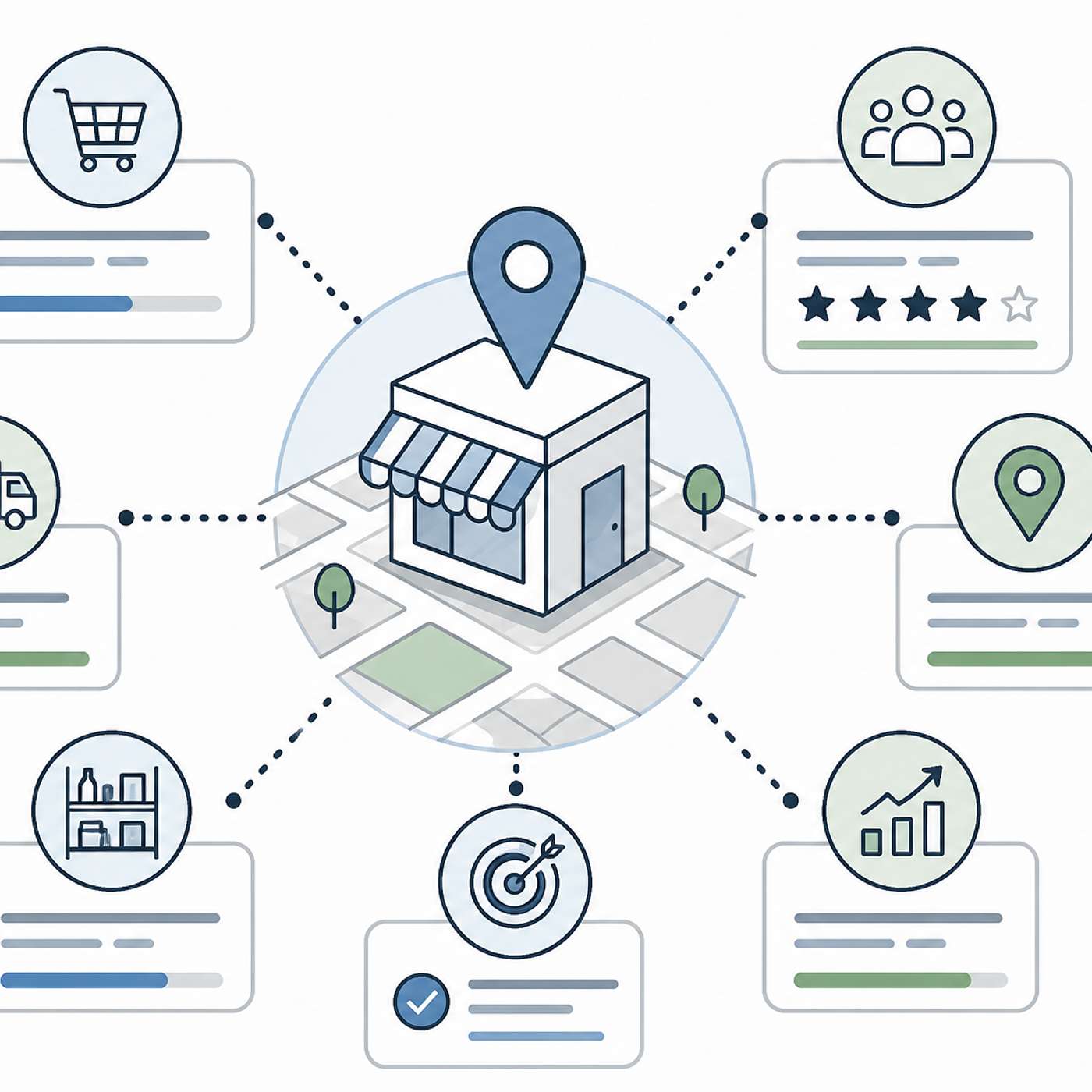
In this episode, the fourth and final installment in a miniseries on the 4 Ps of Marketing, MichaelAaron Flicker and Richard Shotton explore how behavioral science shapes “place.” From making products easier to access to using scarcity and premium environments to influence perception, they unpack why distribution is far more powerful than most marketers realize.

S1 · E116 · 14 May 2026 · 46 min
In this episode, part three of a miniseries on the 4 Ps of Marketing, MichaelAaron and Richard explore how behavioral science shapes product design. From optimal newness to visible social proof and sensory cues, they show how small design choices can dramatically influence perception, appeal, and willingness to pay.

S1 · E115 · 6 May 2026 · 39 min
In this episode, MichaelAaron and Richard unpack how Specsavers turned a simple joke into one of the UK’s most effective campaigns. By combining humor, consistency, and behavioral science, they show how the brand captured attention, avoided fear-based messaging, and built lasting trust and growth.

S1 · E114 · 29 Apr 2026 · 46 min
In part two of our miniseries on the 4 Ps of Marketing, MichaelAaron and Richard explore how behavioral science can improve pricing decisions. They discuss how price signals quality, why delaying costs boosts uptake, how fairness shapes willingness to pay, and how framing upgrades as small differentials can increase conversion.

S1 · E139 · 7 Oct 2026 · 30 min
After 12 tons of KitKat bars vanished the week before Easter, the brand turned a supply chain crisis into a Cannes Grand Prix winning campaign. MichaelAaron and Richard unpack the scarcity, Zeigarnik and IKEA effects behind it, and how brands can turn spectators into participants in a story.

S1 · E138 · 30 Sep 2026 · 36 min
Polish law requires every club to identify each fan entering the stadium. Wisła Kraków's Football Club turned that compliance database into the Lucky Fan Index, a metric for how much luck each supporter brings, and game attendance rose 42%. MichaelAaron and Richard dissect the superstition research behind it.

S1 · E137 · 23 Sep 2026 · 42 min
MichaelAaron and Richard revisit William Poundstone's Priceless to unpack why price feels relative, not absolute. They cover anchoring in courtroom and Williams-Sonoma pricing, why a $5 saving matters more on a $15 item than a $125 one, and how visible costs and higher prices signal quality and fairness to buyers.

S1 · E136 · 16 Sep 2026 · 46 min
MichaelAaron and Richard unpack Writing for Busy Readers by Todd Rogers and Jessica Lasky-Fink: six evidence-backed principles for readers who skim rather than read. Why a 49-word email beat a 127-word one, why subheadings doubled newsletter clicks, and why making a task easy beats making it exciting.
Every episode of Behavioral Science For Brands: Leveraging behavioral science in brand marketing. →

The Melo app keeps playing with the screen off, works in the car and on your watch, wakes you to your station, and browses the whole catalogue offline. Free, no ads, no account.


