

Season 1, Episode 120 · Behavioral Science For Brands: Leveraging behavioral science in brand marketing.
Interview: Michael Hallsworth, creator of the EAST framework, on what really changes behavior
10 Jun 2026 · 47 min
Season 1, Episode 120 · Behavioral Science For Brands: Leveraging behavioral science in brand marketing.
10 Jun 2026 · 47 min
In this episode, MichaelAaron and Richard sit down with behavioral scientist Michael Hallsworth, co-creator of the EAST framework and author of The Hypocrisy Trap. They explore behavior change, social influence, hypocrisy, and why relatable messengers, simple interventions, and context matter more than most marketers realize.
Michael Hallsworth: [00:00:00] There's a basic format of you try and explore the context, understand what's going on, the different drivers of behavior, and that can involve going and actually talking to people, observing behavior in practice, drawing on the latest evidence and data. But that kind of diagnosis side of things, and then you move to a phase where you try to develop a solution based on that diagnosis. And this is where EAST, I think, is particularly helpful. It can be used as a way of diagnosing problems, and this is-- I'll be honest with you, there's a bit of ambiguity here because the beauty of the framework is it's deliberately simple, and so you just have to think of these four things. But it can also be used in a few different ways. The best way is through generating solutions. How can we make it this b- behavior that we've identified more easy, more attractive, more social, more timely? And then af-after that, once you've used it as a way of generating [00:01:00] ideas it can be tested or it can be deployed in practice. So it's one part of a stage. Another thing I would say is that these four things, easy, attractive, social, timely, they're not mutually exclusive. It's not that you choose one. They... The best interventions will often combine them all. MichaelAaron Flicker: And that was a clip from our conversation with Dr. Michael Hallsworth, Chief Behavioral Scientist at the Behavioral Insights team and one of the leading voices in applied behavioral science. He spent the last two decades helping governments, organizations, and businesses apply behavioral insights to real-world challenges, and he's best known as one of the creators of the EAST Framework, a simple and powerful model for behavior change built around four key principles: make it easy, make it attractive, make it social, and make it timely. In our conversation, we went much deeper than just unpacking the EAST Framework. We explored how behavioral science [00:02:00] can move beyond individual nudges. We dove deep into the ideas from his newest book, "The Hypocrisy Trap," and most importantly, we spent a lot of time talking about how brands and organizations can apply all of his work today. And just as we were running out of time with Michael, he started to share some really exciting new thinking he has on behavioral science and AI. It was a truly engaging conversation. Very excited for everyone to listen to it, and now, here's our episode Welcome back to Behavioral Science for Brands, a podcast where we bridge the gap between academics and practical marketing. Every week, we sit down and go deep behind the science powering some of America's best marketing today. I'm MichaelAaron Flicker. Richard Shotton: And I'm Richard Shotton. MichaelAaron Flicker: And today, we're sitting with Dr. Michael Hallsworth, behavioral scientist, author, [00:03:00] and a guest we're very excited to have on the show. Let's get into it. Michael, welcome to Behavioral Science for Brands. We're thrilled to have you here today. Michael Hallsworth: Thank you. It's great to be with you. MichaelAaron Flicker: We have been thinking about the way to welcome you to the show, and we thought we'd start with some rapid-fire questions to warm you up for today's conversation. Question number one: what do your friends or family members think about your passion for behavioral science? Michael Hallsworth: I think they, they think it's interesting. Maybe it's annoying sometimes because- ... I wrote a book recently about hypocrisy, and we love seeing hypocrisy everywhere. And so I became quite obsessed with pointing out when people were seeing hypocrisy everywhere [00:04:00] and saying, "Oh, and that's interesting because..." And maybe that got a bit irritating after a while. It's also a balance between commenting, but also not being too boring, too obsessed with it. Richard Shotton: Although your daughter got to feature in a, on the first page of a book, so there, there's an upside for her. Michael Hallsworth: She loved that, yeah. Richard Shotton: Yeah. What is something that you once believed strongly but now you've changed your mind on? Michael Hallsworth: I think I used to believe that there was a single thing you could do sometimes to change behavior by addressing a specific bias, and I think that can be true, but behavior change is more complex than that. And we need to acknowledge that really. Richard Shotton: I love that. Yeah, it's easy to oversimplify things. There's an awful lot of role for context and nuance, which we may come back to. MichaelAaron Flicker: A little teaser of [00:05:00] all to come. Outside, Michael, of the EAST model, which behavioral science model do you have a lot of respect for? Michael Hallsworth: I think COM-B is pretty good, and that is basically capability, opportunity, motivation as factors for determining behavior. Richard Shotton: And if people do wanna learn more about that, I was g- we had Robert West on last week, who was a real character. He was brilliant. Yes that's a great one to talk about. Michael Hallsworth: I like that because it captures something important about the determinants of behavior, but is really simple. People can understand these terms they make sense, and yet putting them together adds something to understanding why people do or don't do things. Like- Yes ... you can have the capability but not the motivation or vice versa. And I think just that really small insight, if you wanna convince people that there's something to be added in a short space of time, that's a good one. Richard Shotton: And then [00:06:00] finally, if you had a magic wand, what preconception about behavioral science would you erase from people's minds? Michael Hallsworth: The thing I would erase is the idea that behavioral science is this kind of interesting additional thing you can add in or not if you like. Instead, really it's a lens through which we can see all kind of behavior. And if you're not taking that evidence into account, you're actually potentially doing something worse. It's not like you can just go, "Maybe we can do some behavioral science here. Maybe this is something for the behavioral scientist." Most questions deal with behavior in some way, and so you should know what actually influences behavior Richard Shotton: I think we can certainly see marketers being guilty of that. They sometimes think, "Oh, okay, this stuff is just tactics that you apply at the point of sale." But actually, in any situation where you're trying to influence human behavior, you should be drawing on studies that give you a bit of an angle into that question. So that could be big strategic questions, it could be all the [00:07:00] way through to the most trivial ones. And don't just pitch it in a whole Michael Hallsworth: way area. I spend quite a lot of time I spend quite a lot of time trying to convince people that the idea that we could just do normal policy or normal marketing or we could try some behavioral stuff is a complete misconception. MichaelAaron Flicker: One last one, a bonus one. What insight from behavioral science do you think is criminally underused? Michael Hallsworth: The one I think about is something called the fundamental attribution error, which is where you underweight the importance of the situation when judging someone, and you tend to see them as doing something because they're just like that or it's their character and so on. And yet, when we think about our own behavior, we think about all the factors that maybe influenced our behavior on that day. We were tired, we were hungry, or something like that, and that explains our behavior. But for other people, we don't tend to extend that generosity and that understanding of context. [00:08:00] And I think that's a real problem when it comes to our relationships with other people. Richard Shotton: That's a brilliant one. I think marketers often, in fact, every single brief I've ever had in a 25-year career, every brief that comes in identifies the target audience. I've had probably two briefs in my life that have specified the target context. And I think the fundamental attribution error is a great argument that briefs should spend as much time thinking about what is the target context as the target audience. So I think that is something that could massively be used much more. That's a great one. MichaelAaron Flicker: Thank you for playing our round of rapid fire game. So Michael, you have a really long and interesting career, but to anchor everybody we wanted to talk about the EAST framework. You were heavily involved in the creation of the EAST framework. Can you take us through the four key principles of the framework and explain why you chose these specific [00:09:00] areas? Michael Hallsworth: Yes, absolutely. So the first one is make it easy, and there are a few examples here. It can be a question of just removing the friction involved in performing a behavior. That is surprisingly important. We tend to ast- We tend to underestimate the extent to which just even a small reduction in effort can make the difference between someone doing something or not. There are studies showing that- Just in helping university students to complete their applications increased attendance rates from 28% to 36%. There was initial cost and effort, and maybe if people were wavering, that was the big difference between a really consequential life event. Some of this can be making it easy to understand things as well, not just do things. So simplifying [00:10:00] messages, making things clearer, easier to understand is something we've done a lot and makes a big difference. There's a really nice study done in New York City, where I'm speaking to you from, around simplifying the form you got when you had to attend court. This was actually pretty complicated. They simplified it so it was clear what you had to do and when, broke it down into simpler actions, and that reduced the rate at which people didn't turn up by around 13%. And that is a really important thing because you can get arrested- Wow ... for not turning up, and there's a real cost to that. And the barrier was it wasn't easy enough to understand just what you had to do. Make it easy. Make it attractive. So there are two things going on here. One is about attracting attention. So we're more likely to do something that our attention is drawn towards, yet we have these kind of shortcuts, [00:11:00] mental shortcuts that we've developed to filter out the vast amount of information that we deal with every day. And so the idea is that then you have to present your information so it makes it through those filters. This can be around messages, like I just mentioned, something that grabs your attention, but also it can be in the built environment. So one study I, I really is in a Chinese factory where the problem they had was: how can we stop people throwing fabric waste on the floor where people slipped on it? And various things were tried in terms of messages, but what seemed to work the best was putting this sticker, this de- decal on the floor of a lucky golden coin, and people didn't want to throw stuff on top of it instinctively. And so it was... That, that was something that attracted their attention, and they then massively reduced the amount of waste thrown on the floor because that was [00:12:00] something that was salient, as we say The other thing we're talking about with attractive is i- incentives. How can you design incentives for maximum impact? We know that incentives work, but they can be made to work better. So you might be thinking about can you ask people to put some money upfront in a deposit that they then lose if they don't do something? How do we think about gamifying an action so that it feels fun to do it and that kind of incentive you may not have thought of? Or can you appeal to people's self-image? Are you the kind of person that does something? So more creative use of incentives is another way of thinking about attractive. Making it social. We're really influenced by what other people do, and this can be in a simple sense of showing that most people perform a desired behavior. What do most people do in this particular [00:13:00] situation? But also it can be around the way in which social networks really influence our behavior. So it's not just like there is someone influencing you and telling you about what others do, but also we copy others. Behaviors spread through networks, and a really interesting frontier is how can you choose the people in a social network that you seed a behavior with that they then spread to others? And people have done some really interesting experiments to identify the most promising people. And one other thing I just want to say about social is reciprocity is a really powerful factor as well. So when we did a massive experiment some years ago around organ donation, we found that the most effective message was, "If you needed an organ, would you take one? If so, please help others." That was by far the most effective message [00:14:00] 'cause people thought, "Oh, yeah, no, I-- Like, I would do that. I would benefit from that, so I should help people in turn." And then finally timely. We tend to underestimate the extent to which timing matters. We often spend a lot of time thinking about the audience and the the message, but be- behaviors really vary according to the time of day, the time of week, time of your life. So the same offer made at different times can have various effects. A nice example I think of here is around diabetes screening. This was done some years ago in, in Qatar, where they decided to put the-- make the offer for screening during Ramadan, 'cause the barrier was that you had to fast in advance, and that was often a complicated thing to do, and people may not remember it and may not be motivated. But they find- found the moment, the time when they were doing it anyway, and then made the offer then. [00:15:00] And so that was a really important thing. There are moments in our lives when behaviors are disrupted, for example, and we're more likely to take up a new behavior. And finally, in terms of timing, we can help people plan and plan for the future and make more effective plans when the situation arises. That's some work we did some years ago in the UK around job seekers helping them find jobs. A lot of the things that were being done were retrospective. "Did you co- did you do this thing in the last week?" And actually, what we did was we flipped it around and said, "How can you-- What are you going to do in the coming week? Can you make a plan?" And that made a big difference. So easy, attractive, social, timely, those are the four key factors. Richard Shotton: Yeah. Th- that's a lovely overview. You mentioned something around in the social section of, there's some interesting work around identifying who are the people we need [00:16:00] to change the behavior, and then that will ripple out towards others. Could you talk a bit more about that? 'Cause I think that would be super useful to a lot of people. Michael Hallsworth: Yeah. It's an emerging science, but here's an example. So one problem has been-- And I'll be a bit technical for a second here. We do a lot of AB tests or randomized trials, and one reason this question about social networks has maybe been unexamined or under-examined is it's hard to do an, a randomized trial when you're dealing with social networks, because the whole point is a behavior can spread in unexpected ways, and it's hard to keep it away from people. So the way around this people have tried is doing a trial at the level of a village, for example, or a town. So the example I'm thinking of was done in Honduras, and they wanted to find the best way, as I mentioned, of a behavior spreading, and they [00:17:00] randomized hundreds of villages into different approaches. So it didn't matter if people were talking to each other, as long as the villages weren't talking to each other. And they tried three things. The first one was, can we map all the social connections in the village, and then identify the people who have the most connections? Now the downside with that is it costs money and time to do that. The second thing they tried was just random. She would choose people at random. And the third thing was an interesting thing called They c- they called it the friendship paradox. But basically, they asked people to nominate their friends and they found that the behavior they wanted was uptake of a certain kind of health behavior around multivitamins, and they knew when people were redeeming these vouchers. They actually found that this approach of asking [00:18:00] people to nom- nominate their friends was the most effective and also cheap because you didn't need to map the entire network. And this is... I won't go into this, but I mentioned this friendship paradox. Your friends have more friends than you do, and so it was a quick way of identifying the most structurally important people without mapping everything. And I think this is massively important because it's not just about a one-way form of influence. I think behavioral science has really moved on in the last 15 years away from this A to B model to the many-to-many model Richard Shotton: Oh brilliant MichaelAaron Flicker: Michael, we went at a high level through the EAST framework, and if our listeners are hearing this and think, "Oh, I've heard a little bit about make it easy," or, "I have a good idea of make it social," how do you recommend using the framework to apply it to a certain [00:19:00] in-i-insight? So they learn about the model, they might read more about the EAST framework, but how do they take that and use it to help solve problems or help apply it to a commercial setting? How do you recommend they do that? Michael Hallsworth: So there are variations on this, but there's a basic format of you try and explore the context, understand what's going on, the different drivers of behavior, and that can involve going and actually talking to people, observing behavior in practice, drawing on the latest evidence and data. But that kind of diagnosis side of things, and then you move to a phase where you try to develop a solution based on that diagnosis. And this is where EAST, I think, is particularly helpful. It can be used as a way of diagnosing problems, and this is-- I'll be honest with you, there's a bit of ambiguity here because the beauty of the framework is deliberately simple, and so you just have to think of these four things. But it can also be used in a few different ways. [00:20:00] The best way is through generating solutions. How can we make it this b-behavior that we've identified, more easy, more attractive, more social, more timely? And then af- after that, once you've used it as a way of generating ideas it can be tested or it can be deployed in practice. So it's one part of a stage. And the other thing I would say is that these four things, easy, attractive, social, timely, they're not mutually exclusive. It's not that you choose one. They-- The best interventions will often combine them all. MichaelAaron Flicker: That's really Richard Shotton: helpful. MichaelAaron Flicker: You mentioned- So I'm gonna... Go ahead, Richard, please. Richard Shotton: No, I was just gonna say, you mentioned it was super simple, EAST framework, and I do think that's one of the absolute strengths, that it's very easy for a behavioral science specialist to think all these experiments are super straightforward. But if you're talking to a marketer or a public official who's never heard of behavioral science, it is very easy to overwhelm them. So I think [00:21:00] it's a massive strength of the EAST framework that it's so simple. Now, before Behavior Insights Team created EAST, there was Mindspace with its nine different levers. Was it just that Mindspace was too complex? Is that why you distilled it down to EAST, or were there other reasons? Michael Hallsworth: You've basically hit it on, the nail on the head there. So Mindspace I was involved as co-author of that late 2009. That was before the creation of the Behavioural Insights Team. Richard Shotton: I didn't realize that. I presumed it was created by it. I didn't realize it predated. Ah, interesting. Yeah. Michael Hallsworth: It was one of the things you could point to as a rationale for the creation of the team, although the main factors were the government wanted to do it and so on. But there was a foundation there. And it opened up the possibility of how you could apply the stuff in practice. So in 2008, when Nudge came out, lots of attention, [00:22:00] people really interested in it, but the question was: What do you do with it practically? And it tried to answer that question of showing, for policymakers in particular, how this stuff could play out in practice. And at the time, it seemed even quite difficult to condense all the factors relating to human behavior into nine. Richard Shotton: Yeah. Michael Hallsworth: And- Richard Shotton: Oh, it's 10,000 studies or 50,000 studies, yeah, nine is a massive whittling. Yeah. Michael Hallsworth: But the big innovation was the idea that we tried to make a mnemonic or an acronym- out of it, so to make it easier for people to remember. So Mindspace stands, each letter stands for a term, and this has been used in many other approaches, but that was the kind of big attempt to, to break through, 'cause pr- prior to that, you had loads and loads of frameworks out there, really hard to understand, and people were not p- people were not using them in practice.[00:23:00] Yet, we realized when we tried to present this stuff over some years, that nine is a lot, and people find this stuff pretty interesting, so the danger is you get stuck on the first four because the way you present it in order, and people find it really interesting and wanna talk about it, and there's almost a kind of an anchoring effect on the first few, and you often don't get to the last ones. And so people were saying to us we need something even simpler 'cause maybe it's even hard to remember what's in these nine letters." And I understood that, and I agreed with that from the presenter side as well. So yes, we tried to make it even simpler to try and ensure it was used even more in practice. And I would say that I think it's held up over time. So it's, it, its actual simplification has been a strength. I sometimes make this argument that we tend to think that better [00:24:00] is more complicated, more sophisticated frameworks. But I think that neglects the idea that ultimately we want to use these things, and if you have 97 factors that you have to work through, the reality from a behavioral point of view is people don't do that. So you have to go where, go to where people are really. MichaelAaron Flicker: I think we could probably spend the entire hour on this topic, but I'm gonna move us only so that we get to some of the details. Michael, in your latest book, "The Hypocrisy Trap," you mention a counterintuitive idea. The deeper... I'm sorry, the do-gooder help me out here. The do-gooder- The- ... derogation effect. Derogation, Richard Shotton: yeah. MichaelAaron Flicker: A- and how flawed but relatable messengers can be effective. Can you tell us more about that? And l- let's dive into that topic. Michael Hallsworth: Sure. So we don't like hypocrites, right? That is [00:25:00] unsurprising, and I try to explain why in the book. But I also say that there are some kinds of hypocrisy that we don't mind and we actually quite or we think is the right thing to do. And in one of the cases is where, yes, someone's a hypocrite, but it makes them more relatable. So one thing I try and say is that hypocrisy is often about status and claims to status. And we often don't like other people claiming status 'cause it means that we go down in turn. Status is relative. It's just like a zero-sum game. So we don't like hypocrites. We love calling out hypocrites, but we also don't particularly like the super consistent people 'cause they make us feel bad So you get some of this from the climate advocacy literature. There's a really interesting study by [00:26:00] Greg Sparkman that shows that if you give someone who's promoting climate-friendly behaviors but doesn't do them themselves, they're a classic hypocrite, we find them less convincing. We're less likely to do those things. But it's not a linear thing that if you become more consistent, you're more convincing. If you get the ultra-sustainable person who doesn't-- never flies, never eats any kind of animal products all that kind of thing, we actually find them slightly less convincing than someone who makes some compromises but basically tries to do the right thing, because we find them unrelatable. And that can lead to we think they're not like us, but also it can lead to a sort of resentment because we feel like we're being made to feel bad in our flaws as well. So it can be the case that acknowledging your struggle and saying that I'm not perfect myself," can [00:27:00] be more effective, and I call this kind of the honest hypocrisy play as well. You don't-- You shouldn't do it in the sense of I'm not perfect, and it doesn't matter 'cause I'm, I don't have to try and you do," but it's more like it's a genuine struggle. Yeah. Richard Shotton: Do you see with that Dugueta derogation a variance in impact by type of person? There's certainly some work around relatable messages in the health world being more powerful amongst like lower status groups. Would that be similar because you mentioned status or do we not see that effect? Michael Hallsworth: So I define hypocrisy as the perception that someone else's inconsistency has brought them unjust benefits. So you have these three elements of inconsistency Benefits and injustice. And there's some evidence that we're [00:28:00] particularly sensitive to injustice if we are in low status positions or we feel like we've been exploited. We go looking for evidence that other people are exploiting us because we're in a low trust situation. You have this kind of almost I can't remember the term of, but it's a state of mind where you're seeking out exploitation. You th- victim sensitivity, I think it's called. But to your point, Richard, it's also true that the person's characteristics, like the person who's making the judgment matter. So there's a really interesting study called Healthier Than Thou," a play on hope now- Yeah. Richard Shotton: Brilliant name ... Michael Hallsworth: which, Richard Shotton: I love it when academics start having a bit of fun with paper titles. Michael Hallsworth: Absolutely. Yeah. And this one suggests that for people who are overweight they actually don't want to go to a really healthy doctor, a really [00:29:00] a doctor, fit doctor- Richard Shotton: Someone that looks like Arnold Schwarzenegger. Michael Hallsworth: Exactly. Richard Shotton: You wanna go to someone with a big belly. Maybe a little bit porky, but yeah. Michael Hallsworth: Yeah, because they're worried they're gonna get judged for that, and someone won't be able to relate to the reality of the struggle maybe to, to lose weight- that they're experiencing. And so in that case, you actually prefer something of a hypocrite, someone who might be telling you to lose weight, who maybe should do the same themselves because they can relate to your situation, and you don't feel like there's a status hit you're getting by even stepping into the room. Richard Shotton: I think that's a brilliant one. I think 'cause it's quite counterintuitive. I think an awful lot of people when they think about who is the ideal messenger, and it is a very important question, think it must be a paragon of virtue. This is a-- This opens up the consideration of different types of people as a messenger to a whole swathe of [00:30:00] others. Michael Hallsworth: So there's an instance here that you m- you remember I mentioned the injustice element. If you think that somebody has paid a price you're more likely to take their advice even though they're inconsistent. So if you preach something and don't practice it, we see that as much worse than not practicing it and then preaching it. The idea being that in the second one you've changed, right? And you've tried to turn over a new leaf, even though someone can point towards your past inconsistency. And so there's evidence that if somebody says to you maybe you're considering having an affair or something, I think that's an example from one of the studies, and your friend says to you Don't do it," you're actually more, much more likely to take their advice if they had an affair and- MichaelAaron Flicker: Yeah Michael Hallsworth: ... they got caught and their life fell apart, than if they had [00:31:00] an affair and they got away with it. Now some of it- Richard Shotton: They know of what they speak. Michael Hallsworth: Yeah. But s- the mechanism they think is that you've paid a price, so that inconsistency is not unjustified. MichaelAaron Flicker: Can you help us take this, Michael, and think about how it can b- be helpful for a commercial application? So far we're taking a lot away about how the person delivering the message really can change the way it's received and a lot of the nuance here. How would you help those who are thinking about applying it to brands or products or or a commercial application? How can they build on this idea in those spaces? Michael Hallsworth: So a lot of this stuff is really relevant to companies as well. In the book, I make the point that companies are really vulnerable to hypocrisy accusations. We actually process the behavior of companies in a similar [00:32:00] way that we do as humans, but actually judge them even more harshly. We hold them to a higher standard than if someone is personally hypocritical. Partly maybe because we fall in love with brands and therefore the betrayal feels personal. But what's been happening over the last 25 years in particular is this kind of trap of what's been happening over the last 25 years is a bit of a trap for companies because we've increasingly, as consumers, pressured them to take stances on issues maybe around the climate, diversity, equality, that kind of thing. Yet that increasingly conflicts with the basic need to make a profit. It almost-- A- and the more that you claim, that doesn't actually relieve pressure, invites more scrutiny, is the interesting evidence of a ratcheting effect. You combine that with the idea that there's greater transparency of what company's up to, partly through social media [00:33:00] and social media giving employees a voice. You have more complex global supply chains. So you know, there's evidence that you are judged if your supplier doesn't i- if your supplier is inconsistent with your claims as a company, you get hit with a hypocrisy accusation. And then it's really hard to get out once you've started making claims 'cause it looks like, first of all, you didn't mean it in the first place or that you are doing it in a kind of craven way because you feel a backlash And then if you do try and if you are re-revealed as a hypocrite as an organization, it really hits your bottom line. And you may think that your most loyal customers are the ones who will protect you, but actually the evidence is they're the ones who most violently backlash because they have the strongest need to separate their identity from your company. So what do you do in this in this situation, in this trap? I say there are three things that companies should do. [00:34:00] One is coordinate for consistency. So this is where you try and reduce the inconsistency, and often the hypocrisy may not be deliberate. It may be a coordination failure. One part of an organization launches an initiative without checking on another part. So there's an internal alignment thing that is needed, and even it's hard to do this, so I'm not saying it's a complete solution. But examples like Unilever had hundreds of different brands, and they for a while did actually manage to be quite consistent in how those b-brands were presented. I think the core thing is don't trust your employees differently from your external image because that is just the most tangible instance of hypocrisy. If you co- if you can't do it for your own employees, don't claim it externally, and the employees will call you out on it. So that's the big trap to avoid when you're coordinating for consistency. Then [00:35:00] I think the other thing is designing out hypocrisy. So this is where the choice architecture comes in. Can you redesign the way things are-- the defaults the information ordering so that employees find it easier to live up to standards without having to be heroic? There's a really interesting experiment done with financial advisors who may have a, an incentive to give people options that benefit themselves, the advisor versus the client. And this experiment just showed that just ch- changing the order, whether people found out what was best for them first or what they found out was best for the client first, actually meant even self-interested advisors did the right thing. 'Cause once it's anchored on the option of helping the other person that's actually harder to shift. So that's a paper by Silvia Seca Cado and others in American Economic [00:36:00] Review that I think is super important. And it's just a process change. And then the final thing, which I think is maybe most interesting, is the way you talk about your actions externally as a company, and I call this about, I call this weakening the signal. So if you can't avoid making a public commitment, reduce the risk. Admit that your company benefits financially as well. Weirdly, admitting a mixed motive can actually be less bad for your company than saying you're doing it purely out of the good of your own heart. Choose an issue that's relevant to your core business rather than a completely random one that people can say you're just doing it for no reason make it specific and limited claims rather than vague inflated ones, and don't pretend that your actions make your company perfect. Say it's a journey. And I actually in the book say that Starbucks, in its reduction of plastic straws, does this pretty well. 'Cause it, like it's not saying-- Like it says, [00:37:00] "We benefit from reducing plastic straws 'cause we get drinks to you quicker." we're not saying this solves the environmental problem, 'cause there's more to do. And it's it's relevant to their b- their core business. Selling drinks. So yeah, if you make vaguer promises, more inflated ones it feels safer to say, "We c- we're committed to the environment," but actually that simultaneously opens you up to accusat- wider accusations on the other side of it. Richard Shotton: I think l-lovely set of examples there. The o- one that sprang to mind when you mentioned that status is a zero-sum game. So if I pronounce my morality, people dislike it because they are dropping down the pecking order. I think one of the best brands that have tried to avoid that is Waitrose.[00:38:00] So MichaelAaron, this is a kind of posh supermarket in Britain, and for ages they used to have a charity of the month. They talked about all the good things they were doing. They're donating money to a, let's say, a cancer charity in January, and then February it might be a homeless charity. What they then started to do is after you'd done your shop, you've got all your bags, you've paid with your credit card, they handed you this little green disc, and as you were leaving, there were three transparent buckets, three different charities. You voted for the one that you wanted the money to go to. And to me, I love that because no longer is it Waitrose pronouncing about their generosity. They're not talking about themselves being the hero. Now it's the shopper that is picking the charity. They're the-- They feel like they've created this good deed. So I th- I think there's, once you think about status as a zero-sum game, there's some great things you can do to avoid that backlash whilst, [00:39:00] don't skin off the charity's nose, they were still making-- they were still donating just as much. So I think this is a really practical finding that can be applied. Michael Hallsworth: There's one question, I'm just thinking aloud here about whether you take this too far as well, because, y- Ryanair is an interesting example. They're very good at avoiding accusations of hypocrisy because they don't claim t- they're like people try and call them out and saying that their seats are really small or they-- And they're like, "Yeah, so what? It's cheap." and I think it works for them because it's different. I think if everyone did that, we'd-- it would probably be a bad situation 'cause no one would care anymore. It's just an abandoning of principles slightly. It's just Yeah, it's cheap, so what? We're not trying-" Yeah. "... to be anything better than be a really cheap airline. We're not claiming to be good." And I think it works for them, but scaled up, I think it could also lead to a bad situation. Richard Shotton: For society yes. And that's maybe [00:40:00] why Waitrose is such a nice example, 'cause there's still charitable donations happening. There's still something that benefits society. But rather than falling foul of the dislike because of the status attack on the other people, they allow the customer to be the hero, and they come out with a warm glow. MichaelAaron Flicker: I don't know why this springs to mind, but in America Jon Stewart was a political comedian, and he was at the top of his popularity and fame in the mid-2010s. And he would invite he would invite mostly I, I guess it was a range of people, but he became very famous for inviting political candidates or political figures onto the show, and he spent a lot of time bringing out the hypocrisy of statements they made and and things that were happening. And [00:41:00] when people would try to call out his hypocrisy he famously said, "I come on after Muppets and before animated cartoons." He said, "I'm a comedian, not a political analyst." and it was interesting. For those that loved him, it called out the sat- satire of the whole thing. But for those that were not followers of his, it called out what Michael is calling out. It almost went too far. It's either you're helping political discourse or you're just mocking it. And so it's interesting, Michael, to hear you talk about that because it feels like being aware of the role that you're playing is critical. The voice that you have in the community is critical because I think it, it the it has a-- it, it can go too far or it can be v- not well-received if you don't [00:42:00] play, if you don't, if you don't take the right voice and tone. Michael Hallsworth: I think that you could argue there i- is a deeper inconsistency in Jon Stewart's position there, really, and he's trying to get the, have it both ways. And we often think about this as the motte-and-bailey argument, and there's a reason it's called motte-and-bailey. It's like a r- really old-fashioned term from the medieval times where the, I think the bailey is the tower and the motte is the village. And the, you recognize it when I explain it, which is what you do is you make a big claim and then someone challenges you and you say, "Oh no, I didn't really mean that. I just meant this thing." And the other thing is more defensible, so you retreat to your tower, is the idea. And so you could argue what's happening there is he's in the thick of it, making these arguments and then when someone challenges him on it, he retreats to, "No, I'm just a comedian." Which is [00:43:00] f- is a wonderful kind of way of dealing with that, but it's also a strategy, right? So a rhetorical strategy. MichaelAaron Flicker: Fascinating. Michael Hallsworth: Once you start seeing inconsistency ev- everywhere and work out what's going on, then you can't really stop. MichaelAaron Flicker: Back to your t- the love and quandary of your family's view of your latest book, Michael, where they... Once you started talking about hypocrisy, you can't stop seeing it everywhere. Michael Hallsworth: Yeah. And the interesting question is why? That's why I try and... We love calling it out 'cause it really benef- we get benefits by calling out other people f- as hypocrites, and that's the big thing in the book. I say accusations and hypocrisy are bound up together, and actually accusations often create more hypocrisy anyway. MichaelAaron Flicker: Before we come to a close of this conversation, Michael, we wanted to give you the chance to [00:44:00] give our listeners one big takeaway from our conversation today. From what we spoke about, from what you've written in your most recent book, what's one thing you would like the listeners to take away? Michael Hallsworth: So one thing I would like people to take away f- from the book and the discussion around hypocrisy is when you see someone calling out hypocrisy, don't just look in the direction the finger is pointing. Also think about the finger-pointing, why it's happening, what someone is gaining from that, and whether th- they themselves might be guilty of similar inconsistencies. Because the accusations are a good way of getting status and taking down someone else, and there's... Whether we realize it or not, there's often an agenda behind it. We often claim that we're doing, taking down a hypocrite out of principle, but also it's partly to look good ourselves, and maybe that's a bit hypocritical. So also look at who's making the accusation and what it gains for them, 'cause there's an interesting dynamic that goes on [00:45:00] repeatedly in, in that accusation. MichaelAaron Flicker: So helpful to hear. Michael, for those that would like to learn more about your work, where can they find more information from you? And maybe you could tell them where they could find The Hypocrisy Trap if they'd like to buy the book. Can you tell us a little bit more where they can learn more? Michael Hallsworth: Yeah. You can look at my website michaelhallsworth.com. It's available The Hypocrisy Trap is available online the usual places you buy books online. MichaelAaron Flicker: Perfect. Thank you so much. And thanks to everyone for listening today. If you liked today's episode and you'd like to learn more, please share it with others and comment, and follow our pages. It allows us to reach more people just like you who are listening at home. Until next time, I'm MichaelAaron Flicker. Richard Shotton: And I'm Richard Shotton. MichaelAaron Flicker: Dr. Michael Hallsworth, thank you for being on the show today. Really appreciate [00:46:00] you joining us. Michael Hallsworth: Thanks so much. Advertisement: Behavioral Science for Brands is brought to you by Method1, recognized as one of the fastest-growing companies in America for the third year in a row, featured on Inc.'s 5000 list. Method1 is a proudly independent creative and media agency grounded in behavioral science. They exist to make brands irresistible, helping people discover products, services, and experiences that bring moments of joy to their lives. As behavior change experts, Method1 creates emotional connections that drive true brand value for their clients, focusing primarily with indulgence brands in the CPG space. Find out more at method1.com.
Transcript supplied by the publisher with the episode.
by Consumer Behavior Lab · English · Business
The Consumer Behavior Lab is dedicated to teaching marketersacross the United States how behavioral science principles can beapplied to help their brands. By decoding the underlying motivationsof how consumers make decisions, the CBL seeks to make a betterindustry - where both brands and agencies pu
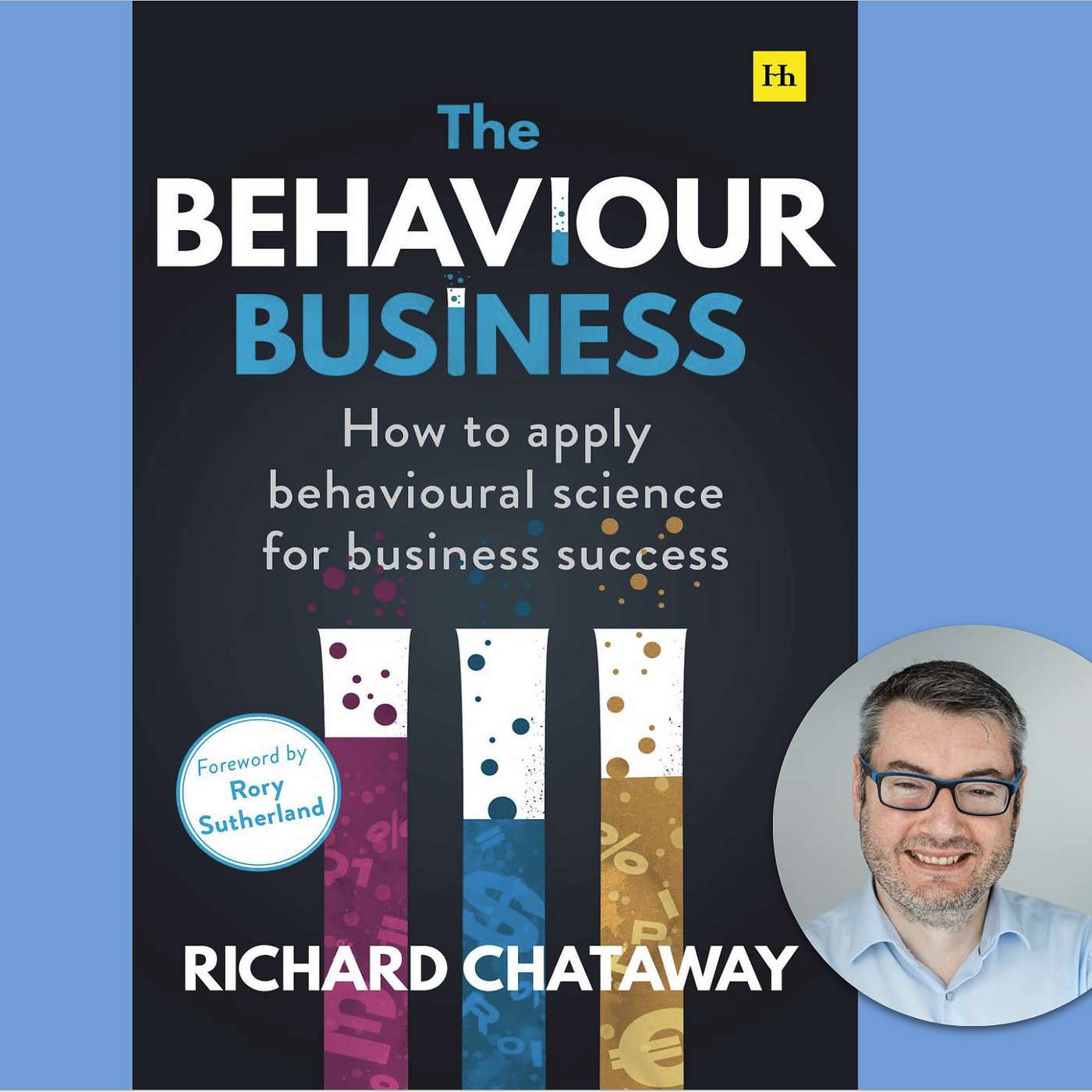
S1 · E123 · 1 Jul 2026 · 59 min
In this episode, we speak with Richard Chataway, founder of Communication Science Group and author of The Behaviour Business. Richard reveals how he used behavioral science to help people quit smoking, why diversity has both a moral and commercial justification, and how interacting with AI changes our behavior.

S1 · E122 · 24 Jun 2026 · 49 min
In this episode, MichaelAaron and Richard explore the intersection of artificial intelligence and behavioral science. They discuss why AI amplifies good and bad thinking alike, how overreliance can weaken judgment, why creativity risks becoming more uniform, and how understanding human behavior remains a critical advantage in the age of AI.

S1 · E121 · 17 Jun 2026 · 39 min
In this episode, MichaelAaron and Richard explore how behavioral science can improve e-commerce performance. From why perfect reviews reduce trust to how scarcity boosts value perception, they unpack practical ways brands can increase conversion, reduce friction, and shape buying decisions online.

S1 · E119 · 3 Jun 2026 · 43 min
In this episode, MichaelAaron Flicker and Richard Shotton explore how agencies can use behavioral science to build stronger brand strategies. From the mere-exposure effect to the halo effect and goal dilution, they unpack why consistency, focus, and clear communication often outperform complexity and constant reinvention.

S1 · E118 · 28 May 2026 · 34 min
In this episode, the fourth and final installment in a miniseries on the 4 Ps of Marketing, MichaelAaron Flicker and Richard Shotton explore how behavioral science shapes “place.” From making products easier to access to using scarcity and premium environments to influence perception, they unpack why distribution is far more powerful than most marketers realize.

S1 · E117 · 20 May 2026 · 1 hr 2 min
In this episode, MichaelAaron and Richard sit down with behavioral scientist Robert West, creator of the COM-B model, to explore the three forces behind every human behavior: capability, opportunity, and motivation. They discuss why behavior change so often fails, how environments shape decisions more than we realize, and how businesses and governments can design more effective interventions.

S1 · E139 · 7 Oct 2026 · 30 min
After 12 tons of KitKat bars vanished the week before Easter, the brand turned a supply chain crisis into a Cannes Grand Prix winning campaign. MichaelAaron and Richard unpack the scarcity, Zeigarnik and IKEA effects behind it, and how brands can turn spectators into participants in a story.

S1 · E138 · 30 Sep 2026 · 36 min
Polish law requires every club to identify each fan entering the stadium. Wisła Kraków's Football Club turned that compliance database into the Lucky Fan Index, a metric for how much luck each supporter brings, and game attendance rose 42%. MichaelAaron and Richard dissect the superstition research behind it.
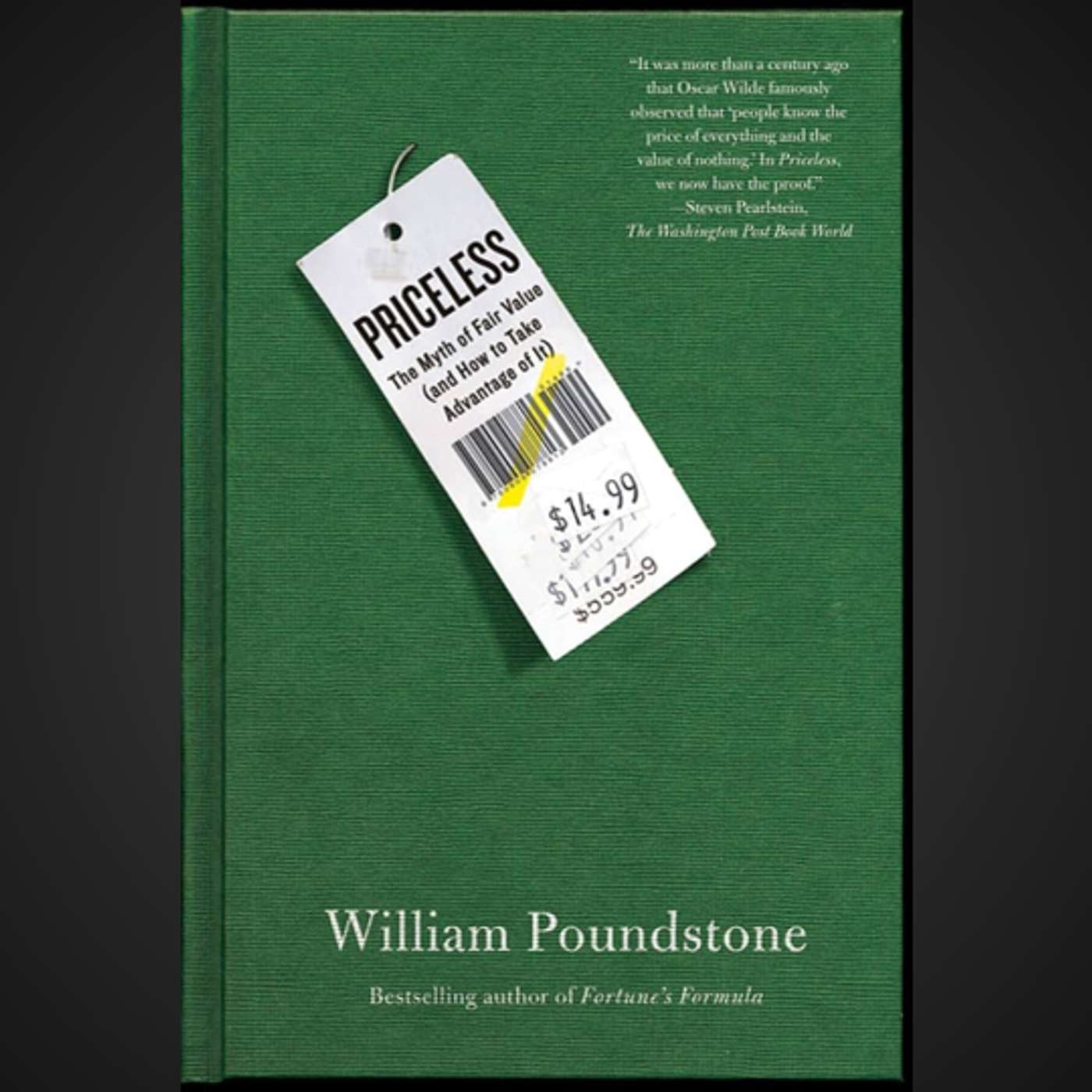
S1 · E137 · 23 Sep 2026 · 42 min
MichaelAaron and Richard revisit William Poundstone's Priceless to unpack why price feels relative, not absolute. They cover anchoring in courtroom and Williams-Sonoma pricing, why a $5 saving matters more on a $15 item than a $125 one, and how visible costs and higher prices signal quality and fairness to buyers.

S1 · E136 · 16 Sep 2026 · 46 min
MichaelAaron and Richard unpack Writing for Busy Readers by Todd Rogers and Jessica Lasky-Fink: six evidence-backed principles for readers who skim rather than read. Why a 49-word email beat a 127-word one, why subheadings doubled newsletter clicks, and why making a task easy beats making it exciting.
Every episode of Behavioral Science For Brands: Leveraging behavioral science in brand marketing. →

The Melo app keeps playing with the screen off, works in the car and on your watch, wakes you to your station, and browses the whole catalogue offline. Free, no ads, no account.


