

Season 5, Episode 41 · Ruthie's Table 4
Dorothée Boissier on Designing Restaurants, Paris, and Creative Partnership
3 Aug 2026 · 20 min
Episode notes
Dorothée Boissier is an interior designer and co-founder of the Gilles & Boissier studio. Together with her husband, Patrick Gilles, she creates exquisite architecture and interiors around the world. Today, we're at Moncler's beautiful flagship store on the Champs-Élysées, designed by Dorothée and Patrick. We'll talk about Paris, food, their creative partnership, and the art of designing restaurants. Order Table 4 at The River Cafe —the star-studded, food-filled book inspired by the beloved podcast: https://bit.ly/Table4AtRiverCafeBook See…
Transcript
Read the transcript · about 3,110 words, follows along as you listen
Speaker 1:Ruthie's Table four is now a book Paul McCartney, Michael Kay, Kamala Harris, David Beckham, China fey Elton John and many more. It's full of stories, beautifully designed, and a celebration of the way food connects us all. It's available now wherever you buy your books.
Speaker 2:You were listening to Ruthie's Table four in partnership with Montclair. Every time I come to Paris, I remember a beautiful time in my life. In nineteen seventy one up to nineteen seventy six, Richard, my husband, and I lived here while he and Renzo Piano were building the Pompidou Center. We were young and we worked together. I as a graphic designer, he is an architect. Our lives and our work were completely intertwined. Dorothy Boissier understands that world. Together with her husband Patrick Shiels, she has spent the last twenty years creating exquisite buildings across the world. They are partners at home and partners at work. Today we're at Bonclair's beautiful flagship store on the Chancelise, designed by Darsay and Patrick. We will talk about Paris. We'll talk about partnership, and of course we will talk about food and really what it means to build something with someone you love.
Speaker 2:Thank you, thank you here, thank you, thank you.
Speaker 1:She grew up with your mother and father in Paris, in Paris, in Paris, in Paris. So my father was from Normand if we go to food.
Speaker 2:Yes, I love butter, I'm fresh, I.
Speaker 1:Love this, I love this. I love when it's really.
Speaker 2:I do too. I supposed to because we cook Italian food. Yes, you know, whenever you have chefs around the table and we start talking about the food. We love French food. And butter is.
Speaker 1:Good when you see the butter in the pants. Starting to sound exactly.
Speaker 2:So tell me about your father. He came from Normandy and came to get from.
Speaker 1:Normandy and to Paris. So he was working a lot, always working, working, walking, very hard. And I didn't see a lot my father. I was with my two sister, my mother. Dinner was more the children.
Speaker 2:Tell me that, yeah, I love French French at that time.
Speaker 1:At that time, the children were more eating before kitchen. And you had a cook, ye, mother cook. I never I think I never saw my mother cooking.
Speaker 2:Good for her. Everybody always says to me. You know, my mother cooked, She made him amazing food. My grandmother cooked, And of course I'm a cook, and I expressed a lot of my love for my children through cooking. But I sometimes I really do respect women who somehow, you know, just decided if they could many can't, they were not going to cook. So that was your mother exactly.
Speaker 1:So she wasn't cooking. My grandmother wasn't cooking.
Speaker 2:And so you grew up in this life. You went to school and went to Paris. Do you remember the food that the cook would make for you? Was it a very tradition? Ah Cevell, tell what cevella is?
Speaker 1:How do you say in English? Rains for children?
Speaker 2:At that time?
Speaker 1:You had to eat negrette and things like that, And did you mind that I didn't really like it? You didn't like it?
Speaker 2:And would you go to Normandy sometimes and have the food? You remember the food from.
Speaker 1:Their food, specially cheese. Butter is incredible there, the big piece of butter.
Speaker 2:And you just take it.
Speaker 1:Once told my mother in law for her first meal, she came to the Italian and she came to dinner at our house, and I made a huge effort to make her a really good dinner to impress her.
Speaker 2:And when she left, she looked at me. She said, that was a very very good dinner, Ruthie. But you know anybody can cook with butter. Yeah. Thanks so, but that's why you stopped.
Speaker 1:Never, my mom told me, don't eat this, don't eat that.
Speaker 2:Never.
Speaker 1:I wasn't obsessed by food. I could eat cakes.
Speaker 2:I could eat everything. So your father, you spent your childhood with your father.
Speaker 1:My father until eight years old. Yes, And after my father father died and I grew up with my stepfather that I loved.
Speaker 2:And so do you know anything about their love story? Man?
Speaker 1:I think my mother they met in an airport and they talked to each other, and I think something happens. But you know, he was the kind of man my mother told me that when they were going to restaurants going back, she could find lots of message from women in his pockets. Just even leaving the restaurant, the women were putting.
Speaker 2:Did they have children? Your mother never?
Speaker 1:No, Because she met him. I think she was thirty eight. There were they had like twenty twenty five years of difference.
Speaker 2:Oh, I see. And he was a very handsome man.
Speaker 1:He had from his grandmother an incredible collection of art period questionistist, and his father was an antiqure, so he had this passion about the decor and also the art. And he lost his mother very early.
Speaker 2:He was.
Speaker 1:He grew up with his grandmother. She was an incredible woman. She was a friend of Bona, of all those artists Ofisolar, who was a very important collector at that time. So we were in the nineteen twenties and this man on Gasola had like six thousand paintings of Picastle Sizan. He was the man to really help all those painters. Yeah, it wasn't easy for them, like go gn and he died quite early, and he gave half of his collection to this woman, the grandmother of my stepfather, and she kept them and she kept she did at that time.
Speaker 1:I heard that she didn't like them. Yeah, they were like in the storage. And so she was also painted by Renoirona. So even my stepfather, you can see the big paintings, he's like small, like five years old, and she's there with the mother, the grandmother. So it's really a thread of culture. Yes, I was loving especially looking at all the books, the auction art books and trying to know which one is which ones? So art antiques were always around me. I think it may be educated a little bit my eye and I thought I could do I could study art, and it's this way. I arrived in a school called Peningens in Paris, Dragon and for me it was a real discovery.
Speaker 2:What did you discover?
Speaker 1:What was that I discover? Drawing? I didn't know how to draw. I had around me only young people who were drawing. Since they were so little, they were all genius about that, and I was so I had to It was like a new language for me, starting from zero, so little by little I had to understand. But as I was used with my eye to look at arts design, I was very curious. When you left home, you were still in Paris, always in Paris, in Paris, yeah, I can feel that, always in Paris, Paris. And then did you live at home still when you went to art school or did you have I was still living at home and when I left the house, twas difficult for me.
Speaker 1:Doesn't tell me about it.
Speaker 2:Very difficult.
Speaker 1:I was in love with a man that I met at seventeen yea and he really really he wanted me to live with him. I accept after five years. It was difficult for me to live the house.
Speaker 2:When you lived with your boyfriend an apartment, did you become a bit more domestic would you? Yes? I did?
Speaker 1:Yes, Yes, I did.
Speaker 2:Did he as well?
Speaker 1:I think he was more looking for a woman who that Yes, So after that I took a quite different.
Speaker 2:Type of man.
Speaker 1:Yes, And what would you do? Would you have parties? And yes, you're in Paris. Yes, but I was taking the book of trying to do the perfect.
Speaker 2:That's of butter, you know, lots of you always call potatoes butter with potatoes exactly. Yeah, I know that's true very well.
Speaker 1:So I was trying to be intent, trying to be the best house house Fife.
Speaker 2:Yes, yeah, and maybe not No. And to Paris and you went to art what was it? What were the other students like in art school?
Speaker 1:Art school, you go a lot to museums, you work a lot, a lot, a lot at night always.
Speaker 2:How did you segue from that to being a designer.
Speaker 1:You have to decide after two years you want to do graphic or into your design. So I took into your design. I loved I think I loved the idea of a scene a theater, dickal lighting, people moving into a dickal I remember I was, I had, I was going a lot to opera Abastia and I saw this opera, Madame Butterfly by Bob Wilson. Oh, yes, and I had I had a shock because you can see. I mean it's almost all the arts were concentrate on the scene, plus the music. But I love this idea of creating a sort of sort of movie in a way, doing design into your designers that because you really create the deco.
Speaker 1:You have the light, but you have the people inside.
Speaker 2:And did you go to the cinema lot? Cinema big influence on you at the time. Yes, interesting films coming.
Speaker 1:Especially Patrick, my husband, he was he's really an artist and when I met him, he I was discovering a new world of art, of movies. Of really he was at Pompidou I think every week.
Speaker 2:This was in the eighties or.
Speaker 1:Yes, more or less, more or less nineties nineties. He was coming from Marseilles. He was born in Paris. He hated Paris.
Speaker 2:It was very difficult for him, so.
Speaker 1:He was every weekend at how did you meet? We met after school at our first job. Christian Interi, a designer and he arrived with his long hair, the belt, with the bull and me I was like the perfect Parisian and uh.
Speaker 2:At first sight? Did you almost? Yes?
Speaker 1:I remember he showed me his book, you know, on drawings, and he was so talented. I was impressed and I always thought I have to work one day with him, and after I joined him and we worked together.
Speaker 2:And did he love food? Did do you like he loves food? He does from Marseille he had.
Speaker 1:He has a mother who is cooking incredibly well. She was born in Algeria, so she can cook everything Africa African, but super French and with nothing.
Speaker 2:Could you be with somebody, though, who didn't love to eat? Because you love to eat?
Speaker 1:You, I love to eat, but very little. I cannot eat a lot.
Speaker 2:Yeah, but that doesn't matter how much you care. It could care about what she eats.
Speaker 1:It's what I told Patrick, he needs to eat the whole piece of chocolate. I told him just eat one piece, you keep it in your mouth and that's it.
Speaker 2:Yeah. I think that's that's a battle you might never win as an older women, tell you your husband how to eat a bar of chocolate? What about when you're designing a restaurant, how do.
Speaker 1:You What we love is that when we have the chef with us to really build the project.
Speaker 2:Do you feel that the chef is so important?
Speaker 1:He really has his vision on how we see the people.
Speaker 2:Into the room, the way he liked them.
Speaker 1:To be seated close not close? Is the kitchen opened? Do we want to see what he's doing? So it's it's very important. It's also a lot of body language, the way you see it. What also you touch if you feel well not well, how do you look?
Speaker 2:What is your view?
Speaker 1:And in a restaurant, you're staying one hour and a half. Yeah, it's not like in a shop where you would and a very important time as well.
Speaker 2:You might be sitting at a place to talk to somebody very intimately, or having a meeting, or you might be celebrated or you might be unhappy.
Speaker 1:Yes, so this and when we started doing restaurants, it was almost the first project we did was for the Hakkasan restaurants. Yes, yes, And you know him and I think he was the first one to understand that a restaurant was something much more than a restaurant, that it's it's really a moment where people do much more than just eating. And he explaineds. Really, how important is when you enter if the if the corridor it's narrow, not narrow? Do you touch the people when you walk? What is the feeling of your table? You see all those details, the height of your seating.
Speaker 2:Yeah, I know that's very important.
Speaker 1:It's very important. It started with the harrys Bar.
Speaker 2:I was going to say that exactly. It's just going to say that. It was just we had exactly the same thought because I you know, you go into Harry's Bar in Venice, you wonder why is it so beautiful? It's in a room with an ugly seil. It's a room that has no windows, it has a room that has you know, the walls don't look on to any of you, and yet it's one of the most beautiful places to sit. And my friend, we probably know Andre Bela, yes, will tell you that it's the height of the table shop that you and I mean I always used to think that it also. I love the idea rather like a bar, there's no entrance. You just go through the sacking doors and you're there. Do you have a favorite one that you've designed that you go back to.
Speaker 1:We did one the two years go for an Sophie Peak.
Speaker 2:Back O.
Speaker 1:It's a back our restaurant in Hong Kong. It was an interesting project because the space was very high level in a tower, so quite low ceiling, not a big place, so the space was not so interesting. But we we had to create the show and and Sophie told us the kitchen has to be the center.
Speaker 2:So it's an open.
Speaker 1:Completely open And it's easy to say that because we all say it all most of the time, say that, but really doing it, and when you are guest, being a part of the kitchen is something different.
Speaker 2:Our kitchen and no, never well, we have to pan tomorrow. I think I'm taking a ten thirty two. Yes I'm coming. I would really love you to come. Thank you. You need to. You know, it's constantly in your mind how people are going to feel in your restaurant. Restaurant is very open, it's very way. I always call it very democratic that it's just one large room, but they're where people choose to sit, and people come over and over again, know the kind of table they want, where they want to and some people just walk in and say, you know, where should we go and they don't care. My husband could never sit in a restaurant facing a wall, so we'd all pile into a restaurant, sit down. Then he'd come in and we'd all have to get up and move.
Speaker 2:So the idea of the open kitchen became very popular, and people often say to me, you know, where did you get the idea from an open kitchen? And of course I look a lot towards California. Yeah, Alice Walters and Wolfgang Puck did it. But it also became the way I think contemporary architects in the probably in the late sixties seventies started seeing spaces inside as being communal that you didn't sell me like your mother would have to go into another room and quick the meal and then she wouldn't see her children until the performance at dinner. Instead, there were kitchens that were open. They were part of the living room. So if we're thinking about food and recipes and designing kitchens, we also cook sometimes or we eat, or we buy food that will make us feel calmer or comfortable and in the end sustained by a feeling of happiness. And so if you needed to think about food in that way and you wanted comfort, is there a food that you would you go for? Yes?
Speaker 1:A hot chocolate, hot chocolate, but in a nice cup.
Speaker 2:Okay, what would the cup look like? Not too big huh, almost.
Speaker 1:Like a teacup, but a little bit bigger, quite thin the port and I love when the chocolate is in the special pot.
Speaker 2:Also what's a special pot?
Speaker 1:You know, the chocolaty. So it's a pot which has a wooden stick, yes, that you can move steering set, so the chocolate is not going to be solid, so.
Speaker 2:It's just I leve.
Speaker 1:Also what is around it? I mean a little bit of cream. You can add some smaller chocolate balls, so you can add things.
Speaker 2:M and you do this quite often when you needs this is what you would go for.
Speaker 1:Maybe I don't need it.
Speaker 2:I think you're just saying that so you can have your hot chocolate exactly. I think it's really good.
Speaker 1:I love when we lived in Paris, we used to go to Angelina on the river and they had the chocolate that was so thick that you couldn't pour it from the from you literally would stand do it like that and we come out and then you have the No, it wasn't too it was good, but you have to add a lot of queen.
Speaker 2:Then you add the cramp fresh, and so we used to go there and Carolography there having his and all these characters and the address of it, I know the addresses called two to six rivally that's weather person. And we used to say we used to remember it by saying, if you had too much, you'd be too too sick. Ay, yeah, let's go too too sick. But it was what I think. The hot chocolate is a beautiful choice of conflict. Thank you, thank you so muchly, thank you, thank you. Ruthie's Table four was produced by Robbie Hamilton, Zad Rogers and Ruthie Rodgers.
Speaker 2:This has been an atomized production for I Heartmedia.
Transcript supplied by the publisher with the episode.
Podcast
Ruthie's Table 4
iHeartPodcasts · Arts & Books · English
For nearly forty years, The River Cafe in London has been a home-from-home for artists, architects, designers, actors, collectors, writers, activists and politicians. It is also the home of its co-founder, Ruthie Rogers — restaurateur, cookbook author, podcast host and one of the most influential fi
More from Ruthie's Table 4 All episodes →
-

S5 · E46 · 7 Sep 2026 · 21 min
How Food Shapes Our Work… Gayle King, Mark Ronson, Graham Norton, Emerald Fennell, and Patrick Radden Keefe.
Whether in film, music, books or television, food can be a source of inspiration or integral to the way we work. In this special compilation episode of Ruthie's Table 4, we're talking about the shared ingredients of what we do, with Gayle King, Mark Ronson, Graham Norton, Emerald Fennell – the director of Wuthering Heights, and Patrick Radden Keefe – the author of London Falling. Hit FOLLOW to make sure you never miss an episode, and join the Ruthie’s Table 4 community on social. Instagram: instagram.com/ruthiestable4 TikTok: tiktok.com/@ruthiestable4 YouTube:…
-
S5 · E45 · 31 Aug 2026 · 28 min
Where Food Meets Politics… Jacinda Ardern, Andrew Jarecki, Erin Lyall, Hilton Als, Annie Leibovitz, Kamala Harris
I've always thought we judge a culture by the way we feed our poor, our sick and our prisoners. In this special compilation episode of Ruthie's Table 4, we're talking about food and politics, in conversation with Jacinda Ardern, documentary filmmaker Andrew Jarecki, CBS conflict producer Erin Lyall, writer and critic Hilton Als, Annie Leibovitz, and Kamala Harris. Hit FOLLOW to make sure you never miss an episode, and join the Ruthie’s Table 4 community on social. Instagram: instagram.com/ruthiestable4 TikTok: tiktok.com/@ruthiestable4 YouTube: youtube.com/@RuthiesTable4Pod Shop River…
-

S5 · E44 · 24 Aug 2026 · 24 min
Why Restaurants Matter… Jamie Oliver, Piers Morgan, Marina Hyde & Richard Osman, Tracey Emin & Dara Khosrowshahi
It may come as no surprise that I have a special interest in restaurants. The River Café is where I work, where I record this podcast, and where I spend so much of my life. In this special compilation episode of Ruthie’s Table 4 , we’re talking about restaurants—how to run them and why they matter—with stories and memories from Piers Morgan, Jamie Oliver, Marina Hyde and Richard Osman, Tracey Emin, and Dara Khosrowshahi, CEO of Uber. Hit FOLLOW to make sure you never miss an episode, and join the Ruthie’s Table 4 community on social. Instagram:…
-
S5 · E43 · 17 Aug 2026 · 17 min
The Food That Shaped Us… Kamala Harris, Sadiq Khan, Ab Rogers, Marina Hyde and Richard Osman, and Rashida Jones.
Childhood kitchens, our parents' cooking—the food we eat when we're young stays with us for life. This special compilation of Ruthie's Table 4 celebrates food and childhood, featuring memories from Kamala Harris, Mayor Sadiq Khan, architect Ab Rogers, Marina Hyde and Richard Osman, and Rashida Jones. Hit FOLLOW to make sure you never miss an episode, and join the Ruthie’s Table 4 community on social. Instagram: instagram.com/ruthiestable4 TikTok: tiktok.com/@ruthiestable4 YouTube: youtube.com/@RuthiesTable4Pod Shop River Café Books and more……
-

S5 · E42 · 10 Aug 2026 · 41 min
If You Can't Take the Heat… How Does a Restaurant Handle a Roasting Summer?
As a farewell to series 5, I'm joined by Sian Wyn Owen to take you behind the scenes at The River Café during the recent heatwaves this summer—what we cooked and how we served. And Season 6 is on the way, starting off with the stars of Only Murders in the Building , Steve Martin and Martin Short, in an episode full of laughter, food memories, and banjo playing. See you in October! Order Table 4 at The River Cafe —the star-studded, food-filled book inspired by the beloved podcast: https://bit.ly/Table4AtRiverCafeBook See omnystudio.com/listener for privacy information.
-

S5 · E40 · 27 Jul 2026 · 34 min
Clare Hornby, Founder and CEO of ME+EM
Good food and good clothes should do the same thing: make you feel instantly comfortable, confident, and completely at home. In this episode Ruthie sits down with Clare Hornby, the visionary entrepreneur founder and CEO of ME+EM. Clare has built the UK's fastest-growing luxury label by mastering "intelligent style" -creating crafted, functional wardrobes for women. Bound by a shared love for exceptional ingredients in food and fashion, Ruthie and Clare talk about friendship, building a business from scratch, the food memories that shape them, and much much more. See omnystudio.com/listener…
-

S5 · 23 Jul 2026 · 20 min
Bonus: Michael Elias on his new book, Bender's LA
Ruthie speaks to her brother, screenwriter and author Michael Elias, about his latest novel, Bender's LA. In the coke-dusted canyons and deal-making rooms of 1970s Los Angeles, writer David Bender sets out to remake his life - romantically, professionally, and spiritually - after his wife walks out in Puerto Vallarta with a single sentence and a suitcase. Order a copy now: https://www.amazon.co.uk/Benders-L-Michael-Elias/dp/B0GWC41TVM See omnystudio.com/listener for privacy information.
-
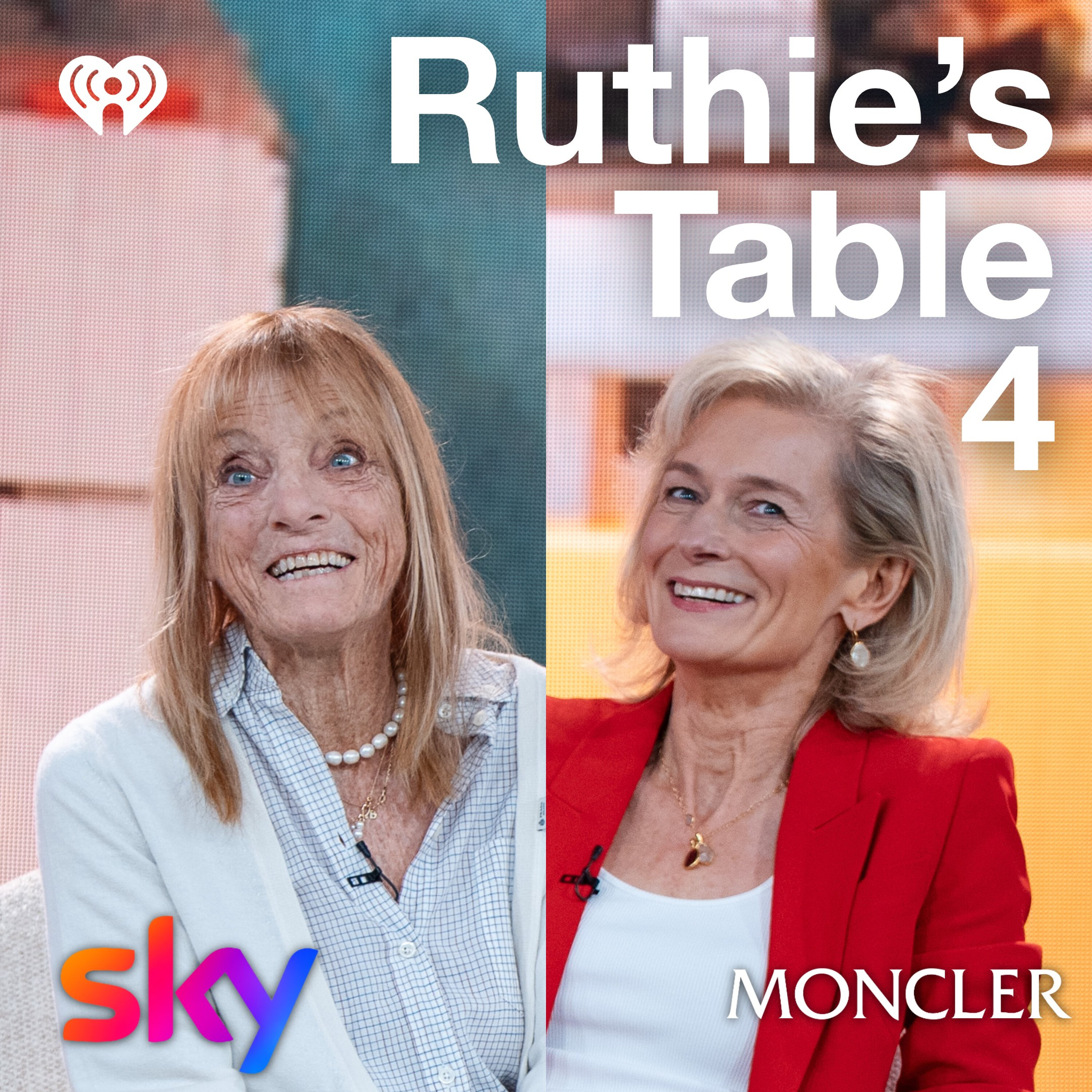
S5 · E39 · 20 Jul 2026 · 22 min
In Conversation With Zanny Minton Beddoes, Editor-in-Chief of The Economist
Zanny Minton Beddoes and I have different professions, and different workplaces. As editor-in-chief of The Economist, hers is in the newsroom mine is the kitchen. But we have much in common, sharing a message of honesty - me with ingredients, Zanny with words. And we both have time limits - in the case of this conversation, just 20 minutes which we recorded live onstage at the Google Zeitgeist conference. In this brief time, we explored her work and life through the lens of food. And what a life it is. Order Table 4 at The River Cafe —the star-studded, food-filled book inspired by the…
-

S5 · 17 Jul 2026 · 6 min
Bonus: Wine with Ab Rogers
Ab Rogers explains his fascination with wine and why he prefers grapes that have had to fight for their survival. Order Table 4 at The River Cafe —the star-studded, food-filled book inspired by the beloved podcast: https://bit.ly/Table4AtRiverCafeBook See omnystudio.com/listener for privacy information.
-

S5 · E38 · 13 Jul 2026 · 36 min
Ab Rogers, Designer
Ab Rogers is a visionary designer. He is also my stepson. For over 50 years, we’ve been side by side, taking adventures together. Today, we’re together in the River Cafe to share stories - memories of his father and my husband Richard Rogers - travels, families, work and food. We will also talk about five women who inspired the way he cooks, and the creative methods he uses to bring ingredients together, creating some of the most delicious food I’ve eaten in my life. See omnystudio.com/listener for privacy information.

Take it with you
The Melo app keeps playing with the screen off, works in the car and on your watch, wakes you to your station, and browses the whole catalogue offline. Free, no ads, no account.


