Episode notes
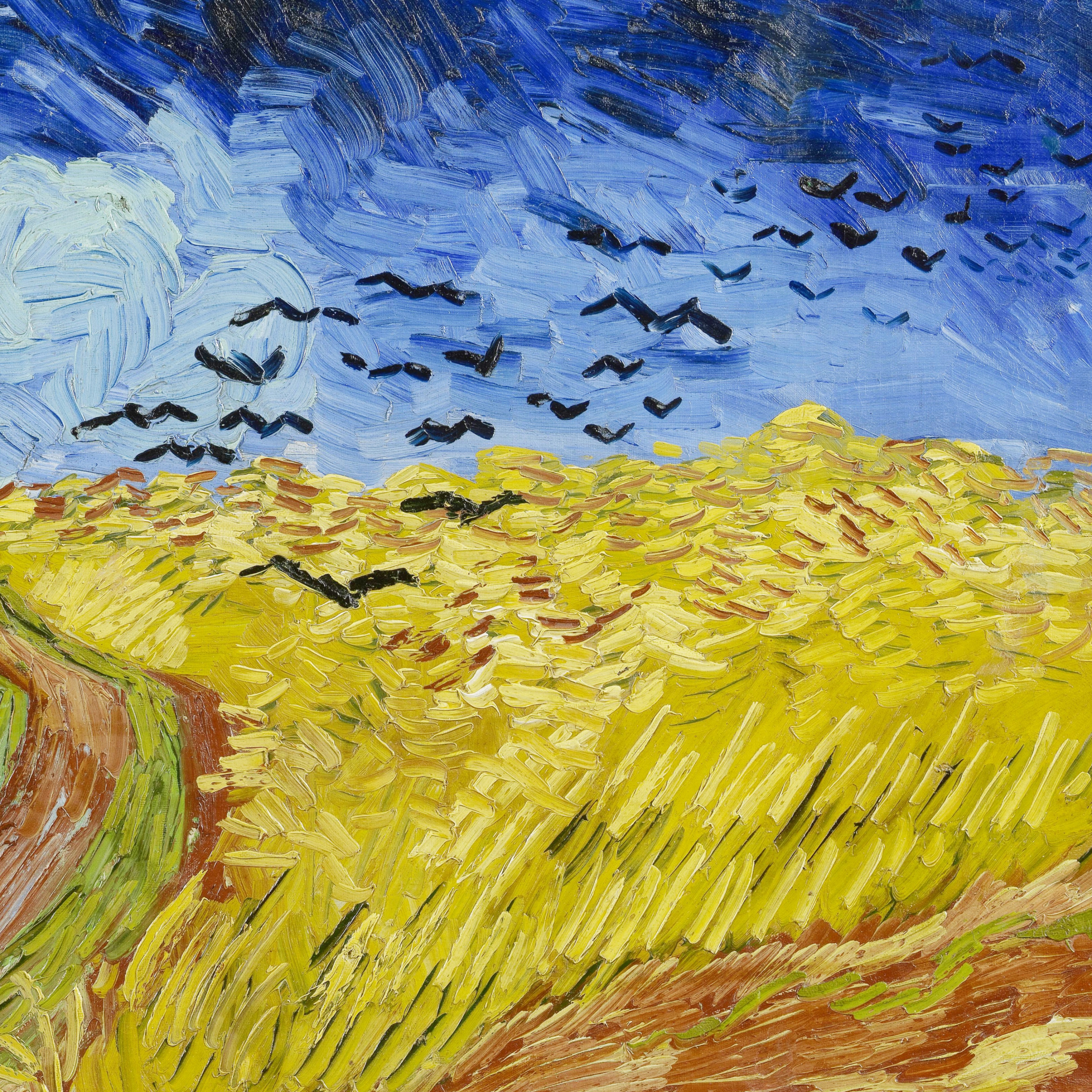
Consciousness is one of the biggest mysteries in science. We all know what it feels like to be alive. We taste food, feel pain, and hear our own thoughts. However, scientists still struggle to explain how a physical brain creates these personal feelings. In her book "Consciousness: An Introduction," Susan Blackmore explores this difficult topic. She uses simple language and fun experiments to help readers understand the human mind.Blackmore combines psychology, philosophy, and neuroscience in her book. She does not just give a list of facts. Instead, she invites the reader to explore their…
SyllabuswithRohit
by SyllabuswithRohit · Hindi · Learning
My channel covers a variety of subjects—books, stories, and more, all in Hindi. I share knowledge, ideas, and learning beyond the syllabus. For new episodes, please visit: https://www.youtube.com/@SyllabuswithRohit
More from SyllabuswithRohit
-
10 Jun 2026 · 9 hr 41 min
The Odyssey | Complete Book | (Hindi/हिंदी में)
00:00:00 Introduction00:01:55 Book 1: Athena Inspires the Prince00:30:06 Book 2: Telemachus Sets Sail00:55:04 Book 3: King Nestor Remembers01:24:36 Book 4: The King and Queen of Sparta02:10:36 Book 5: Odysseus - Nymph and Shipwreck02:35:34 Book 6: The Princess and the Stranger02:53:17 Book 7: Phaeacia's Halls and Gardens03:07:59 Book 8: A Day for Songs and Contests03:32:14 Book 9: In the One-Eyed Giant's Cave03:59:27 Book 10: The Bewitching Queen of Aeaea04:25:45 Book 11: The Kingdom of the Dead04:57:05 Book 12: The Cattle of the Sun05:18:02 Book 13: Ithaca at Last05:38:36 Book 14: The Loyal…
-
9 Jun 2026 · 1 hr 29 min
The Elephant in the Brain
Most of us believe we are the masters of our own minds. We assume that when we speak, act, or make a purchase, we understand exactly why we are doing it. In The Elephant in the Brain, Kevin Simler and Robin Hanson argue that this is a convenient delusion. Our brains are not designed to be transparent tools of truth; they are designed to help us navigate social hierarchies. To do this effectively, the brain hides our true, selfish motives from our conscious awareness so that we can more convincingly deceive others.The "Elephant" represents these hidden, self-interested drives—for power,…
-
8 Jun 2026 · 1 hr 12 min
Seeking Wisdom
The surest path to success is not through brilliance, but through the consistent avoidance of stupidity. To achieve this, one must understand reality as it is, not as one wishes it to be. This requires a "multidisciplinary" approach—using a toolkit of mental models derived from hard sciences like physics, biology, and psychology. 1. Biological Wiring and Evolutionary BaggageTo understand current behavior, one must look to the ancient past. The human brain evolved for survival in a primitive environment, not for navigating the complexities of the modern world. The "Old Brain": We are…
-
6 Jun 2026 · 9 min
The Experience Machine (Hindi/हिंदी में)
The central question of this philosophical inquiry is whether anything matters to human beings other than how our lives feel "from the inside." To test this, we are asked to imagine an "Experience Machine." Suppose super-neuropsychologists could plug you into a tank where electrodes stimulate your brain to simulate any reality you desire. You could write a masterpiece, make friends, or bring about world peace. While floating in the tank, you would not know it is a simulation; you would believe it is all actually happening. You can pre-program your life experiences for two years at a time,…
-
5 Jul 2026 · 5 hr 37 min
Demian (Hindi/हिंदी में)
Published in 1919 under the pseudonym "Emil Sinclair," Demian is far more than a standard coming-of-age story. It is a feverish, introspective, and philosophical exploration of the human soul. Written by Hermann Hesse during a period of deep personal crisis and psychoanalysis (under a disciple of Carl Jung), the novel serves as a guide for anyone struggling to reconcile societal expectations with their own inner truth.It is a Bildungsroman (a novel of education/formation) that moves away from the physical world of action and adventure, diving instead into the turbulent waters of the…
-

4 Jul 2026 · 1 hr 23 min
How to Change Your Mind (Hindi/हिंदी में)
In his 2018 masterpiece, How to Change Your Mind: What the New Science of Psychedelics Teaches Us About Consciousness, Dying, Addiction, Depression, and Transcendence, Michael Pollan performs a remarkable feat of cultural alchemy. He takes a subject long relegated to the fringes of "hippie" counterculture and places it firmly within the realm of rigorous science, clinical medicine, and profound philosophical inquiry. The book is structured as a "mental travelogue," blending meticulous historical research with cutting-edge neuroscience and Pollan’s own transformative experiences as a…
-
3 Jul 2026 · 1 hr 9 min
On the Shortness of Life (Hindi/हिंदी में)
Seneca was a Roman thinker and a leader in the Stoic school. He wrote a short work called On the Shortness of Life. It is a letter to a man named Paulinus. But it also feels like a letter to us. The claim is bold and simple: life is not too short; we just waste most of it. This line sounds sharp. Yet the essay is warm. It gives us a way to use time well.Seneca starts by naming the problem. People say there is not enough time. They rush. They groan. They blame fate. Seneca says the fault is ours. We “are not given a short life but make it so.” Many fill their days with work that is not their…
-

2 Jul 2026 · 50 min
Enchiridion (Hindi/हिंदी में)
Epictetus wrote a small book called Enchiridion—meaning “manual,” or a sort of practical guide. This little text has had a profound impact on modern thought and philosophy. When it was translated into everyday language, it quickly became popular, especially among those who thought for themselves, those who challenged the Church, and those who valued their own inner life. Montaigne owned a copy. Pascal disliked the pride of Stoic philosophers. Frederick the Great carried it with him to every battle. When Anthony, Earl of Shaftesbury, was gravely ill, this book gave him strength and courage,…
-
1 Jul 2026 · 9 hr 5 min
1984
George Orwell’s 1984 (originally titled Nineteen Eighty-Four) is not merely a novel; it is a cultural shorthand for the loss of freedom, the death of privacy, and the manipulation of truth. Published in 1949, in the immediate wake of World War II and at the dawn of the Cold War, the book was Orwell’s final, chilling warning to the West. Today, in 2026, its themes of mass surveillance and political gaslighting feel less like historical satire and more like a mirror held up to our digital age.The World of OceaniaThe story is set in a future London, the capital of "Airstrip One," a province…
-
30 Jun 2026 · 1 hr 19 min
Evolution and the Modular Mind
In the chaotic streets of Philadelphia, Robert Kurzban noticed something peculiar: sometimes, ignorance is a survival strategy. If a driver sees that you’ve seen them, they expect you to stop. But if you cross the street looking confused or distracted—like a tourist lost in thought—the driver is forced to brake. By appearing "ignorant," you’ve won the social game.This observation serves as the launchpad for Kurzban’s book, Why Everyone (Else) Is a Hypocrite. As an evolutionary psychologist, Kurzban argues that the human mind isn't a single, unified "self." Instead, it is a collection of…

Take it with you
The Melo app keeps playing with the screen off, works in the car and on your watch, wakes you to your station, and browses the whole catalogue offline. Free, no ads, no account.