

Episode notes
The numbers are almost incomprehensible – last month US debt hit 40 trillion dollars. With an interest bill of more than three billion dollars a day. And that’s before Donald Trump’s trillion dollar promise to hand every adult in America a cheque for five thousand bucks! Now, as global debt levels rise to record highs, and the cost of paying that debt rises too – experts are sounding the alarm – warning the economic storm that’s brewing is starting to look an awful lot like the 2007 global financial crisis. Today, Senior Economics Correspondent at the Age…
Transcript
Read the transcript · about 2,790 words, follows along as you listen
Speaker 1:I'm Ruby Jones, and you're listening to 7am. The numbers are almost incomprehensible. Last month, US debt hit $ 40 trillion, with an interest bill of more than $ 3 billion a day. And that's before Donald Trump's trillion-dollar promise to hand every adult in America a cheque for $ 5, 000. Now, as global debt levels rise to record highs... and the cost of paying that debt rises too, experts are sounding the alarm, warning the economic storm that's brewing is starting to look an awful lot like the 2007 global financial crisis. Today, senior economics correspondent at The Age and Sydney Morning Herald, Shane Wright, on the chance of another GFC and what it means for Australia. It's Tuesday, September 15th. So, Shane, you've been speaking to people in business and in finance who are starting to describe the current outlook globally as GFC-like.
Speaker 1:So tell me what they're seeing that has them so worried.
Speaker 2:Well, at the heart of the matter is the cost of money. So the cost of debt is just going up very, very quickly.
Speaker 3:Mean the federal government is paying more to borrow. And the ripple effects through the economy are driving up borrowing costs on everything from mortgages to car loans.
Speaker 2:And we have governments all over the world, particularly the United States, that have to, they operate on debt. And the cost of that debt is just signaling bright red, oh my God, we've got problems that need to be addressed. So you can think of the debt issue as the key one, but it ties into what central banks are doing. which they're worried about inflation, that's going up. And part of that issue, of course, is what's going on in the Middle East. The cost of oil is going up.
Speaker 2:It's climbed again. All of that is coming together. And that's why so many people are starting to really, they're tightening sphincters around the world at the moment.
Speaker 1:And in the middle of all of this, we've heard Donald Trump talking about the possibility of handing Americans $ 5, 000 each for which would add up to more than $ 1 trillion in all.
Speaker 4:If the Republicans win the House of Representatives and the United States Senate, both of them, because of our economic, tremendous economic success, like in history we've never had anything like what's happening, but because of our tremendous strength and success economically... I will issue a dividend to every adult citizen in the United States of America for $ 5, 000.
Speaker 1:What impact would that have on what seems like an.
Speaker 2:Already precarious situation? Well, it's like turning up to a house fire and throwing a jerry can of petrol on top of it. That's what worries a lot of people. Like, there is a discount in that, thinking amongst investors, thinking, oh, well, He won't win both the House and the Senate, which is one key proviso. And two, he has promised handing out checks to people, well, for the last 18 months, and none of those checks have arrived. So there is a little bit of proviso, but it's the fact that he had the gumption to say, I'll hand out what is, it works out about 1.3 trillion US or almost 2 trillion Australian to try and stay in power Again, that adds to the worry. Also this week, we've got, say, the Federal Reserve. They're likely to increase interest rates. It's a real test for the new head of the Federal Reserve, who was appointed by Trump, of course. Trump has been saying interest rates need to go lower.
Speaker 4:Rates should be lowered. We have other countries that are paying less interest rates.
Speaker 2:So many real key economic fundamentals are all just falling on the wrong side right at the moment.
Speaker 1:And of course, when we talk about spending, we should talk about AI as well, right? Tech companies are looking at spending billions of dollars on data centres at the moment. What impact is that having?
Speaker 2:Yeah, this is the other thing. Governments, particularly through COVID, were able to get away with taking on a lot of debt because the private sector just wasn't doing a great deal. It's actually been the story since about the GFC back in 2008 to 2010, business investment globally had really slowed. There's a handful of tech companies who are going through what is the biggest expanse of spending on infrastructure, let's say, since the dot-com boom of the late 1990s, which turned into a bust. And the amount of money that the AI companies is spending means, if I'm an investor, I'm thinking, who am I going to send my money to?
Speaker 2:You normally would have gone to, say, bought bonds in the United States government. They don't look as attractive compared to what, say, an IAI company is offering right now. So you actually have that squeeze between private and public on a limited amount of cash. And that's why ultimately interest rates go up on all of those, both the private and the public debt.
Speaker 1:Mm-hmm. Okay, well, let's go back to the driving issue, the cost of debt here. Tell me a bit about why it is that investors and governments and institutions around the world have traditionally been so willing to lend the US money and why that's now changing.
Speaker 2:Well, the United States has always been considered the safest bet in the world. There's about three countries, four countries in the world that have never defaulted on their debt. Australia is one, New Zealand is another. And Washington is the third. The Confederacy during the Civil War did default, but look, we push that to one side. But that's how safe an investment the United States has always been considered, that they will always honour their debts. The issue partly is the fact that there is so much debt being created by the United States. The budget deficit this year will be about US $ 2 trillion or about $ 3 trillion Australian.
Speaker 2:On top of that is the fact that their total debt went through 40 trillion US about six weeks ago. By the end of the year, it'll go through US $ 41 trillion because they're just running such a big deficit. All that means, okay, if you're an investor saying, right, do I trust Donald Trump's United States to honor its debts? You go, well, maybe, maybe not. And again, you end up, do I put my money somewhere else? We're actually seeing other central banks going, hold on, I'm not so convinced about where the United States is headed. That's the sign that, yep, we still think the US is pretty good investment, just not as good an investment as it was like a year ago, five years ago, 10, 20, 30 years ago. Okay.
Speaker 1:So if the US isn't able to borrow as cheaply as it used to be, if people aren't seeing it as as safe an investment under Trump as they did previously, what are the impacts of that?
Speaker 2:Well, the interest bill that the United States is paying now every year is more than they spend on defence. It's about 15% of the entire budget is now on interest. And this is the flow and effect of what the US is doing. If everybody else's debt is effectively priced relative to what US debt costs, then everybody else's debt costs go up as well. So we've seen it on Australian government debt. The interest rates on that are going up. the interest rates on every European nation are going up.
Speaker 2:They're going up on Japanese debt. When you've got so much debt in the world and the price of that debt is going up, then you end up in that situation where the entire global economy gets squeezed because so much money is just being paid back on interest rather than on goods and services for people or private sector.
Speaker 1:So is there a risk then that the US might default on that debt?
Speaker 2:At the end of the day, the Federal Reserve of the United States could actually just start printing cash, which has got a whole 1920s Germany, Weimar Republic sort of vibe to it. I think if we got to that point, well, the cats and dogs would be living together. We'd be in caves eating tin food. I don't think we're quite into that spot where the United States defaults. But if you start not forcing US consumers either to go without or actually to pay more tax in a large amount just to stabilise the US budget, then you have a broader economic flow on effect, which no AI tech giant would be able to overcome.
Speaker 1:Still to come, what does this economic storm mean for Australia? Can we talk a bit more about the potential comparison with the global financial crisis, the conditions that led up to that in 2007, 2008? Tell me about what happened then and any kind of comparisons to the situation now.
Speaker 2:You're going to give me the chills there, because I lived through that period.
Speaker 5:The stock market suffered one of its worst days in years Monday. Investors reacted to a stunning reshaping of the landscape of Wall Street that took out two storied names. Lehman Brothers and Merrill Lynch.
Speaker 6:As a result, our entire economy is endangered. So I propose that the federal government reduce the risk posed by these troubled assets and supply urgently needed money.
Speaker 5:Governments have injected trillions of dollars.
Speaker 1:The world's central banks have made unprecedented coordinated interest rate cuts. And still, the global economy is plunging further into crisis.
Speaker 2:Think of the financial system being the oil that greases the entire world economy. And that effectively came to a halt. Businesses and governments stopped trusting each other because no one actually knew where all this debt, which had come out of the US property market, who was owed what. So when we come to this point, it's, right, we know who has the debt. The problem is knowing, one, who's going to pay that debt and whether they can continue to pay as much debt and the interest on that debt.
Speaker 2:I don't want to get too technical, but there's really two types of recessions. There's a business cycle one where supply and demand get out of whack and there's pain, but they come and go relatively easily. Financial crises-induced recessions like the GFC are very different because they take so long for an economy or economies to get out of. There is a reason that global interest rates fell post-GFC. It was the GFC just had this long, long impact all the way effectively up until the COVID pandemic. And then we ran into a pandemic. Everyone's creating money. Everyone's creating huge debts. And so the reckoning has now come along.
Speaker 2:So that's how you end up in a GFC type situation.
Speaker 1:So what are the risks then of a shock like that now?
Speaker 2:They are higher than they were even five or six weeks ago. They are just continuing to mount because, one, we can hear Donald Trump say, I'll give everybody $ 5, 000. His Treasury Secretary, who has come up with a plan of, I will create money to buy back some American government bonds, which will require the creation of more government debt, but I'm trying to bring down interest rates because most of their American mortgages are priced off a 30-year American debt.
Speaker 3:We routinely do buybacks and we're going to increase the size of the buyback. And Sarah, I would note that it could be more than the $ 4 billion per issue.
Speaker 2:Yeah, I was going to ask how big this... That failed completely just last week. Just think of it. He tried to spend $ 6 billion to achieve something and came up with nothing. So the risks of a reckoning in terms of a real big spike in interest on government, like an even larger one, which would force investors to go, that's it, we're out of the market. They're just continuing to grow and grow and grow. Factor in AI continuing to hoover up as much money as possible, and then factor in what the hell's going on in the Middle East, then that's where you get into a confluence of business-type recession and plus a financial crisis-induced recession all at once.
Speaker 1:And you mentioned that Australia is already feeling the effects of some of this. Can you talk a bit more about the risks here for us?
Speaker 2:Yeah, so if I'm Jim Chalmers, I'm worried because the government in the last 10 days has sold $ 2. 4 billion in debt. The interest rate on that debt was all over 5%. That's the first time that had occurred since 2011. So he's looking at his budget and he's going, oh, hold on. the cost of interest is going up. If I'm, say, the Treasurer of New South Wales, the Treasurer of Victoria, the Treasurer of Queensland, where Queensland's credit rating was downgraded last week, the interest cost is now going to hit the taxpayers of Queensland, it's going to hit the taxpayers of New South Wales, it's going to hit the taxpayers of Victoria. So that means if you're a Treasurer or a Premier, you're going to have to make choices about whether we keep spending or whether we're going to have to wind back entitlements or spending on a new piece of infrastructure. And if I'm a business operator, if I need to borrow money, the cost of that money goes up.
Speaker 2:So you can see that all bubbling away. It's not a very tasty brew for anybody.
Speaker 1:So, I mean, let's talk about what a prime minister or a treasurer should or could be doing right now.
Speaker 2:Look, trying to reduce spending, so you're not actually having to go into the debt market as much is something, but there's a There is always a trade-off if you start cutting expenditure, depending on who you cut from, like the debate that's going on at the moment over health entitlements for veterans. The NDIS, the huge cut that's taking place in the NDIS is another where, yep, both sides of politics realise they just can't keep spending on that.
Speaker 2:So you can make those sorts of decisions, but they take a long time. And at the moment, we're in a short-term problem. So trying to, say, reduce the amount of spending you do in five or six months is really painful and also possibly recession-inducing. No one's happy. They are terrible decisions, whichever way you look.
Speaker 1:And it also sounds like so much of what happens next really hinges on the US, not on us.
Speaker 2:On the Middle East and on the US, it really does. And this is it. Donald Trump, he's got the midterm elections in November. It's not as if he's going to go on the fiscal rampage and start slashing expenditure as voters are getting ready to go out and vote on his own party. That's unlikely. The Iranian regime and its allies throughout the Middle East have got November 3, the midterms. They've got that pencilled into the calendar. And no, we can really exert a lot of pressure and a lot of fiscal and economic pain on the United States, almost unimpeded for the next six to eight weeks. So yeah, it's not going to be pleasant for anyone on the way into November at least.
Speaker 1:Wotain, thank you so much for speaking with me.
Speaker 2:Remy, what a pleasure it's been. Have a good one.
Speaker 1:Also in the news... One Nation has unveiled its plan to cut immigration by 750,000 places over three years in what would equate to net negative migration. Student visas would be capped at around a third of the current intake and visas for the families of skilled migrants would be scrapped altogether. Labor and the Coalition are sounding the alarm over the proposal, which they say would push the country into recession. And Australian Olympians are among a huge group of female athletes calling out a new betting company ad featuring Sydney Sweeney playing sports in little to no clothing.
Speaker 1:Gold medal swimmer Arianne Titmuss says it's a kick in the teeth for women who've dedicated their life to sports and for female fans, questioning how sexualising women's sport is still a thing. Sweeney has responded to the criticism by posting magazine covers of semi-nude athletes, including Serena Williams.
Speaker 2:And Ronda Rousey.
Speaker 1:I'm Ruby Jones.
Speaker 3:This is 7am.
Speaker 1:Thanks for listening.
Speaker 2:Thank you.
Transcript supplied by the publisher with the episode.

More from 7am
-
E2048 · 17 Sep 2026 · 18 min
Is Labor’s migration plan tackling a real problem or a political one?
After one false start and a hell of a lot of political pressure from the right, Labor has finally unveiled its long-awaited immigration plans. Backpackers, students and visa overstayers will all be targeted by the measures – designed to bring net overseas migration down from around 300 thousand, to 225 thousand by 2028. So what impact will the overhaul have on our economy, our communities, and on Labor’s re-election prospects? Today, journalist Peter Mares – who writes extensively on immigration for Inside Story magazine – on what’s in store, and whether the…
-

E2047 · 16 Sep 2026 · 18 min
Why is Australia going soft on settler sanctions?
Last week, countries including the UK, Canada and France announced plans to restrict trade with Israeli settlements in the West Bank. In the past, Australia has joined its overseas allies in actions on Israel. This time it’s different – with Foreign Affairs Minister, Penny Wong, saying Australia isn’t considering joining the ban. So – why not? Today, Commissioner on the UN’s Commission of Inquiry into the Occupied Palestinian Territories and Israel, Chris Sidoti, on Australia’s responsibilities, and its failures. If you enjoy 7am , the best way you can…
-
E2046 · 15 Sep 2026 · 18 min
A big-tech defector’s AI warning for the world
In the last week, AI bosses around the world have suddenly grown a conscience – urging a global slowdown amid fears the race to develop artificial intelligence could outstrip humanity’s ability to control it. For Dex Hunter-Torricke, that realisation came a little sooner. The big-tech insider walked away last year, disillusioned, after spending 15 years inside the belly of the beast. He wrote speeches for Mark Zuckerberg at Facebook, worked with Elon Musk at SpaceX, and most recently helped Google DeepMind explain the rise of artificial intelligence to the world. Now, he says…
-

E2044 · 13 Sep 2026 · 19 min
Something is seriously wrong in the Northern Territory
One by one, the Aboriginal leaders, organisations and watchdogs the Northern Territory government is supposed to work with are walking away. The Children’s Commissioner has resigned. An Indigenous MP has left parliament after more than a decade. And now almost the entire Aboriginal side of the Territory’s Justice Policy Partnership has suspended its involvement. They’re all making a remarkably similar complaint – that the government isn’t listening, and that the structures supposedly designed to give Aboriginal people a say have become meaningless. Today,…
-
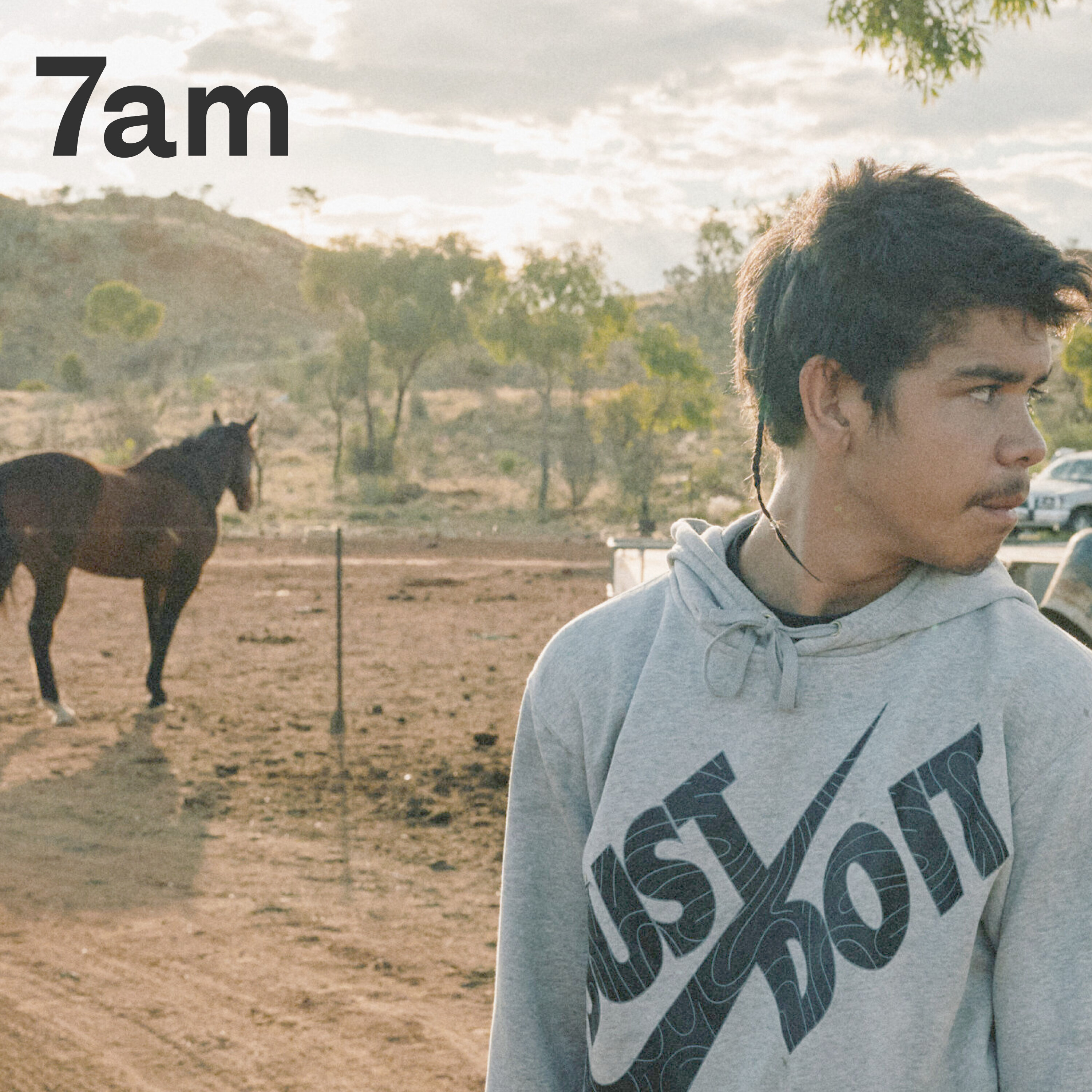
E2043 · 12 Sep 2026 · 31 min
This is Alice Springs: Children of the Intervention
From afar, Alice Springs is a whirlpool of myth and truth. A town with competing interests and few solutions, marked by chaos and decades of government overreach. In cities and towns across Australia, we read about a “crisis” about “rampages”. One newspaper described the children of Alice Springs as “tiny menaces stuck on a turnstile of trouble”. In this first episode of our three part series This is Alice Springs , Daniel James visits the town at the heart of our nation, to find out how all the interventions, big and small, by governments of all…
-
E2042 · 11 Sep 2026 · 15 min
Did the PM dabble in pork barrelling?
In 2020 Anthony Albanese called for the sacking of then-sports minister Bridget McKenzie over her involvement in the infamous sports rorts – which he labelled a farce. Not long after, she resigned. But now that similar pork barrelling claims have been levelled at the Prime Minister, he’s come out swinging – refusing to admit any wrong-doing over his failure to declare membership at a golf club which received a six million dollar grant. Also coming out swinging this week was Andrew Hastie. The Liberal MP delivered a masterclass in how to take on One Nation as he labelled…
-

E2069 · 8 Oct 2026 · 16 minNew
The $25 billion plan to take on Coles and Woolworths
The Greens’ official think-tank has a new proposition — a national chain of 624 publicly owned supermarkets. To make that a reality would cost more than $25 billion, and involve the forced sale of 200 Coles and Woolworths supermarkets. But the Institute, which took its inspiration from New York mayor Zohran Mamdani, says it would cut grocery bills by 22 per cent. Today, former MP and now Green Institute Executive Director Max Chandler-Mather on his proposal for a publicly owned supermarket chain. If you enjoy 7am , the best way you can support us is by making a contribution at…
-
E2068 · 7 Oct 2026 · 17 minNew
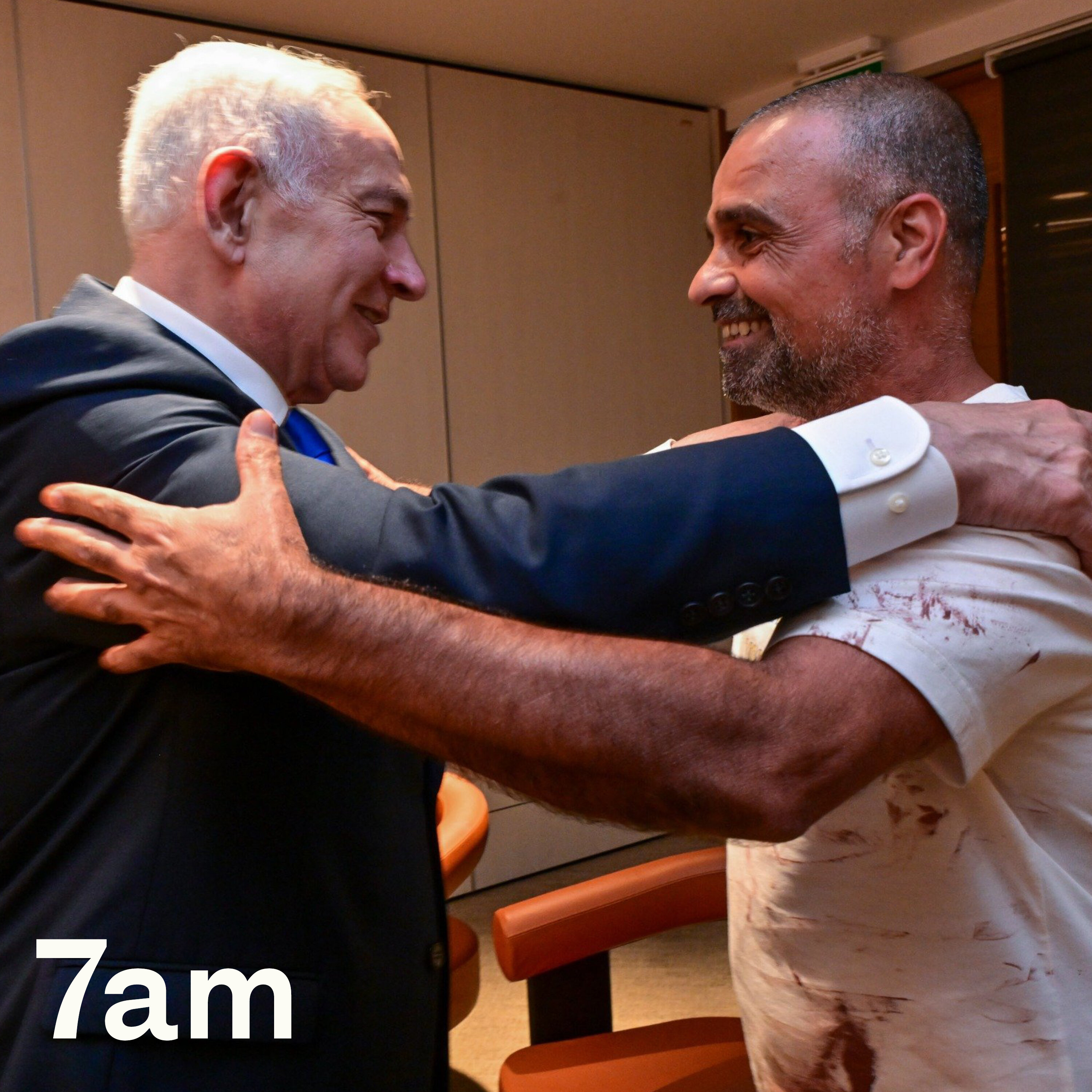
Could the Flydubai attack keep Netanyahu in power?
Big events have always had the power to shape elections: from John Howard and the Tampa affair, to the attempted assassination of Donald Trump. And it doesn’t get much bigger than a foiled attempt to bring down a plane mid-flight. One week on from the Flydubai incident, details are continuing to filter out about the co-pilot accused of stabbing his colleague in an effort to crash the Tel Aviv-bound plane. And as investigations continue, Israeli Prime Minister Benjamin Netanyahu has been front and centre – with the country’s election just weeks away. Today, Middle East…
-

E2067 · 6 Oct 2026 · 15 minNew
'Biggest cut in history': What Angus Taylor’s migration cuts would do to Australia
Angus Taylor has promised “the biggest cut to immigration in the history of this country” – vowing to cut net overseas migration to one hundred thousand for two years if he wins office, slashing Australia’s temporary migration intake by 650 thousand over four years. Temporary graduate visas would be scrapped and new international students capped at 240 thousand. Australia’s humanitarian intake to be halved at ten thousand a year. In a press conference which saw classic Coalition slogan “stop the boats” make a comeback, a new catch cry made an…
-

E2066 · 5 Oct 2026 · 17 min
Undercover inside Cuba: The world’s longest-running blockade
The United States is once again tightening its grip on Cuba. New travel and economic restrictions are adding to a brutal oil blockade that has already pushed the country deeper into crisis, leaving Cuba increasingly isolated both politically and economically. But behind the decades of hostility between Washington and Havana, there’s a human cost that can be easy to lose sight of. Power cuts stretch through the night. Food and medicine are scarce and millions of people are struggling with water shortages. Today, SBS reporter for Dateline, Colin Cosier takes us inside Cuba, where he…

Take it with you
The Melo app keeps playing with the screen off, works in the car and on your watch, wakes you to your station, and browses the whole catalogue offline. Free, no ads, no account.