Season 1, Episode 9 · Wodcast
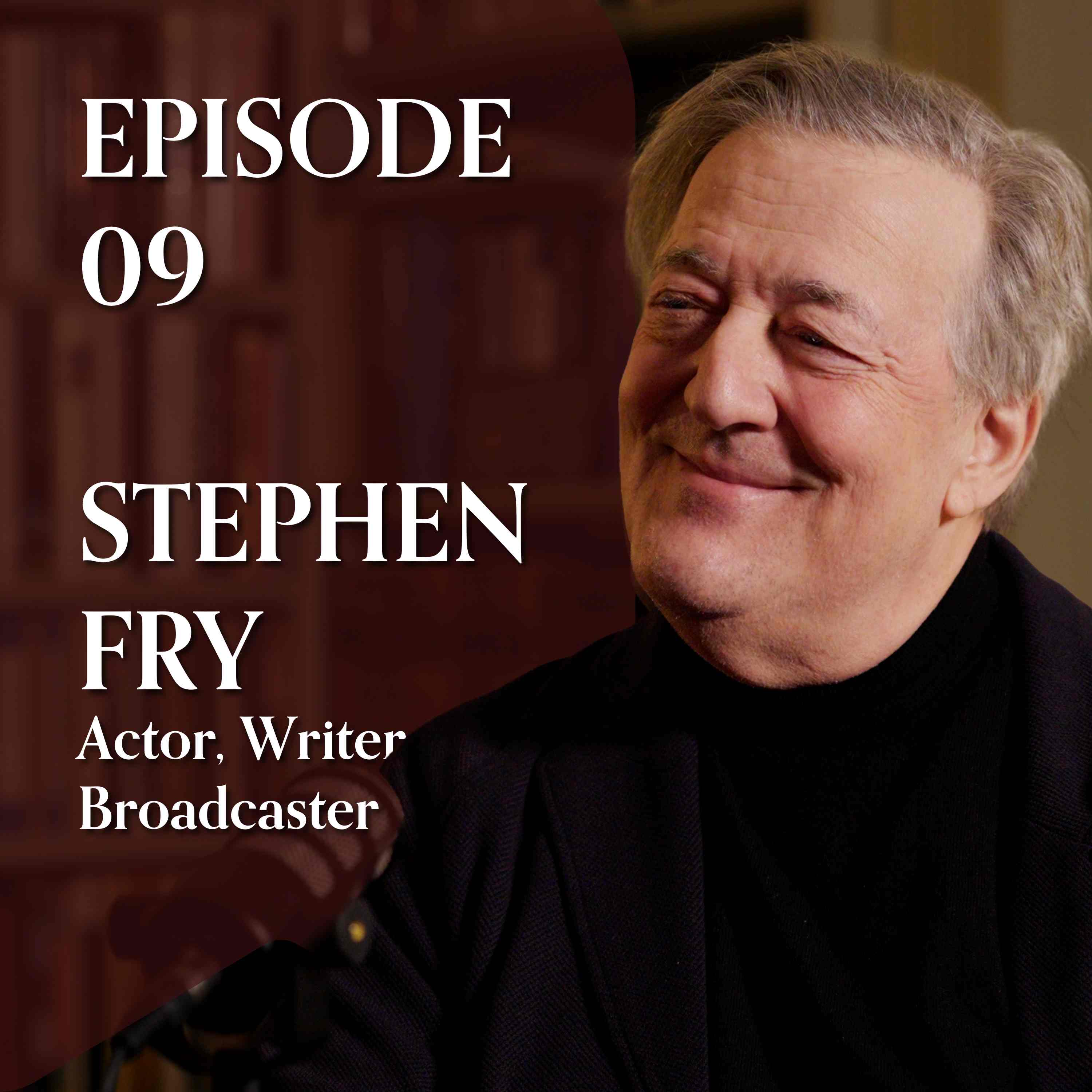
E9 - There Is No Perfect Word | with Stephen Fry
7 Oct 2026 · 1 hr 8 min
Season 1, Episode 9 · Wodcast
7 Oct 2026 · 1 hr 8 min
What if words can never mean exactly what we want them to mean? Stephen Fry has spent a lifetime exploring language: writing it, performing it, studying its history, and delighting in its strange contradictions. In this final episode of Season One, we sit down with Stephen to explore what words can and perhaps cannot do. We begin with “happy”, a word Stephen traces back to hap, meaning chance or what happens. From there, the conversation opens into a much bigger question: if language is metaphorical, and words can never map perfectly onto the things they describe, how do we ever understand…
Welcome to the WODcast. Here we explore the power and beauty of words. We're your hosts. I'm Mabel. And I'm Ben. Today we have the utter joy to talk to Stephen Fry about his deep connection to words. We hope you enjoy the episode. Stephen, thank you so much for joining us today at the WODcast. It's a pleasure to have you here with us. And I'm very excited for you to meet Benjamin because I do not know two people that have a longer or more enduring love of words and a recognition of their power too.
So it's going to be a delight. And before we start, I'd actually like to ask you, Ben, if you have a word of the day. And then maybe we could hear a word of the day from you, Stephen. Wonderful. Thank you, Mabel. Stephen, it's a pleasure to meet you. In preparation for today, I read your book, Mythos. Is that how I pronounce it? Yes, Mythos, I think. Mythos. And the word of today, my word of today will be psyche. Psyche. as it is one of the stories the love stories in the book that end with a dance forever which i think is a joy and of course psyche we still use it a lot in today's world so that would be a word that i'd like to explore later it's a good word a very good word to explore and i'm delighted and to have been the inspiration behind it Despite my love of Greek and my love of classical civilizations, linguistically, I have a passion for Anglo-Saxon words.
And so I offer up to start with the word happy. Hmm. It's a word people are obsessed with these days. Where does happiness come from? And they've been obsessed for a long time. You know, Plato, can you be happy if you're not virtuous? Can you be virtuous if you're not happy? And all these questions that still, you know, oppress and consumers. But, you know, they have a happiness index, don't they? And it seems a pure word that we understand. And yet its origin is chance, hap, as in haphazard.
What happens? So it's interesting that there isn't a pure word for happy. In a sense, in language, there's not a pure word for anything. All language is metaphoric. I mean, even the word to be, the two roots of our English word to be, are from proto-European languages sort of beyond Sanskrit, which mean to breathe or to grow. So there is no abstract word. Words are not mathematical. They don't mean, they don't map exactly onto a thing in the way that a number can.
Two of something equals something. Words don't equal. So to be is to breathe, to grow. As humans, we couldn't find absolute words for absolute things. We could only use them as... something to do with what we could see, hear, feel or experience like breath or growth. So breath and growth are the words of essence. Essence is one of the to be words, of course, from essay, which is petrol as well, which I rather like. Essence. And Essen, eating. Because it's spirit as well, you see.
So we say petroleum spirits and the French call it essence. So spirit and essence is breath again, you see. It's the word breath. Spire, inspire, respire, conspire. Do you know if there's a connection between essence and Essen, the German word, which means... To eat, no, I think those not, false friends or whatever. False friends, yeah. No, I think that's a nice thought, though. You eat to live, so you eat to exist. Yeah, essence is essential. It is essential, yeah.
So do you think happiness happens? Well, no, it's not that it necessarily does, but it might as well. I think if you chase it, you know, it's one of the jokes of the American Constitution that you have a right to happiness. You know, life, liberty and the pursuit of it. And it is a pursuit, which to me always suggests chasing a salmon and grasping it. And the harder you grasp it, the further it leaps from your grasp. But, yeah, I think most words for happy, I believe, in...
Glück, the German Glücklich, Glück is luck. It's the same origin as that word, luck. Yeah, of course. So lucky. Because you're a German speaker, of course. Yes. Oh, then you'll know exactly. Yeah, my mother's. It's zelie, you know, there's blessed. Yeah. And that's an interesting one, too, because that's the Sermon on the Mount, the Beatitudes, the blessed are. The Beatitudes. We actually just threw a party on the word Beatitudes. It's a lovely word.
It's a beautiful word. Supreme blessedness. Yes, Matthew 5. Yeah, it is. Blessed are the cheesemakers, as Matthew Python reminded us. Blessed are the cheesemakers and the winemakers. Yes, absolutely. Your point does make me wonder how on earth we ever understand each other, because every word can be interpreted so vastly differently. Yes, I mean, we grasp what it is as it comes out of the mouth of a speaker or comes off the page. We know it's all about context.
But the roots of the word, the ancient wisdom from which the word comes is what's so interesting to me. I love that. My vade mecum, as they used to say, my eternal companion, the thing that I carry with me always these days on a phone, of course, is the etymological dictionary. Because I cannot see a word without wanting to know where it comes from. I don't know why. It's just passion for me. And I find it so fascinating. See, because English is so privileged to have three sources, three major sources, the Greek, the Latin, and the Anglo-Saxon.
And we can divide them up in a way that the Greeks can't. The Greeks just have Greek. I say just. It's a gorgeous language. Yeah. But if they want to say heal, they will use the verb from which we get therapy. But we can reserve therapists for a particular kind of healer. And we can say healer, then that has a slightly more Saxon slightly up there because healer. That which heals becomes health, just as the public wheel becomes wealth. Wow. So beautiful.
Yeah, deep becomes depth. It's that wonderful, the way Saxon works. But then when there's the Latin, curate has the cure of souls in a parish. So there are different ways of healing, and we can use different languages differently. to apply to them. And you use psyche, and we use the Greek psyche, psyché. We use it in the technical way, psychiatrist, the psyche, the individual psyche. Psychedelic. Psychedelic, psychological, psychotropic, for turning the mind.
so on um but then we we can use we can use spirit and um mind and you know soul soul for example is another word that psiche is soul in in but then that can be used for very special purposes in english which we separate from psyche So we can give extra connotations and nuances to words that mean the same, but we've decided they can take on a slightly different flavor, which I think is lovely. Yeah. So many nuances. It reminds me of what you always talk about in words being bridges.
It's almost as though as you talk, they're bridges from the soul to the psyche to our world. Yeah, yeah, indeed. And of course, because we now have AI, I think, in the same with learning languages, it's a kind of equivalent. If you want to learn a language, the first thing you have to understand is your own language. And German is a good example. People who learn German and who struggle with German, as I do, very happily, I love the language, but, you know, will come across what are known grandly by grammarians as modal auxiliaries.
I'm talking about Zollen and Mussen, you know. Modal auxiliaries. And so if you want to say, I could have gone, but I didn't want to, or I should have gone and I didn't want to, I would have been there. But, you know, those sort of things, you're using subjunctives of carbon, and it's just really weird. But it's only weird because English is weird. It's hard to understand because we don't realize what a strange word could is for a foreigner to learn what could means.
Was able to can mean, but it means could you do this is in the present tense. It has. It's a ridiculous word. And also the fact that our present tense is so peculiar. So for a French person, you'd say something like... I am reading this book at the moment. And they go, oh, je suis lisant. I am reading it. No, they don't say that. They just say, I read this book. Ich lese this book. Yeah. I read this book. And you say, I'm reading it. They don't know what they're doing.
Okay, what they're doing, yeah. But they don't know? No. In French, German, Italian, and all European languages, they know not. They don't know. You know, you wouldn't say, you know, Sie machen nicht. You know, these are progressive presence. And that's where English has become more complicated, not less. People always think languages get eroded and simplified. It isn't true at all. They often get more encrusted. And, for example, Christ on the cross, you've got him there, virtually.
Yeah, beautiful. You have to do a cutaway now. You've got Christ on the cross, and he says, Father, forgive them, for they know not what they do. It's exactly as a French or a German would say it. They know not what they do. But we wouldn't say that now. We'd say they don't know what they're doing. We'd use these progressive present forms. They don't know what they are doing. And that's more complicated. And to have German looking at English, they don't know what they do.
What do you mean they do not? Because to do is to do something, you know. And if you don't know that about English and you're trying to translate something into German, I don't know, you might say, mach nicht wissen. It doesn't make sense. It would get all jambled up. Exactly. Or in French, you should have. Je ne fais pas. I don't. That means I do not. Doesn't it? I'm not doing. I am not doing. Je ne suis pas faisant. You know, it doesn't make sense at all.
It just means simply I know not, I do not. You know, I am not, I read not. But we have to complicate everything. So unless you can see that in your own language, how peculiar it is, you won't find it easy to translate into another language. And when I say this about AI, because AI is our language models, of course, like that. But how do we think? We don't know really how we think and where our cognition starts and finishes and where it overlaps with feeling and perception and other things that the brain does.
And I think what's exciting about AI, all that's terrifying about it, and there's a lot, is... is that you can't really understand it or you can't understand what its limits are and what it does unless you understand our own minds. It makes us think about our own minds, just as learning a foreign language makes you think about English. So looking at AI makes you think about how we think, how we process ideas and language. Before I jump in with more questions about your mind and how you're understanding it, I was wondering whether you brought a bridge, a word today.
Oh, sorry. I'm just totally hogged the conversation. No, that's what you're here for. We're here to talk to you, Stephen. I mean, there is a word that I would love your definition of, which is, or your etymological insight into, which is anagnorges. Is that how I say it? Anagnorges? Anagnorges. Anagnorosis, discovery. Anagnorosis. It's the word, as far as I understand it, it's a moment in a narrative where a character reveals untrue self. Refined discovery.
Yeah. Do you know the etymological background? Yes, it's Aristotelian. It's a Greek word. Okay. Anagnorosis. Yeah. Anagnorosis, other. Okay. It's an analogy. It's another. Yeah. Yes, but I know it as one of those words like catharsis and so on that you get from Aristotle's poetics, that there is the anagnosis in a story. Yes. Which is the revelation, the discovery, that it's a turning point in a story where something is. And then, of course, we use the French word for the end, for some reason, the unknotting, the denouement.
Do you have an idea of an anagnosis in your life? I don't know. I would confuse it probably with the other Greek word that has become more common in modernist literature, which is epiphany. Yes, a beautiful word. Which is quite similar, a showing forth. That means literally the epiphany in Christian history. In Christian tradition is the kings giving their presence to Christ. They show forth the presence. That's the feast of the epiphany, isn't it?
And James Joyce and others. It's a kind of modernist idea, isn't it? The epiphany, the moment that reveals something, which is like an anagnosis, I suppose, isn't it? Do I have ones in my life? I don't think they're slow. They're slow burn. I mean, the reason films and novels are cheats is that lives are turned around. There's critical moments, events that alter people's destinies happen in a very short time that in real life don't. And often quite romantic.
Yeah, or indeed there's a psychic revelation that someone's, they realise as a child that this happened to them and so suddenly they're freed of all their inhibitions or all their ide fix or whatever it is. And, of course, everything is so much slower. Yeah, I mean, it reminds me of musicals, how in a musical, there's a song at the moment. Yeah, exactly. Fairly life, more like a musical. So it's more like you almost wake up thinking, oh, it's taken me years to realise that this is much simpler than I thought it was or that I'd, you know, whatever it might be.
I mean, so I'm not sure that I've had an epiphany really. Uh-huh. I think as you age, you become more patient about things. And so you don't obsess about some sorts of things that you used to when you were young. You don't, you don't, yeah, I fret less. Is that because you know yourself better, thinking about know thyself? Yes. I'm not sure that I do know myself any better. I'm just more used to myself. I'm more accustomed to myself. I'm less shocked by myself, perhaps.
I don't know. I'm not sure I'll ever know myself, really. I mean, it's a strange thing because that seems to be this Greek ideal, know thyself. Yeah. And I suppose it's a bit like what I'm saying about know your English language before learning a foreign one or the Kipling thing. What do they of England know that only England know? Whatever you find out about yourself by going out, in fact. So you know yourself by knowing others, I think. Yeah, and we seem to live in a culture now that's so individualistic.
It's sort of somewhat self-obsessed. Yes. And it's all about the inward kind of experience. But actually, we're relational animals, aren't we? Yes. I think probably before I was... Even 60, I very rarely came across in public print or what we'd now call online, the word narcissist. It's quite a rare word to see. Now you see it every day, everywhere. It seems to be the... the condition to which we impute it in others very easily, whether they be presidents or other figures.
Solipsism used to be used more, I suppose, but that's somehow more poetic, isn't it, to be a solipsistic? Yeah, I can't help but connect to the fact that we are going through, as you know, as president of Mind Charity, this extraordinary mental health crisis, as people call it. And there seems to be this rise of obsession with self, the narcissism. And those two seem very interlinked to me. Yes, I think that's right. I mean, it's very easy to talk vaguely and non-medically about conditions of the mind.
And obviously, the charity that I work with, Mind, is most of our work is taken up with the very serious illnesses that are actual diagnosable illnesses like pain. like schizoaffective disorder or such extreme forms of anxiety or obsessive compulsive disorder that they are people become a danger to themselves or others and the forms of self-harm that lead to people spiraling out of control now obviously there's a bit of a blowback at the moment in your telegraph reading public and and so forth and the reform and so on where there be young gen z people are just constantly moaning about their anxiety and their not working properly and they should just get out and have a good walk and stop it.
So on. I mean, there is an element that, uh, oh my all my mental health my mental health is sometimes you think it's a bit like someone complaining about a sprained ankle while they're in a cancer ward yeah you know there are real you know suicide is the biggest killer of men under 15 you know these these are and the self-harm epidemic it's absolutely astonishing and heartbreaking to think of children cutting themselves and hurting themselves and If you do engage with a child and they're trust enough to ask them why they're doing it in a sensible way, not an angry way, they'll say it's because to take the pain away because they hurt so much elsewhere inside.
What on earth is going on in our country that are so many children? And it's, of course, poverty and neglect and bad parenting and abusive and, you know, addicted parents don't help in any way. But having said that, having given talks in schools and whatever, and I might be talking about Greek myths or something, and then in the Q&A afterwards someone might ask about it, mental health. And I remember going to a school, which we will say is a very famous private school and a privileged and elite one.
And I was talking about, I said, they asked about mental health, and I mentioned having spoken at a school. uh in a poor area of london and uh how much mental health there were how much self-harm there was and i said i'm not sure you were aware of this as an issue and they just started laughing so bloody hell oh god yeah you've got it here of course we bloody have You know, I'm thinking, what? And that, you know, so it isn't entirely, you know, you can't just say it's about poverty.
And there is something else in the air, if you like. And actually, I would say in the water, because for me, the great metaphor, or at least a great metaphor, if it's great, but is... Our waterways, because we know that our waterways are polluted with raw sewage here in Britain. And the streams of our cultural discourse, if I can put it that way, are similarly polluted. The way we communicate with each other, the canals, the canalized... because there were the natural streams of conversation, like rivers that were natural.
And now we have the canalized ones, and they are horrifically contaminated. They're full of toxic waste and raw human effluent and rusting Tesco trolleys and everything else. You wouldn't ask a child to swim in them. And yet they do. Every day they are swimming in these rivers of discourse that are poisonous and... You know, and you look at Australia and you say, I can see why you're doing that. But you can also see why it will never work. Have you heard of a VPN?
It's not difficult. But, you know, who knows? Who knows where it'll go? And these are the same people, the people who control those canals. other people who control AI as well. So we're in for a hell of a ride. Wow. You've bought, I hope, a treasure trove of words to share with us. Well, I've given you happy. Today. Yeah. The words, I mean, our Saxon words, I'll tell you a story just to continue this thing about Saxon and Latin, but I think it's so interesting and it's part of our minds if we are natural speakers of the English language.
Um, when I was about 10, you know, a bit older, 11 or 12, perhaps, uh, I was at home and, uh, lived in the country, deep in the country. And my parents didn't really approve of television, particularly. There was a small black and white television somewhere that was kept in a cupboard. occasionally taken out if, you know, Winston Churchill died or an American walked on the moon or something like that. It was something important to watch. A member of the Hats, of the Coburg family, the Windsors got married or something.
And anyway, it was a rainy day and my father was out, who was the one who was most disapproving. So I took the television out and there was a film on it. It had just started, so I didn't know what it was. And the language in it was so extraordinary, I couldn't quite believe what I was listening to. And at one point, a young man knelt in front of a beautiful young girl and said, I hope I shall not offend you if I state quite openly and frankly that you seem to me to be the visible personification of absolute perfection.
And I remember feeling like sandbagged. I thought, how can people speak like this to each other? It's so funny and so beautiful and so silly and so charming. So many things at once, I couldn't quite believe it. So when it was finished, I ran off to my mother and said, Mummy, Mummy, I hope I shall not offend you if I stayed quite openly and frankly that you seem to me to be the visible personification of absolute perfection. She said, what are you talking about?
And I told her this thing I'd seen. I said, it wasn't Dickens or Jane Austen. It was sort of in the pie. It wasn't Shakespeare. It was more recent, but I couldn't work out what it was. And I explained the story. And she said, oh, that was the importance of being earnest. And it was the... Anthony asked with film of it a famous film and I said well what is it and she's explained it and I Cut a long story short. I got a copy of it from the local mobile library in the countryside that we had and I read it and read it and and became obsessed with what wild did with language and and And I looked at that phrase in particular.
Why was I so amused by the visible personification of absolute perfection? It's preposterous. Why is it preposterous? Well, it's preposterous because when you love someone, you say, I love you. You speak Saxon. Mm-hmm. You know, you don't say the visible personification of absolute perfection, which are Latin phrases, which are used for different purposes in the English language. But if you want to be direct and trusted, you say, yeah, you know, you say, here I am.
Fuck off. Go away. Things that are pure Saxon. You don't start saying, be expeditious. You know, it's the moment you do, you're not trusted. And it goes back to something very deep in our culture, I think. And we mythologize it, or at least we turn it into a sort of self-mythology about Britain. I mean, look at Robin Hood, the idea of a sort of Saxon, probably blonde with blue eyes and crisp. but with a long bow, and a Norman with lank, greasy hair, Frenchified, with a crossbow, you know, mechanical, metal, dark, swarthy, untrustworthy, with the name of Do Something, as opposed to Robin.
And it goes all the way through English culture. They're in the Battle of Agincourt. It's the long bow against the French knight with, you know... And with their Latinate phrases and their courtesy and so on. And we are simple, strong, you know, all those good British words. And it's fascinating how that still lasts. We still don't trust the complexities of language when they become... Latinized or indeed Hellenized with Greek technical words as all technical words are.
Greek technical techne is a Greek word, of course. And I just think it's really interesting. It's a sort of mirror or a microcosm of our class. anxieties in Britain that it's even there in the language you use straight away not just your accent and everything else that gives you away from in terms of your education your class your outlook your disposition even your sexuality sometimes in the way you speak um but uh but but just the words you use the actual choice of words the you know, I should say the real choice of words, and then I stay saxophone, actualising suddenly becomes Latin, you know.
And of course it's all unconscious, it just streams out of you, it's unconscious, it's unawares, you know. Again, if you want to, again, you can always translate it back. That's beautiful. Yeah. And so, but I do have a fondness, and I think we all do have a fondness for English words. And the ones I love are the ones that end in L.E. which tend to mark a sort of affection and not quite a diminutive. Diminutives in language are lovely. You know, in German you have line and chin in particular, you know, and they're lovely and...
The Hjön in English became Kinn, so napkin and bodkin, but they're not so common as they are in German, where they're everywhere. Even more in Dutch, Scher. You know, this has never been a glass glass. It's always a glass, a little glass. I once heard a Dutch person talking about... a house he bought and he said, how much did it cost? He said, a million here, a little million. Couldn't even say million, a million here. It's just extraordinary. And of course, in Slavic languages, it's usually the letter K, so, you know, you'd be maple.
I like that And water of course Is very similar to the English word water Voda But little water is vodka Vodka Which is similar to Rishkebar Could you give us some words ending in Ali Piffle What does piffle mean Have you had piffle You've never had piffle A little piffle Yes, thank you. Has he heard of piffle? That's an absolute piffle. Absolute piffle. What is a piffle? Piffle nonsense. Surely you've heard the word piffle. I have, yeah. Your listeners are thinking, hello.
Yeah, piffle. Piffle, waffle. Yeah, but mottle, mottle, waffle, treadle. Any of those sort of words are lovely. And that's so English. I would not want to play you at Scrabble. Don't do that. Just do it. These are lovely things, you know. I mean, after all, It's a rare privilege to have been given the gift of music. And so people become musicians and they are a small cohort of the human population. But you might as well say 100% of the population is given the gift of language.
So we all have it. And the words are, to a musician that might love the key of C minor or have a particular fondness for a diminished seventh or whatever, you know, some musical thing, because music is their treasure. Well, we have languages, actually. And so we hug words to ourselves and should hug words and embrace them and love them for what they do. And not just what they mean and what they signify, but how they sound. how they travel in the mouth, how the tip of the tongue hits the back of the teeth and how it feels, the sensuous pleasure of words and language is very important.
I cannot believe you don't know the word piffle. We know now. It's a perfectly ordinary word. Thank you for bringing it. It's not a difficult word. I just never had anyone say it. Oh, what a load of piffle. Have you really not? Never, I'm afraid not. I clearly am not hanging out with the right people. You make me feel like Boris Johnson now that I'm suddenly using Woodhouse-ian words from the past. It is. I mean, you've heard of mink and poop. Before we get lost in mink and poop and piffles, I wanted to touch on the expression of love that you mentioned, how it's more trustworthy if it's in the Anglo-Saxon languages.
Yeah. Because, of course, the Greek have got a vocabulary to express love. Accape and Georgios and so on. And one thing that stood out to me is in the book that you wrote, Mythos, you talk about the four of the ancient ones. Philos and Eros. And I think later on... Others have been mentioned with the Greek origin. We spoke a lot about self-obsession and the obsession with happiness. And of course, the Greek have a word to describe obsessive love, which is mania.
And that's one thing that I wanted to talk to you about as... Mabel beautifully mentioned anagnorisis. I kind of experienced this word-related anagnorisis when I started to realize how deep I love words. And as a, I guess, result of this newfound love, I sacrificed hypnos, right? I stopped sleeping for a while. And yeah, the lack of sleep fueled by this newfound love did lead down the path of mania in a lot of ways. It became all-consuming and exhilarating and obsessive.
And I was curious to talk to you specifically today about your relationship to words and whether it changes throughout the different cycle that you experience when you fly high or when you are a bit lower. In terms of my mood swings as a bipolar. Yeah, that's very interesting. And certainly I've had many, many sleepless nights with mania playing with words in my head, either making anagrams out of them all the time. endlessly disassembling the letters and putting them back together again or finding resonances and connections between words that shouldn't have them.
Faux amis, as the French call it, false friends. And it just bounces around in my head and won't stop, won't stop the words... It's like a brownie in motion of words just constantly bouncing off each other. That happens a lot. Yeah. And, of course, when you're in the depressed mood, nothing moves you. Nothing. You're in a sludge. It's a good word. Sludge. Yeah, you're in a sludge, a dark sludge. And so nothing is quick and you don't care. That's the awful thing.
When you're in an elevated state, you care about everything. Of course, not too much. You're just... You just want it. You want to possess it, to eat it. We really want it inside you. You want it somehow a part of you. I sometimes call it my irradiated Joan of Arc sort of state, you know, where you do, which is the manic state, the hypermanic state. Yeah. And, yeah, and a lot of artists, it seems if you can faithfully retrospectively diagnose, you can look at some and feel that they have a similar, similar moments, you know, Keats when he's writing to a nightingale, you know, like that.
As if he tempted some dull opiate to the trains. And it passed and leafy woods had sunk. Would you say in that state you see more connections between the words, like from the phonetics profile to like? Yes, you do, actually. That's right. They sort of light up in your head and form a kind of path. Which probably robs to sleep. Yeah, which robs to sleep. Is that what you experience? How did you experience it? Yeah, and that reminds me of Kipling and his beautiful quote that words are, of course, the most powerful drug used by mankind.
Yes. And then I did get high of my own supply in a lot of ways. I just had so much fun with words and where they came from and where they're going and how to bring them alive. Like, what makes a word alive? That's right. You have this sort of living necklace of things lighting up in your mind and you can't… systematize it and you think it should be a great book or a great poem or a great encyclopedia or something in order to try and capture and you can't because it's so it's it's not chaotic but it is um uh it's a bit like the stars, you know, you see a constellation, but of course, a constellation is a complete illusion.
There is no such thing as a constellation. It's just a pareidolia, I think it's an apophony. In other words, the human desire to see a pattern in something, and from our angle, that looks like, a set of balances, so we'll call it Libra the scales. But, of course, if we were to move in space, we would see that the stars that we think are next to each other are not next to each other. They're not even vaguely next to each other. They are millions of miles apart, and they're nothing like a constellation.
So in the same way that if you were walking through a wood and you saw some bushes and they make, oh, look, that makes the shape of a thing. And then as you move around the corner, oh, it's gone. The shape's gone. And then we're stupid enough to say that means people who were born under that side are balanced. How stupid can someone be? But similarly, we see these patterns and relations and connections between words. And while we're trying to get to sleep in the morning, it's gone.
It's sort of disappeared. it feels like those stories that we then believe the patterns they kind of do help us in a lot of ways um yeah it's it's it is a powerful thing those words and how they just come from those 26 letters and then you can rearrange them yes and one thing that i experienced during this i guess madness in a lot of ways was um poetry and how it just soothes you so much like nothing else really And I started to read The Ode Less Travelled.
Oh, thank you. Yes, it's a delight to read. However, it's also a lot of homework. There's a lot of exercise in there. It's technical, yeah. But I hope a pleasurable exercise. Oh, it certainly will be. How was it for you? When did you first discover that rhyming words, they create this sensation in you? I think from like a lot of children from the early stage of things like, you know, now we are six or whatever, you know, AML, your mother reading you, James James Morrison, Morrison, Wetherby, George Dupree, took great care of his mother, although he was only three.
Now that he said he must never go down to the end of the town without consulting me or whatever. And you just, you know, it's part of it. I mean, people have written a lot about why certain... phrases and certain rhythms, the I am, of course, da-dum, da-dum, da-dum, da-dum, which is there in Shakespeare and most of English poetry, really. What it does and why a particular length of line in the same way as music, you have four, four, you have the ballad form with four feet, you know, da-dum, da-dum, da-dum, da-dum, da-dum, da-dum, da-dum, da-dum, da-dum.
Is it a heartbeat? Is it something deep within us that comes from ancient, ancient, ancient, ancient origins but it seems natural to us but of course we have to remember that it doesn't a lot of languages don't have rhyming poetry i mean it don't bother i mean italian they do with singing you know with opera and so on but almost every word can rhyme in italian because they all end in vowels so it's like it's like what it's not There's no great achievement in rhyming in Italian.
And, you know, Greek, you know, the great Greek poets didn't rhyme. Interesting. There's a rhythm, there's a, you know, the dactylic hexameter has a sort of... But then English is a stress time language, which you'll see me write about in that book. And it has a particular thing that every word has a stress that is different in English. It has a beat and a rhythm. In French, it's much more, and Spanish even more so. But, you know, so, you know, when Americans say French word, they tend to overdo the last syllable.
Mm-hmm. So, you know, they say homage. And we'll just say homage. Homage. Because we tend to go down at the end of words like that. So we say journal. The French will say journal. But they don't say journal. They're equal space. So we say Canada. Canada. To the schwa. Schwa is the most common English vowel, even though it doesn't have a letter to represent it, except in phonetics with an upside-down E. But Canada, whereas the French is Canada. It's an absolute equal Canada.
And we can't do that in our language. We very rarely do it. And so we say, you know, journal, this is journal. We say machine, we should put it on the second syllable there, we'd say machine. You know, so it's really interesting how the stresses of the language define it, its heartbeat and its rhythm and the poetry. Does this connection to the stress of language translate to your music taste? For example, do you listen to rap? No, I know. My husband has made me aware of Kendrick Lamar and a few others like that, but it's not my first port of call, shall we say.
But opera is language, of course. I guess they have it there as well. Yeah, yeah. And music follows, I think, without perhaps us necessarily being aware of it, follows the human breath. You know, even a pianist, the phrases tend to reflect what we can breathe. music now obviously the pianist doesn't need to breathe in the way a flautist or a clarinetist needs to breathe or even the way a violinist needs to bring the bow back in a different direction but you still get the phrasing, it still seems related to a human breath, if you follow a lot of piano music or any instrumental music it just is, you know and there are exceptions of course there's a lot of things in the piano literature like sarabji or whatever that just goes It doesn't stop for breath.
And, of course, a piano doesn't need to stop for breath, but somehow it does in our minds. We expect things to be the shape of a human breath and the duration of it and to have the in and out of it. That's the dialectic of music. The argument of anything is... and you listen to any piece of music, it does that. It's question and answer. It's the basic form of poetry and collective art is this, you know, this, this, the breast trophy and antistrophe, but also the question and answer.
You know, it does that... It has a question and an answer. We don't notice it necessarily, but we expect it, and it gives it the drama, because without conflict, without question and answer, without dialectic, there's no shape to anything. So you need that sort of sense of... So music is, in that sense, it's like language, it's phrased in it, because it's human. Mm-hmm. Because it's human, it follows the human seek, find, in, out, strophi, antistrophae, and diastole, and so on, the heartbeat, the pulse, the thing that keeps us alive, that everything about us is this out and back, the tide, you know, everything, ebb and flow.
Ups and downs. Ups and downs, yeah. Part of it, I guess. A rollercoaster, almost. LAUGHTER Maybe. I wonder, is the word muse, is that in music? Yes. And there's an example of the wisdom of the Greek collective unconscious, as Jung would say, that creates myth. The muses are nine sisters who represent the different arts, history, and poetry, and dance, and so forth, famously. Um, and that, but what's so clever, well not clever because it's not conscious, but what's so revealing is who's their mother?
Who's the mother of the muses? Do you know? It's so revealing. Because my question is like saying, what is the mother of the arts? Yeah. What is the thing that creates the arts? The mother of the muses in Greek mythology is the Titaness, raped by Zeus, or at least conjoined with Zeus. We don't know the circumstances of it. Whose name was Nemosyne, which is, Nemosyne means? Nemosyne. It's memory in there. Memory. Yeah. The arts are the daughters of memory.
Wow. That's what the Greek mythology tells us. Wow. Mnemosyne, mnemonic, and we have the word from that. I was always very amazed that Nabokov, Vladimir Nabokov, the writer, he wrote his autobiography, and he wanted to call it Speak Mnemosyne. Mnemosyne is spelled M-N-E. You know, M-N-M-O-M-S-Y-N-E, Mnemosyne. And the publisher said, Vlad, baby, you cannot sell a book with a title that people can't pronounce. They're going to look at it and go, what the, you know, come on.
What the piss will be. Speak Mnemosyne. He said, no, I want to call it Speak Mnemosyne. They eventually persuaded him. And the book, which is a masterpiece, is called Speak Memory. He eventually agreed. So what does those daughters of memory, what are they trying to remember? It's not they're trying to remember, they're the daughters of memory. They are born from memory. They are the product of memory. Of memory. So what it's saying is art is the product of memory.
That's to say, which is what art is. You remember how a thing is and you recreate it, you reassemble it, you re-member it. You put its members back into place. um and that's what you do that's what the arts do they are they are you know because an artist is there to to to to give you the truth of an experience whether it's for me as truth of a beautiful scene in a kitchen and a water jug it's there it's realized and it's re-experienced and um art comes from memory is sort of what the myth is saying.
I mean, myth is not an exact crossword puzzle to which there's a solution and this means this and this maps onto that. But nonetheless, it is a fascinating thing in that the daughters of memory are the arts, are the muses and history and dance, terpsichole. And those members, like... But those are not the muse, am I now? They're the muses. The nine muses. Oh, my God. They're the daughters of, yes, the nine daughters of Zeus and Mnemosyn. A lot of new connections.
Thank you. Do you relate to this idea of a sort of divine inspiration coming like a lightning bolt from the gods when you're creating? Because I think about Carl Jung talking about divine madness. Yes. And this experience of bipolar, where there is a kind of mania that, as you say, become Joan of Arc. Yes. You're flooded. Radiated. Yeah. You know, flooded. It's as good a metaphor as any, I think. Yeah, yeah. Just as demonology and, you know, demons is a good metaphor for, you know, for as long as you don't take it too seriously.
But yes, the Greek word enthusiasm is lovely there because the the in enthusiasm is theo, is God. It means engodded. Okay. To be enthusiastic is to have God. And theogen. All those. And theogen. God within. Yes, yes, of course. No, the theologian is obviously the law of God. The words of God, the study of God is theology. But enthusiasm is God within you. You are enthused. You are engodded, if there were. And do you have a relationship to that inspiration coming from something outside of you?
Or do you feel it comes from within you when you begin your own flow? I think you characterize it as coming from outside of you because you can't control it. Because it comes when it wants to come. You can't summon it up. You can't, you know, the nature of it. And that's why it's also called inspiration. It's the spirit, this breath. coming from somewhere that is. And obviously, it's not entirely alien. It doesn't make you suddenly write it in Latvian.
It doesn't allow you to embody an experience that is quite outside your mind. imaginative or experience, experiential, you know, life, it all comes from you and it's your intellect, your way of speaking, your memory, or whatever it is you're writing about. It's definitely you, but the thing that guides you and the thing that sort of makes you go, well, how did I do that? And any writer will tell you that they often look at something they wrote 20 years ago and go, my God, I don't think I could do that now.
Even if they think it's shit, they'll go, I don't know. Why did I do that? It's extraordinary. I mean, I disagree with most of it, but it's whatever it might be. You know, you just know it almost seems to have been done by someone else. You know, it's you, you know, you know. And it's, yeah, the mystery of creation is something. fascinating but very hard by definition to pin down um because because i mean it again metaphors are helpful i think sport is a good one that um you you can't be a great batsman or a great tennis player unless you practice hour after hour after hour until you know the language of tennis.
You know how to move. You know how to bend your knees. You know how to read the ball. You know how to do this. But some days you just can't really do it. It just – I had a bad day at the office, they will often say, you know. But their technique is always there. But on some days they are inspired. The batsmen will just – the ball will seem to float down as big as a beach ball and they'll just be able to hit it around the ground and they'll make a sentry and they'll just, like, feel like, I can do this.
It's incredible. And then for a month, they'll be out of form, is the phrase. They just scratch around and they can't do it. Technically, they're as good as they are. They're working as hard as they are. But somehow this thing comes and goes and you can't bottle it. You can't order it up. And that's why sport is exciting. It's why it's a multi-billion or trillion pound industry around the world because it's so unpredictable. You never know what's going to happen.
That's why you can have betting on it, disastrous as it is for so many people. You couldn't have betting if it was a readable outcome. You know, I mean, yes, the odds suggest the readability, but there's still, you know, you can still make money or lose a lot because you can't know. And now that's just sport. And you may say, I don't care about sport, but nonetheless, it's a human activity. that is, you know, incredibly important to a lot of people and takes an enormous amount of training and work and understanding in order to perform it.
Well, then say that of music or writing, poetry or whatever it is, it's the same thing. You have to, you can't be a poet if you don't love language, if words aren't something you study and think about, experiences and emotions aren't something that you try and... you know, embody in language, but you can't do it every day. And it takes enormous amounts of work and the work isn't quite enough. I mean, I think Thomas Mann gave one of the best definitions of a writer you could possibly have, which is that a writer is just an ordinary person who finds writing more difficult than other people do.
And it's because you find it difficult that you're a writer. What happens, I'll give you an example, is people who try and write, and this is a lot of people, they start the first chapter of a novel, say, and it's going pretty well, I like this, this is good. Oh, yeah, yeah, this is fun. I think this is going to be good. They might even get halfway through chapter two and then suddenly, bang, they're stuck. How do I get this person out of the room?
What do I do? I don't know. That's so obvious. Oh, I can't. And it goes into a drawer or, you know, goes into a folder on the hard disk. And they forget about it. And they think I'm not a writer because I couldn't do it. No, you're not a writer because you didn't realize how difficult writing is. only when you know that it is impossibly difficult and that you come across these barriers time and time again that have to be overcome. And so a writer finds it difficult.
That's the point. But people who think, because I'm finding it difficult, I'm not a writer, are exactly wrong. You have to work through these terrible barriers, just as a runner has to, you know, work through the wall of pain and so on. That's what makes you what you are. And it's unpleasant news because people are obsessed with process. You know what a... A literary festival is like, you know, Hay on Wai or whatever, which we both had connections with.
And I still do. I'm still the president. I'm happy to say. Every session you do, there's a Q&A afterwards and someone will ask you how you write. Do you write in longhand? Do you use a word processor? What time in the morning do you get up? Do you drink coffee? Do you do this? Some cheat sheet. There must be a way. There must be a thing. Yeah. A thing that helps you do it. What is your secret is the question. Yeah, what is your secret? And, of course, whatever answer you give, they can...
Because really the answer is you just simply sit there until your brain bleeds. So it's discomfort, sitting in discomfort. Well, it might be uncomfortable. The process is irrelevant. It's what's going on in here. It can be a pencil on an exercise book. It can be a web processor. It can be a... It can be anything. It doesn't really matter in the end. It's what's guiding your... What's pushing the words out. And every writer knows that there are days and years that can go by without being able to do it.
And during that process, do you find yourself personifying words? Are you angry at the words because you can't put them together or do you love the words? How does your... The words come easy. Yeah. It's the story that comes hard. Yeah. And words, words, words can pour out and... I love them always and far too much. I'm far too, you know, I encrust everything with words. I try and hold back on, you know, the worst sorts of efflorescence. But Cyril Connolly, who was one of the great literary critics of the 20th century, founder of the literary magazines and a friend of all the great writers, really, in Britain at least, of the...
He wrote a very interesting book called The Enemies of Promise. The second half is kind of autobiographical in which he talks about his time at Eton College with Eric Blair, who then became, of course, George Orwell. And it's a fascinating contrast between these two people, Cyril Connolly, a very sort of bonamous person. He was a big man and a huge glutton, or certainly a gourmet or gourmand. And the very thin, you know, communist, George Orwell, both at Eaton, it's extraordinary thing to imagine them.
Anyway, he writes, that's the second half. But the first half is an analysis of different types of prose. He coins the phrase Mandarin to describe a particularly efflorescent, flowering, ornate use of language, one that takes pleasure in itself, that is textual and sensual and textual and sensual and so on. And he... contrasts that with what was a relatively new style of bare, stripped down language, which is best exemplified, of course, by Ernest Hemingway, who still is the knowledge master of that extraordinary ability to convey all kinds of deep emotion and even description without describing.
You know, if you can read some of his short stories and say, oh, you know that scene where they go and they see the man dying on his bed... well is he on the left of the right of the door what sort of a room is it and people will describe it very very detailedly and there is no description and jen austen into a sense in a sense was a bit like that you ask anyone who reads Pride and Prejudice to describe Fitzwilliam Darcy. Is he blonde? They go, no, he's dark-haired.
She never says that. Never. Never describes it. Never. But everybody's convinced he's dark-haired. He somehow has to be. Because his character says he should be. And, of course, whenever he's cast, no-one would cast a blonde Mr Darcy in a movie. Absolutely not. And there's no reason why he shouldn't be blonde or ginger. So, you know, she... Anyway, the... There are those styles, and I'm very Mandarin, you know. I just love the words, and I do overdo it, and it goes against the American style, which is dominated by Amiway, really.
Yeah. But... Yeah, so no, it's story that I find difficult. I really admire people who can plot. I mean, you know, not the things I write, you know, when I'm doing the Greek myth, the plot's already there for me. I just have to retell them. It makes life so much happier for me. If the three pillars of storytelling are narrative and language and character, character and language I find, I wouldn't say easy, because no, that would be... But, you know, I really relish.
But plot, I just think, oh, I've got to be an architect now. I've got to structure. It's like threads of a tapestry, isn't it? Yeah. Arachno. Arachne? Arachne, yes, the wonderful Arachne. What's Arachne? She was a weaver. She's a weaver. She was a weaver, brilliant weaver. She made the terrible mistake, the hubristic mistake that so many Greek characters do of challenging Athena, the goddess of handicrafts and amongst other things. To a weaving competition.
And Athena was so disgusted by her cheek because the thing she wove also revealed some of the bad side to the gods, the lust and the rape and the, you know, the jealousy and envy and the injustice that the gods were capable of was the subject of her tapestry as she wove and wove. And so Athena punished her by saying, you will weave forever now. She shriveled up into a spider and weaved her web. And that's why spiders are called arachnids, after arachnid.
Yeah. So there's that, yeah. And of course, yeah, there are different ways of telling that story. For some, it's a punishment. For some, it's a reward. She gets to weave forever. Yeah. For some, she's so ashamed of what she's done, she goes out in one version of the story. She goes and hangs herself because in the garden, Athena takes pity on her, turns the rope. She hanged herself into a silken thread and the choked, darkened, writhing body of Arachne into a spider.
Wow. So it depends how you regard the gods as punishers or rewarders. It's an interesting question. Do you have a look on the gods as rewarders or punishers? Oh, they're both. Yeah, mostly punishers. But no, I would call them as the mafia. Yeah. The mafia are very close to the gods. Don't ask a favor of them, ever, because they'll call on you and it's a bad idea. And don't insult their dignity because they can't take a joke. Did you ever ask the gods for a favor?
All the time. We all do. That's why I'm not going to. We all do. We all do, don't we? Do you ever worship or pray to those gods? No, not to those gods. I say by Jove, which is, you know, Jove is the Latin for Zeus. So I suppose, but no, no, I don't. I think what the Greeks got so right was that if you look at the world, it is full of beauty and wonder and glory. magnificence and so whoever created it would be full of glory and wonder and magnificence and beauty but it's also full of injustice and capriciousness and unfairness and deep violence and cruelty and lust so whoever created it must have those qualities too not the strange hebraic idea that God is perfect and yet made a totally imperfect world yeah And blames it on the devil.
And yet he's more powerful than the devil. And come on, explain yourself. This is ridiculous. The whole thing is preposterous, obviously. But if you were going to say some immortal beings made this world, then they would be like the world they made. And that's where the Greeks have the advantage because they made gods who exactly reflect the human condition. What is your relationship to the word creation? You know, this question of why are we here?
Do you have a sense of it? Well, I think creation is an interesting word because it's loaded. People use it. I mean, I've literally heard people stupid enough to say, well, if there's a creation, there must be a creator. Yeah. it's just preposterous it just doesn't make any logical sense at all but if you're going to use the creation in that meaning something that has been created by someone well then yes but i don't think the universe we live in in that sense is a creation no it's the universe it is the case as witgenstein put it you know it's the case it's what we have um is the universe um but whether i Tim Rice has a good metaphor where he talks about the cat and the TV.
And he says creation, whatever this universe is, is the TV and we are the cat. And trying to explain what this is is like trying to explain what a TV is to a cat. You know, it's beyond our mind. It's beyond our ability to comprehend. Of course, yes, in terms of the physics of it. I mean, there's absolutely no possibility. I mean, we can't even comprehend the distances. It's just simply beyond belief. Or our size. Yeah, I was like that Brothers Grimm thing where the king asks a wise shepherd boy, I think it is for some reason, Brothers Grimm.
who's got a reputation for being wise. And he says, well, if you're so wise, tell me how many hours are there in eternity? And the shepherd boy says, the diamond mountain is two miles high and a mile across. And once every thousand years, a bird comes to wipe its beak on the top of the mountain. and the time it takes for the mountain to be worn down by the bird's beak, worn down flat to the ground. is the first second of eternity. It's rather lovely.
Wow, that's beautiful. It's rather nice, yeah. Of course, and you say, well, what a stupid question, how many hours are there in eternity? But eternity is another way of saying infinity, and infinity is puzzled mathematicians, far cleverer than any of us will ever meet. You know, the most brilliant minds have puzzled over infinity and discovered, of course, that there are lots of infinities, which makes it absolutely baffling, which, More infinities.
Well, yeah, because if you think about it, there's an infinity of numbers, 1, 2, 3, 4, it's going on forever. But then there's also an infinity of even numbers, 2, 4, 8, 6, there must be an infinity of those. There must be an infinity of odd numbers, 1, 3, 6, 9, there must be an infinity of prime numbers, infinity of numbers that are four apart. So there are lots and lots of infinities. In fact, there's an infinity of infinity. Exactly. How do you cope with that?
It really is. It's hard enough to find a dry cleaners that's open. Do you think that's where we find peace in words? Possibly. Because people don't contain words to them. They are rooting to some extent, aren't they? Exactly. Very rooting. And the beauty of language, it does allow you to travel through time, right? You can read someone's words that have outlived them. And indeed, the words themselves are ancient. And so you can travel back with them.
They're like sedimentary rock. You can go down and down. A word I would end with. It's spelled either G-E-N-E, if you like, or it really maybe goes even back to Gaia, the goddess of the earth. But also it's connected to one of my favorite words, which is kind. Now, you may say, oh, you're going to come on about being kind. Oh, yes, being kind is good. But the origin of the word kind... kund in ancient and old german i think as well as in mankind uh in chaucer kind means nature nature is kind kind and you think about it we did nature uh i'm not someone of that kind i'm not someone of that nature He is of that kind, sheepkind, mankind, womankind, humankind.
And kin is the same word, kin. So you're kin, you're kind. Your kind is in your group. Christopher Ishwood wrote a wonderful book called Christopher and his kind, meaning people of his same sexuality. It's a book about gay people in the 1930s and 40s. Christopher and his kind, my kind of people. And... Kindness, you think, how does kindness come out of nature? Nature comes from the Latin nato, I am born, as in nativity, nature, birth. And kind, though, comes from the gene words, generate, genesis, genesis.
Gene is the unit of generation, of birth. You generate something, you give birth to it. Genesis is the birth of everything in that sense of a genesis. But then also from that word, just as kind... as in nature, comes to mean kind, as in warm-hearted and giving. So gene and generation gives us generous, which is similar. So they both make the same journey from different places and different cultures. Somehow there is this sense that if you are, if nature is involved, the kind, kindred things that are alike, kindred things, kind things...
things of generation genitive genital generous happens so there's something about the bounty of nature in that that nature is kind it has a kindness under the kind is kind do you know what i mean it's just very interesting the two totally human different human cultures should have come to of how this very basic root, gene, gene in Greek, from Gaia, from birth, from gen, gen, gene, generous, genesis, becomes generous. And then kin, kind, kindred becomes kind, kindly.
Isn't that fascinating? It is. I do think it's so interesting. And you've been incredibly generous and kind with your time. Oh, it's been a pleasure. It's been a pleasure. I think we'll have... Do you have a last question? Yeah, we have one last question for you, which is, Stephen Fry, if there is one word that you would like to be remembered by, what would that word be? I ought to say kind, don't I? Well, I suppose a good... A good Anglo-Saxon way of saying authentic, because that's such a grubby word these days, is himself.
That he was whatever else he was, he was himself. And that's maybe you asked about anagnorosis and about the journey through life and finding things, getting to a place or realizing a thing. Maybe it is trying to strip down all the things that are not you and find what is you inside. thank you for joining us today it was an absolute delight to talk to stephen fry about his deep connection to words piffle a word to remember or not i guess please do follow us on instagram at what.cast and on substack at whatcast where we'll be sharing more about the episodes as well as any word breakdowns that you might enjoy And wherever you're watching this or listening to this, please subscribe and share it with someone that you think loves words.
If you fancy, please share a word that this episode brings to mind or a guest that you'd like us to speak to. You can DM us on Instagram, send us an email. We'd love to hear from you and to hear your feedback. And we'll see you next time. Bye.
Transcript supplied by the publisher with the episode.
by Into the Words · English · Arts & Books
The Wodcast is a fortnightly podcast exploring the words that shape our lives, cultures, relationships, and imagination. Hosted by Benjamin Aston and Mabel Evans, each episode unfolds into conversations, stories, ideas, and perspectives from writers, thinkers, artists, and cultural voices. From love
S1 · E8 · 23 Sep 2026 · 57 min
Today, Wodcast sits down with Sir Tim Rice one of the world's most celebrated lyricists and one of only a small number of people to have won an Emmy, Grammy, Oscar and Tony, for a wide-ranging conversation about words, songwriting, storytelling and the strange alchemy of turning language into something that lasts. From Jesus Christ Superstar, Evita and Chess to The Lion King and Aladdin, Tim has written some of the most recognisable lyrics of the last half-century. But this conversation is less about the hits themselves and more about what happens inside the words: how a lyric comes…
S1 · E7 · 9 Sep 2026 · 57 min
What does freedom really mean when you have spent part of life without it? Today, the Wodcast sits down with Waad Al-Kateab journalist, filmmaker and activist for a deeply personal conversation about freedom, home, family, language, community and the power of imagining a different future. Waad grew up in Syria under the Assad regime and began documenting life in Aleppo during the Syrian revolution. Her extraordinary archive became For Sama, the acclaimed documentary that brought the realities of war, motherhood, love and survival to audiences around the world. In this conversation, she…

S1 · E6 · 26 Aug 2026 · 48 min
What if surrender isn't the opposite of creation, but part of it? Today, the Wodcast sits down with musician and songwriter Nick Mulvey for a wide-ranging conversation about words, music, faith, creativity and the things that can only be felt beyond language. Nick arrives with the word “yield” a word that can mean both to produce and to surrender. From this apparent contradiction, the conversation opens into a deeper exploration of creativity, control and what happens when we stop trying to do everything ourselves. Nick reflects on the role surrender has played in his own life, and why he…
S1 · E5 · 12 Aug 2026 · 1 hr 1 min
What lies in the silence between who we have learned to be and who we are becoming? Today, the Wodcast sits down with Remi Olajoyegbe, founder, female empowerment coach, business leader, co-founder of Medicine Festival and founder of the Isumataq Collective, for a deeply personal conversation about success, transformation, grief and what it means to live and lead from a place of wholeness. Having built a highly successful career in investment banking, Remi reflects on what she calls “the void of success”: reaching the milestones, ticking the boxes and receiving the external validation, while…
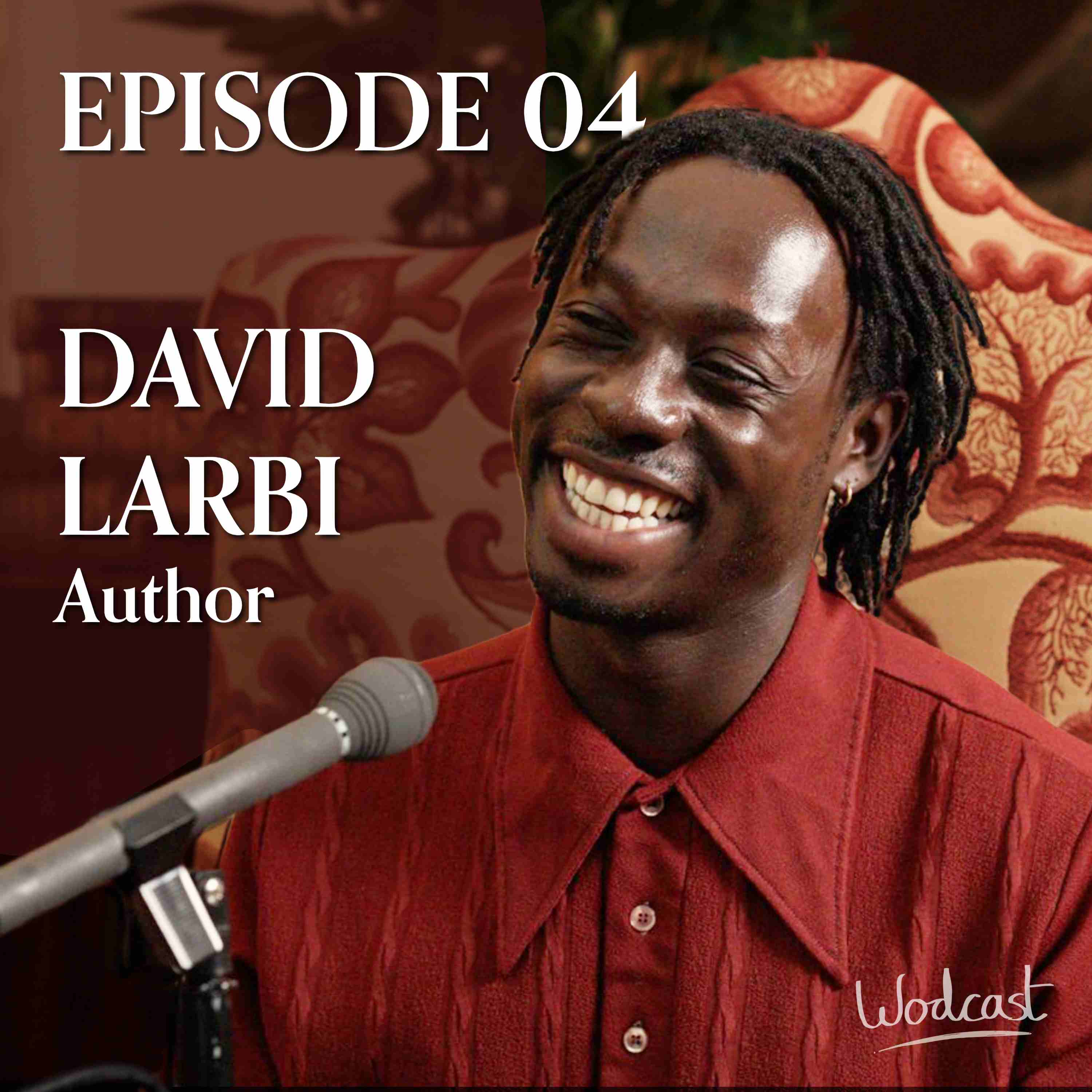
S1 · E4 · 29 Jul 2026 · 1 hr
What does it take to become Frequently Happy? Today, the Wodcast sits down with David Larbi, poet, bestselling author of Frequently Happy, and one of the UK's most thoughtful voices on joy, creativity and emotional wellbeing, for a deeply reflective conversation about poetry, presence and the courage it takes to live authentically. Together they explore why happiness begins with contentment, the relationship between creativity and self-discovery, and how words can help us better understand our emotional landscape. Along the way, they discuss burnout, boundaries, the importance of silence in…
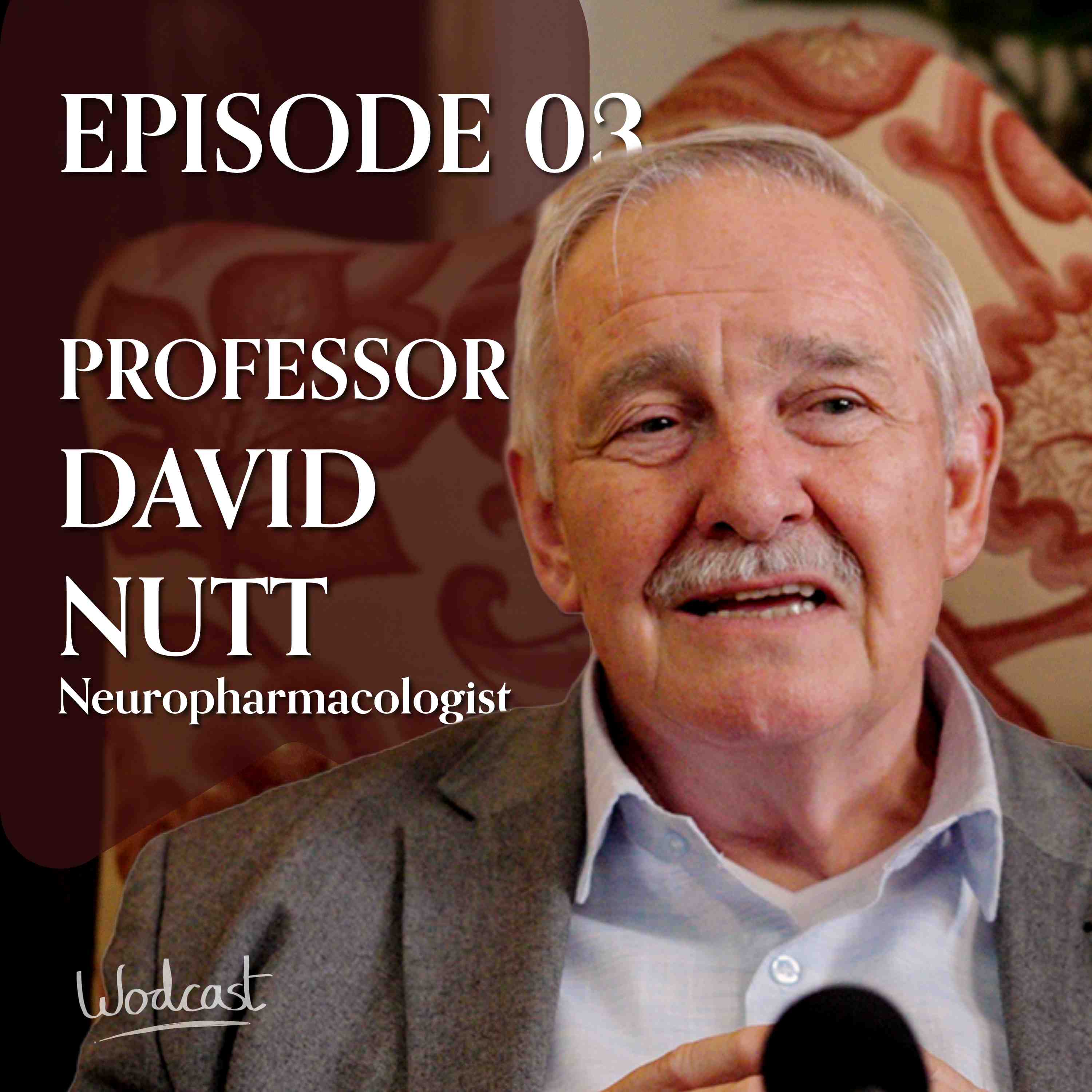
S1 · E3 · 15 Jul 2026 · 1 hr 10 min
What happens when language becomes more powerful than evidence? Today, the Wodcast sits down with Professor David Nutt, one of the world's leading neuropsychopharmacologist, psychiatrists and consciousness researchers, for a thought-provoking exploration of language, consciousness and the extraordinary power of words to shape how we think, feel and act. Together they discuss the origins of the word psychedelic, why MDMA was originally called empathy, how language has influenced public perception and policy, and what happens when words become more powerful than evidence. Along the way, they…
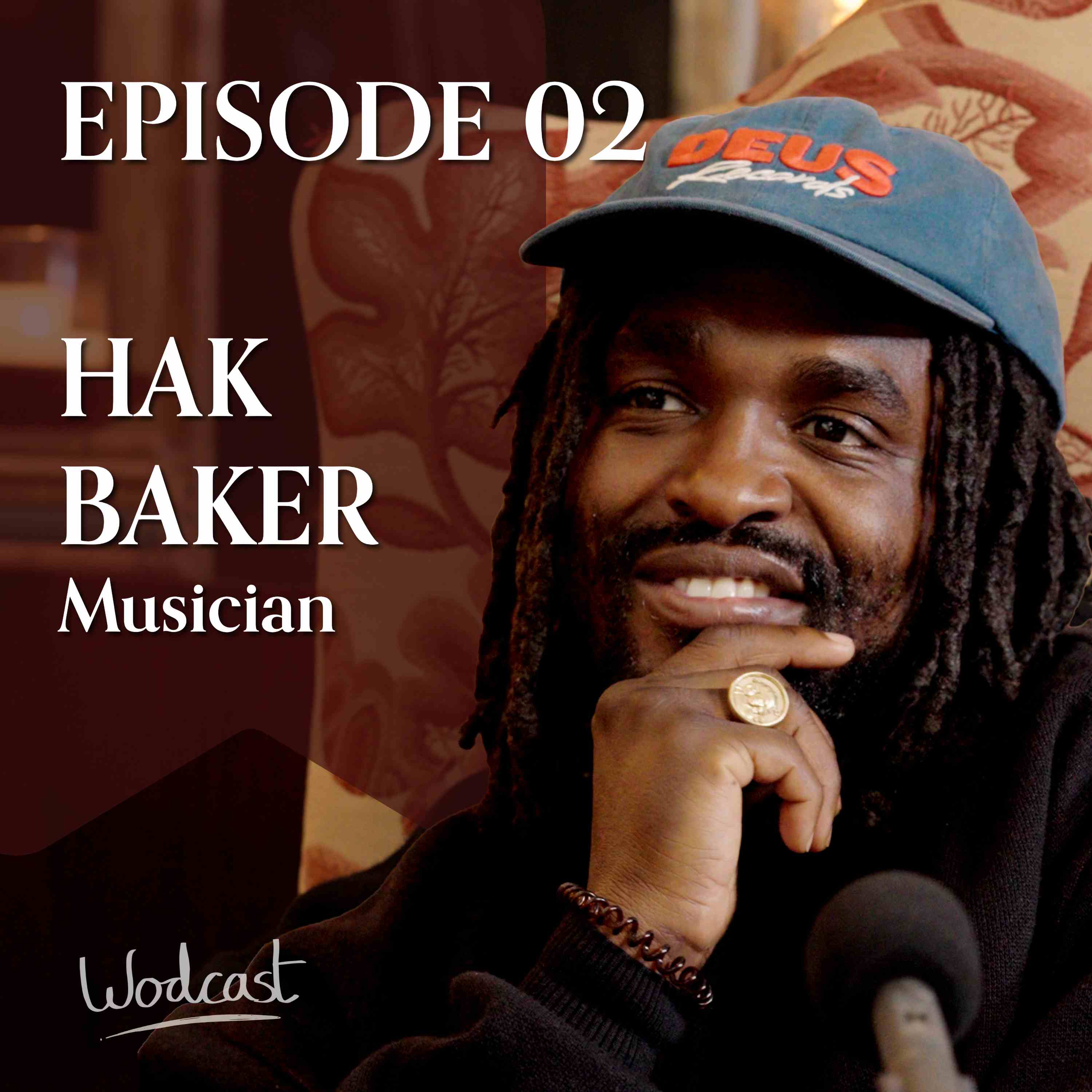
S1 · E2 · 1 Jul 2026 · 1 hr 12 min
What if romance wasn't just about falling in love? In this conversation of the Wodcast, musician, songwriter and poet Hak Baker joins Benjamin Aston and Mabel Evans for a wide-ranging exploration of romance, brotherhood, community and the courage it takes to change. Together they discuss the forgotten meaning of romance, why transformation is rarely a solitary act, and the idea of slaying the dragon within - the lifelong battle to confront our fears, ego and destructive patterns. Through stories of growing up in East London, finding his voice through music, and building communities rooted in…
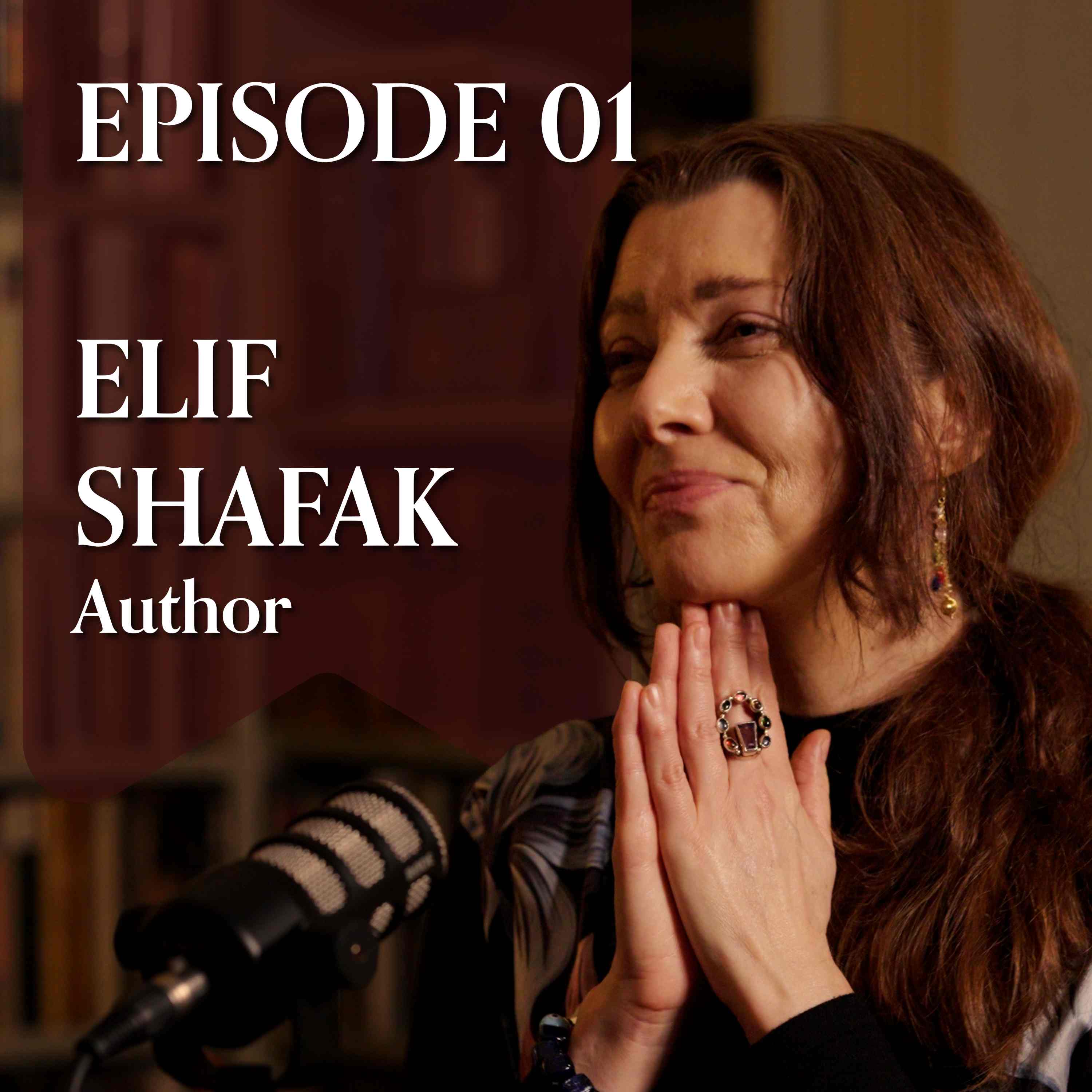
S1 · E1 · 17 Jun 2026 · 1 hr 25 min
What happens when faith and doubt learn to dance together? In this opening conversation of the Wodcast, bestselling novelist Elif Shafak joins Benjamin Aston and Mabel Evans for a wide-ranging exploration of language, love, storytelling and the search for wisdom in a noisy world. Together they discuss the ancient meanings hidden inside words, why different cultures understand love in different ways, the forgotten goddess of writing, the importance of oral storytelling, and what Elif calls "inner democracy" the practice of making space for the many voices within ourselves. Drawing on her…
S1 · E1 · 12 Jun 2026 · 1 min
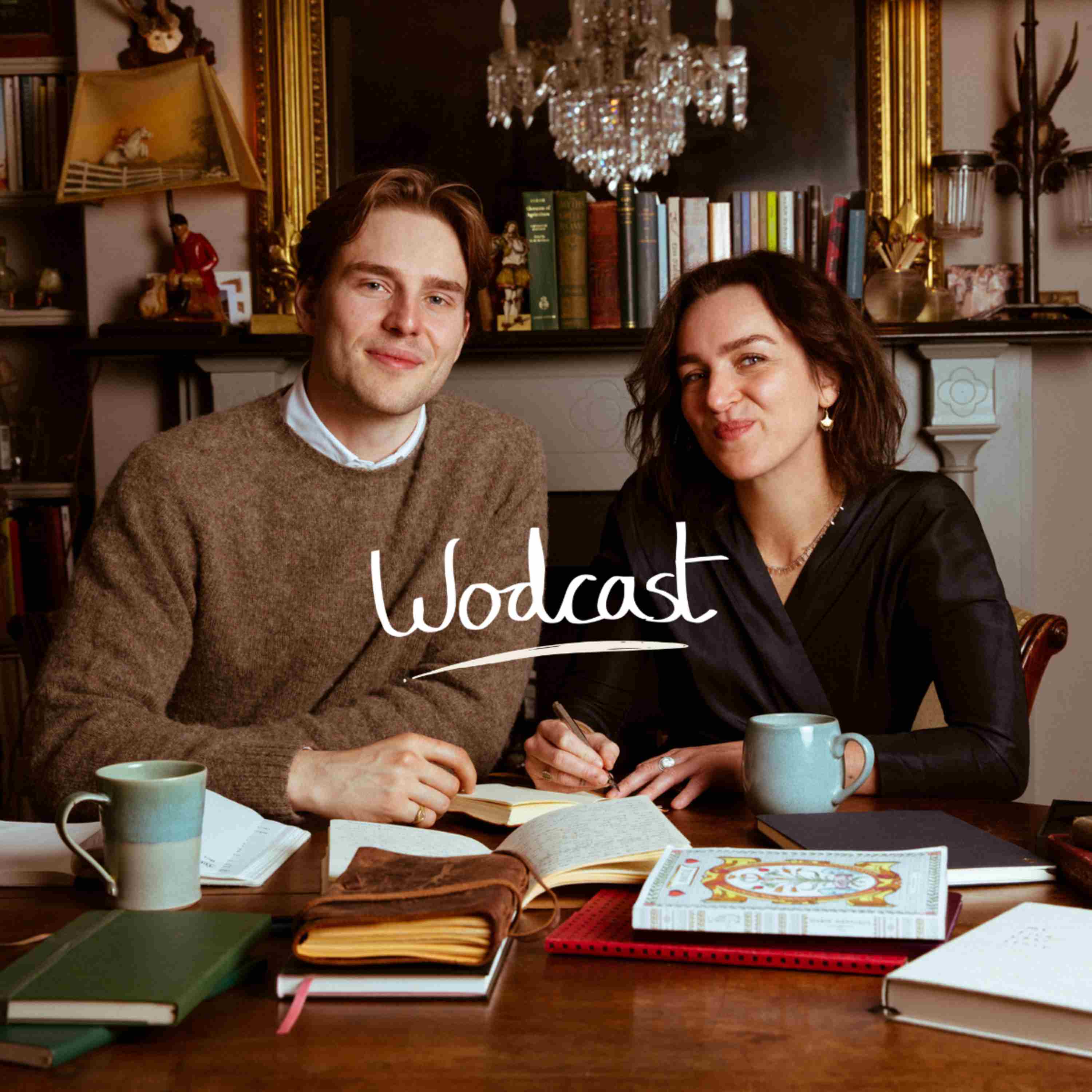
In Season One of the Wodcast, we sit down with novelist Elif Shafak, musician Hak Baker, Professor David Nutt, writer David Larbi, founder and coach Remi Olayjoyegbe, musician Nick Mulvey, filmmaker Waad Al-Kateab, lyricist Tim Rice, and writer, actor, and broadcaster Stephen Fry. Across nine conversations, we explore the words that have shaped their lives, the language that has influenced their thinking, and the stories they carry with them.

S1 · E1 · 6 Jun 2026 · 1 min
Welcome to the Wodcast where every word carries a world inside it. The Wodcast is a podcast exploring the words that shape our lives, cultures, relationships, and imagination. Hosted by Benjamin Aston and Mabel Evans, each episode unfolds into conversations, stories, ideas, and perspectives from writers, thinkers, artists, and cultural voices. From love and belonging to courage, grief, joy, identity, and everything in between, the Wodcast invites you to slow down and look more closely at the language that shapes how we see ourselves and one another.

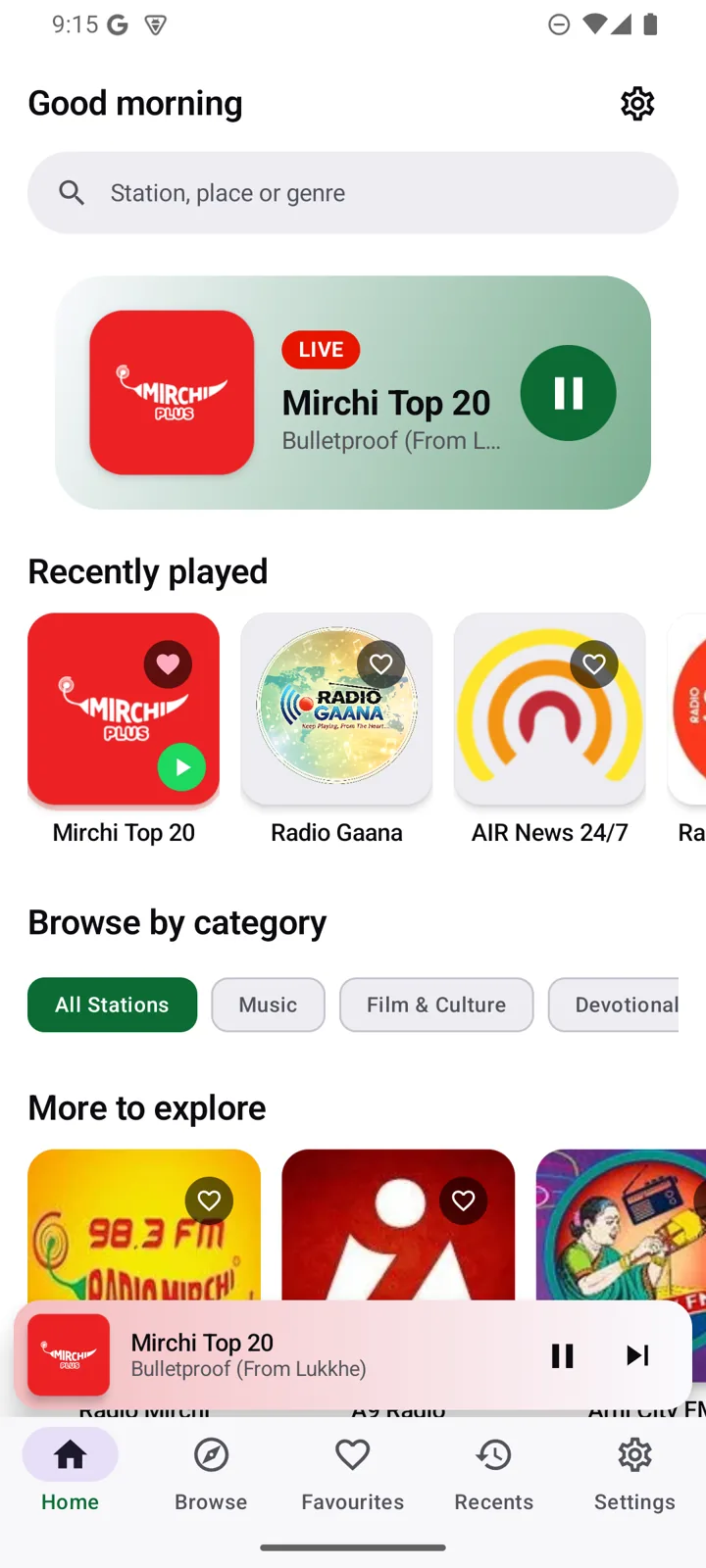
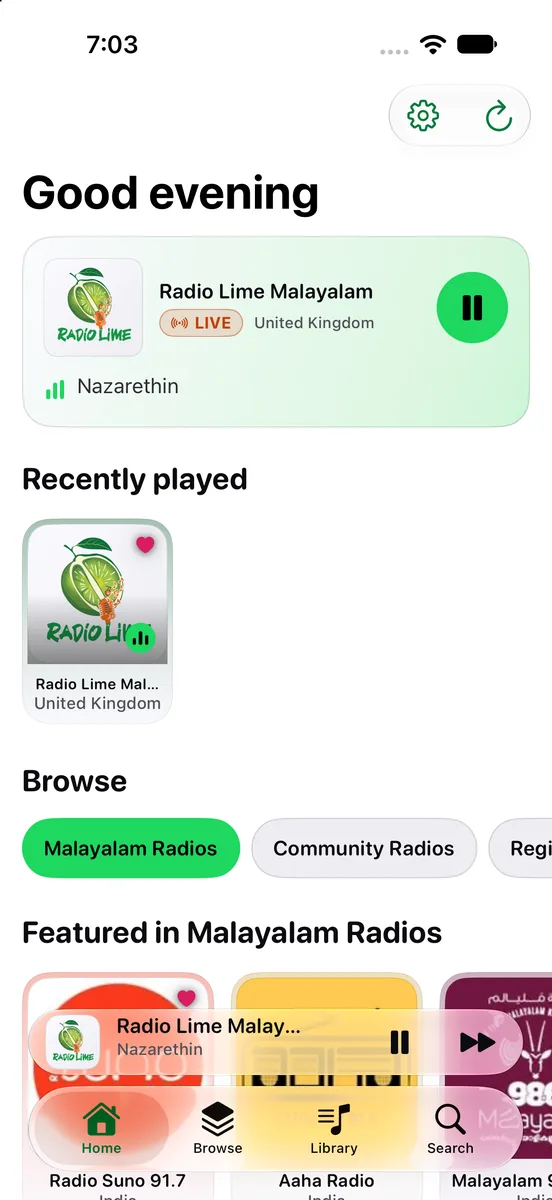
The Melo app keeps playing with the screen off, works in the car and on your watch, wakes you to your station, and browses the whole catalogue offline. Free, no ads, no account.