Season 1, Episode 1 · Wodcast
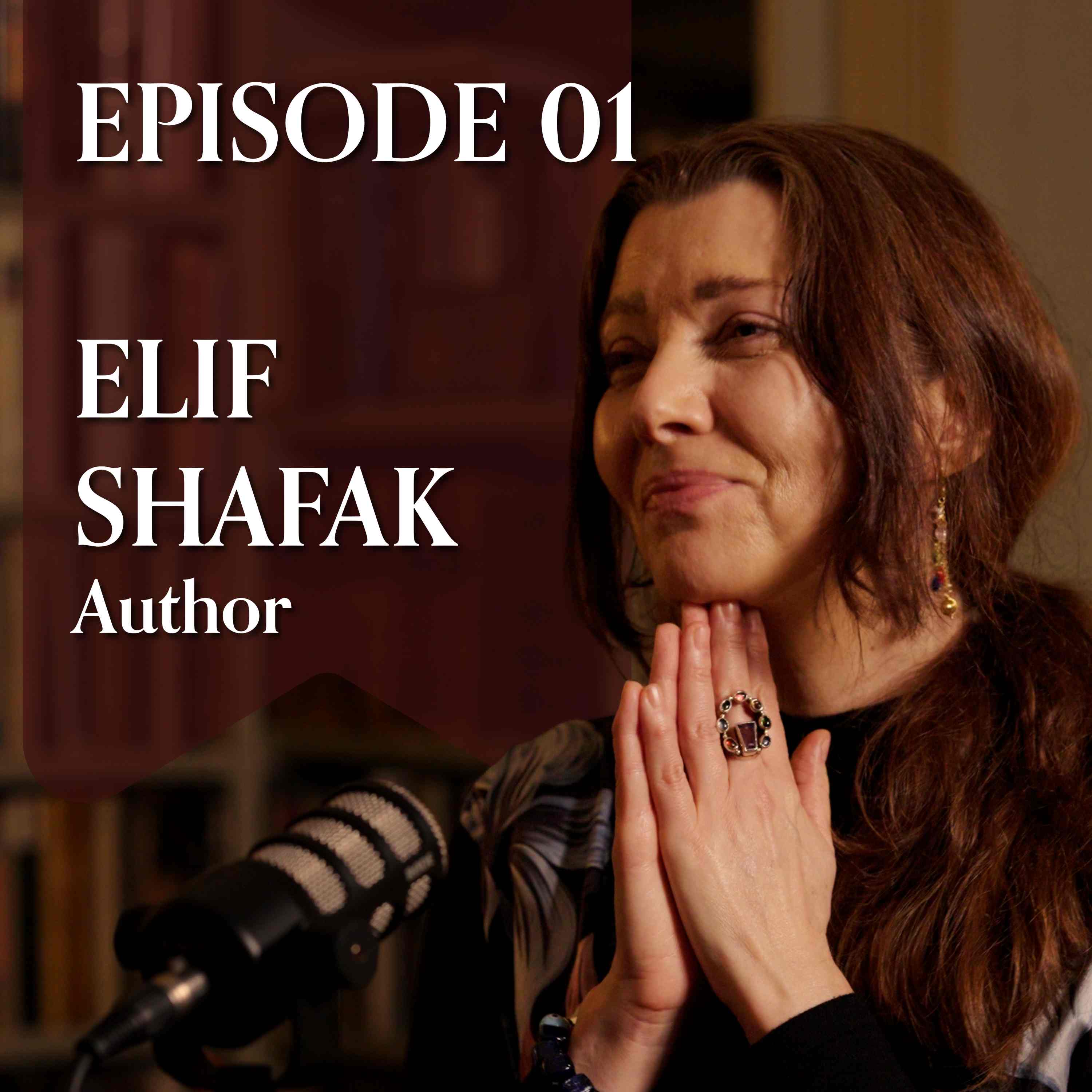
E1 - When Faith and Doubt Hold Hands | with Elif Shafak
17 Jun 2026 · 1 hr 25 min
Season 1, Episode 1 · Wodcast
17 Jun 2026 · 1 hr 25 min
What happens when faith and doubt learn to dance together? In this opening conversation of the Wodcast, bestselling novelist Elif Shafak joins Benjamin Aston and Mabel Evans for a wide-ranging exploration of language, love, storytelling and the search for wisdom in a noisy world. Together they discuss the ancient meanings hidden inside words, why different cultures understand love in different ways, the forgotten goddess of writing, the importance of oral storytelling, and what Elif calls "inner democracy" the practice of making space for the many voices within ourselves. Drawing on her…
Welcome to the WODcast. Here we explore the power and beauty of words. We're your hosts. I'm Ben. And I'm Mabel. And today's guest is novelist Alif Shafak. We hope you enjoy the episode. Very good to see you. So good to see you again. It's been over a year. I know. Can you believe it? hardly but yeah a lot has changed i guess yeah but i remember it so fondly yeah i'm glad you did i mean so do i so happy to see you and i would like to start by saying thank you um simply because your words especially the ones that created there are rivers in the sky completely changed my life it was at your book launch that i got introduced to mabel so you were the matchmaker i love that That's amazing.
It's beautiful. It felt like rivers meeting. Exactly. And converging into something. Oh my God, that makes me so happy. That's fantastic. It's a pleasure to meet you. I've been very excited for today. Such a joy for me. Thank you. And together with Mabel's Brilliance, we're now bringing the WODcast to life. So it's amazing that you're joining for a second interview, I guess. I know. It's wonderful. And you're based in London. Yeah. That's beautiful.
So great. Yeah. And to start off, I revisited our first conversation where we spoke about the role of grandmothers and how often they carry wisdom through their stories, especially oral stories. And Babel's grandfather was an oral storyteller as well. An oral historian and a story theorist. Yeah, George Hewitt Evans. he was a writer and he would go around the land collecting the stories of farmers and the way that they used essentially magic and spells to tame their horses to collect different items from the land and he would just sit with them and talk and so to be doing this project with Ben it feels like some kind of I feel my grandfather is sort of happy and very present actually because we're collecting words That is beautiful So is it possible to read his work?
Yes, yeah. So George Ewan Evans, he wrote a book called The Leaping Hare. The Leaping Hare? Yes, about the hare and asked the fellows who cut the hay. Again, just capturing the wisdom that was about to be lost. I'm very curious. Yeah, no, he's a remarkable man. And I've only just got to know about him recently. How so? I think both of my parents, who've also been in literature, never so you never grew up with him no i didn't grow up i didn't know him and i knew he was an author it was only when i started to look into his work did i understand what he was actually doing capturing the folklore which is something i've always been fascinated by and um yeah just the way that he's he's caught basically a history that was very close to being lost yeah you know No, that resonates with me very much.
I can imagine, yeah. It was such a joy to read There Are Rivers in the Sky for that purpose. It felt like just the way you travel through time in your writing, it moves me very deeply because time is something that is so intangible and your use of it is extraordinary. Thank you. Yeah. It's a mastery. Yeah. A mastery. And to start off, I was reflecting on what word that I'd like to share with you And, of course, the role that you have in my life brings me to kismet.
Kismet, yes. And actually, in preparation. That's such a lovely word. Oh, wow. I did have the joy to read your 40 Rules of Love. And for anyone that doesn't know kismet and its full meaning, there's a beautiful page where you describe it really well. And I'd like to share that with you. Please do. If that's okay. Please do. It's page 221, if I'm not mistaken. But I love the post-its. There's so much wisdom in here. Here we go. Okay, a lot of post-its sometimes.
That's wonderful. Get lost in them. Okay, so if I may from your beautiful book. Destiny doesn't mean that your life has been strictly predetermined. Therefore, to leave everything to fate and to not actively contribute to the music of the universe is a sign of sheer ignorance. The music of the universe is all-pervading and it is composed on 40 different levels. Your destiny is the level where you will play your tune. You might not change your instrument, but how well to play is entirely in your hands.
Thank you for reading that. Thank you for writing it. And what stands out is the 40 levels that you describe. And I wonder if there's a connection to the title, The Forty Rules, if there was a conscious decision when you wrote it. You know, before I started writing The Forty Rules of Love, I did a lot of research into mystical philosophies all around the world. And to me, it was very interesting to see how people have never met each other, never seen each other.
And they might have lived in different centuries, continents, cultures, or they might be coming from different religious backgrounds. But they were saying very similar things. The quest was very universal. So I'm very interested in that heterodox mysticism, mystics who are a little bit like misfits. And many of them are talking about layers or levels of awareness, consciousness. and a part of me believes that these are important teachings that we need today as well you know they're not some bygone wisdom but I think they very much resonate with us in the modern world so I guess I do differentiate religiosity from spirituality and I'm curious about that other domain in which there's room for faith but there's also room for doubt and I like it when they hold hands.
I like it when they dance together. I remember listening to you, I think it was on your TED talk about the dance between faith and doubt and how you cannot have one without the other. And I wonder, do you think the world or the Western world is currently, you know, lacking faith of some sort? I mean, the mental health of the people over this side of the world is dire um you know i just wonder if there is a lack of belief in something bigger greater than oneself that we are like parched you know there's a there's a sort of parchedness there i think all around the world right now there is um there's need for i would say more spiritual journeys and i don't want to maybe generalize it as east and west because this is something we can observe all across the world, right?
I guess for me personally, you know, I'm not a religious person. I have too much doubt, which I appreciate. You know, I find doubt very precious. But what I'm trying to say is the way sometimes religious people divide humanity into us versus them and the assumption somehow that us is closer to truth than them or us is closer to God than them. That is not close to my heart. Whereas I like individual journeys. You know, you might start that journey as a Buddhist.
You might end up as something else or vice versa. You know, who am I to judge? It's your personal quest. It's your personal journey as long as it comes from the heart and it doesn't divide humanity into boxes. So I think what scares me is absolute certainty. We live in an age of clashing certainties. So someone who is very sure of their religiosity, the way they want to get rid of doubt, it feels a bit scary to me because faith without doubt is a dogma, and dogmas are very, very dangerous.
On the other hand, someone who is extremely confident and sure when it comes to their atheism, maybe they want to get rid of faith. but I think in life there are moments of faith and it doesn't have to be a religious concept faith can be quite secular actually when we start writing a book we don't know what we're doing we don't know if we're going to be able to finish the book or succeed but something tells us to keep going that's a secular act of faith when we fall in love and you don't know if that person is the right person but your heart tells you go for it that's a secular act of faith.
When you move to another country, another city, why do we do these things? We migrate, we journey. Something tells us, right? So these are secular acts of faith. So in a nutshell, I think I'm more interested in agnostics or those mystics who are a bit like misfits, always walking that thin line between faith and doubt. I think there's more humility there. I like it when people can say, I don't know, When we don't have all the answers, when we're not that sure of our convictions, that feels like a healthier approach to me.
Certainly. And I wonder when, before you take one of those leap of faith, are there particular words that maybe provide you with support or confidence? you know we take it for granted but the word love of course it sounds simple to our ears but actually it is complicated it is so central and i think we need to remember that the ancient greeks there was so much wiser than us they had at least six different eight different words to describe love. So agape would be different than eros, and so on.
But today, we lump it all together, like the love we feel for maybe our children, the love we feel for our fellow citizens, human race, just one single human race, or the love we feel romantically, or the desire we feel sexually you know all of that we lump together under one umbrella one concept and sometimes it feels like it's not enough i wonder if we could have more words when we talk about love yeah i understand in arabic there are 20 different words for love and then in the english language it's love you know it's so limited as you say absolutely in turkish we have only two but in arabic there's Yeah, more than 15, as you said, close to 20 different words.
And it really makes a difference, you know, because language shapes us. Languages, they shape the way we think, the way we approach the world. When you realize there's another concept, it helps us to think in a much more nuanced way. So it's almost like those words, language, they're bridges into different realms. So the more words you know, I guess, or particularly when we talk about love, If you just know love, it might be confusing because you might experience a different type of love when it comes to your children or parents compared to maybe your romantic partner.
Yeah. So I wonder when you experience those different types of love, do those Greek words, for example, come up and they help you navigate? They do come up. Also, when I'm writing, they come up, you know, when I'm creating characters, fictional characters or trying to build a story. But equally, I think those concepts are not static in themselves. So, you know, whether we're talking about a more romantic type of love, that also changes. The beginning of it is different.
Maybe when it is more mature, it's different as years go by. So there's also change, room for transformation and change. Metamorphosis is another word that I really love a lot. Yeah, and within each word. So I don't see these, let's say, six or 20 different words we use for love. We need to bear in mind that each and every one of them is dynamic and constantly moving and becoming. The only constant is change. Which does remind of a river that just keeps flowing.
And I'm very curious to hear a bit more about your journey. You mentioned spiritual journey, and I wonder what element writing has had in your life, because it probably transformed over the years. I know you started, I think, in Turkish, your first novel. Yeah, that's true. I mean, I started writing at an early age as a child. I've been writing since my childhood, but that's not because I was planning to become a writer or a novelist. I really didn't know such a thing was even possible.
There were no writers around me, no such role models. I think it was more like an existential need, primarily because I was very bored. I thought life was very boring. And to me, Storyland was much more interesting. I was an only child. I was raised by a single mom, a working mom. So my mother was away for long stretches of time. Partly I was raised by a very traditional grandmother. And that was interesting because her world was full of oral stories, oral storytelling, just like your grandfather.
Very much connected with an ancient wisdom and appreciative of those stories. So she was like that. but I think otherwise I felt very lonely you know and books became my companions from an early age onwards and that's how everything started I wanted to go to story land in Turkey in the Middle East we have this tale about there being a mountain a magical mountain it's called Kaff the mountain cuff so it is believed that all the stories in the world all the tales in the world come from beyond mountain cuff so every now and then those stories are dispersed but usually they reside there and i wanted to go to mountain cuff you know i wanted to see what was behind that mountain that's beautiful it reminds me of um excuse me if i get the pronunciation wrong but in the book nisaba yes who's the goddess of literature and story and i wonder do you have a relationship to gods and goddesses and how do you relate and do you pray when you write to nisaba to these these figures of story yeah thank you it's what a beautiful question and i'm so glad we're talking about nisaba um to me you know i guess primarily maybe i should say i'm always
interested in silences as well as stories. So people who have been written out of history, forgotten, erased, whose voices maybe we don't hear anymore, have always been important to me. And when we trace back the origins of writing, it makes a lot of sense that it started, it went hand in hand with the development of agriculture, because we needed as human beings, as we go back thousands and thousands of years ago, as human beings, we needed to keep a record, track of what it harvests, what is being produced, what is being traded, and so on.
So you develop the numbers, you develop the words, but of course the beauty of language is it doesn't stay still like a river, it wants to flow. So very soon human beings are producing poems, they're writing stories. And for me, it's interesting to see that a goddess, a female deity, is representing both literature and agriculture. You know, in both hands, she holds these for a long, long time. But as patriarchy becomes more consolidated in ancient Mesopotamia, what we realize is all the skills and talents of Nisaba are being delegated, given to a male god called Nabu.
So Nabu becomes the god of libraries and literacy and literature, whereas it was Nisaba. And he becomes the god of agriculture. And again, when centuries pass, we realize Nisaba is being portrayed in the drawings as the loving and devoted wife of Nabu. And then again, centuries pass by, then she becomes the secretary of Nabu. And then some more time passes by and then she's completely forgotten. Whereas the cult of Nabu continues or the worship of Nabu continues into Roman and Greek mythologies.
So there's a continuity. But Nisaba remains in the region and she's completely forgotten in the region. So I think part of me wanted to remember this forgotten goddess. And that's why the book, There Are Rivers in the Sky, it ends with that dedication, you know, now and always praise be to Nisaba. Because once upon a time in schools, at schools, students, scribes, when they would write cuneiform tablets, they would end it with, you know, praise be to Nisaba.
So I just wanted to remember that. yeah I mean hearing about her being erased from history it makes my heart weep when you think about the women the goddesses that have been forgotten and sort of plastered over yeah um and I wonder yeah I wonder what your experience or understanding is of how language has been a force of oppression the language we use for women to describe women women deities how it's kind of, yeah, been weaponized, should we say?
Yes, I mean, that's the thing about language, isn't it? Because it can heal, but it can also hurt. And what unites us, among many other things, is our love for words. You know, we all believe that words matter, how we use words matter, right? And we know that with our words, we can give positive energy to someone. We can use it in a healing way, but it's also possible to use words in a very destructive way, not only vis-a-vis other people, but also within ourselves, because each and every one of us, we keep talking to ourselves.
So sometimes there's a nagging voice in our brains. Where does that voice come from? For instance, as women, we internalize the voice of patriarchy, you know, in a way when we so much so that when we look at the mirror, and when we judge ourselves, you know, we're not pretty enough, we're not this enough, we're not thin enough, that enough, we have, you know, wrinkles, all of those words, where does that come from? is does it really come from within does it come from outside so i think it's it's a good thing to to pay attention to both words but also where do they come from absolutely how do you distinguish where words come from like how do you differentiate which words are coming from the outside so to speak and where do you find your your true voice i guess yeah and not everything that comes from outside is bad you know and we are connected of course with you know the microcosmos and the macrocosmos.
But my point is, if there are words that we're using when we're talking to ourselves, and those words create, and we can feel it, create harm, it's a better idea to just discard them, to get rid of them, to minimize their effect. All the ancient teachings tell us that words have power. you know they have power over us over each other so we just try to use them in a more constructive way as writers as poets as bards I think we all try to do that it brings to mind the word sovereignty which this year has had a new meaning for me because I always understood sovereignty as something to do with state and politics and then as a woman I've come to know sovereignty is to be an authority unto oneself and understand what is mine and what is over overlaid in my understanding of what it is to be a woman and that word has been a kind of anchor for me um a sort of walking pole along the path to keep myself kind of you know sovereign unto oneself yeah that's beautiful yeah it's where language becomes for me this um uh tool a beautiful tool yeah that's that's really is so beautiful.
But equally, I think, and very much in line with what you said, the word democracy, for instance, we always use it as an external concept, as something to do with society and politics with others and, you know, with political regimes. And of course, it's very valuable in that regard. But there's also an inner democracy that is equally valuable. By that, I mean, I think we all have so many different voices inside us. You know, we're all so complicated.
Like Walt Whitman reminded us, we all contain multitudes. But we live in a world in which we are never allowed to recognize that multiplicity, let alone celebrate it. So usually we prioritize one side of ourselves and that becomes our public face. and everything else is just suppressed and just under the carpet. But that's a very hierarchical structure. That is not an inner democracy. For me, it was depression that taught me the importance of this because the thing about depression, going through depression, is because you fall down and then you break all into pieces and then you have to sit down and reassemble your pieces.
and it's an interesting phase in our lives because there is a chance that the new self that we build could be better than the previous one right we have to do a lot of thinking so it was a learning experience for me when I went through that depression and I realized other sides of me for instance the side of me that was more maternal the other side of me that was more domestic and wanted to learn how to make rice pudding you know I always had belittled that because the only thing that mattered for me was the intellectual side of me but then that's not a democratic system right right that's um that's an oligarchy so there came a moment when everything you know toppled down and i had to rebuild the system and it became better you know more more inclusive still learning still trying but i all i'm trying to say is i think we need to talk about inner democracy as well.
That's beautiful. So beautiful. The inner democracy. I've never put those words together. And I do wonder, how do you govern this inner democracy? Because I can imagine there are many voices, many almost like shades of identity, colours that come to play. And I wonder how you find the right balance. Yeah, I really appreciate this question. And of course, democracy is not an easy system, but it is the best system we have come up with as human beings.
So I have a lot of appreciation for it. And I think we need to improve it. We need to reform it, but not abandon it, right? Whether it's external or internal. So sometimes those voices quarrel. And I'm not saying they're always in harmony or in unison. But I wrote a book called Black Milk. And that was about postpartum depression. and it's a book that even though it deals with a relatively heavier subject like depression, actually there's a lot of humour in it because I think humour is so helpful, not condescending humour, not the kind of humour in which the author situates herself somewhere above and makes fun of other people, but compassionate humour in which we can smile, can smile, can laugh together at the follies of human existence, which we all share.
So that was very helpful, and that's why there's a lot of humor in the book. And in that book, there are six different Thumbelinas. Thumbelina? Yeah, little me's, and I named them and how they quarrel and how eventually they learn to respect each other. I think, to me, that's very essential. What are those six Thumbelinas? Tambrina was an animated movie, wasn't it? It was beautiful. I remember it. Yeah, I need to remember it now. One of them was Mama Rice Pudding.
I remember that. I need to remember. So there was a side of me that was more ambitious, a side of me that just wanted to have nothing to do with society and go and live like a hermit, like a mystic. There's a beautiful word I can never pronounce. Anchorite? Recluse? what is it? Anchorite yeah so yeah as you can see you know they pull you in completely different directions or part of me that's more of course maybe bookish or intellectual as I said I wrongly prioritized her yeah and they keep quarreling in the book they keep you busy I guess we all have that conflicting voices yeah it makes me think about this word I'm fascinated by mother you know in its broader sense where how do we learn to mother and father ourselves and give love and appreciation and acknowledgement to these parts as our children and then in the broader society or I guess in a more spiritual context I'm coming to engage with this concept of the holy father having had a lot of interest in mother earth where do the two sit with each other how do they govern each other and knowing that there is a system within that is not
based around as you say this oligarchy of top-down domination be quiet over there you're not welcome but actually creating a space of harmony between those two the masculine the feminine the the children that are born from them which are our parts are many parts yeah yeah but it is it is no i find it not easy no we don't beautiful i love you i love your thumbelina reference and I love what you said I guess for me personally I don't want to think of in dualistic terms it doesn't make sense and you're so right we have to think about these concepts the father, the mother or the more masculine energy in the world the more feminine energy but for me they're more fluid and they flow into each other rather than mutually exclusive categories.
Does it make sense? That's beautiful. So we live in a world in which, unfortunately, only one type of masculinity is being applauded and presented as a role model. There are many other types of masculinities, equally femininities, and within that masculinity there's room for femininity or vice versa. Again, they can talk to each other. I like writers who are aware of their feminine, for instance, male writers who are aware of their feminine side.
They're always the best when it comes to writing about the female experience because why they can tap into, you know, they can understand their characters, they're wiser. So it makes us, I think, grasp the world in a better way when we are aware of the other side in us and how much of that we also carry. yeah thank you for that reflection because even in the conversating about it it evolves my understanding you know it's a recognition of the duality to then allow it to dissolve yeah wow beautiful we're going to take a brief moment from the episode to discuss a word given to us by one of our sponsors what's the word ben the word is rooted brought to us by some of our architect.
I love the word rooted. I know it comes from the old English rot and that means to be beneath the earth. So it's a word that really comes from underground, but it traces back to also meaning above ground. And it reminds me of the hermetic principle as above, so below. But how does this relate to Summer Owl Architect? Great question. And it felt like such a natural fit because I had the chance to work with Keith, Keith Summer Owl, the founder of Summer Owl architect and what stood out to me is his buildings whether they're hotels or farmhouses they are so in harmony with the environment around them so they make it they emphasize using only local stones and local wood wow and that's why the buildings feel rooted in the broader landscape that's beautiful what an inspiring way to build buildings and create landscapes rooted in the environment that they're from and in yeah and just to i guess reiterate that rooted isn't about being stagnant or being stay put it's about creating a foundation which will allow you to reach further beautiful now back to the episode there is a quote that i was
going to share with you um because i think you wrote it down if i may peek where is it just there it's also from the book and it goes when you step into the zone of love you won't need language and i was wondering whether that goes to almost an understanding of each other without having to express anything yeah this is a tough question isn't it because as people who love words we also believe in the power of language. But then there are many philosophers, of course Wittgenstein immediately comes to mind, who remind us that in a way the limits of our language constitute the limits of our understanding, right?
So language cannot grasp everything and sometimes human beings have found ways to communicate via other channels. I'm always interested in silences, gaps, the pauses between words. I'm also interested in, you know, these other ways of communication that we try to build. If I may give you one example, my grandmother was not a very well-educated woman only because she had been pulled out of school for being a girl in Turkey and she wholeheartedly believed in women's education And she genuinely supported my mother's education, which changed our lives, of course.
But the reason why I'm mentioning is she wouldn't know often how to talk about the past. She had gone through so many things and the ancestral heritage. But instead of communicating via words, she would feed you. So food was a language. Food was how she communicated her love. food was how she expressed her emotions. Not only her, of course, she's just one example. But many women do that all across the world. Often the way, you know, they cook, they present.
Or when you, for instance, look at the tapestries or rugs, kilims coming from Asia Minor, the Levant, the Middle East, often women who were weaving those tapestries or carpets, they would put their feelings into. You can read the patterns. That is a language, you know, not via words. So I think we need to pay attention to such things as well. It reminds me of expression being the antonym of depression, which is something that you've briefly touched on.
And I guess it's so important to give the inner voices an external representation, whether it is through food and cooking or tapestry and weaving or just words, I guess. Yeah, absolutely, because we do want to express ourselves. Sometimes we don't know how to do that. Also, I mean, this is a little bit surreal, but I think in that world of oral storytelling, they will always tell you that nature has a voice too, and not just one voice, but multiple.
So trees tell us something, rivers tell us something. I wish you had seen my agent's face when I told him that I was going to write a book. This is The Island of Missing Trees. And there was going to be a talking tree at the heart of this book, a fig tree, and it was going to speak. And I saw he's always very supportive. But for a moment, I saw this flicker of anxiety and panic in his eyes because and I understand, of course, where that panic comes from, because it's a risk for an author, you know, when you're writing literary fiction and when you make a tree talk.
If it doesn't work, the entire novel collapses. But I heard this voice in my soul, you know, in my heart, and I believed in it, so I just wanted to follow it. But all I'm trying to say is when we go back to ancient teachings of many minorities across time, they remind us that you know the wind tells us something the earth tells us something rain tells us something so they always attribute voices to nature it makes me think of the spider how it weaves and it creates the most resilient web that could withstand gale storms yet you touch it and it can fall apart and that to me speaks so much to yeah the reality we live in where things can be so finite and then fall apart and um i think trees can talk i mean i you know i think we should normalize the trees to in fact speak to us and speak to each other yeah i think they're more sentience than we recognize and that's a beautiful word sentient sentient is an amazing word yeah do you guys understand like the tree language or the spider the spider chats i think my experience of listening to nature which is one that i'm increasingly trying to kind of attune myself to is the quietening of the mind to such a point that something arises
of the body in fact sensations whether it's just peace or it's like deep listening and i'm i don't know how to talk about it because it's so it's somewhat ineffable and this is a word that i like to use a lot ineffability because i think so much especially when it comes to the the listing of nature it is ineffable it's it's it's hard to find the words to describe what it is to sit by water and listen and truly listen to what it has what it carries um but i guess i would encourage everyone to try yeah you know just try listening to to nature and try listening to the silence Definitely, definitely.
I mean, for me, it was an important learning experience. As I was writing There Are Rivers in the Sky, I had to, I wanted to listen to Yazidi grandmothers. And as you know, the Yazidis are one of the most maligned and misunderstood and persecuted minorities in the Middle East. Not just now, but throughout time. The Yazidi lore talks about 72 massacres, date by date, you know, holding the memory. And this is a culture in which memory is transmitted not via written literature.
They don't have a written holy book. Instead, everything is carried over via oral storytelling. So lullabies, folk tales, riddles, you know, all of that is very important. And therefore, you have to do a lot of listening to try to understand the culture. and something really stayed with me when you talk to Yazidi grandmothers and pay attention to what they're saying, especially in the month of April, they advise their children or grandchildren not to run around or stomp or jump up and down like children do, of course.
Why? They warn them gently. Why? Because in the month of April, they believe that the earth is pregnant. So when you walk in the month of April, you need to do so softly, gently, you know, tread it carefully. Now, to our modern minds, this is just nonsense or irrational. We just perhaps brush it aside. But my point is it's so valuable. And these old teachings and only a culture that has not disconnected itself from nature can come up with such an approach.
Whereas what we have done today is we think we're so clever, the cleverest species. We think we're above nature. We think we're outside of nature. And primarily our relationship with nature is based on consumption. So we become consumers of nature. And that's not helping us. It's destroying our planet. It's destroying our own lives. so I think in those ancient teachings of the Yazidis and many other minorities we can find a lot of wisdom that we need today yeah it brings to mind the word remembering just remembering the knowledge that has been there for so many millions of years that we've forgotten or has been erased which also reminds me of the difference between information knowledge and wisdom which is also something you mentioned And I wonder in this fast-paced consumerism or consumerist behavior, especially online, where the attention spans are shrinking by the second, I wonder how we can bring back something that requires a bit of patience and invites you to listen maybe more deeply.
And I wonder if you have any thoughts on it. And, you know, that's why your work is so important. You tell us to slow down, you know. don't rush, pay attention to seemingly small things like words, one word. Let's pick that word and let's trace its etymology, let's trace its story. I really find that so valuable, just not to take things for granted. I do make a distinction between information, knowledge and wisdom. Actually, T.S. Eliot in a poem mentions this, you know, trilogy or distinction.
And I think in the age we're living in, in particular, we're so bombarded by information. It's almost like the age of hyper information. And for a long time, we have romanticized information, to such an extent that the idea back then was, if you spread information, everyone is going to become informed citizens. Informed citizens can only make informed choices. So from now on, it was going to be the triumph of liberal democracy, there will be no more authoritarianism, no more challenges to democracy, we're all going to become one big global village.
What is happening right now is actually, we rely too much on information. And I think it makes us also very arrogant, because we now all have some knowledge about everything. You know, we know something about everything. Nobody can know something about everything. What we forgot is to say, I don't know. You know, when was the last time we ever used I don't know? You can ask me anything. If I don't know the answer, I will Google it. In the next minutes, I'll be able to say a few words about that subject, giving me the illusion that I know something.
But actually, that kind of information is an obstacle in front of knowledge. so I think for true knowledge what we need to do is to slow down we need podcasts like what you're doing together I think we need really I love podcasts and I think they're very nourishing for the mind but what we need is also slow journalism definitely we need books, cultural spaces literary festivals and then I'm hoping for wisdom we also again it's part of this conversation we need to bring emotional intelligence we need to bring the heart into the conversation you know it makes me think about intergenerational dialogue as well because i'm astounded at how we don't speak to people much older than us and ask them to teach us their ways to give us their knowledge and i when i think of wisdom i just think of how much is lost in us not conversating with the older generations as a young generation.
I guess it's the floor of youth, really, as you think you know everything. And actually sometimes we need people who have lived much longer than us to say, with respect, you don't, and there's much to that. Yes, equally. Equally, I think we need to learn a lot from young people. Yeah, the dialogue. The dialogue, and we have something to learn from every human being, right? And that's the beauty, that's what we share together. we don't learn from sameness.
Like if all my friends speak like me, think like me, vote like me, you know, it means I'm surrounded by my mirror image. And that can be a very narcissistic existence. Whereas I think these cosmopolitan encounters, and by that I mean when you meet people from completely different backgrounds, different religions, no religion, different traditions, different stories, and when we have time for each other to hear each other's stories, those are the moments when we genuinely learn something.
And we probably discover that underneath we share some universal quests. Indeed, yes. And we're not that different, right? Yeah. And that's, I guess, why we love words so much, because they do feel like bridges. Yeah. And I was also conscious of your Turkish background and whether there are words that don't translate into the English that you kind of miss in English that you have in Turkish. Beautiful, beautiful question. There are, and I really think if we want to understand cultures better, we have to pay more attention to those words that cannot be easily translated, easily carried over borders.
We have, for instance, this word called gurbet. Gurbet. it's g-u-r-b-e-t it's um it's not exactly exile but it has that meaning there's a longing there's a yearning you know you are you're not in your motherland anymore and it's more a feeling than a physical you know location so you can carry gurbet within you wherever you go And you yearn for... meaning and no single word in english completely yeah covers that meaning what does deracinated mean i don't know that deracinated i like it's connected to roots so uprooted deracinated or anyone yeah i'm very interested in roots the world roots yeah yeah because if you're not rooted you're not grounded because you don't have the connection to gaia right to the earth which is when I guess every gust of wind will just blow you away yes but at the same time I mean it's so interesting there's a Lebanese French author called Amin Maloufi I was reading an essay written by him about roots in which and I understand why he speaks like that in which he questions how roots can also feel very claustrophobic you know sometimes it can be a burden but i want to think of roots maybe in a slightly different way
like an upside down tree you know the baobab tree when you look at it it looks like it's upside down so its branches look like its roots right so if we could only be upside down trees then you could have roots that draw light and water and oxygen from infinity rather than being rooted in a patch of soil. You still have roots, but your roots are connected both to the local and the universal. Both your fellow citizens are yours, but also an entire humanity.
It doesn't make sense. I like the imagery of upside down trees. It reminds me of the, I think it's the hermetic principle, as above, so below, from the Emerald Tablet, which is one of the ancient forms or principles of correspondence. That's so true. Do you believe that what happens in our internal world is what we directly experience in our external world? I'm very interested in these old teachings. And I think there is a continuity. so how we take care of ourselves is very important that said it's not easy of course you know we can talk about these principles for hours but then the moment we leave this room and you see me in the traffic having a panic attack or getting upset and you know so it's it's another level to really practice that in our daily lives.
But I think awareness, if I may give you an example, of course we all want to be loved, but we also need to learn self-love. And I'm not saying this in a narcissistic way, like everything we do is great. Not like that. We should also have self-doubt. I think self-doubt is also very healthy. But compassion towards ourselves, not to judge ourselves, particularly as women, We do that a lot. We're very harsh towards ourselves. Yeah, very much so. Do you think those judging voices that you might hear, are they coming more from the outside than from the inside, as we touched on earlier?
I mean, it's both, isn't it? Because imagine a whole life we built. And think about a child that has been raised and constantly heard scolding or maybe belittling. And after a while, that child or that adolescent starts to internalize that voice and starts to scold. So we need to break the chain, that chain of oppression, that chain of judgment. And the biggest moments, the amazing moments in history are possible, personal or collective, when we can break the chain.
You know, when I think of my grandmother, because she wanted to give her own daughter a very different life than the one she had, she really broke that chain. She didn't perpetuate, you know, the same codes, the same patterns. That to me looks very, feels very revolutionary, actually. And did the chain break through like education? Education, definitely. But also, I think there are different paths to knowledge. You know, as I mentioned earlier, for instance, my grandma was not able to go to high school, university.
And she was one of the wisest people I've ever met in my life. I think she showed me with her sheer existence that one cannot have a very chic diploma on the wall, but one can still be wise. Or the opposite, one can graduate from a very well-known posh university or college, but one can still be ignorant. So there are different paths to knowledge. and our duty or responsibility maybe as human beings is to expand our knowledge in every way we can.
So to be open to learning and sometimes unlearning. We have a lot of unlearning to do as well. Equally challenging. Equally important and challenging. Are you unlearning a lot? Oh my gosh, endless unlearning. Remembering and unlearning. Those are my two focuses at this point in my life. Really? Yeah, because I think when, as I say, young women, there was a time where I was overlaying so much. I must change. I must. And then you come to a point where you go, I'm not broken.
I was never broken. And I don't need to be fixed. And I think we do have this culture now of this idea that we're inherently broken. And I think inherently we're not. But, you know, capitalism operates and runs on the idea that, you know, we are. So I'm trying very much in my life to unlearn that. I love that. Yeah, I respect that very much. What about you, Ben? Are you unlearning anything? I'm also trying to learn a lot. I think that's where my...
Of course, you're doing a master's in a university. That is a lot of learning. Of course. It's been equally challenging. When I was... I had the opportunity to do some physics courses and it's not a language that I speak. However, it is the language of the universe. and through I guess the the beauty that words bring me I try to also see that in physics and how they name things and it is yeah it's it's a similar music that you can hear it just takes a lot of time to start to hear the rhythm that's beautiful yeah hands off to you hands off to you sometimes I see the I see the sign language on his paper and I'm like It is an alien language.
How do you do it? They're all fun and games. I think that's remarkable. Yeah. I think it does open new understanding in a way. Definitely. And I also think with you that only when we leave our comfort zones, we genuinely learn, right? So for me personally, you know, when a novelist becomes interested in neuroscience or water science. I don't know anything about these fields, but I want to learn more. So you become a student of that field. You become a child again in that field.
But equally when a scientist falls in love with poetry, right? When a poet becomes interested in film theory or when a director is drawn to political philosophy, when we leave those atomized spaces and journey into another discipline, another way of thinking that is when we learn more right the most is that what guides your research when you do those when you write those novels that you dive into those foreign lands almost yeah indeed i i do a lot a lot of research and i love it you know i love interdisciplinary conversations i like intercultural readings so um i don't like it when our reading lists are solely Eurocentric.
Sometimes we forget that there are different ways of storytelling all across the world. But basically, I think when we learn about history, philosophy, you know, literature, and then you realize they're all connected. It's not like there are separate boxes and we can keep them. That's one of the many reasons why I love the novel as a genre so much because in it there's room for nuance for pluralism for multiplicity even though in our world there isn't and so inside a novel we can find history we can find philosophy we can find technology and so on and politics but perhaps more importantly there's emotional intelligence in a novel and i don't know a single human being who does not need to connect with their emotions or with the emotions that are guiding and misguiding our world in this age of angst, right?
So my point is I think whatever is the subject of life can be the subject of a novel. It reminds me of the end of There Are Rivers in the Sky and I'm very conscious of not giving any huge spoilers away. But Delika, the character, when her father has to decide whether to save his own grandchild or to harm another child through trafficking. And I just thought that was such a beautiful kind of human question because when it comes to it, is there this primal need to protect our own beyond the broader moral picture at hand?
And it was just such a beautiful nuance that was such a gift at the end of an already extraordinarily nuanced and beautiful novel. By coincidence, while I was writing this book, there was a case of organ trafficking in the UK by a Nigerian couple. They were trying to bring over someone and I was reading it and thinking. And then I was doing a lot of research about the Yazidi captives. As you know, when ISIS started their horrific genocide against the Yazidi minorities, the very first thing they did was to kill the water.
You know, they poisoned the wells, the fountains, leaving no drinkable water for entire communities. Then they killed the elderly. In a community like the Yazidis, if you kill the elderly, you kill collective memory. Because all the memories are held by older people. They killed defenseless men and then they kidnapped women and children. As we're speaking right now, over 10 years have passed. More than 3,000 women are still missing. Unfortunately, treated as sex slaves in ordinary neighborhoods across the region.
And some of them are also unfortunately exploited by this organ trafficking networks. so as I was writing all these pieces came together in my mind one more thing happened one of these women was saved in a house from a house in Ankara from the you know the neighborhood where I grew up my maternal grandmother's house literally three streets away and as I was reading that piece in the newspaper it really struck me hard because how is it possible that a human being is kept under such horrific circumstances in a tight-knit community and the neighbours don't know and the neighbours don't see or they don't care, you know.
So I think this kind of dehumanisation of each other is part of the problem and that's still going on. Yeah, and also the importance of nuance in these conversations. I, 10 years ago, started a women's rights charity with a remarkable woman who was an FGM survivor, a survivor of female genital mutilation. And we've spent the last 10 years understanding, you know, what is it that creates a world where a grandmother and a mother would do that to their daughter.
And the nuance of language around this became so fascinating because, you know, we all over call something like FGM a practice, but you would never call rape a practice and somehow by using that word you give it standing in an idea of culture and it's when I started I was a very you know radical young feminist that was like this is bad this should not happen of course I still believe that wholeheartedly but then speaking to the women who do this to their daughters because they believe it will help them they believe it will protect them and then you just see how all of this work we've been doing was actually very wrong because when you demonize those women you're doing much more harm or you imprison them you know and so it's a it's a it's a conversation you know it's something that needs to be very delicately discussed and understood and we live in a world where nuance is not really welcome in the room much of the time and i've just experienced firsthand how much harm that's done yeah it's a very very complicated subject as you said um but i also find it very important that the practice be banned absolutely yeah um so that in a way people don't feel
compelled to continue definitely as you said the conversations with mothers and grandmothers aunties they're very important a whole community but my worry is that things can go backwards so fast and so easily and when that happens the very first rights that will be taken away will always be women's rights and minority rights. I mean, last year in Iraq, they passed a law that makes it possible for children aged nine to be married. You know, and it's the, you know, when you pass such laws.
That was last year. Yeah, last year or the year before. Yeah, I think there's so much work we need to do together. I am a big believer in global sisterhood, you know, global solidarity, but basically not taking things for granted. And what happens in one country can happen elsewhere. And I think we live in a world that is very liquid. You know, things change very fast. Yeah, and the rollback on rights, it seems to be happening everywhere. Yeah. What do we do, Alif?
What do we do? You know, as a kind of global sisterhood, as potentially people in power who have power that might be listening, What do you think we should do? I mean, it's a very difficult world to live in. I think right now there's so much anxiety. I really think it's the age of angst. And young and old, east and west, everybody's so anxious right now, understandably. Maybe the only difference is some people hide their emotions more than others.
That's the only difference. but that even though that in itself is challenging enough it's not um it's not like we can't do anything about it my worry is if this age of angst were to become an age of apathy i think then it would be a much more dangerous world to live in so the moment we become numb you know the moment we become desensitized or indifferent the moment we stop caring connecting and we all become atomized individuals. That's a very scary world.
So what you do, what we try to do together is we try to build bridges and we care. That's not a small thing, you know, because all change starts from that little seed of caring, that little emotion of caring about other people, not only ourselves there is a brilliant meditation teacher called guy bergs who i adore and he talks about apathy as the lowest the lowest form of consciousness yeah because to be angry to be vengeful to be judgmental is better yeah than to be apathetic i fully agree yeah fully agree because all those other emotions whether it's anger anxiety depression i think from the way i see them.
They're like sources of raw energy. It is bad if it becomes repetitive, then it becomes toxic, you know, you're drawn into a loop. But if we can see them as sources of raw energy, we can turn them into something more constructive. There's a beautiful essay by Toni Morrison. She says, it's so simple, but I think so powerful. She says, sometimes I feel so angry. Right, rightly so, because so much is happening in the world. But the next line in the essay is, sometimes I feel so angry and then I sit down at my desk and I write.
So to me, she takes her anger and turns it into literature. Maybe another person takes their anxiety and turns it into art painting. Another turns it into climate activism, you know, but apathy is so low, you know, it's just, I agree at the bottom of, you know, all those emotions. And to me, it feels very, very dangerous when we become numb like that. And numbness often comes from overstimulating, right? And I wonder if that's a bit of a danger of the online world that we've created because we are so inundated in information.
We don't know what's true or fake. And yeah, then maybe from that comes a numbness because you're kind of used to the terrors and horrors of the world because you just get bombarded, which is worrying. You're so right. And now there are developing new concepts to understand this phenomenon because it's so widespread. Like there's an emotional fatigue. There's an information fatigue. People don't want to read anymore and want to engage anymore. But that's precisely why I think we need to spend less time with information and we need to try to spend more time with knowledge and wisdom.
So instead of getting our information from snippets of social media feed, can we slow down and listen to a podcast? You know, we're still engaging, but in a much more meaningful way. Right. Otherwise, I'm fully with you. It becomes like a bombardment and many people just withdraw from the public space. It seems to be also a question of intentionality. So you have to be intentional to slow down. Right. because if you just go online, you don't need an intention to be bombarded.
You're kind of like passive, whereas you need to be active and proactive to be like, I'm going to take time to go on a walk and listen to an audiobook or a podcast. That is so true. I gave two TED Talks about 10 years apart. And the reason why I'm mentioning is the first time the guidelines were keep the talk around 19 minutes or 20 minutes, right? 10 years later, when I was preparing for the second talk, they said, keep it around 13 minutes because the guidelines have changed.
And when I asked why the difference, they said, in those 10 years or 9 years, the world average attention span has shrunk. And that's very sad because are we not able to listen to a talk for more than 13 minutes? Maybe it's now lower now than 13 minutes. But as you said, there has to be an intention to, okay, I want to slow down. I'm going to go out for a walk. I'm going to walk by the river and try to pay attention to the river. Yeah, I also think about our consumer diet in the same way we think about what we eat, thinking about what we consume and being very mindful and having somewhat of a filtration system as to what we're allowing to digest.
You know, that's become sort of increasingly important. I wonder if words are also becoming diluted or losing their meaning. Do you have a sense of any words that you feel are just overused and have lost what they actually mean? And maybe you could bring us back to their true meaning. I really appreciate this question. Sometimes I want to have a dictionary of, you know, discarded words, unloved words. I mean, not that long ago, for instance, the word diversity, the word multiculturalism used to be positive things.
And they no longer are when in the general public space. space. I remember many politicians would use these words in a positive way. But now diversity is regarded as almost like a bad thing. And that breaks my heart. You know, there's a part of me that wants to pick up that word because it has been, I think, chucked aside. And a part of me wants to just take it. So one word that I love is mudlarking. You know, we're all mudlarkers in a way and what do mudlarkers do when the the river is so tidal the river thumps of course and when it retreats mudlarkers walk in that mud and trying to see what has been lost discarded forgotten and they take it and they love and appreciate those broken pieces the remnants of history not because we want to be stuck in the past but i think we have to honor the past we have to understand because what we cannot remember we cannot repair and what we cannot repair will keep coming back so healing if we want to do healing individually and collectively it has to start with memory memory mnemonic mnemonic yeah what is mnemonic i think it's the greek word where it comes from it's the greek word for where it comes from yeah yeah connected to yeah recollections
they're remembering well fascinating mudlurking does remind me of king arthur yes it was a great mudlurker and of course the word king being in mudlurking yeah i always thought that was so beautiful i loved hearing you say in another interview that words hold flavor yeah flavors and colors and yeah what's the most delicious word to you yeah i mean i don't know how to talk about this but i think i have a very mild form of synesthesia some words and they always leave a flavor in my on my tongue like i associate them with tastes some words in turkish some words in English.
But I'm very interested in that. I'm interested in people who experience like when our different senses merge so that words can have music or colors or flavors. The merging of senses is something that intrigues me endlessly as an author. So the word motherland, for instance, has a very mixed taste for me both the sweet and the sour I can imagine, do you have any words? that taste? I mean what's it called, the hot seat? is that what it's called? the hot seat or a word that you love to say like you enjoy how it feels coming out of your mouth I like sublime I think sublime has got this yes it sounds nice when you say it yeah or subliminal subliminal yes subliminal and from my understanding is sub is beneath or under and liminal describes liminality so it's not yet crossed the threshold of consciousness for example so subliminal marketing would be the marketing that gets bombarded without us being aware of it you know that's beautiful what about you have you got words i don't but as i asked as i was asking you alif the word perplexity just came to mind yes because it feels it feels perky
perplexity it does have that kind of immediately broke up turkey is a great word perky perky perplexity preposterous you know that kind of like you like the peas i do in this very moment I guess because I'm feeling so invigorated by our conversation. Those words are coming, the words that feel kind of invigorating. And they are, absolutely. Yeah. I think it's fascinating also. I mean, the word meander, I like it a lot. It comes from a river in Asia Minor in Anatolia, which when you look at the picture of the river, you will see it winding constantly, the Menderes River.
So meander is the ancient Greek given for the river. That's beautiful. I love it when we trace the stories behind every word. Yeah. Is there any words that you don't like? That's a tough question because imagine when you're writing a story, you need all the words. This morning I was writing about a character who doesn't like the word forever because his partner, his love, wants him to love her forever. And he thinks that forever is the most preposterous or misleading word in the dictionary.
It's a lie. You know, there is no forever. So I was thinking about the word forever. Why do we romanticize it so much? Is there that much substance to it? That's interesting. So the dislike of a word comes from the context. From the context, only the story. Otherwise I wouldn't, of course, dislike the word forever. But within that story, I was very critical of the word forever. I wonder if we're not obsessed but so drawn to this forever because we're so fleeting.
And maybe that comes from being aware that our time here is so limited. So we try and connect to something that lasts forever. True. I think you're right. But also there's a bit of possessiveness in it. Like, again, coming back, maybe we're drawing a full circle and coming back to love again. When we talk about love, there's so much emphasis on my wife, my husband, my love. I think there's the emphasis there is on the first word, my, right? that person doesn't belong to us.
It can be, of course, like until people's last breaths, but no one can guarantee that. And so love is in that moment. And when we say that, it sounds so scary. But it is in that moment, the fullness of it, the beauty of it. So we want a guarantee. There's a little bit of possessiveness in it as well. Certainty. Certainty, yes. we're so scared of it yeah it reminds me of something you showed me that was so beautiful which is or you've actually reflected to me once which is alan watts's words on we don't say rising in love we say falling in love true and in the fall comes you probably know the quote better which is surrender yeah yes surrender true you don't control the fall you don't control the fall and we don't say staying in love which is harder than falling in love how do you stay there oh i'm staying in love with love yeah you know because that's effort how do you stay in love so does that mean you got to keep falling like is the fall like um because when we say falling we take no responsibility it's something that happened to us you know it's just the wind the things the way the circumstances worked so we fell in love almost despite us our will but to stay in love actively
that requires a lot of work. You need to put effort into the relationship, care for the other person, for the relationship, for yourself. So it feels important to me. Which might unlock pragma, the Greek word of long-lasting love, I believe. Yes, yes. And I think it's where the word pragmatic comes from. Pragmatic comes from. Which I think is such a beautiful detail. Fascinating. I also don't know the quote by heart, but it's about how we expected love to, you know, supply us with bliss or make us secure.
However, the true power of love lies in its ability to transform us. That's so true. And I was curious whether you've experienced that in your own life, that love has kind of like allowed you to see new things of you or like you grew out of an older self into. Yeah, absolutely. Absolutely. There's a line in the Forty Rules of Love when it says, if we are the same person before and after we've loved, it means we haven't loved enough. Because I think love does change us, right?
And that was one of the main reasons why I was so intrigued by the story between Rumi and Shems. I mean they lived more than 800 years ago and yet to this day Rumi's poetry speaks to our hearts, right? Precisely for that reason because he connects with humanity. In the old sources and archives Rumi is described as fire and Shemsi is described as water and can fire and water love each other? There were so opposites, there were such different people and they transformed each other hugely.
So in my life as well, I think the same thing, maybe not to the same degree, but it did happen, of course, with every love that you experience. And just like that with every book that I write, because you have to love what you're doing. When you finish a book, for instance, you're not the same person anymore. Something has shifted inside you. Something has changed. So that transformation, that metamorphosis, that word again, is very important for me.
And when do you know it's the right time to write a book? I really don't know how much of this is rational and the conscious mind. Doesn't have to be. Yeah, I don't know whether we choose our subjects or our subjects come and choose us. And I'm not claiming that it's easy because when I'm writing, I always feel a little bit miserable. But if I'm not writing, I know I'm much more miserable. You know, between books is the worst time. Virginia Woolf says something similar.
It's so interesting. You know, it's always more anxiety producing when you're not working. When you're working, despite all the anxieties and everything, the love is so strong. It keeps you going. So I think stories come and then you have to sit down and try to hear the voices, the characters. You shouldn't try to control everything, in my opinion, but honor the characters and allow them to guide you. Allow the language to guide you. To me, this is very important.
As you can hear in my accent, I'm an immigrant in this language, right? So English for me is an acquired language. And I have to hear the rhythm when I'm writing. So I'm constantly speaking and reading out loud. the melody of the language is so important for me and when you say about finishing a book and the i hear you speak of the void yeah and that pertains to the chapter in the 40 rules of love well my favorite chapter when chams leaves and then rumi becomes the poet and i wonder how this concept of forever actually sometimes when love leaves us that is in of itself is the transformation point yeah rather than your mind your mind forever and that's what will transform us it's sort of nuanced but it's um the void i'm fascinated by the void yeah and i i'm very intrigued by your question again i mean coming back to words of course how we describe time We have only one word to describe something so complex, so important, crucial in our lives.
And we want to believe that time is linear, just a steady, progressive march, that tomorrow is going to be better than yesterday, that we're more civilized than people who have lived, you know, thousands of years ago. So we want to believe that the arc of history bends towards justice and so on. But that's all in our minds. There's no guarantee, right? when you follow the journey of a river, for instance, let's, for instance, look at the River Thames.
It's a zombie, isn't it? Zombie is an interesting word. The Thames is a zombie because not that long ago it was declared biologically dead. Sorry, though. Why? Because of the way we human beings mistreated the river. So the assumption back then, 150 years ago, was it's so filthy, from now on nothing can survive in this water. And yet here we are, right now the Thames is home to more than 300 biospecies. So instead of respecting what the river has achieved, its ability to renew itself, as we're speaking right now, in the name of money, in the name of greed and profit, once again, water companies are pumping sewage into the same river.
So when you follow the journey of a river, is it really linear history or is it more cyclical? or are there maybe some echoes throughout history? And I think, again, the ancient Greeks understood this better than us because they talked about two different words. They talked about chronos, which is chronology time, calendar time, a bit more linear time, if you will. But then there's kairos, which is deep time. Deep time. So kairos is the longue durée, you know, the longevity.
you don't only focus on the ticking of clocks from day to day but you also pay attention to those patterns throughout history and for that we need to understand kairos, but we don't have a word for that, if we had maybe we would start noticing time in a different way would you create a word one day for us? I wish, or we could sometimes bring back older words yes, remember remember it's the renaissance it's like find all those beautiful words and make sure that we don't forget them like apricity i mean i'm a big fan of yeah um kairos i do wonder when the word time appears do you in your head do you see it when i ask people that they often have like the guru calendar in front of their head or like their diary and just manda to front that's how they see time and i wonder what it is like for you two when do you hear time is it more cyclical do you see the seasons or the moon for me the moment you say time it's the rings inside the tree the rings wow yeah yeah it's rings yeah circles within circles i mean i almost never perceive of time in a linear way and i think storytellers time is very close to nature's time which is again
cyclical. We used to live like that. I mean, imagine the movements of the moon. As women, we were very much tuned into that lunar calendar. And you're constantly aware that things are waxing, waning, growing. But there's a continuity and there are patterns, there are circles. We lost that. And instead, we adopted this linear understanding, which kind of makes us arrogant because we think, well, tomorrow is going to take care of yesterday. There is no guarantee, right?
Things can go backwards. So time can move in multiple directions. It doesn't have to be a steady march. I love, I just, I know I've said it before, but I just love your presentation of time in your novels. The way they interweave and they just, oh, it's just so delicious. It's so satisfying because I think as someone like you that does experience time as a spiral, when you live in a world that does not represent that meeting your novel is like a breath of fresh air because you're like you know that relationship to time someone else has that too someone else is capturing it it's just a gift it's a gift really it means a lot thank you we were speaking about remembering yeah I do wonder if there is a particular word you would like to be remembered by oh that's a tough one I mean, I love the word storyteller.
I like it so much. Yeah. Storytellers. Of course, we want to dedicate our lives as writers to the written word. But within storytelling, I think there's also recognition of the importance of the spoken word. Right? So it feels a little bit broader, a little bit more inclusive. I love the word writer or novelist but storyteller has a very different sound or ring to it how about you? I guess this is season one right? we can't jump ahead of time thank you for joining us today for our episode with Elif Shafak I was particularly inspired by this notion of an inner democracy and I certainly will be tending to my inner garden I loved how she highlighted that we only have one word for time whereas in the ancient greek language there is chronos and kairos if you also enjoyed those insights into words and language please join our growing community on instagram at what.cast or on substack under the whatcast and I love this word that Ben uses community because I often think about it in relation to common unity if you share a common unity with us an affiliation to words and language please share our episodes with people that you love people that also might want to learn in the way we do
from these remarkable minds about words please also subscribe from whatever channel you're on to stay up to date and in tune with future guests on our show i would love to hear whether time is linear or circular to you. So let us know in the comments and we'll see you next time.
Transcript supplied by the publisher with the episode.
by Into the Words · English · Arts & Books
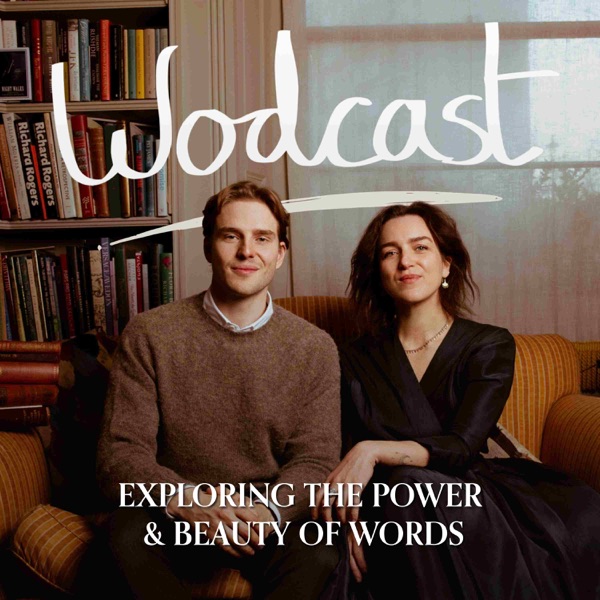
The Wodcast is a fortnightly podcast exploring the words that shape our lives, cultures, relationships, and imagination. Hosted by Benjamin Aston and Mabel Evans, each episode unfolds into conversations, stories, ideas, and perspectives from writers, thinkers, artists, and cultural voices. From love
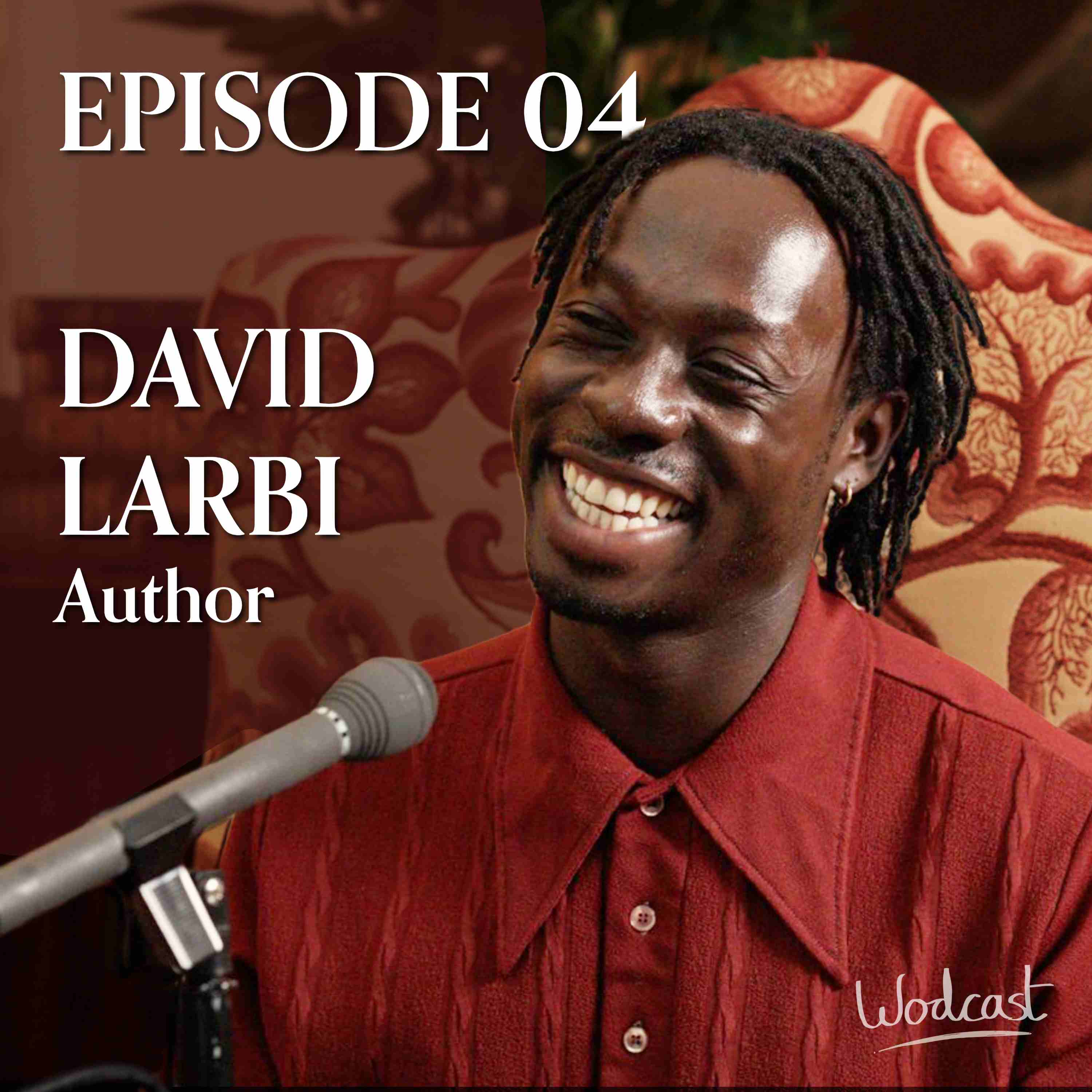
S1 · E4 · 29 Jul 2026 · 1 hr
What does it take to become Frequently Happy? Today, the Wodcast sits down with David Larbi, poet, bestselling author of Frequently Happy, and one of the UK's most thoughtful voices on joy, creativity and emotional wellbeing, for a deeply reflective conversation about poetry, presence and the courage it takes to live authentically. Together they explore why happiness begins with contentment, the relationship between creativity and self-discovery, and how words can help us better understand our emotional landscape. Along the way, they discuss burnout, boundaries, the importance of silence in…
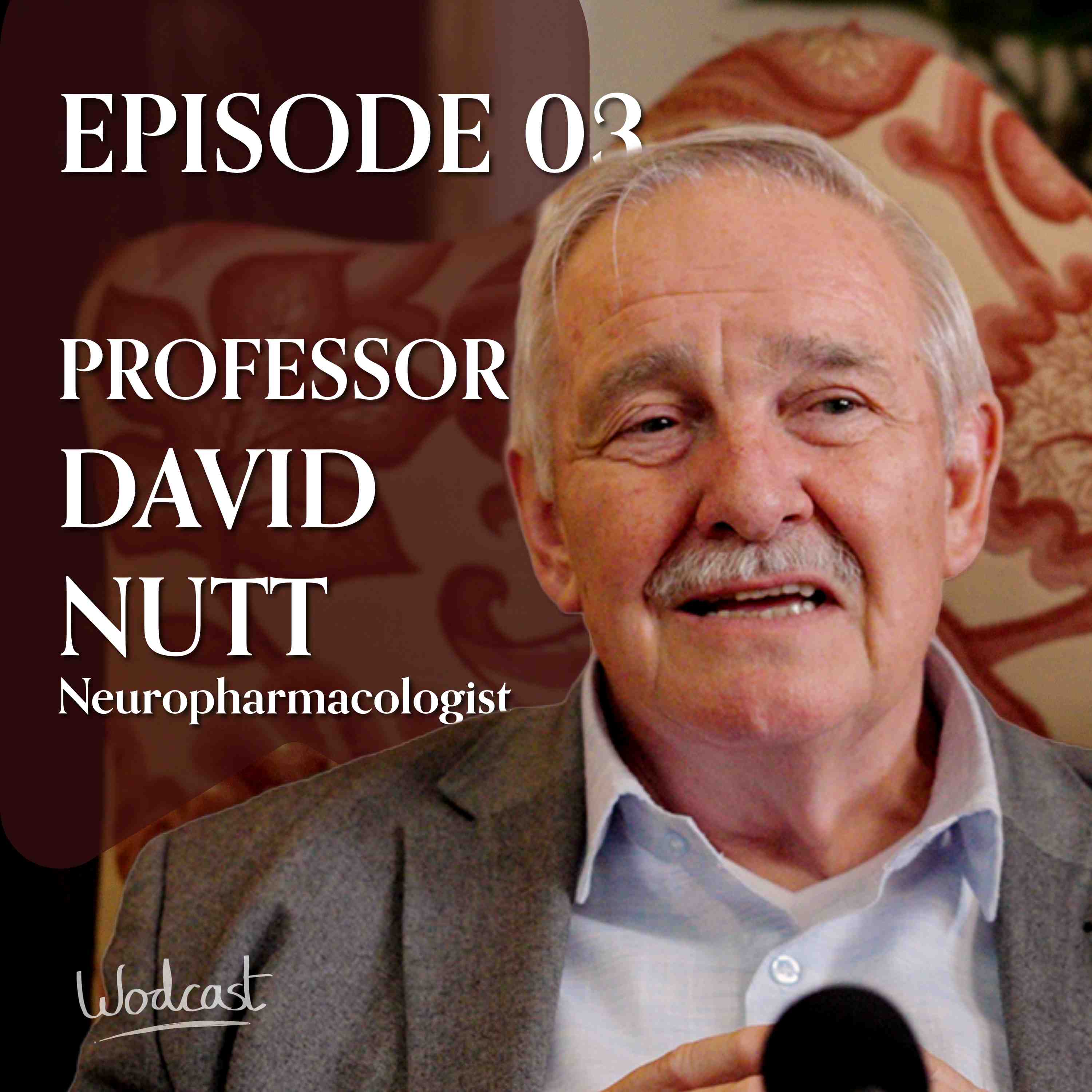
S1 · E3 · 15 Jul 2026 · 1 hr 10 min
What happens when language becomes more powerful than evidence? Today, the Wodcast sits down with Professor David Nutt, one of the world's leading neuropsychopharmacologist, psychiatrists and consciousness researchers, for a thought-provoking exploration of language, consciousness and the extraordinary power of words to shape how we think, feel and act. Together they discuss the origins of the word psychedelic, why MDMA was originally called empathy, how language has influenced public perception and policy, and what happens when words become more powerful than evidence. Along the way, they…
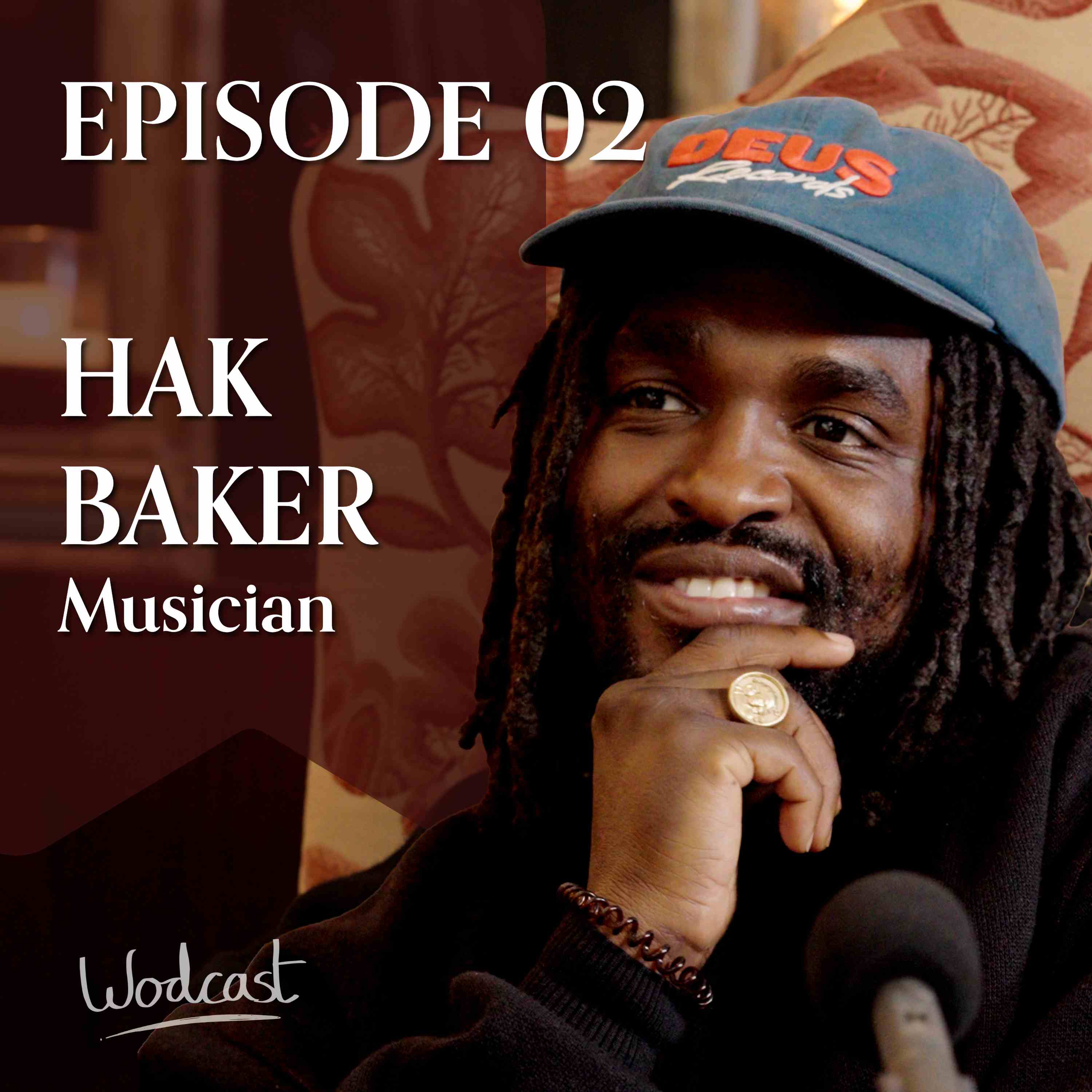
S1 · E2 · 1 Jul 2026 · 1 hr 12 min
What if romance wasn't just about falling in love? In this conversation of the Wodcast, musician, songwriter and poet Hak Baker joins Benjamin Aston and Mabel Evans for a wide-ranging exploration of romance, brotherhood, community and the courage it takes to change. Together they discuss the forgotten meaning of romance, why transformation is rarely a solitary act, and the idea of slaying the dragon within - the lifelong battle to confront our fears, ego and destructive patterns. Through stories of growing up in East London, finding his voice through music, and building communities rooted in…
S1 · E1 · 12 Jun 2026 · 1 min
In Season One of the Wodcast, we sit down with novelist Elif Shafak, musician Hak Baker, Professor David Nutt, writer David Larbi, founder and coach Remi Olayjoyegbe, musician Nick Mulvey, filmmaker Waad Al-Kateab, lyricist Tim Rice, and writer, actor, and broadcaster Stephen Fry. Across nine conversations, we explore the words that have shaped their lives, the language that has influenced their thinking, and the stories they carry with them.

S1 · E1 · 6 Jun 2026 · 1 min
Welcome to the Wodcast where every word carries a world inside it. The Wodcast is a podcast exploring the words that shape our lives, cultures, relationships, and imagination. Hosted by Benjamin Aston and Mabel Evans, each episode unfolds into conversations, stories, ideas, and perspectives from writers, thinkers, artists, and cultural voices. From love and belonging to courage, grief, joy, identity, and everything in between, the Wodcast invites you to slow down and look more closely at the language that shapes how we see ourselves and one another.
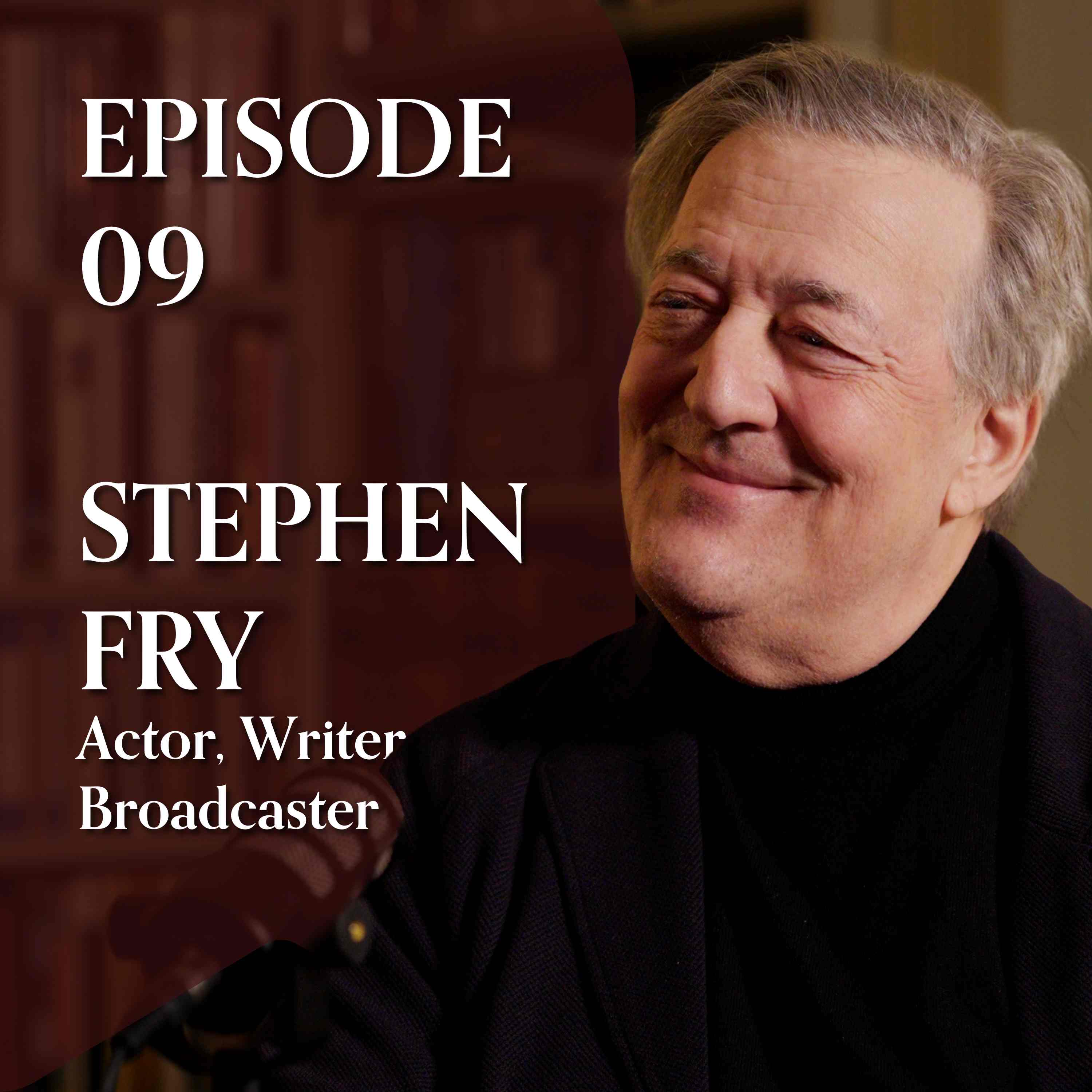
S1 · E9 · 7 Oct 2026 · 1 hr 8 min
What if words can never mean exactly what we want them to mean? Stephen Fry has spent a lifetime exploring language: writing it, performing it, studying its history, and delighting in its strange contradictions. In this final episode of Season One, we sit down with Stephen to explore what words can and perhaps cannot do. We begin with “happy”, a word Stephen traces back to hap, meaning chance or what happens. From there, the conversation opens into a much bigger question: if language is metaphorical, and words can never map perfectly onto the things they describe, how do we ever understand…
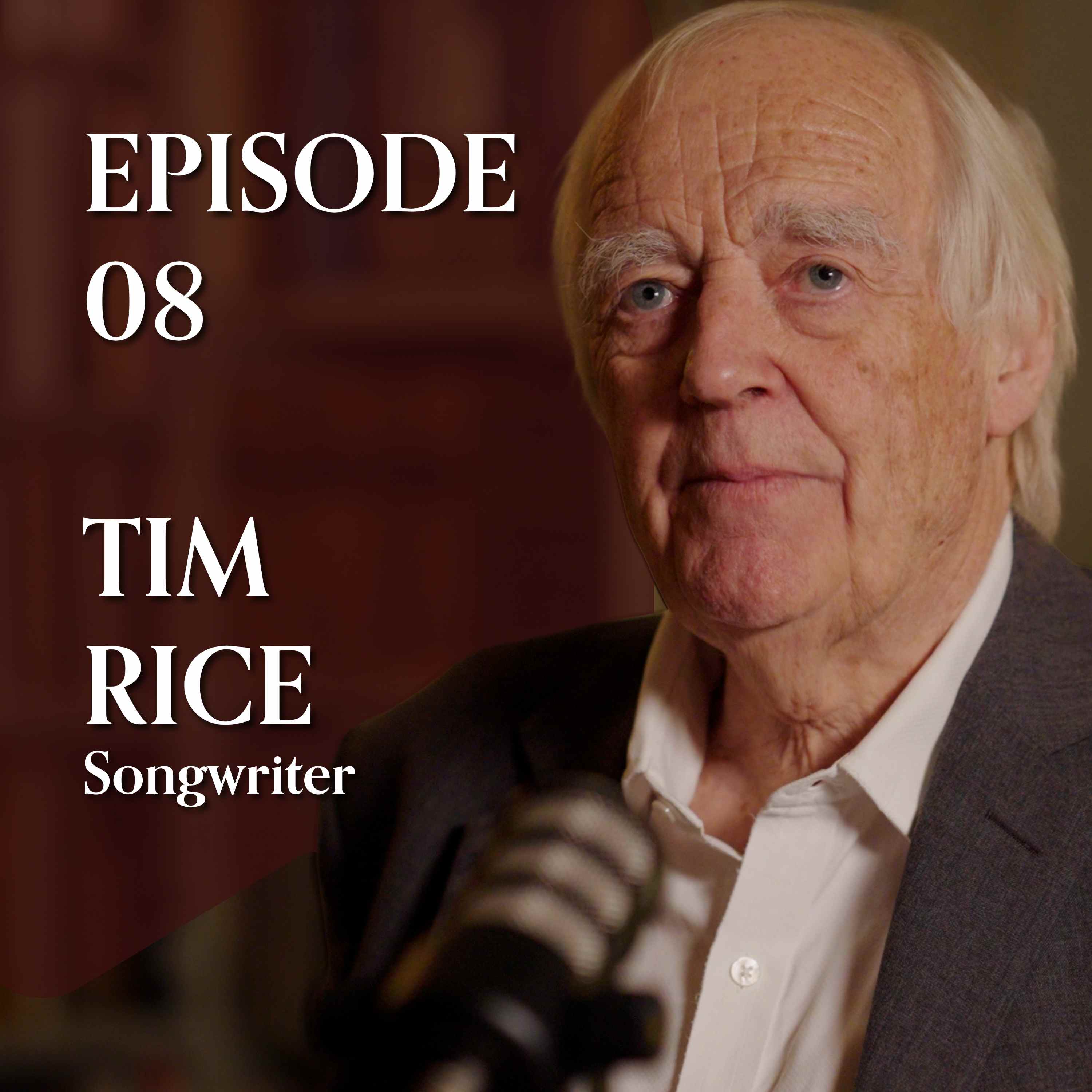
S1 · E8 · 23 Sep 2026 · 57 min
Today, Wodcast sits down with Sir Tim Rice one of the world's most celebrated lyricists and one of only a small number of people to have won an Emmy, Grammy, Oscar and Tony, for a wide-ranging conversation about words, songwriting, storytelling and the strange alchemy of turning language into something that lasts. From Jesus Christ Superstar, Evita and Chess to The Lion King and Aladdin, Tim has written some of the most recognisable lyrics of the last half-century. But this conversation is less about the hits themselves and more about what happens inside the words: how a lyric comes…
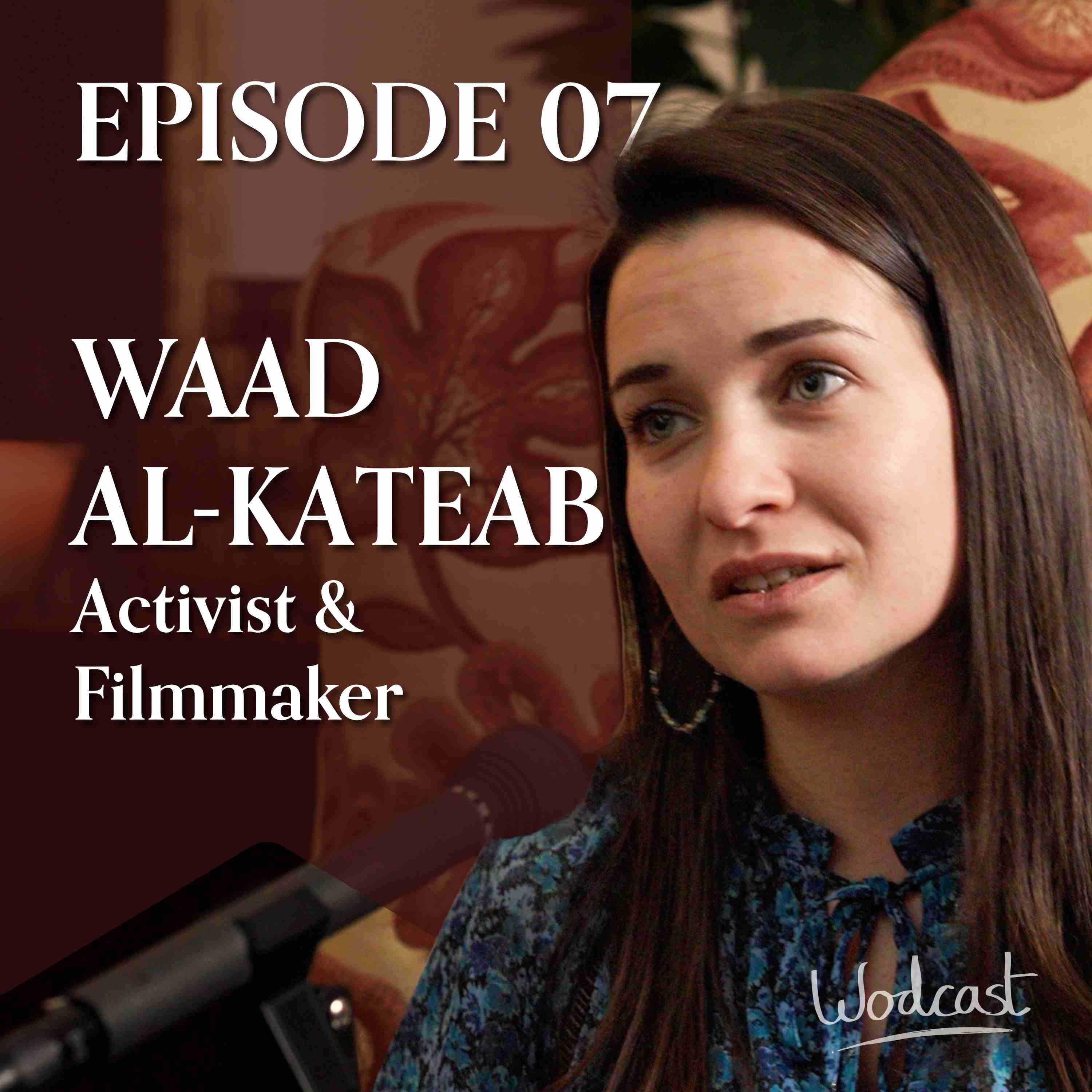
S1 · E7 · 9 Sep 2026 · 57 min
What does freedom really mean when you have spent part of life without it? Today, the Wodcast sits down with Waad Al-Kateab journalist, filmmaker and activist for a deeply personal conversation about freedom, home, family, language, community and the power of imagining a different future. Waad grew up in Syria under the Assad regime and began documenting life in Aleppo during the Syrian revolution. Her extraordinary archive became For Sama, the acclaimed documentary that brought the realities of war, motherhood, love and survival to audiences around the world. In this conversation, she…

S1 · E6 · 26 Aug 2026 · 48 min
What if surrender isn't the opposite of creation, but part of it? Today, the Wodcast sits down with musician and songwriter Nick Mulvey for a wide-ranging conversation about words, music, faith, creativity and the things that can only be felt beyond language. Nick arrives with the word “yield” a word that can mean both to produce and to surrender. From this apparent contradiction, the conversation opens into a deeper exploration of creativity, control and what happens when we stop trying to do everything ourselves. Nick reflects on the role surrender has played in his own life, and why he…
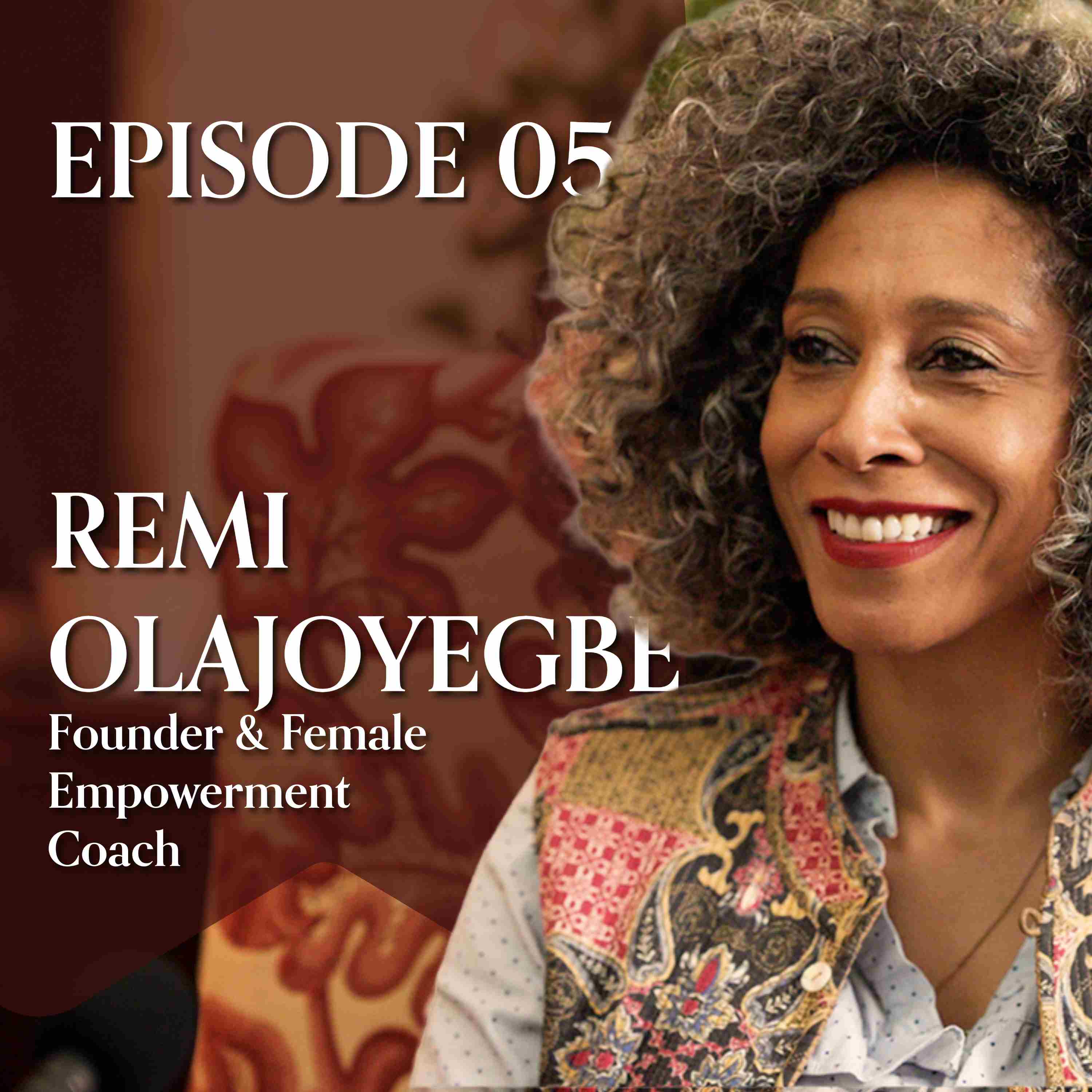
S1 · E5 · 12 Aug 2026 · 1 hr 1 min
What lies in the silence between who we have learned to be and who we are becoming? Today, the Wodcast sits down with Remi Olajoyegbe, founder, female empowerment coach, business leader, co-founder of Medicine Festival and founder of the Isumataq Collective, for a deeply personal conversation about success, transformation, grief and what it means to live and lead from a place of wholeness. Having built a highly successful career in investment banking, Remi reflects on what she calls “the void of success”: reaching the milestones, ticking the boxes and receiving the external validation, while…

The Melo app keeps playing with the screen off, works in the car and on your watch, wakes you to your station, and browses the whole catalogue offline. Free, no ads, no account.