
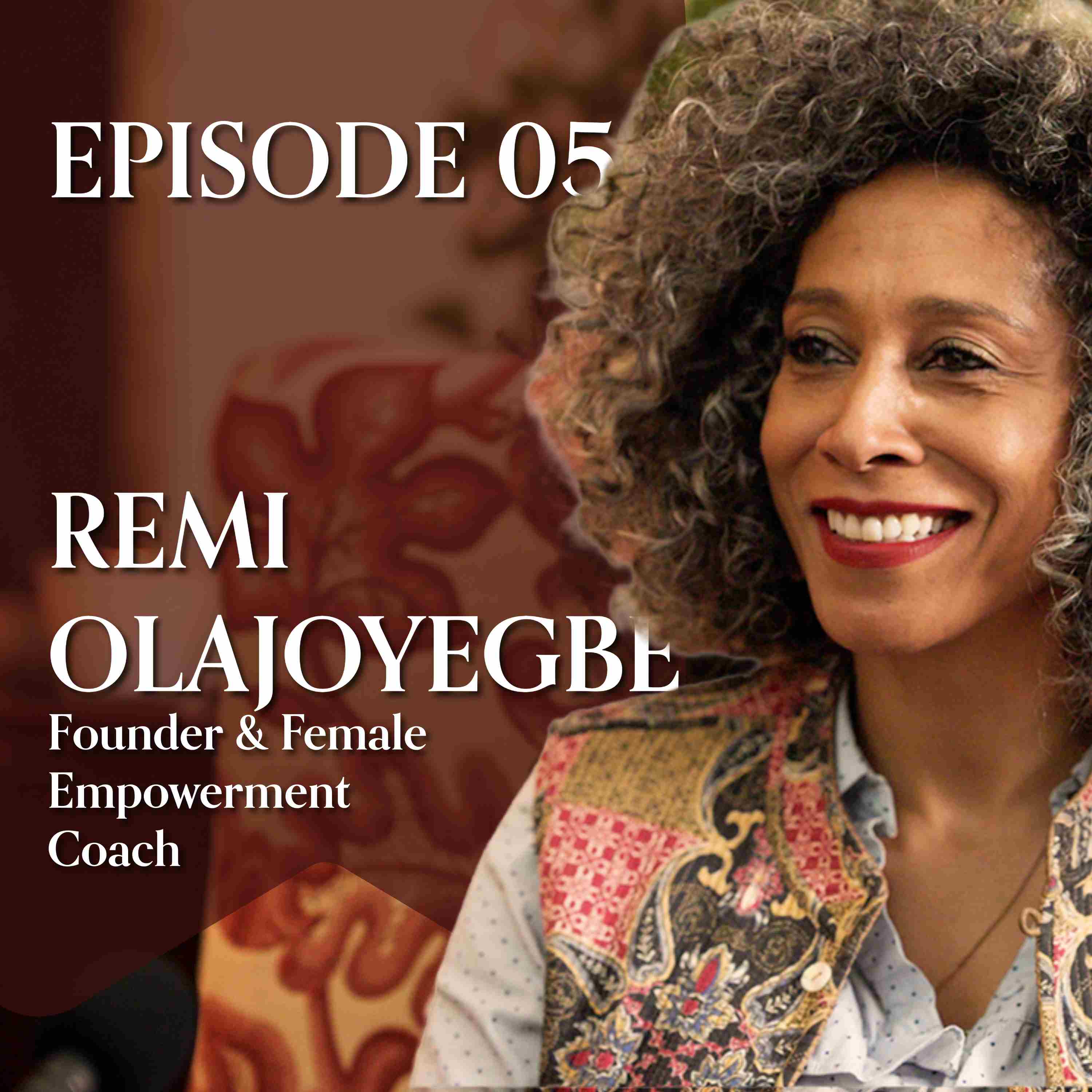
Season 1, Episode 5 · Wodcast
E5 - Isumataq: Where wisdom reveals itself | with Remi Olajoyegbe
12 Aug 2026 · 1 hr 1 min
Season 1, Episode 5 · Wodcast
12 Aug 2026 · 1 hr 1 min
What lies in the silence between who we have learned to be and who we are becoming? Today, the Wodcast sits down with Remi Olajoyegbe, founder, female empowerment coach, business leader, co-founder of Medicine Festival and founder of the Isumataq Collective, for a deeply personal conversation about success, transformation, grief and what it means to live and lead from a place of wholeness. Having built a highly successful career in investment banking, Remi reflects on what she calls “the void of success”: reaching the milestones, ticking the boxes and receiving the external validation, while…
Welcome to the WODcast, where we explore the power and beauty of words. We're your hosts. I'm Mabel. And I'm Ben. Today's guest is founder, business leader, strategic and systemic coach, Remy Olajo-Egbe. I hope you enjoyed the episode. Remy Olajo-Egbe, welcome to the WODcast. You are a strategic and systemic leadership coach, founder of Izumatak Collective, co-founder of the Medicine Festival. And at one stage in your life, you were leading and very much succeeding in your role as the equity capital market syndicate desk at Goldman Sachs, where you were voted one of the top 100 women in finance.
We are delighted to sit down with you. Thank you so much. It's lovely to be here. And to start with, we are wondering, what's your word of today? It's a very precious word, this word, to me. And the word is isumatak. I'll spell it for you. I-S-U-M-A-T-A-Q And it's an Inuit word. And it means two things. It means the keeper of the sacred space within which wisdom reveals itself. The keeper of the sacred space within which wisdom reveals itself. And it also means the creator of an environment in which transformation can happen.
It's actually so moving to speak it out loud. It's so beautiful to hear it from you, Remy. And where did you first learn this word? I think the word found me. I don't know exactly when it came, but easily a decade ago. And I was thinking what I would... want to call the space that my house became, which was my first retreat space, where I used to hold deep dives with women, female leaders that I was working with. And, yeah, somehow I happened upon this word and it lived within me for some time.
And I knew that it was a compass. It was my compass. Yes. It was my, you know, it helped guide the pathway of what I was doing. It was, it sort of, it denoted a way of being. And it felt absolutely right and true as somebody that works with women in the field of female empowerment, but also human potential. I'm obsessed with human potential. and transformation, because of course my life has had much of that, that this was the word for me, that this was the word, this was the guiding word.
And it has stayed with me throughout and is now the name of the collective, which is a platform and community for women, which I launched last year. So, Isumatak. Beautiful, Remy. Thank you. And do you think that words find us in our lives at the moment we need them to make sense of feeling and experience? Mm-hmm. I think words are spells, you know? So... With many things, but with that kind of magic, there is a gravitational pull. There is a sort of, there's a resonance with words.
And I think when you are receptive and in that moment of your life, where transformation was very much presenting itself as the golden thread for me, that word came. And I think that's why I think I was very receptive to, to being in that space of transformation, my own journey. Yeah. And you grew up to an Assamese mother and a Nigerian father. And you grew up in London. Yeah. So was there a case of sort of traversing different cultural lines and languages in your childhood?
Very much so. So we spoke English at home. My father learned some Assamese, which was quite extraordinary. They both spoke very good English, my parents. and would speak Hesomese when he visited my mum's family and my mum spoke a little Yoruba, not much. Although it's interesting when I think about my childhood and I think about words, I actually think about what was unspoken and what I had to learn about. in the unspoken realm, the weight of the unspoken, because, of course, you know, I was very blessed to be and be raised in two very different cultures, you know, Indian and African.
And so there were things that translated easily and there were things that didn't. And so I became quite adept at being able to read between the lines and see, ah, this is what this means. And also to realise that sometimes... words don't necessarily mean truth. But you have to sort of, you have to discern what's actually not being said. And again, that's formed, that forms a lot of my work as a systemic constellator, is actually listening to the field of the unspoken and listening to the dynamics of the unspoken.
So while there are words, there are, there is much in the silence before and after that word, often, if that answers your question. Yeah, absolutely. Brilliant. I wonder, since you had two different cultures when you were growing up, whether this cross-cultural vocabulary allowed you to navigate maybe with more depth or just have more words that you could access. Yeah, gosh, I don't know. More words. I think... I think what it does is it enables...
There's a part of my identity. I sometimes say to people, I'm a bridge person. You know, I've spanned two worlds, two very different cultures. You know, now, you know, I'm very vocal in leadership, but also the spiritual aspects of that. And, you know, once I grew up in the corporate world, and yet I span those two worlds too. So I think... the richness of two cultures means that you have to create relevance in both and work out how to bridge the two, particularly when not everything is being said.
It's like, where is my rightful place in this system? Where do I, you know, what really resonates and makes sense? So I think that richness may have given me more access to words, but I think it just deepened my understanding of how to listen. Beautiful. And the words that you're using now in your life as the founder of the Assumatac Collective and co-founder of Medicine and Coaching Women, they're words that the mainstream culture doesn't really adopt very readily.
You know, indigenous wisdom, the feminine aspects. How do you, how do you, from what place do you share those words that aren't really sitting in the mainstream? And how do you place them in the mainstream? Is that what, Yeah, you do. Yes, I do. And it's a brilliant question and I probably need a moment to answer it because it's so layered. I think being a bridge person, if I might use that term, I have a capacity to translate and to apply what I think is.
is being asked of me by taking, say, non-mainstream language and placing it in the mainstream, you know. It's a challenging path because, you know, you can veer into the realms of too woo-woo, you know, too feminist. I think what words have taught me, and hopefully this helps answer the question, is how to hold polarities right. So actually how to hold opposites with words, because I think there's this sort of there's this tendency to collapse into identities, isn't there?
You know, like she's really strong and she's too soft and this one's magnificent and this one's, you know. So I think my own exploration of your question through words has been because I have had to sit in. in the depth of my own polarities and really hold the fact that I am... I can be both deeply humble and I can also be really pioneering in my work, you know. I do bring into the consciousness of some of the women that I work with very deeply...
this notion that we are awakening women, you know. But instead of talking in highly spiritualized terms or I try and deconstruct things. So for me, then awakening isn't something that we feel isn't available to us somehow, which can be the case, right? Rather, I think about awakening as returning and remembering our essence. and a radical act of reclamation of that essence once we've worked out how to return and remember. And so bridging that language means I can talk to somebody that doesn't need any self-censorship, that can completely understand the fullness of any concept from consciousness to, you know, feminine wisdom, but that I can also translate that language reasonably well, I think, to other communities that are interested and open and curious.
So, for example, awakening women, or I often speak about awakening women leaders. in a way that helps them relate to these words, you know, rather than feel othered by them, you know. And again, that tendency of humans to other or to make wrong is often because we don't understand that we are polarities and actually our mastery is to be able to hold those polarities in. together to be both humble and pioneering you know to be magnificent and deeply vulnerable you know in equal measure sometimes even in the same day and moment to moment frankly uh does that answer your question absolutely there's one thing that comes to my mind is how you through your use of words by building those bridges and translating you make certain realms accessible to i guess the mainstream or maybe the individuals in this case women that have not had the luxury of escaping maybe thought patterns that were self-limiting yeah and as through your work you invite them into a new field you bridge them yes a new space yeah that's really empowering yes yes I'm curious on that, Remy, what happens when the words we've been given do not adequately express the life we feel inside our interior world?
We have to find new words. But what that means in the context of transformation is we have to create the conditions for people to find those new words. So there's no point in talking about transformation as something we can do by force. Transformation happens when we feel safe enough to soften, right? When we feel secure enough and to be honest with what is, right? And... and supported enough to transform. And then in that space, well, there's a whole new language for us that we can access.
But I think trying to layer on something without understanding the depth of why we can't access these new words, why they're not resonant, means that we're not speaking to something that's very important, which is the words that we use often speak to, again, the unseen of our conscience groups, the groups that we belong to, the groups that we're born into, right? So if you're in a family... that doesn't speak about abuse or you're in a family that doesn't speak about alcoholism and you want to, then by speaking words that don't come from that conscience group, you move out of a place of innocence where everybody's holding the artifice or the veneer into a place of guilt because you're saying, no, in order for me to grow, I don't want to collude with what's going on here.
That's very, very difficult for people who don't realise that at the core of what's happening when they're growing is they're challenging their need to belong to that particular family or that particular educational organisation or that particular group. So those words are so powerful. And in order for us to break away from the limiting ones and find new ones, we need to understand why they have such a grip on us, why our language is limited. Does that make sense?
Yeah. And then we can invite in the new. But we can't shame that or make that wrong. Because if we've been told, how many times parents say things like, you must never say that, or don't speak about that in public, or, OK, such and such is coming, just make sure you don't mention it. It's like, boom, boom, boom, there's a long list, right? Yes, a long list of things. So all of this programming, which you're referring to, creates limits to the language that we can use, limits to the words that we feel resonance with.
And then suddenly someone offers you a word or speaks to your soul and you're welling up with tears because the essence of you has been met. But we have to create the conditions for that to thrive. And that's where transformation needs to be held safely and caringly and gently so that we can emerge into new language. We can develop our own language, our own. And actually, we can say, no, that's not that's not giving me what I need to express who I am becoming.
And who I am becoming is not a function of having to belong in this system or this system. It's actually a function of me growing, feeling the growth enough that I'm prepared to challenge that. I'm prepared to say this system has something that's misaligned or has a distortion that no longer suits me. And therefore the language, of course, would no longer suit you. Touch big concepts around. It's so, so beautiful to hear you talk. Thank you. So it's just really moving me because, of course, I spend a lot of my time writing and creating and I'm a chatterbox, so this is so good.
It's fascinating. It's fascinating to hear your reflections. And you spoke about transformation, and I'm curious to hear more what role ceremony and rituals play in this transformation. So... Well, if you think about our day to day, right, we go downstairs and, you know, there are certain things that sort of put us out of sorts. So, OK, we brush our teeth and then we have our coffee, you know, and then we want our sort of breakfast and our bits and pieces.
Essentially, they are day to day rituals, right, that help us navigate life. So they are the things that help us somehow manage the biggest pieces, whether that's family or work or emotional turmoil or joy. But they're markers or milestones that we take for granted. They're the simplest of rituals. Where ritual and transformation meet, and I mean, this is a huge topic and I can't probably do it justice in just this one sitting, but is that by the same token, they allow us to chart and mark the journey.
of transformation. They allow us to, through the process of ritual, through the process of ceremony, to make something sacred, to remember that we are coming back to ourselves in a sacred way. That's really, for me, So it's almost like taking an everyday ritual. I mean, life is a ceremony and of course everything therefore is sacred. But unfortunately, we're forgetful humans and we're habit bound and we tend to not hang on to those truths conceptually well because we're stressed and busy and all the things.
So transformation can be supported by ceremony and ritual because it allows us to craft things. And we are creator beings. We are culture crafters. It's what we do. We tell stories. We craft. It allows us to craft ritual and ceremony that help us follow the journey of our transformation, that enable us to put down markers and milestones as to where we were and how we are emerging. And in the context of something that's safe and held, it helps us remind us of our deep sacredness.
It's like the word assumatac can be, when I think about it, I think, gosh, a family can be an assumatac. A family can be a keeper of a sacred space within which wisdom can occur. But you are an assumatac. You are your own keeper. I am an assumatac. You, Ben, are an assumatac. So the ceremony helps you remember that your own sovereignty and agency is an assume attack is then held within this context. So it's both the family. It can be both the family, the space and the individual.
And that's why it's so layered and so rich. Again, we could talk extensively about your journey and pathway to transformation, Remy. You know, going from the corporate world to coaching women in this esoteric school, the Asumatak Collective. Do you have, and this might be a challenging question, but I'm going to throw it at you. Go on. Do you have a series of words to mark that? those major points of transformation. Gosh. Throughout your life. I guess what I'm wondering is what words have kind of accompanied you.
Yeah. Okay. Well, I suppose the words, and this might be a bit jumbled, so you have to let me... The words denote the phases, I guess. And I would say... Actually, that's, yeah, that's, yes, I would say that the first phase of my life, I would say, was marked by a lot of loss and rupture. So loss and rupture would be two very key words. And what I mean by that is, so age six, my father moved back to Nigeria and he took my brother with him. My parents were still together.
I stayed with my mum in London. It had its benefits, but of course, you're splitting a family. And my brother went to boarding school in Nigeria. Yeah. So that was a big rupture, for sure. And my earliest sense of loss, which I couldn't make sense of, because, of course, the masculine in my family had suddenly disappeared. And not long after, my aunt, who used to live with us, she died. And actually, when I think about loss and rupture, it's been a very key theme for me in my life.
And therefore, those words are relevant because... I think about some very key moments. You know, my first child was stillborn full term. We lost our second child. My third and only live child was born. But seven weeks before she was born, my beloved mother died completely out of the blue. My father passed on my 47th birthday and... And so my key word, which has come home to me, and actually it moves me to share this because it's, I almost feel like, oh gosh, I didn't really get that.
How did I not get that? Is my name. My name means grief. So my full name is Oluwaremi Lekon. And it means God consoles your tears. So that is so, yes, I do have words that denote very key stages of my life. Yeah. And actually, for me, it's been the journey of learning how to transmute loss, learning how to transform grief. so that I am truly alive to life. But it's been quite a ride, you know. It's been a ride. So I would say they are those losses, and then they are those words, that phase.
I'd say my second phase of words in my life were words that... were words that felt important in terms of proving myself. So, you know, you referenced my career in investment banking, being successful, but being performative, you know, using words to win deals, to negotiate your corner, to dominate, to convince, actually. You know, there's a shadow of all of these aspects of our success, right? And so those elements of myself, those words were a big phase of how I showed up with confidence in that stage in my life.
in that industry, which I got many great things from. So it's not that that was the case, but I'm just thinking about the words, you know, success. It was, it's a very performative place, you know. And so I suppose as I think now about this phase, what would the words be? And I feel like the words, like a Sumatak, but actually just generally the words that are in my life now have allowed me to create spaces where meaning and real feeling is expressed safely.
So it's almost like the first phase would have been to have lived and listened and figured out what was unspoken, what was unsaid. The second phase would have been to survive what one couldn't say. And the third phase would be to create spaces where... real feeling and real words could emerge in safety. You know, does that make sense? Totally. It's such a beautiful journey. Yeah. Remarkable journey. And you did reference your name. And I think what stood out to me is, of course, the joy.
Yeah. The joy within. Yeah. And actually, thank God, my second name is Oruna, which means daughter of the sun. So it was the polarity again. I was just like, oh, thank you for that polarity, because actually I've needed it to balance out the grief. And when you speak of polarity, I'm curious to hear what your perspective on the genders is, like the masculine, you've mentioned how your father moved back to Nigeria early, and your brother moved with him.
And I guess also your relationship to, I guess, those two poles. Yes, gosh. I think I'm more in my feminine in my later years. I'm more in my yin. I was absolutely more in my masculine for most of my early career years. I think partly that was emulating my father dancing to the sound of his drum, you know. And... There are so many cultural reasons and familial reasons as to why that was. And I think I am also much more conscious of the middle, you know, the sacred third as well now.
And this is an understanding that's still emerging within me. And I had a really wonderful conversation the other day with a friend of mine who gave me a wonderful reflection after this big circle that we had held. And she said to me, you know, Remy, I had shared that I had been feeling quite lonely on this path. You know, I'd... I spent the last eight years renovating, rewilding, turning an old fish farm, knackered old fish farm into a sanctuary.
You know, building a retreat space, erecting a temple, a devotional space for people to come and do workshops and be together and sing. I had then moved on with no stop whatsoever to bringing through the threads of the platform and the community, the Assume Attack Collective. and speaking to this intersection of spirituality, business, womenhood and leadership, which is that intersection is the Assumatac Collective and it's not a busy intersection.
It's a reasonably lonely intersection and I sit right in the middle of it. And yet it's important because if we really want to transform, I think, we can't be fragmented, you know. We can't be either one or the other. We can't, as I was saying, we can't just collapse into those identities. So the polarities piece is important to be able to say, well, I'm both and, actually. And so I was saying to my friend, oh... You know, I've been feeling quite lonely on this path.
And I know I'm not lonely and I know I'm loved and I have the most amazing friends, female friends, but friends generally in my life and family. Amazing. I'm so well held and supported and I'm very blessed. And yet that's been part of my path and I feel it. And she left me a really beautiful voicemail and she said, you know, Remy, what I'd like you to try on for size, and I can't believe I'm going to share it because it's making me squeeze my bottom.
What I'd like you to try on is that you feel lonely because the work you're doing is pioneering. And it created such discomfort in me. And she said, you know, Maybe just sit with that and try that on. Feel that. And I've been really reflecting on it because, you know, I am out there. And she said, what you've been doing is in that pioneering work, you've been creating spaces for us to be activated. And for us, this particular friend's just released her book.
You know, another friend is, you know, a major activist. And she said, so you've been activating us. You've been providing these safe spaces where we can have these activations and start to bring all of ourselves online. You know, I often say, how can we live and lead from a place of wholeness? That's my prayer, that's my desire for the community that I'm leading and building. And I have been sitting with that. And the polarity of that, that pioneering, that magnificence, that being out there in the world is deep humility.
And so polarities are incredibly important. It's in the same way the masculine and the feminine within me are incredibly important. But the bit that's crucial is that both come into alignment, that I'm not leaning too far. I was leaning too far into my younger years of emulating my father because of the wounds around my father, because of my relationship. I loved him. And that was my story. My story was... trying to find relevance through his eyes, you know.
And so suddenly when you say, well, actually, that's important, but that's not quite in alignment, you know, in the same way that I can't swing so far to the feminine because I have got a lot of these masculine traits and gifts. And that third middle way enables me to sit in the with both and say, well, actually, I'm both of those things. You know, I can both be, you know, one can be strong and one can be soft. And in a way, it's almost as if. you need the opposites so that you can kind of check and keep clean, you know, because, well, of course, we're egoic beings, right?
So we need to be able to go, hold on, have I got a handle on that? And suddenly the humility comes in and it says, right, you know, and it might knock you down a peg. But likewise, when you're playing too small and you don't need to, the magnificence might come in and say, hold on a second, we've got work to do, you know. Because that is a sort of slightly roundabout answer on the polarities. But trying to find that middle ground... has been, yeah, I think it's all of our life path.
It's all of our path to mastery in some way. And I'm interested in what you said, Remy, about this intersection that the Assumatac and your work sits at of leadership, spirituality, women. You work with extremely high-powered senior executive women, and I want to know, really at the heart of it, what is the biggest challenge facing these women? Wow, that is a question, Maple. Because you have the bird's eye view, Rems. Yeah, it's to be able to bring the fullness of their being.
It's to be able to tell the truth about who they really are. It's being able to say, I am a badass businesswoman and a mystic. You know, it's that, I think, you know, and I speak of it in spiritual terms, because I think, you know, that's sort of where I often see the sort of those women express themselves in the business world, also express themselves in these in this other, other realm. I think it's really challenging because we. there's so much opportunity and I feel very blessed so it's I almost don't want to sound like I'm complaining but the challenge is that we work and live in systems that were not designed by us and are not for us often so what that means is that we again, we lean into that strength which might suit that aspect of the society or the community that we are serving.
And that, to me, is not wholeness, because I also see that woman in deep grief being able to transmute intergenerational trauma and bring around change in her family line. And somehow that's just not relevant, you know. But if really this part is being attended to, how can that other part not be great? If this is not being attended to, can that be as great as it can be? I don't believe it can. I don't believe that we are then operating from a place of wholeness.
We get asked and told, be your authentic self, bring your full self into it. Really? Bring your full self? You know, the full self, you know, these women, all women are amazing. And there's such a mix in the community from, you know, mothers to CEOs running big companies. It's the reality is it's about being able to express the fullness of who we are. And of course, there are times and places where that might feel more comfortable. But I think...
I think we've forgotten. I think we've forgotten who we really are. I think we've forgotten. It's like we don't like to talk about mysticism and magic as if it's a sort of, you know, there's something a little bit too... People turn away and yet people want to find meaning. People want to see the coincidence in things. You know, so I think that's a really big challenge, which is how do we show up really in our entirety How do we really express our truth?
How can we live more whole lives and then create more whole systems? I remember one morning when I was sketching the community and I got this download and I wrote the word success because it's been such a key word for me in my life. And it just sort of came and it was S-U-C-C-E-S. She understands that conscious collaboration is essential to, for a self-actualised sisterhood success. And then the next sentence, sisters understand that conscious collaboration is essential for a sustainable systemhood.
And I was just like, that's it. This is what the blueprint of this community is, you know, that actually the more of us that find each other and are able to express, and again, very much within the context of Assume Attack, right, but... and are able to support each other in our wholeness, in our fullness, I believe that that gives us the capacity to really start to turn systems around. You know, we've been pitched against each other for too long.
You know, it's it's not working for us. And actually, you know, there's always a sort of softening around feminine leadership and leadership. You know, these are excellent skills that the world is desperately in need of. Look at the state of the world and tell me that we do not need more collaboration. We do not need more compassion. You know, I just literally I can feel my entire body just temperature going. We need all of that. And we need masters of communication and weavers of community that can bring that into being.
And as a woman, I feel very well placed. And I see my community is very well placed to do that, to bring that. Sorry, I went off on a bit of a rant there. No apologies. Bring it all around. I'm really curious how, and I just want to, I don't want to keep pulling this back to the challenge, but I am curious to sort of identify what structures of language uphold these systems. Um, what structures of language uphold these systems? Well, I think there is an excellent question.
I think it should be a question that is asked far and wide. And I hope that your WODcast continues to do that, actually. It's an excellent question. The structures are limited. They're limited by what we believe is appropriate in a particular industry. I think they are not relational enough. They are, you know, and of course there is... language within industries pertains to a particular industry. But, you know, when we are driven by extractive people over profit, business models and ways of operating, that are not in alignment with thriving life, with the harmony that we can all exist well on this incredible paradise earth that we live on, that we get to call a home for a temporary, for a minute.
I think that... That is essentially the limitation. The structure is that we see ourselves as separate from nature. We are nature. Right. And so, I mean, gosh, I mean, there's so many ways that you could look at this, but that would be one fundamental starting point, I think, which is... to understand that we are nature and therefore what we do unto the earth, we do to ourselves, you know, uh, what we do unto our fellow humans, we are doing to ourselves.
And, um, uh, and then if we're birthing language that supports that, the language of warfare, the language of, um, othering the language of racism the language of you know misogyny i mean you see it burgeoning everywhere i mean it's all over right then that's where we need to interrogate and say well this system is indeed influencing the language that is be that is being enabled does that make sense the this system is enabling language which creates a limiting system limits our capacity our way of being as humans and therefore systems should have their own sense of responsibility as to how we interrogate the language that we use you know we have to also be careful because i i i don't want to swing so far that we can't have good debate and that we can't um We can't allow for difference.
That's also really important. You know, we should. I mean, we should be. I mean, I don't know why we don't do it so much in schools, even you. We should be able to debate and have differences of opinion. And for those differences to be held and OK. And for us to be able to say, you know, you and I may not agree on... how they're treating the green belt out there, but that doesn't give me the right to then cancel you. I mean, again, look at just what we live in, the cancel culture.
So we've got to be careful as well that, you know, we're not too scared to challenge. It's such a big topic. I haven't done a very good job of answering that. But, yeah, I think we have to start local. We have to interrogate the language we use in the systems that we're in. Yeah. where you've given us a lot of food for thought, one thing that does come to mind is how you're mentioning the cancel culture. And previously you also spoke about the integration of your fullness.
And it just feels, it reminds me of the macro and micro. So if we can't fully integrate who we are, maybe our polarities, how will we allow... it on a broader level. Absolutely, absolutely right. How can we give compassion if we do not give compassion to ourselves? How can we even know what it feels like? You know, if you walk past and say, why is that baby crying? Because you haven't actually attended to your own inner child that needs some attention.
So I think that's absolutely right. We have to, this is it. This is, we have to start with this frame of reference. We have to bring it back to self. And And, you know, we're all, you know, unfortunately, we live in cultures where we're always looking outside for the truth because we've forgotten that it exists within. So, again, we must keep coming back to the spaces like this, like the Assume Attack Collective, like Medicine Festival and all the other amazing spaces out there that enable people to interrogate themselves, to inquire.
interrogate maybe sounds a bit harsh although i love the word but to inquire yeah to inquire more deeply inquire does feel closer to curiosity which i think is such an impelling life force to just wonder and i guess trying to discover yourself i wonder yeah i know could you imagine yeah i wonder Well, I do wonder, I love how beautifully you turned success, such an overused word, into an acronym. And you also talk about the void of success. Well, that's probably in answer to one of your questions, Mabel, around what are some of the structural issues.
I think the void of success is a really big structural issue. I think you get there and you've checked the box and you've got the whatever is on your sort of bucket list of things, the children and the car and the house and the job and the this and the that and the fourth, whatever it is, and yet there's still this deep yearning, there's still this deep emptiness, there's still... the sense that it's not quite enough, I haven't quite made it. And so if you're not skilled or in environments where you're supported and safe enough to be honest with that and to then identify what is, what is, not...
not um yeah to identify what is then you can't bring through uh transformation because you're not really engaging with with the truth of it you know and it's hard to to articulate the void of success because the the the echo chamber is telling you haven't you done well and and You know, and and we're, you know, the sort of homogenous communities are sort of all reflecting that we're all sort of trying to achieve the same stuff. And yet you're deeply at odds with it, you know, and that is an important place to reach.
My God, I've been there to know and to suddenly feel. ah, there's quite a lot underneath this that I have not attended to, you know, and for me, my pathway in was through grief. It was, you know, grief was my companion. For 10 years, I walked with grief and for 10 years, I mean, and you know, I, you know, I bow my head in total reverence, because who knows when grief strikes. But in terms of my own life experience for 10 years, I walked with grief.
And it showed me unhappiness. And it showed me, just that sense of deep isolation that couldn't be fixed with those things, you know. I think it's a human predicament thing. I think it is. I think it's, you know, it's, you know, do we want the things we have or do we want the things we haven't got? Do we want the things we have? Often we want the things we haven't got, but wouldn't it be relieving to want the things we've got? You know, it would be a void of success is not what wanting something else.
Because I believe and of course, there will be many ways to look at this, that we're not really turning the lens inwards. We're not really attending to why it is that these things are not the panaceas that we are hoping they might be. They're not solving and fixing in the way that we thought they would. It reminds me of a word that I think I learnt from you, Remy. Interiority. Nice. Interiority. I think I heard it from Remy first. Could you explain the word to us?
So interiority to me is your inner world, essentially. It's your inner world, you know. Interiority, your inner being, you know. I should say, sorry, your inner beings because there are many, you know. And actually when we think about the parts that we are made up of and what parts... play out in the world and what parts represent us. And often they're the parts that have been adapted, you know. Our personalities have adapted because of the homes we've been raised in, the families, the educational environment, the work environment.
But in our interiority there are many... many versions, many shades, many blends of us. And when we don't attend to them, then they're a little bit like hungry ghosts knocking on the window, you know, saying, what about me? What about me? So it's important. It's important that we explore that inner space. And how does one go about exploring the interiority? There are, I mean, many different ways, you know. Meditation is a good one. Well, I would say more than meditation, a noticing practice.
I have a noticing practice. Noticing? Yes. So when you're meditating and you're scanning your body, you're noticing... what sensate experiences are happening in the body. So it might be that, you know, you're doing your breathing exercises and you're noticing that there's a tightness in your chest. And you're noticing what you might be thinking about. And you're noticing that actually, perhaps, you're thinking about some charge that occurred because you had an interaction in your relationship.
And so you spend time noticing what's happening in the body. Because, of course, it's a wonderful book that you'll all have heard of. The Body Keeps the Score. You know, there's a lot of information stored in the body. So that's a great way is, you know, how do we become more embodied to notice what's actually going on in there? Right now, we're just all, you know, minds on sticks, aren't we? So this is ruling the show. But actually, there's so much going on in here.
And it's only when we suddenly get an ache or a pain or something's not quite working that we go, oh, gosh, we must attend to that. The body's going for crying out loud, you know. finally finally you're paying attention exactly exactly so i think that's a very good way to get into the body movement is a great way to get into the body and dislodge you know i know as you know women we hold so much in our hips there's so much you know movement can really help flush trapped emotion um and um conversation you know speaking about our different parts speaking from the position of our parts there's a lot of work constellations looks at um the knowing field and essentially our part in systems and i always think of internal family systems work as just like inner constellations where all your different parts show up you know so you might have you know, a really protective part and you might have a really angry part.
And sometimes those parts are competing and sometimes one is trying to silence the other. You're looking very knowingly. So it's good to become aware of what part you're speaking from, you know, and integrate them. There's, you know, if we don't integrate, I was having a wonderful conversation with a friend the other day who was talking about, their parent and how they would never, you know, they were expressing something and it was painful how they would never be like that.
And, you know, and I said, the problem is when we, when we cut off or sever the part, it finds its way of speaking and representing and it can actually get louder and more obtuse. because it's not being attended to. But of course, we're looking and going, I would never want to be like that. That's, you know, my father or my uncle or something we've got a view on. That doesn't work for me. That doesn't chime with me. And yet, if we're thinking about our parents, we're a complete blend of all the good and all the bad, you know.
So the chances are some of those aspects will shine through in us for good and for bad. And therefore, it's worth... paying attention to those parts and perhaps wondering what it is that they might want or need that they still feel that they need to be so strongly represented. Interesting. Have there been parts that you've met when you were exploring yourself that you were like, how do I integrate this version of myself? So many. Yeah. So many. Oh, my God.
So many. Yeah, I think it's about listening. So, for example, if I've met my jealous part, we all have a jealous part, my younger self would have chastised that jealous part, you know, because there's something shameful about feeling jealous. Yeah. Whereas me now, I welcome that part. It's so much so that that part doesn't really show itself that much anymore. But I think that's because I understand that that jealous part has shown me what I desire.
So if something comes up and I feel a bit like, oh, God, you know, I really would have loved to have done that. It just feels there's a contraction, you know. Actually, that jealous part that is a bit of a taboo because it's sort of a bit of a low-grade emotion, isn't it, jealousy? It's showing you, ah, that's something I desire. That's something that I want to attend to. There's something in me that sees something in you that's admiring it and also desiring it for myself.
There's nothing wrong in that. So I think the compassion to be with that part is actually... I know it's been incredibly helpful because suddenly that part doesn't have to sort of be raging. That part just can sort of give you a tap on the shoulder and go, actually, yeah, you probably need to attend to the fact that you keep saying that you want to do more music and everyone's doing music and you're not doing music. Why wouldn't you? Why don't you get on with something, you know, an example.
But the reality is in that sort of full spectrum of emotions, every single human being has that part. And again, it speaks to the limitation of the systems and the societies that we live in, that some parts which are deemed unacceptable or not very attractive or are somehow swept away and quietened or hidden. But it doesn't mean, if anything, they get stronger. So I think I bring that part, I welcome that part because I welcome that part for all of us because I think it's a great insight into what, where we might want to be heading, you know?
It's like a nudge. Yeah, it's a nudge. Yeah. I'm curious because I feel like the most common forms of jealousy often are relationally. And how does that map relationally, Remy? Because when it's someone else doing something, but what if it's jealousy of a partner or the way that a partner's out in the world and behaving? It's so complex. Yes, yes. Well, and it will generally be speaking to something that you didn't receive, that you're feeling insecure about, you know, if we feel it feeling that perhaps we know we're not getting enough attention, you know, and then how do we utilize that?
to again turn the lens inwards and say, right, OK, there's a neglected part of me that is feeling that when your time is taken up with other things and other distractions, my neglected part doesn't feel seen. But wouldn't that be easier to say that than act out all the things that people act out? Rather than saying, actually, I'm feeling, I mean, I've said it to my husband before, I'm feeling a bit jealous. And I just, you know, I really want you to myself.
And I don't want to be at this party. And, you know. But we need the language. We need the language. We need the truth. We need to be able to know that these words are really important words too, and that we can bring them out of the shadow and they can be part. Don't you think that when you look at warring leaders who are making crazy decisions, that they are not wracked? with jealousy and all of these things right so so it's it's as plain as day there but actually we are all made up of these complex emotions you know and our personalities have adapted to show things that are acceptable or or or not and so as we come into contact with that and we look at the adaptations we've had to make because we needed to belong or we needed to be popular or we needed to be successful or we needed to stand out, then we can start to see, ah, underneath that, underneath that layer, is a whole realm of other emotions that we're not attending to because they are the ones that we've experienced.
you know, for whatever reason we've shied away from. So I think finding ways to bring the truth, I always find it very helpful if something is going on for me in relationship. If I was feeling something, I would say, I'm feeling it. You know, when you do this or when you're out in the world doing this, I feel rather than I hate it when you do that. Right. Because actually you're bringing it back to yourself then. You know, you're saying, you know, this is me.
I have to own it. This is my stuff. The only way I can transform it is if I own it. And I'm reacting to you. And suddenly that person that you're bringing it to, particularly if it's a beloved who cares for you, will be able to not feel under attack and say, sure, of course, I really I get that. thank you for telling me, as opposed to, thanks for attacking me, that wasn't so great, you know? It's creating bridges again. Yes. Isn't it? Bridges to understanding.
Yeah, yeah, yeah. This relational field that's so rich and actually that, you know, what do we, we have feeling, we have touch, but of course, language. You know, we need to use language. And where does language fail us? Oh, my goodness. Sometimes there are no words, you know, in the silence of grief, sometimes there are no words. Sometimes it's okay not to look for those words. You know, where we, we, we are, I mean, I know it and We over communicate sometimes, you know, and perhaps when someone gives you a loving squeeze on your arm, that says everything, you know.
I think the nature of mind is such that we want to sense make things. And so we layer on language all the time, don't we? We want to, you know, sort of enlist our intelligence or our intellect. But there's much to be understood that's just beyond that, you know. The language of the heart isn't that. It doesn't always have words. You know, the language of grief, silence, doesn't sometimes is all we... Is it. So I think... I don't know, I think, I don't, yeah, does it fail us or...?
So, yeah. Language is such a beautiful thing, it's such a dance, and yet it's... Perhaps we've lent too heavily into it at times when our feeling self should be more engaged or enlisted, you know. Our problem-solving minds... our egoic minds. You know, it's like you've got the armour on and you're going into battle with the mind and the words before actually the bodies may not even be ready. So perhaps it fails us because we are too fast to try and find words and meaning for things that...
might need to be felt at a deeper level, a more sensory, bodily, earthly level, elemental level. So giving it more time, not rushing it. More time, more time to settle. The winds of the body, the waters of the body, the elements of the body, listening to other aspects, not just words. And then, again, I'm looking at the table and the circle, it's sort of this notion of wholeness, that we are then living and leading from. Yeah, maybe language is just one part of this wellness.
One part, one part. And also, I do believe one of the most suitable parts to build bridges as we have explored. And if we build one more bridge into the far, far, far, far future, we're wondering if there is one word you could be remembered by, which word would that be? Gosh, gosh. That's a question. I mean, I had my moments. But I think... Bombastic, by the way. Bombastically kind. Bombastic and kind. Yeah. Both and. Thank you for those reflections.
Yeah, thank you, Remy. It's been such a gorgeous conversation. Yeah, you've been very generous and kind. Oh. Good. Yeah. is there any word or words that we haven't covered that you would like to share oh my gosh there's so many beautiful words so many beautiful words i like the word alignment alignment how can we live in alignment I like the word thrive. Thrive. There's such an energy to thriving. It builds up. Yeah, it does. It does. It really delivers, doesn't it?
It really delivers. It gets you started and it starts and it ends and it takes you on a journey in those five little letters. Thrive. Fix. Yeah. Alignment and thrive. And of course, I love the word love. How can one not love the word love? We've had a lot of reflections on love. Have you? Yeah, it's been so beautiful. It's been the undercurrent of every conversation. Yeah, of course. It's just magnificent. Of course. It has been totally magnificent.
And then the words are just the bridges, but love is always the flowing river. Always the river flowing. Yeah. And the words somehow take you right back to it. Thank you for joining us today for our episode with Remy Oludroyagbe. I found the conversation particularly moving, especially around her reflections on the word grief, loss and rupture. I particularly liked her anachronisms for success, which we'll share in the comments below. It was phenomenal.
Hearing her reflections on how language limits us or can limit us, and how she describes herself as a bridge or her work that bridges, I guess, people through transformation and how she uses language in a very intentional way. Isumatak, what a magnificent word. So a lot to unpack, a lot to... A lot to reflect on. A lot to reflect on and dive into. So please do subscribe and share the episode with anyone that you think may benefit. We can only keep doing this with your support.
You can follow us at the links attached to this episode. And we'll see you next time. We'll see you next Wednesday.
Transcript supplied by the publisher with the episode.
by Into the Words · English · Arts & Books
The Wodcast is a fortnightly podcast exploring the words that shape our lives, cultures, relationships, and imagination. Hosted by Benjamin Aston and Mabel Evans, each episode unfolds into conversations, stories, ideas, and perspectives from writers, thinkers, artists, and cultural voices. From love
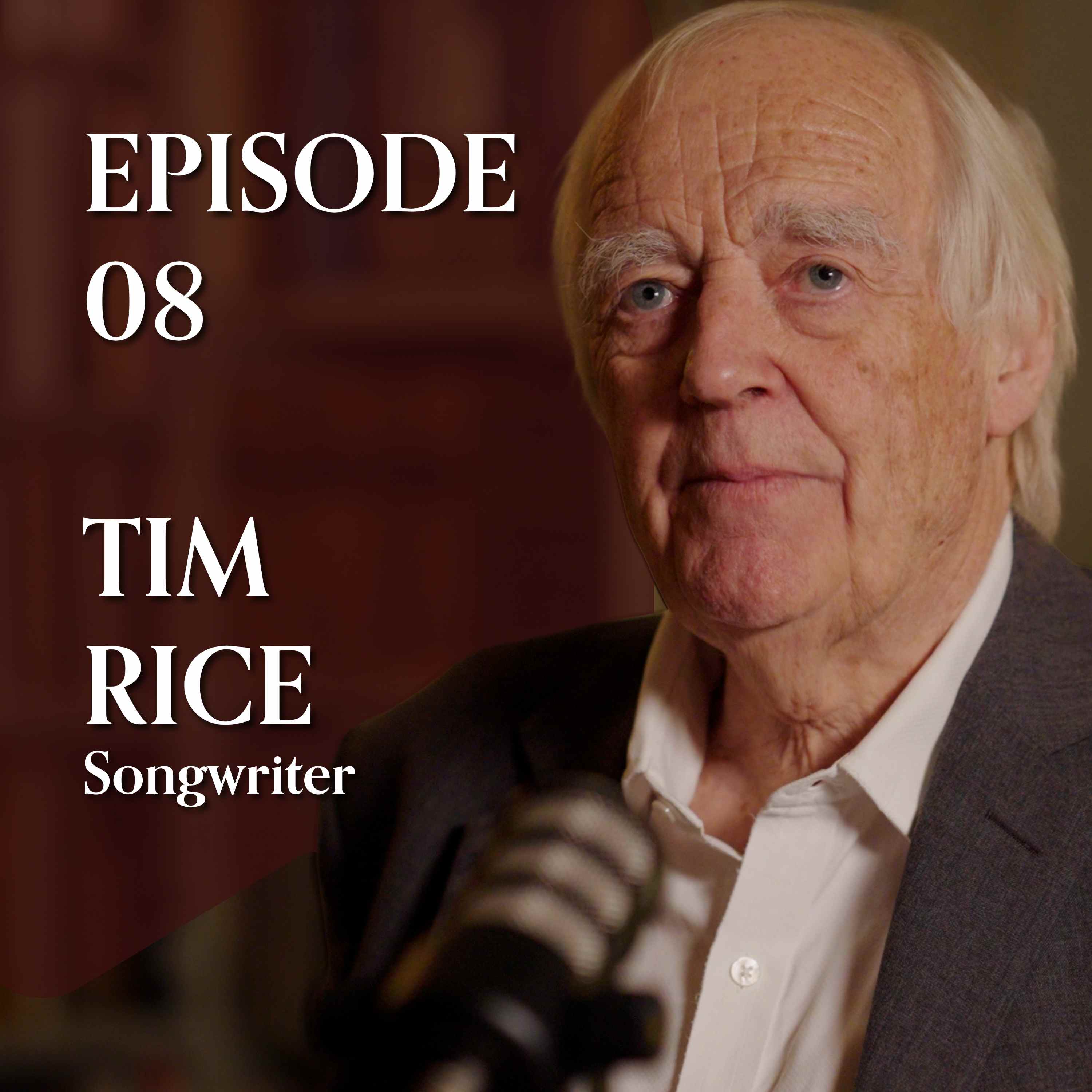
S1 · E8 · 23 Sep 2026 · 57 min
Today, Wodcast sits down with Sir Tim Rice one of the world's most celebrated lyricists and one of only a small number of people to have won an Emmy, Grammy, Oscar and Tony, for a wide-ranging conversation about words, songwriting, storytelling and the strange alchemy of turning language into something that lasts. From Jesus Christ Superstar, Evita and Chess to The Lion King and Aladdin, Tim has written some of the most recognisable lyrics of the last half-century. But this conversation is less about the hits themselves and more about what happens inside the words: how a lyric comes…
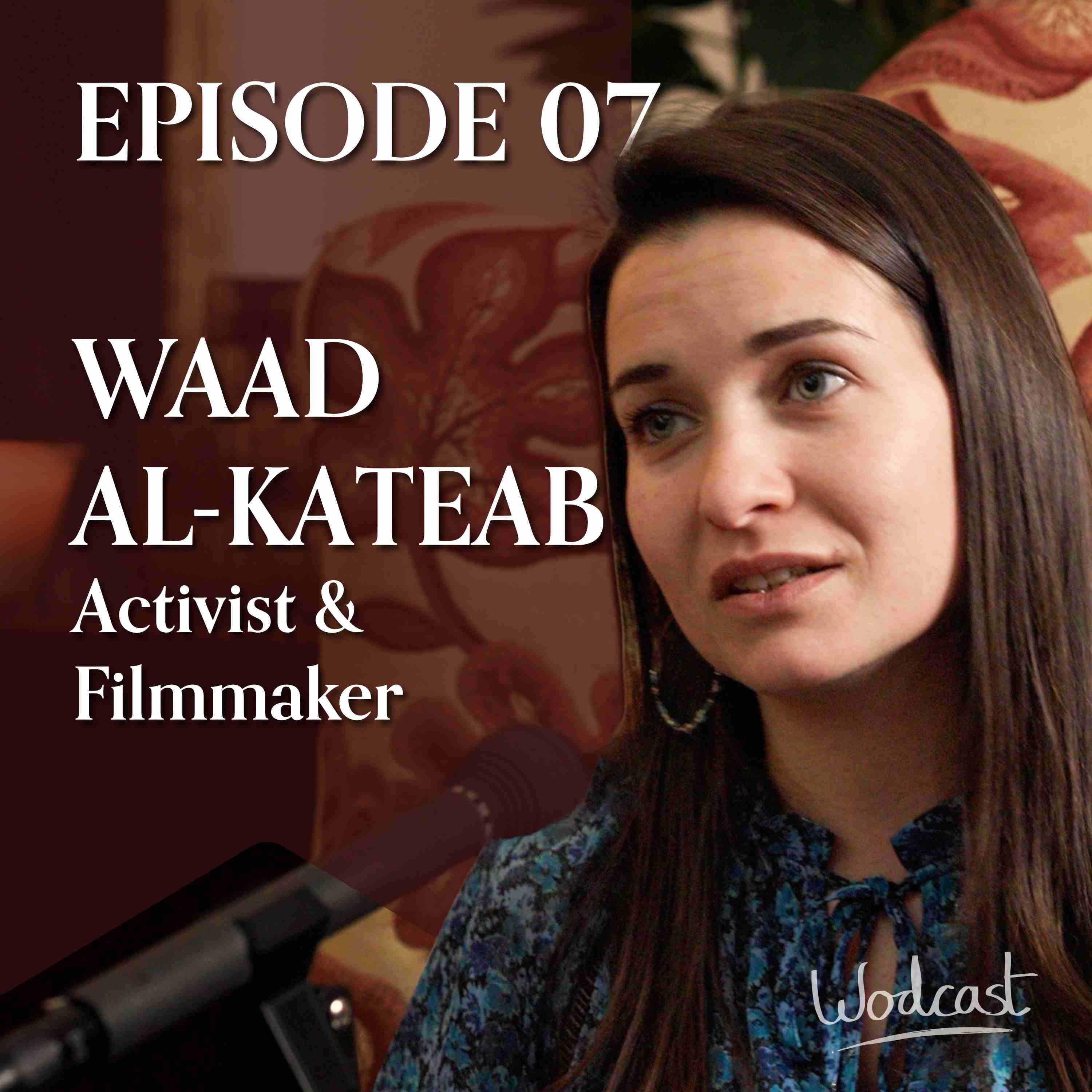
S1 · E7 · 9 Sep 2026 · 57 min
What does freedom really mean when you have spent part of life without it? Today, the Wodcast sits down with Waad Al-Kateab journalist, filmmaker and activist for a deeply personal conversation about freedom, home, family, language, community and the power of imagining a different future. Waad grew up in Syria under the Assad regime and began documenting life in Aleppo during the Syrian revolution. Her extraordinary archive became For Sama, the acclaimed documentary that brought the realities of war, motherhood, love and survival to audiences around the world. In this conversation, she…

S1 · E6 · 26 Aug 2026 · 48 min
What if surrender isn't the opposite of creation, but part of it? Today, the Wodcast sits down with musician and songwriter Nick Mulvey for a wide-ranging conversation about words, music, faith, creativity and the things that can only be felt beyond language. Nick arrives with the word “yield” a word that can mean both to produce and to surrender. From this apparent contradiction, the conversation opens into a deeper exploration of creativity, control and what happens when we stop trying to do everything ourselves. Nick reflects on the role surrender has played in his own life, and why he…
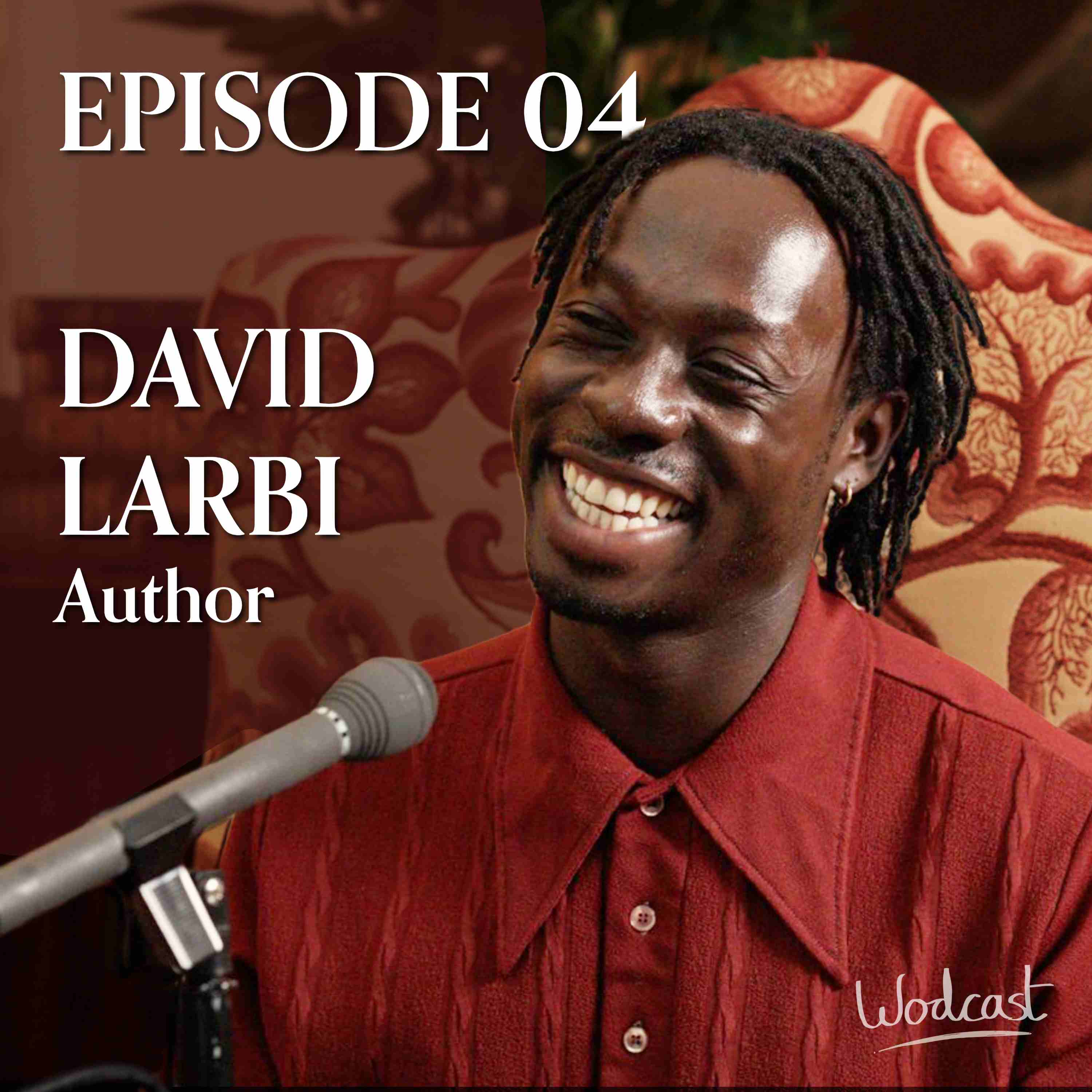
S1 · E4 · 29 Jul 2026 · 1 hr
What does it take to become Frequently Happy? Today, the Wodcast sits down with David Larbi, poet, bestselling author of Frequently Happy, and one of the UK's most thoughtful voices on joy, creativity and emotional wellbeing, for a deeply reflective conversation about poetry, presence and the courage it takes to live authentically. Together they explore why happiness begins with contentment, the relationship between creativity and self-discovery, and how words can help us better understand our emotional landscape. Along the way, they discuss burnout, boundaries, the importance of silence in…
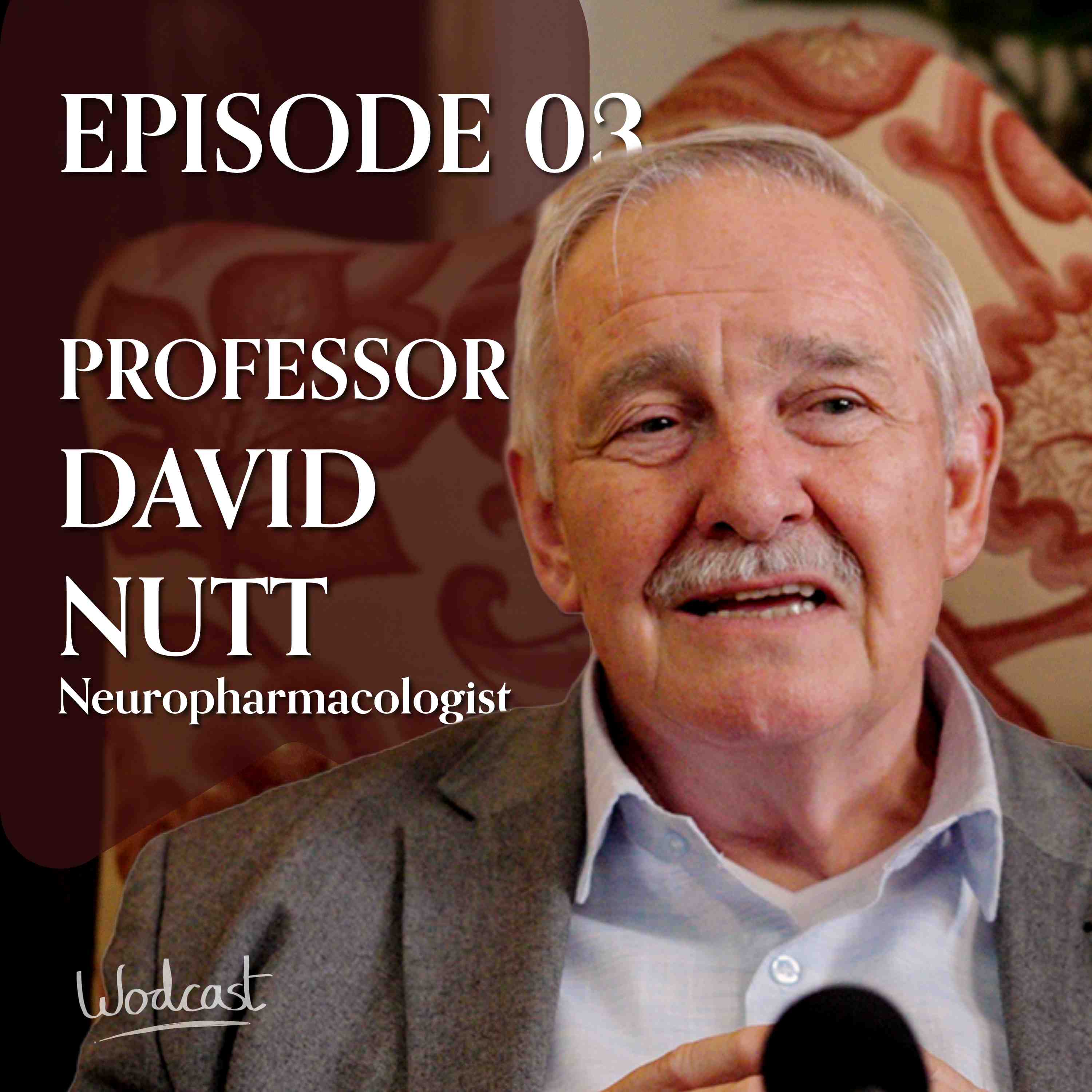
S1 · E3 · 15 Jul 2026 · 1 hr 10 min
What happens when language becomes more powerful than evidence? Today, the Wodcast sits down with Professor David Nutt, one of the world's leading neuropsychopharmacologist, psychiatrists and consciousness researchers, for a thought-provoking exploration of language, consciousness and the extraordinary power of words to shape how we think, feel and act. Together they discuss the origins of the word psychedelic, why MDMA was originally called empathy, how language has influenced public perception and policy, and what happens when words become more powerful than evidence. Along the way, they…
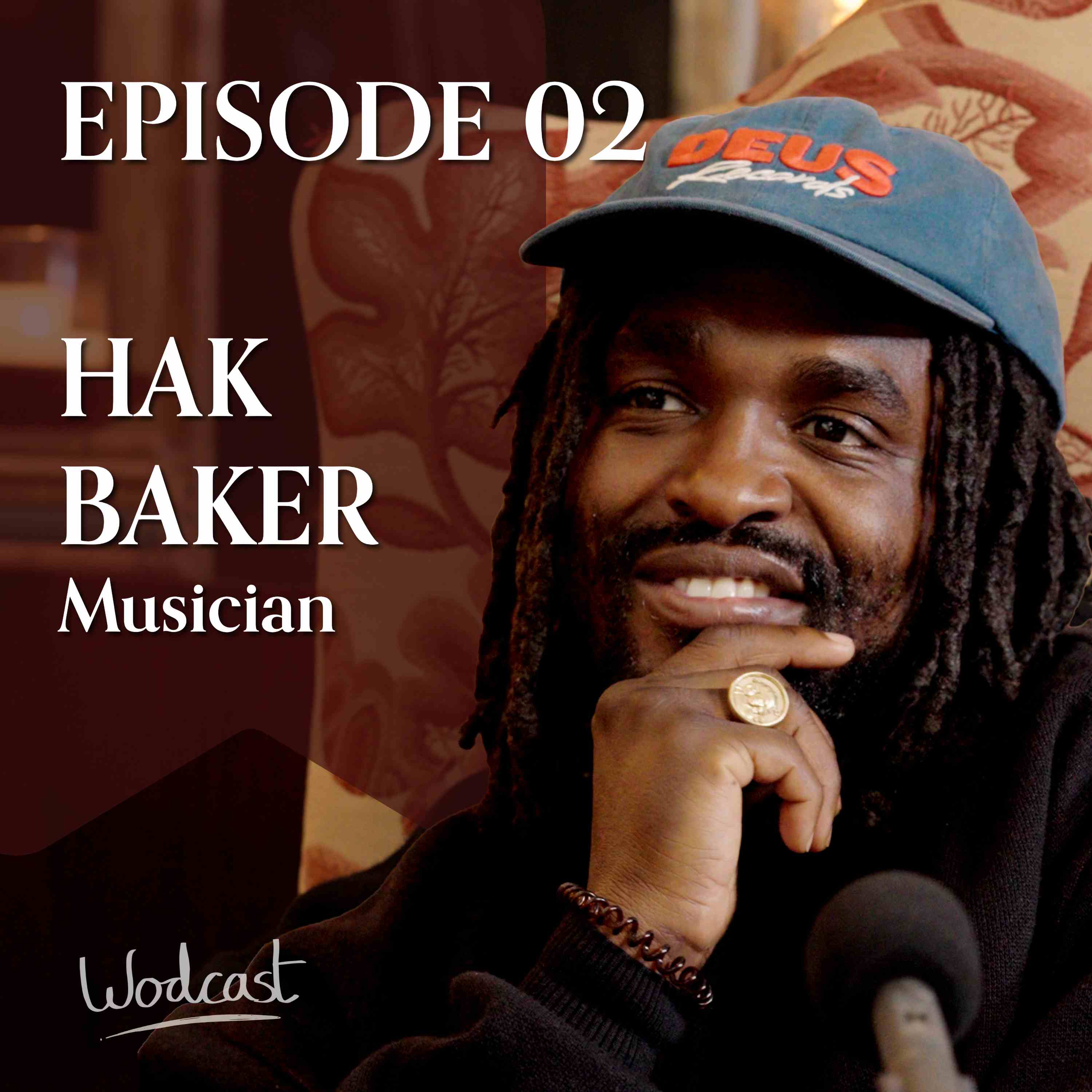
S1 · E2 · 1 Jul 2026 · 1 hr 12 min
What if romance wasn't just about falling in love? In this conversation of the Wodcast, musician, songwriter and poet Hak Baker joins Benjamin Aston and Mabel Evans for a wide-ranging exploration of romance, brotherhood, community and the courage it takes to change. Together they discuss the forgotten meaning of romance, why transformation is rarely a solitary act, and the idea of slaying the dragon within - the lifelong battle to confront our fears, ego and destructive patterns. Through stories of growing up in East London, finding his voice through music, and building communities rooted in…
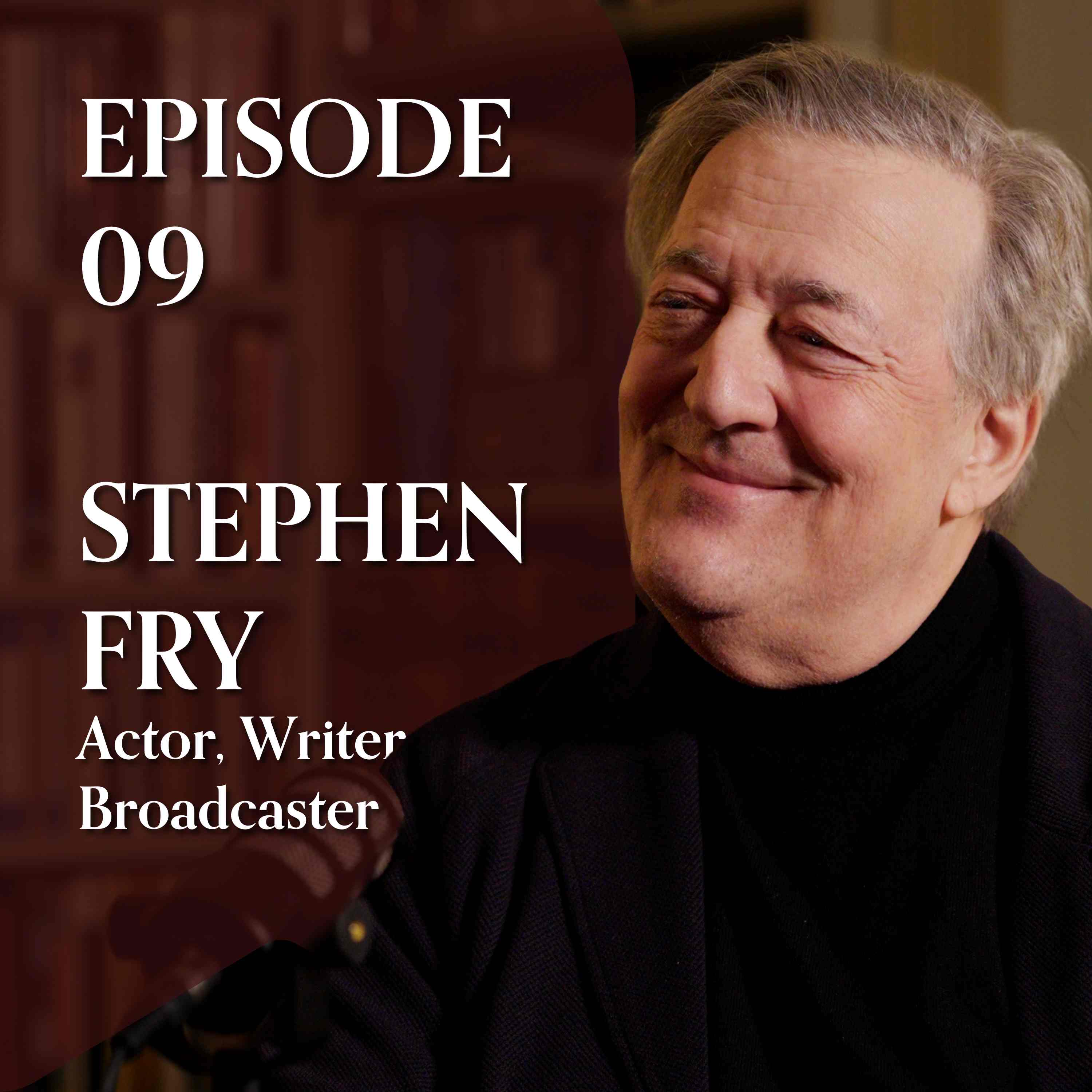
S1 · E9 · 7 Oct 2026 · 1 hr 8 min
What if words can never mean exactly what we want them to mean? Stephen Fry has spent a lifetime exploring language: writing it, performing it, studying its history, and delighting in its strange contradictions. In this final episode of Season One, we sit down with Stephen to explore what words can and perhaps cannot do. We begin with “happy”, a word Stephen traces back to hap, meaning chance or what happens. From there, the conversation opens into a much bigger question: if language is metaphorical, and words can never map perfectly onto the things they describe, how do we ever understand…
S1 · E1 · 17 Jun 2026 · 1 hr 25 min
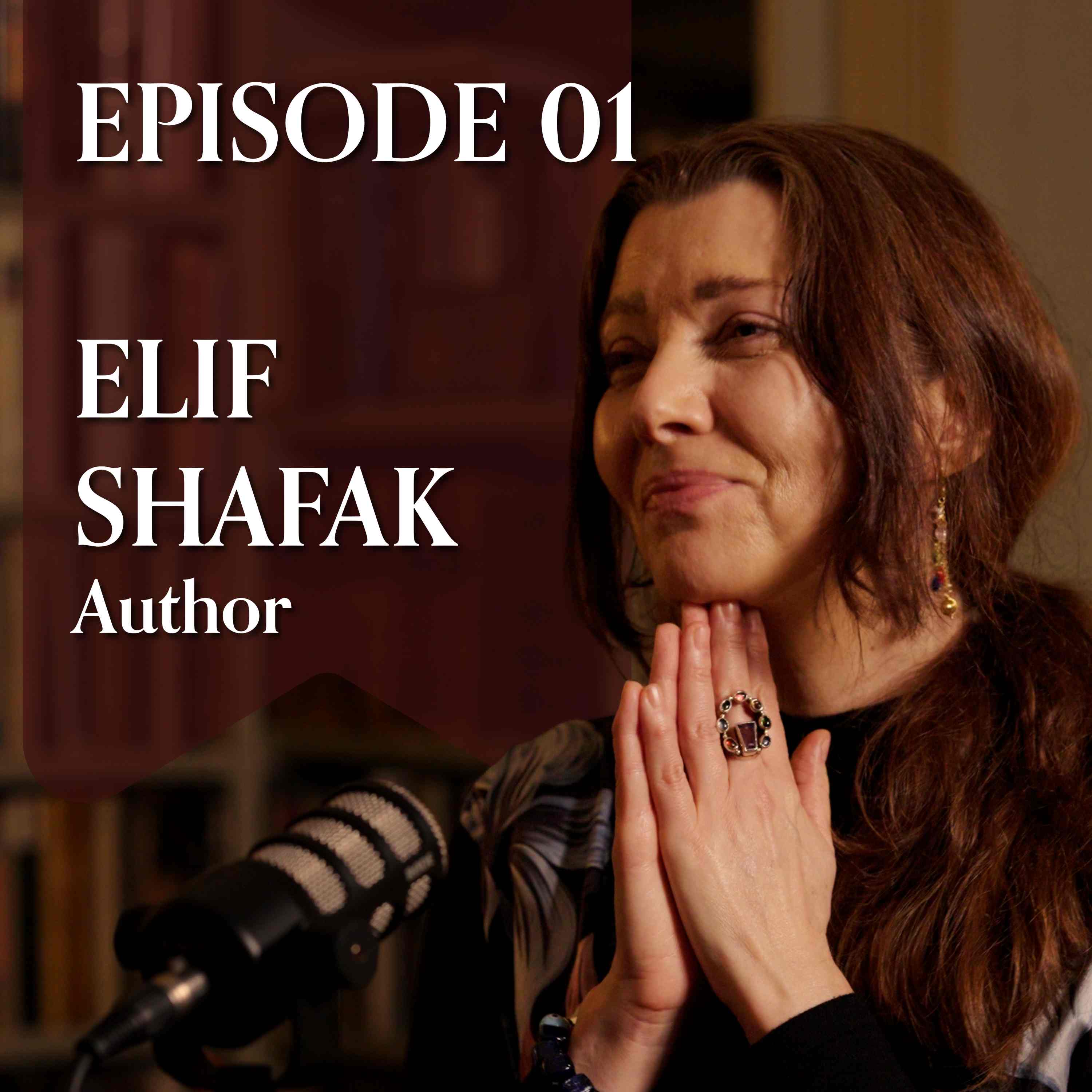
What happens when faith and doubt learn to dance together? In this opening conversation of the Wodcast, bestselling novelist Elif Shafak joins Benjamin Aston and Mabel Evans for a wide-ranging exploration of language, love, storytelling and the search for wisdom in a noisy world. Together they discuss the ancient meanings hidden inside words, why different cultures understand love in different ways, the forgotten goddess of writing, the importance of oral storytelling, and what Elif calls "inner democracy" the practice of making space for the many voices within ourselves. Drawing on her…
S1 · E1 · 12 Jun 2026 · 1 min
In Season One of the Wodcast, we sit down with novelist Elif Shafak, musician Hak Baker, Professor David Nutt, writer David Larbi, founder and coach Remi Olayjoyegbe, musician Nick Mulvey, filmmaker Waad Al-Kateab, lyricist Tim Rice, and writer, actor, and broadcaster Stephen Fry. Across nine conversations, we explore the words that have shaped their lives, the language that has influenced their thinking, and the stories they carry with them.

S1 · E1 · 6 Jun 2026 · 1 min
Welcome to the Wodcast where every word carries a world inside it. The Wodcast is a podcast exploring the words that shape our lives, cultures, relationships, and imagination. Hosted by Benjamin Aston and Mabel Evans, each episode unfolds into conversations, stories, ideas, and perspectives from writers, thinkers, artists, and cultural voices. From love and belonging to courage, grief, joy, identity, and everything in between, the Wodcast invites you to slow down and look more closely at the language that shapes how we see ourselves and one another.

The Melo app keeps playing with the screen off, works in the car and on your watch, wakes you to your station, and browses the whole catalogue offline. Free, no ads, no account.


