Episode notes
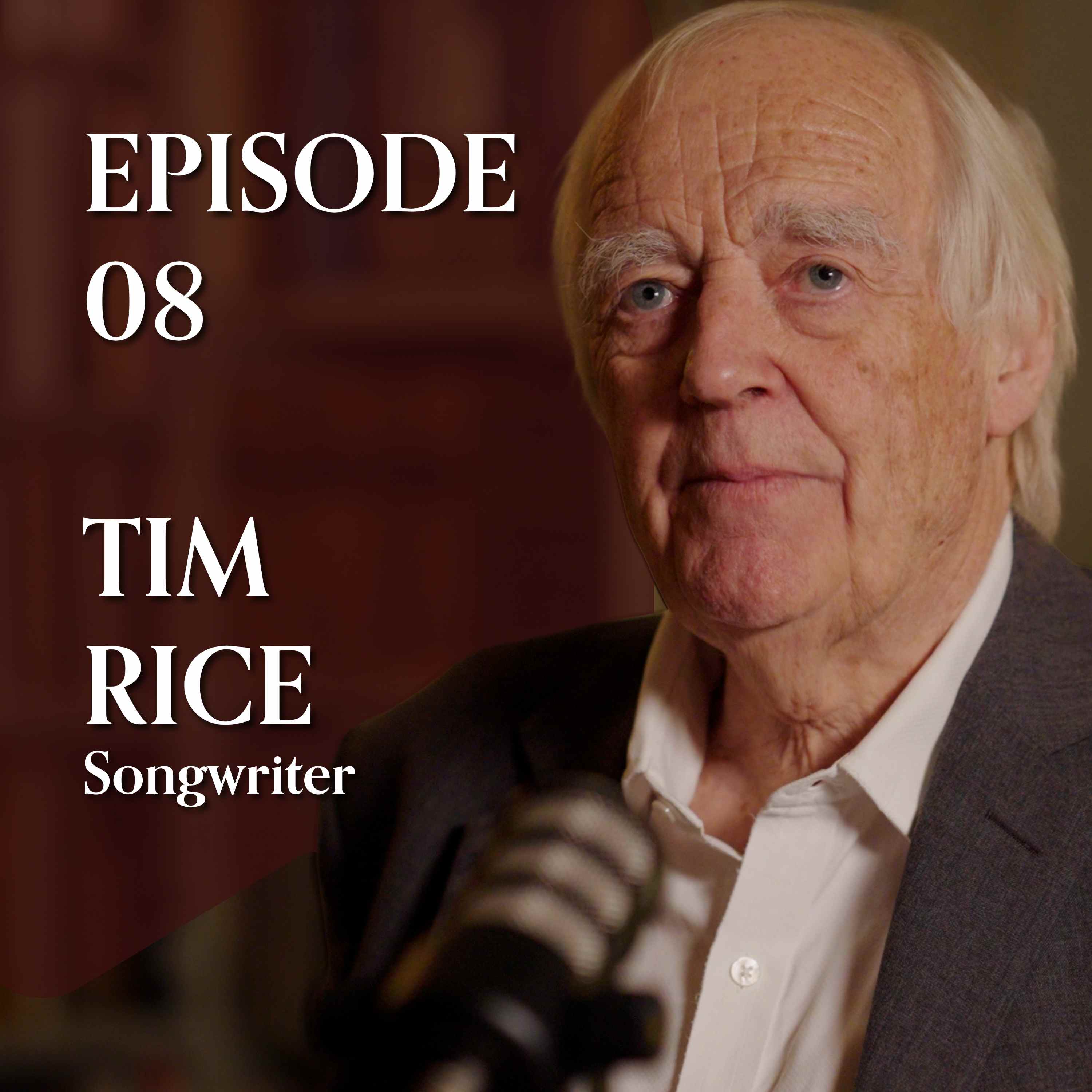
Today, Wodcast sits down with Sir Tim Rice one of the world's most celebrated lyricists and one of only a small number of people to have won an Emmy, Grammy, Oscar and Tony, for a wide-ranging conversation about words, songwriting, storytelling and the strange alchemy of turning language into something that lasts. From Jesus Christ Superstar, Evita and Chess to The Lion King and Aladdin, Tim has written some of the most recognisable lyrics of the last half-century. But this conversation is less about the hits themselves and more about what happens inside the words: how a lyric comes…
Transcript
Read the transcript · about 9,370 words, follows along as you listen
Welcome to the WODcast. Here we explore the power and beauty of words. We are your hosts. I'm Ben. And I'm Mabel. And today's guest is none other than lyricist Tim Bryce. We hope you enjoy the episode. You've got your notebook? I've got my notes. Well, cheers. Yes, bottoms up is the expression, I believe. Bottoms up. Cheers. Congratulations. Bottoms up must must come from that. You swig, you see the bottom of the glass goes up. It's Australian whiskey.
Australian whiskey? What do you think? It's good. Get you going. Get me going. Sir Tim Rice, welcome to the WODcast. It is an absolute pleasure to have you here. Thank you. It's a pleasure to be here. So you are one of 27 people on the planet who is an EGOT, meaning you have won an Emmy, a Grammy, an Oscar and a Tony. and multiple awards in those categories. You have worked with musicians such as Freddie Mercury, Elvis Presley and Burt Bacharach, as well as Elton John.
You're the man that made us fall in love with a warthog with wind while simultaneously giving us Hakuna Matata, not only to sing but also to live by. The Lion King is currently the highest-grossing Broadway production of all time. And you never went to university... Well, I kind of went to university. I went to the Sorbonne in Paris only for six months. And I must say I spent more time exploring the rest of Paris than the Sorbonne. But I got French A-level when I was 17 or whatever.
And I didn't want to go to university, strangely. And my parents thought I should go. I think I rather disappointed them. Both my younger brothers went in the end. But they kind of said, well, there's this course at the Sorbonne, which is only six months. Maybe you'd like to do that. And so I did. And I worked on a petrol pump station to support myself once I got to Paris. And it was a very important part of my life. The petrol pump station I worked at in England before, in the vacation before I had to get out to Sorbonne.
But it was – I look back on that year in Paris, nearly a year, with great affection. It was wonderful. It was the first time I'd really learned anything about any foreign place. And I read somewhere that you said that all of the ideas that you had for Jesus Christ Superstar, for Evita, for chess, for Joseph and the amazing Technicolor Dreamcoat were seeded from your childhood when you were eight years old. Is that true? Certainly Joseph, superstar, Evita.
And chess, in a way, perhaps not quite so much that one. That was inspired ultimately by the Bobby Fischer-Boris Spassky chess match in Reykjavik, Iceland, in 1972. But the others, I mean, I didn't know about chess, the game, when I was young, but I wasn't particularly interested in it. But certainly Joseph and Jesus were certainly characters I knew a lot about when I was very young. And Eva Peron... I knew about her when I was young because I collected stamps.
And in my stamp collection, Argentina was the first country in my little schoolboy stamp album. I mean, there are some countries that would have come ahead of Argentina in alphabetical, like Albania, but they either didn't have any stamps or this stamp album didn't feel it was worth having a page for Albania. And on the on the Argentine page, I had a few stamps with this rather beautiful woman on and I didn't know. I mean, I soon found out who she was that she was called Eva Peron and a.k.a.
Evita. But that was all I knew about her. But I think things you learn or pick up in the first 10 years of your life are more important than in any other decade. And I always think. As Orson Welles in that brilliant film, Citizen Kane, the final thing he dreamt about, the final word he said as he was dying was rosebud. Rosebud. And nobody knew. This is the story. I mean, it's fiction. It was all about a newspaper magnate who made millions in America.
It was based on Randolph Hearst, who was a real newspaper zillionaire in the 20s or 30s. And this was 1920s and 1930s, I hasten to add. And Orson Welles played Citizen Kane. And Kane, K-A-N-E, was really Hearst under a different name. And when the Citizen Kane, when Kane died at the beginning of the film, His last words were rosebud, and nobody had a clue what he was on about. And it's revealed at the end, it then goes through his life, it's revealed in the end that it was a sledge that he played on sliding down hills was called rosebud.
So that character was the final thoughts he had in his life were something very important to him in his childhood. And I think that's what... I will think about when I get to that stage, there'll be something like that. The next musical. Yes. Pity I'm dying because I could have done a good show. it's fascinating I mean chess has just done previews in Broadway 40 years after its first release to astounding success well it's a bit early to say that as we speak um it's in the middle of previews and I I'm quietly confident it'll do all right but you can't bank on anything you just don't know the public will tell you That's something we've reflected on, how you've written those words 40, 50 years ago, not just for chess, but also for other musicals.
And everything has changed around the words, right? The cast, the set, the whole production, but what has remained are your words. And I wonder... And the music, of course. But also the music I've been told has changed slightly. Well, I mean, music can be altered differently. and still work. Like the recent production of Evita in London, the orchestrations were very different from the orchestrations with the original production, which was 1978. And it's been done in many ways, but the music in 2025 at the London Palladium with Rachel Zegler was...
was very successful, but it was very aimed at a much younger audience, I feel. And the instrumentation and the machinery and the gadgets weren't even there in 1978, which was much more conventional. And it has always been rock. It's always been contemporary. And it's not really dated, if it sounds like I'm bragging, but the original Evita score still sounds great. I mean, Don't Cry for the Argentina is a big, lovely, corny ballad. And the orchestration of that hasn't really changed.
But a lot of the other stuff... over different productions in different countries, the music does change a bit. Not the tunes, not the melodies, but the words, you can't really change them, which I suppose is good. Do you feel that lyricists are underappreciated geniuses? Of course. I think it's interesting that, yes, there is a difference, I think, between the public's thoughts about musicals, about that they have a different view of musicians to lyricists.
I mean, obviously, they might have a view and say, well, these words are brilliant, these words are awful. But... They kind of think, everybody thinks, that there's something about musicians or composers that is special. They're doing something that most people can't do. Or they're wrong, because anybody can write a tune, just like anybody can write a word. Anybody could write a lyric. I'm assuming they can read and write. But whatever their language is, whatever their education, people can write, you know, I love you doll or whatever.
It might not be good, but they can do it. But people think, ...tend to think composers... ...oh, I couldn't begin to compose anything... ...but you can. There are only seven letters in the musical alphabet... ...A, B, C, D, E, F, G... ...there are 26 in the ordinary British... ...or English language alphabet. So you could argue, if you're starting from scratch... ...if you came on from Mars... ...and you're presented with... ...these languages, you've got 26 symbols, learn them... ...this is music, it's got seven, learn them... ...you'd say, I'll go for the music.
It's easier... And I can, I'm not a great composer. I'm not even a good composer, but I could write you a tune now within about, you know, it wouldn't be great. You wouldn't go home thinking I've just heard, you know, Mozart. But it would be a tune. And it's not difficult. And I could do the same, you know, I mean, anybody could do that with a bit of confidence. And I could do the same with words. But funnily enough, it's much harder to write instant words.
You might get a title, but you've got to sit for words to actually, especially if you've got to write more than one verse. I mean, it's another unfair thing is the composer writes a tune. You know, don't cry for me, Argentina, take as an example. You know, bam, bam, bam, bam, bam, bam, bam. He likes that. We'll keep that. And he's written verse 1. This is not against Andrew at all. Andrew's a genius. I'm just saying. I'm using that tune. But when you've written as a composer, when you've written verse 1, you've also written 2, 3, 4, 5, and 6, because they're all the same melodically, whereas the lyrics have got to be probably different or at least have some changes every time.
And also in a show like Evita... Not only does Don't Cry For Me Argentina have six stanzas or verses, the tune comes back, and it's right that it does, because it's a good tune. It comes back as a rocking tune, Oh, What a Circus. But the tune still existed. The only thing that changed between, the only difference between Oh, What a Circus and Don't Cry For Me Argentina is the orchestration and the vocals. The actual tune, top line, is in essence the same.
So in answer to your original question some hours ago, I do think lyricists get a rough deal sometimes. Listen, I'm very grateful and I would not have had any success without great composers like Andrew. But people do have this thing that, oh, he writes tunes. That's something no one can do or not many people can do, but anybody can do it. Do you think that might be because we don't communicate in tunes like on a day to day, whereas we use words quite flippantly?
Yes, I think. Yes, that's a good point. I think people obviously use you. You speak with words and talk with words and you read words. But to write something like a book or a poem or even words for a musical, that's quite a task. And a lot of people can do it really well. But it's not something that's – I don't think people think, my goodness, how on earth did he grasp the concept of 26 letters and words. They don't think that. But they do think that about music.
Yeah, I see the difference that you're describing. And I guess I do wonder, when you write lyrics, where does the phonetics of the word sit? Like, how important is the sound of the word? Yeah, very important. You should have, one of the things, when you've got a great tune, like Don't Cry For Me, Argentina, And the rhythm is whatever speed it's taken at is da-da-da-da-da-da-da-da. So you can't have – I'm trying to think now, thinking of a word that wouldn't fit.
But you couldn't end with – I don't know. What's a word that has a stress on the second syllable? I mean da-da-da-da-da-da-da. You can't have a word that goes da-da at the end. the words have to fit the emphasis that you would have when you're talking, you know. So it's not... Everything has to fit. It's like a jigsaw puzzle. You have to make sure that the words, if you like, emphasize the brilliance, which you hope is there, of the tune. So you always take the sound of the word and you match it with the... Yeah, but there are no rules.
The thing is that... There are really no rules. You just have to write something. I mean, certainly in musicals, you have to write something that's plausible, I think, and people can relate to. You don't want to preach. You don't want to be too clever. You just want to tell a story well. And if you tell a story well, and if it's a good story, then I think a lot of thoughts and a lot of messages come out of it, often ones that you don't even intend yourself.
So your friend Don Black says you can say more in three lines of a good lyric than you can say in any novel or film. Well, that's a very good point. I would... Yes. I mean, that's probably, I mean, if you take that literally, which I suppose, I mean, it's not wrong. I mean, obviously, you can say something, especially if it's backed up with a great melody, you can say something fairly, if not profound, but something that people can relate to everyday life.
And, I mean, obviously, I wouldn't say that two or three lines of a lyric are as good as Ulysses or 1984 or Jane Austen or whatever or Nicholas Nickleby. But they can make the same impact. You know, I mean, so many political slogans are really can be songs and people march down the street, you know, singing one line and you get what they're saying, often frighteningly so. But High Flying Adored, which is also in Evita, I don't know, I'm concentrating on Evita particularly, but High Flying Adored is a song about Che Guevara, the character of Che, sings it to Eva.
And he's saying, well, you've got to the top now. The only way is down. You're 26. You know, everything's been fantastic. Now what? Clever dick. It's like, you know, show me. And it was actually, that was quite easy to write because I felt in that position myself. I was suddenly very successful at 26. And I really thought the only way is down. So I was writing about being famous too early. Not that I was that famous, but being successful. And it's difficult to cope with.
A lot of people, you know, I'm not quite sure how I survived somehow, but you do tend to go off the rails. Most people don't go completely off the rails, I'm glad to say. But that song was about... I suppose that was as autobiographical a song as I've written. But it doesn't look like it's about me, but it's about, it is really. I'm trying to think of something in chess that might be about me. Well, Circle of Life is something I actually believe.
There's so much luck in everything. And it's unfair. But if you are lucky, you should appreciate your luck. not lord it over other people. Sometimes I sound like a really boring preacher at the moment, but the message is not, you know, you're superior. You're lucky. That's what you've got to remember. You're lucky. And then people say, well, no, no, you've obviously got a talent because it's not luck. I say, well, I'm lucky if I had talent. I'm lucky.
You know, that's and you've got to remember that. You mustn't say all the time, oh, I'm brilliant. Even if you are brilliant, you've got to remember that it's it's luck to a certain extent, to a great extent, actually. I mean, quite a few of my lyrics have been a bit confessional, I suppose. Confessional? Well, meaning I'm saying something that I would not want to say in black and white, in public or whatever. But I can say it through a song. And I feel I've said it.
but I can deny it at the same time if I want to. And also I've written a lot of songs in which I've not had the experience. Like ones I've written for women on the whole, you have to guess what they might be thinking. But I always find it very... I'm always quite flattered if a woman says to me... Well, you know, that one's not wrong. You're not wrong there. I'm sure plenty of them say, what a cretion. He doesn't know what he's talking about. But if you get enough people or one or two people over the years saying, yeah, I don't see that, that's a bit of a reward, I guess.
This ability to put yourself into other people's shoes to write from their perspective, has that left a mark in your own life, like in your personal or private life? I think my private life's been a bit of a mess. Nothing serious, but I hope. But I think having a... I mean, being, you know, going through, you know, one or two relationships in this and the other, I think you do get to appreciate other people's points of view who should. I don't think...
I don't think that's affected my work. I think the other way around. I think the problems one's had or ups and downs have come out in the work. You know, I mean… I can write about things I've experienced. I can always write about things I haven't experienced. I mean, I've never stood on a balcony in Buenos Aires and spoken to 10,000 people. I've never been crucified. There are lots of things that, you know, I've never done. But you can put yourself in that position.
I've never, I shall probably say, I've never had wind problems like in Hakuna Matata. But frankly, I have on occasion. That does remind me of the classic Hakuna Matata. And... I've been very excited for today and I would like to understand a bit better how you found this Hakuna Matata. Well, it was in a Swahili phrase book because in Kenya where Lan King is set, one of the principal languages is, you know, native languages as opposed to British or English language is...
Swahili. And we were, I was working with the directors of the movie. They were still friends of mine. It was a nice team. And Elton wasn't involved at this stage. I mean, Elton was waiting for the lyrics to be sent because he likes the lyrics first. And we had to write a song which encompassed the, the, the, the totally relaxed laid back, uh, uninterested attitude to almost everything that these animals, the warthog and the meerkat had. And there were quite a few lyrics I wrote which didn't have Hakuna Matata in, which were never used because they weren't quite funny enough or they didn't quite fit.
And, I dug up a, I had this Swahili dictionary, so maybe there's some words in Swahili that rhyme, which were quite useful. But I saw this phrase, you know, nothing matters or, you know, no problem. I thought, well, that's what the song's about. And so I wrote a very simple lyric, took about, 20 minutes, as far as I can call it. Elton wrote the tune in about 25 minutes. And it was one of the most popular songs I've ever written. It's crazy. I mean, it's...
But it's fun. Children love it. Yeah. And it actually makes quite a good point, you know. What a marvellous phrase, you know. It is a nice, you know. It's, hey, nothing matters. I mean... That's obviously not true, but it's great to feel that for a bit. Nothing matters. So what? I mean, what annoys me a bit, actually, about it, in the show and in the movie, for that matter, they only use one verse. The song has got two verses and a chorus. And the first verse is not the warthog with wind problems.
It's the meerkat who is saying... All I do all day is I stand outside the hole. I look left and right and I guard against predators. And suddenly I thought, why am I doing this? Hakuna Matata. And it's nothing matters. Relax. Then the warthog says, well, I've got a problem as well. And it's not as serious as the meerkats. His problem is that he keeps farting. And so that's quite funny, but it's much funnier. And that's the verse that the film used and kept for shortlist reasons and the show.
And they use that because it's funny and it always goes down really well. But I think it's funnier if you have a moderately serious verse first, because Pumbaa, the warthog, is taking the mickey out of Timon, the meerkat. He's saying, you've got problems, mate? No, what about this? You know, I've got such a showable wind problems that friends won't stand downwind, you know, and all that. And that kind of works. I've never spoken so long about Hakuna Mokata.
And while you were writing on The Lion King, I believe you got a call at Disney from Alan Menken to come over and join the team at Aladdin. Yeah. And he proposed you an idea around something at my feet. Yes, I was brought into the Aladdin film at last minute, and the Aladdin film was coming out before Lion King. It was nearly finished, and tragically, a great lyricist called Howard Ashman, who'd written a lot of hits with Alan, Beauty and the Beast, Little Mermaid, and Little Shop of Horrors, and all that.
And he died. He'd been ill for a long time, and it wasn't a total surprise, but they all hoped that he would be able to finish Aladdin, and he didn't. So I was pulled off The Lion King for a couple of weeks and said, we're desperate, we need a couple of lyrics for Aladdin, which is coming out very soon, and it's not quite finished. And Alan had this wonderful ballad, and it was a song for the... big scene in the aladdin movie um of jasmine and aladdin flying around the world on a magic carpet and the animation was great with you know literally flying around the world you saw the world and alan said a lovely tune i thought this is a great tune to start off working with alan and he said um i thought we could call it the world at our feet And I thought, I'm not sure that feet is a particularly romantic part of the body.
I mean, for some people, maybe, but not for me. And so I said, well, I heard the tune. I said, what about a whole new world? And I said, yes, good idea. And it worked. And it became actually, I think technically it's my biggest hit ever. And Alan's, of course. But it was a number one record in the States. It won Grammy for Song of the Year, which is quite a hard one to win. It's normally awards that, you know, you think, well... I was lucky, but this one, I was lucky, but I never thought we'd win that one, Song of the Year, because you're up against, if it's Oscar time, you're only up against songs in films.
You're up against maybe three or four other songs that are quite good. In Grammy Song of the Year, you're up against thousands of songs. Obviously not all of them are good, but that's a harder one to win. Amazing. A whole new world. So, Tim, we have asked you to bring some words to share with us today. Right. And we're wondering if you can share... Well, we asked you to share words that have been milestones in your life, that have meant something to you.
And would you share with us your first word? A very important early word. That sounds funny. That's right, early word. was Eagle. Eagle. Because, believe it or not, there was a comic a terrific social success. It was the first serious post-World War II comic and it was called Eagle and it was a huge success. It made a big social impact. Every child wanted to read it and it was quite grown up in many respects. And last night, funnily enough, I was looking through some...
I've got all the Eagle comics from 1950 onwards and... And I must have known when it came out, I was very young, I must have known what an eagle the bird was, but I've always had a... Every time I see an eagle, which is not that often, you don't see too many wandering down Oxford Street, but up in Scotland you see eagles occasionally, and there's always something... That word leaps out to me in a story, and... even though it may have nothing to do with Eagle comic or even with nature, but it's a word that meant a lot to me.
I mean, every Friday you'd wait for the comic to arrive. It was actually, it wasn't an inane comic, it was highly intelligent. But I learned an awful lot from it. It's one of those things that had, you know, useful tips and history and extraordinary things and... stories and a lot of it was was in in cartoon form but a lot of it was actually written out with was was you know text so it's i always think that eagle the comic and eagle the word were always was very important to me I mean, it's often easy to think of words that you don't like, you know, words that you think.
I don't like the word detritus. I don't know why. Detritus. Detritus, which means junk and rubbish. Do you know the word? Not yet. Detritus. It sounds so... Detritus. It sounds quite epic for a word that means junk. It holds a weight to it. The detritus of his life was lying around. I never liked that word. I also don't like the word sibling. It's annoying because people say, I mean, in the olden days, have you got any brothers and sisters? Now we say, have you got any siblings?
Yes. Because I don't know whether people think that you shouldn't discriminate between brothers and sisters, but you're not. Maybe you should say sisters and brothers. I don't know. But if I say to you, have you got any siblings? You say, yeah, I've got two. I say, well, the next question has to be, are they brothers or sisters? I've just wasted two seconds. I could have asked you first straight off. I sort of feel that sibling is one of those politically correct words that you have to use these days.
And it's a rotten word. It doesn't help you at all. That's my view. I don't like that word much. I'm trying to think of some other words. I love the word heartache, because it was a word in so many popular songs of the day. And when I was lucky enough to make a bit of money, the tax rate was nearly as bad as it is today. And the only way around it back in those days in the 70s was to form a company. And you formed a company and the company, you paid any money you were lucky enough to make into the company.
And then you made your mom and dad and brothers directors and you then could pay them a little bit of a salary. So the money stayed and you weren't giving it all away to the government who were wasting it. You gave it to family and close friends and things. That was, And I called the company Heartaches Limited. Wow. And I never thought that, and this is when we did Superstar and made a bit of money, and I thought we might have one year of making good money, maybe two if we're lucky.
And I don't want it all to go in tax because after three years, I'm going to be looking for a job again. And luckily for me, that didn't happen. But I formed Hardly X Limited, which was much appreciated by my parents and my brothers and everything, my siblings. the word became quite important to me. Heartaches, as a company, still exists. And I've had a cricket team called Heartaches and a music publishing company called Heartaches. It's quite a nice name.
And it's a name I liked because a lot of records, pop records in the early rock and roll era, that's when your heartaches begin. Nothing but heartaches. A lot of songs that had the word heartaches in. It's a great rock and roll song, you know. But... That's When Your Heartaches Begin was a big hit for Elvis. And Elvis was my first real American pop hero. And he was a big star in his day. And you wrote for him. We did. We wrote one song, Andrew and I, his music publisher, a chap called Freddie Beanstalk, who...
I knew his girlfriend who was working at Capital Radio. And she was going out with Freddie, who was American, and didn't come, came over to England. But Freddie was a music publisher, and he was looking for new songs for Elvis. And I met Freddie through Linda, his lady friend at the time. And Freddie said, well, if you guys want to write a song, I'll play it to Elvis. You never know. Wow. So we wrote two songs. one of which nothing ever happened to, as far as I'm aware.
I keep thinking one day they'll find Sonny, oh, we've heard Elvis singing this in the bathroom, we've recorded it. But that was a rocker, and we also sent him a ballad called It's Easy For You. And for a long time, nothing happened. Freddie said, well, Elvis likes the song and he's going to record it. But then two years later, he still hadn't recorded it. But then he did. And it came out in July 1977 on his album, and then he died. So, which was, I mean, it helped sales of the record, but it was very sad.
We were distraught. And it was a nice song. It wasn't a great song. It was a good song. And when I did my tour, we featured it. And it always went down quite well. I mean, people don't know it. I mean, Elvis freaks know it. But it's just a nice country-flavoured ballad. It's easy for you. So it was great. I think that Elvis must have spent at least 10 minutes looking at the words, thinking, what's all this about then? And the success of your words kind of prove a point that you did hit the home run in a few instances.
Yes, sometimes it does, yes. But sometimes it's interesting. People often misunderstand songs. And then I think maybe I've misunderstood it. A song like Any Dream Will Do, which is quite a popular song, it's actually a bit of a downer if you really think about the lyrics. Yet the tune is terribly bouncy and people love it. And Abba, who I've worked with, Bjorn and Benny, one of their great skills for me, they wrote these marvellous melodies, nearly all with sad lyrics, like one of us is crying, one of us is, you know, and, you know...
Knowing me, knowing you, aha, there's nothing we can do. And they're basically good tunes, even a jolly one like SOS. They've written so many great songs, The Winner Takes It All, which have the most uplifting melodies, but the words are sad and that kind of works. The contrast. Yes, but people don't even see it as a contrast. I mean, I never saw, I thought, oh, another great ABBA record. And then you realize after hearing it, I mean, Super Trooper, what a great song, you know.
But if you listen to it properly, it's a sad song. You know, it's all about the agony and pain of being on the road and being on my own and you're not there. It's not a suicidal song, but it's certainly not a very, in a way, not a cheerful song. But the tune is so good. and when they write a sad song with a sad tune like the day before you came then if you know that one it wasn't so successful it's a great song but it didn't go quite as well as some of the you know super trooper or um you know mamma mia all that actually mamma mia is quite a happy happy thought quite a happy lyric but um any dream will do you see it has it's kind of It's an escapist song.
And the guy, the singer, which has usually been a bloke, Joseph singing, it's, I close my eyes, I wanted to dream just to get away from it all. And I wear this coat and I'm happy and everything's wonderful. Then I wake up and the coat's gone. And that's the end of the song. It's like, it's sad, but people are going, ah, dah, dah, dah, you know, it's interesting. It reminds me of in Jesus Christ Superstar when people are gleefully singing about the crucifixion of Christ.
It's sort of similar, isn't it? Well, yes, exactly. That's a good point. It's the contrast with, you know, Jesus Christ Superstar, you know. And it's a great rock gospel thing. Hey, let's go for it. And yet it's actually rather sad, or very sad, to put it mildly. Do you think it's almost like the truth would be too harsh if you would have sad tunes and a sad one? That's fascinating. No, it's an interesting thing. I mean, you can over-analise all these things.
And sometimes people say, what do you mean by that word? I say, well, it rhymed. There's a bit of that. But that's not as important as getting the plot over. But in musicals, you really have to have pure rhymes. You know, so you can't get away with time and fine because it's not a pure rhyme. But in, you know, popular music, you know, there's so many dodgy rhymes. It doesn't matter. You know, it's a different art form. Yeah. But I had a few bad rhymes.
In any dream with you, there's a bad one. May I return to the beginning? The light is dimming. It's beginning N and beginning M. And I keep thinking. But I couldn't change it now. And it worked. And it works. Yes, that's the thing. It does remind me of the first conversation we had a year ago at Hay Festival, where I asked you about a favorite word and you did share lagoon. Oh, lagoon. Because you think it's fantastic. That's a great word. It rhymes with so many other words.
Gosh, yes, lagoon is a good word. I hadn't thought of that one. I mean, I had them, but I never thought of it. I like lagoon. It's a difficult word to get into a song, unless you're, you know, South Pacific or something. There must be... Have I ever used lagoon in a... I don't think I have. I must remember that. Lagoon. What's the other one? I do think of something else I should... I quite like the word endeavor. I don't know why. It's nothing sort of worthy about it.
It's just a nice word, meaning to try or whatever, or it can mean a trial. Yeah, I like endeavor. It has a sort of feeling to it of trying with heart. Yes. Somehow in the way it sounds. It sounds like a sincere word. It does. Yes. Yeah. And fascinating how it starts with the end, right? Like, end ever. Oh, actually, I never thought of that. End. Yes. I wonder if that site originated. I don't know where it came from. Endeavour. I must have used it.
It's quite a good rhyming word as well. What comes to mind? Well, never, you know, clever, you know. That's enough for the moment. Endeavour. So, Tim, we spoke about how a sad lyric with upbeat music has the effect. What about a bad lyric with good music? Well, you can have a daft lyric, which people might say is bad. And I'm trying to think of a modern one because I'm so out of touch with what's going on. But you can have a nonsense lyric. I mean, Little Richard, who was a great rock and roller, you're far too young to remember him.
But his greatest song began with the immortal line, Wop, bop, a loo, bop, a loo, bop, a loo, bam, boo. Bam, boo. Tootie Fruity, and then it was En Rude, and then it went, I've got a girl named Daisy. She almost drives me crazy. And you think, and the words are nonsense, but they're brilliant. I mean, if that song had been called, I mean, it begins, Wap, wap, bloop, bloop, bloop, bamboo. If that had been, you know, I love you, baby, and you love me too, it would have been as good.
People would go, oh, I love the song, but books have been called Wap, Wap, bloop, bloop, bloop, bamboo in tribute to that song. And, I mean, plenty of nonsense songs where you just repeat something that doesn't make sense. I mean, there's a big hit called Sugar, Sugar. Again, it's before your time. I know Sugar, Sugar. Sugar, honey, honey, you are my candy girl. I mean, it's a great song. It's like children's mercy rhymes. You know, often, what do they mean?
What does three blind mice mean? What is whatever? It's something satisfying about a rhyme that, apart from anything else, it tells you the line is over. Usually. Yeah. But, I mean, Argentina has rhymes, but nobody notices them because verse 1 rhymes with verse 2. And, you know, the first one is... I can't remember, I can't remember how the song starts now. It won't be easy, you'll think it's strange. Think it's strange. And verse 2, about a minute later, goes, I had to let it happen, I had to change.
And the first line is strange and change. And that goes through the whole, the six lines of the first verse, rhyme with the six lines of the second verse. Nobody noticed. But the song works, and I think it works partly because of that. That's certainly maybe only 5% or 10%, but it's satisfying. People think this song is, it sounds complete. Yeah, it's maybe a subtle noticing. Yeah, well, I think people will analyse it, if anybody bothered. They would spot that.
Of course, but even just listening to it, it probably is... You wouldn't notice it. Interesting. But you would, there's something satisfying about a rhyme, even if it's hidden. That to me just seems like the power of song and words is that they can hold so much meaning where a novel holds meaning in one's imagination when they read it. But when you hear a song with words, I mean, it's one of the most ancient forms of storytelling. Well, obviously, novels could only exist when you had printing.
so that if you're a novelist in 1150 you'd think oh bloody hell if anything they invented printing i could get my wonderful stuff out there but um yes i mean you're right a novel can be extraordinarily brilliant but there's so much of it to absorb whereas sometimes you can a song can get you into the message quickly but You know, novels are vital. They're an incredible part of our culture. And, you know, long may the novel live. We all love books.
I mean, books everywhere here. But a pop record or a song in a show can have a lot of meaning for people. because it bypasses a lot of the thought process. I mean, that's not quite expressing it correctly. It bypasses a lot of the analysis. You just get, hang on, I know what that song is trying to say. Whereas in the novel, and this is a strength of the novel sometimes, you've got to read gradually. It's like the real world. You don't realise something just like that.
You've got to live it and go through it. Whereas a pop song... you know, can sometimes say something really quickly and directly, which is a plus. And one of the joys of the research Ben and I were doing for this interview was actually reading your lyrics. Oh, God. Because we've only ever listened to them. But if you read the lyrics to Can You Feel the Love Tonight? I mean, it just had me in tears. Oh, no, really? It's not that bad. I mean, at one point you talk about where, let me just find it, you talk about the kaleidoscope.
There is a time for everyone if they only learn that the twisting kaleidoscope moves us all in turn. There's a rhyme and reason to the wild outdoors when the heart of this star-crossed voyager beats in time with yours. I mean, that's poetry. Poetry, right. Okay, great, I'll take that. I'm quite pleased with that one, if I may be arrogant. There's a line about kings and vagabonds. I'd rather like that. Yeah, that was a good phrase. I don't know where that came from.
What is a vagabond? Vagabond is a roaming person who's lost. And actually, it's a good question. I think if you looked it up in the dictionary, I'm not sure what it would say. But I always think of a vagabond as somebody who's almost the opposite of a king, but not like a complete disaster. Plenty of kings have been complete disasters. But it's somebody who lives outside the law and is a bit dodgy, perhaps. but really heart in the right place. That's how I see that vagabond.
And so the lyric, is the lyric saying kings and vagabonds, no one can escape love when it comes? Correct. No matter whether you're at the top of the tree or the bottom. And that was the message. And vagabond fitted the scansion so well. The what? It fitted the scansion. What's the scansion? Well, the tune. I mean, the scansion being the number of syllables. Actually, but Elton, having said that, Elton did the tune after the words. So he, which is unusual for most songwriters.
So he got this line, Kings and Vagabonds, and he wrote a tune which went da-da-da-da-da in rhythm. You know, I mean, which worked really well. When I heard that one back, I thought, hmm, this sounds good. And it was a big hit. Even though people might not have known it, certainly at the time it was a hit, they didn't know it was from The Lion King. They just thought, oh, it's another great Elton John tune. You know, which it was. Do you find that the titles come during the songwriting after?
Is it something you initiate the process with? It's titles that are annoying because sometimes you write a song and you don't have a title. Sometimes a title can help you, especially if it fits beautifully onto the key phrase, the musical phrase. But if you have a... If you don't know what it's called and then you finish a song, you think, well, what can we call this song? And don't cry for me, Argentina is a case in point because we had this wonderful...
backing which Andrew's terrific orchestration, great tune. And when we played it to the Rebel Company, they said, oh, this is the single, this will be a hit. We said, no, it won't be a hit, you know, because it was called Don't Cry Me Argentina. So you can't have a song like that, you know, all about Argentina and you can't dance to it. And we changed the title stupidly. We tried about three different titles and got poor old Julie Covington to come into the studio and sing it with the other lyric.
One was It's Only Your Lover Returning. Another one was All Through My Something and Wild Days. I mean, it was awful. The whole song didn't sound as good. So in the end, we said, well, if you like the song, put it out as Don't Crack Me Argentina, which is a very memorable title. There's not many songs with that title. In fact, I hope there's only been one. and I think the title made people remember the song, and it made them think, what's it about?
If it had been called Is Only Your Lover Returning, it would have been, oh, it's another song about love. And it wasn't about love, really. Even though at the end she says, I love you and hope you love me, it's about somebody begging you. to everybody to love her, which is, you know, that's not an overworked theme in lyrics. Whereas I'm Coming Home, Darling, there have been some great songs with that theme, but it's not a very original theme. Tim, if I may ask, your words, and if you were to look at all of the lyrics you've ever written, there is almost a philosophical, religious, spiritual tone that comes through in your reflections on a kind of nature that is broader than us all.
Yeah, well, I think, you know, it's nice. I'm glad if you spot that. I like that. Could you speak to that? Are you a religious, spiritual man? I'm not really religious. I mean, you know, like almost everybody, you do think... Why are we here and how do we get here? I mean, no one will ever know. I mean, I was at a funeral today and it was a long life lived and a very nice person, so it wasn't too sad. But, you know, and there was this sermon touched.
It was a very good sermon. You touched on the fact, you know, that she's now gone to somewhere where, you know, and you think, well... Has she and where's she gone and where'd she come from? Where did we all come from? I mean, you've got all these, these are totally unoriginal thoughts. But it is bewildering. I mean, you know, I'm not a physicist, but they say, well, how did the world begin? Well, that's simple. It began from one tiny little atom that exploded.
You think, yes. How did that get there? And they say, well, what was there before that? Oh, time didn't exist. Time started with that explosion. You think, yes. But still, it's absolutely bewildering. Now, whether or not the human race will develop to an extent or maybe AI will help us here, will explain things, but it's beyond comprehension. But I sort of feel it's a bit like, how do we get here? I mean, this is a bit of a spin-off from your question when I'm just saying any philosophy I have is not worked out deliberately.
It might be in some of the words, but it's like trying to explain television to a cat. You've got a television which works, right? It's, you know, television works. You've got a most intelligent cat ever born, and you could spend years trying to teach the cat how television worked and it wouldn't get it. That doesn't mean to say that television doesn't exist. And we're a bit like that. We are the cat. And creation is television, or any invention, if you like.
And however bright we are, however intelligent we are, we haven't got the equipment to understand television. how we got here. But we got here. So how did we get here? There must be something out there. Yeah. And obviously the most primitive civilization said, God. Christianity said, it's God. It could be right. It's not, you know, I think it's unlikely. But, you know, people have so many, you know, theories and things. And there's a faint possibility that one of the religions on this planet is correct.
I doubt it. But they're all trying to express the same thing spiritually. And that's fine. but it's not fine to have a go at somebody else because they don't believe the way you believe it. That's obvious to most people. But I just always think of the cat in television, I think. We will never know, although when we snuff it, perhaps we'll find out. Perhaps it's best that we don't find out. I mean, you know, you read Stephen Hawking and people and you think, you know, strings and atoms and things are interesting.
Well, sure, it actually answered my question. Not only how do we get here, but why are we here? That's interesting. And the next question for me would be, what do we do here? Well, all you can do is, you know, keep chugling along and try to be reasonably nice most of the time. I think, which is difficult. I mean, one of the things you've given the earth is your music and lyrics. I think it's fair to say that your work has touched the lives of millions and brought such joy to people.
Well, if that's true, I'm delighted. I'm sure it's annoyed a lot of people as well, critics. I mean, some of the reviews I've had over the years, you know, have been terrible. But no, it's a nice thought that your stuff, that wasn't why I set out to do it. I did it because it was fun and I liked rock and roll and I had a vague idea of maybe making some rock and roll records, which never really happened. But it's true with, you know, for all sorts of creative things, if you are lucky enough to have something that, you know, reaches other people.
But so many aspects of life that are not on the face of it creative itself. that have changed my life, like taxis or the tube or something. You know, if somebody hadn't invented, you know, or the steam engine, you know, so many people contribute to life in different ways. And just because we write, I don't think artists are superior creatures. They're interesting. I mean, somebody who's good at any form of life, whether it's engineering or, you know, football or lyrics...
If you're lucky enough to be good at it, you do contribute. But it doesn't mean to say you're better than anybody else, I think. I'm not sure what I think most of the time. No one knows anything. That's true. Rule number one. That's your rule number one. And I just adore it. No one knows anything. It's a powerful rule, I think, to remind that. Yeah. No one knows. It's the cat. The cat. No one knows anything. I mean, we all know, you know, just about how to open a door, how to find the whiskey in the fridge or whatever.
But, um... I'm looking forward to seeing this podcast. Not mine, but, you know... The Wodcast, yeah. The Wodcast. The Wodcast coined by you yourself. This podcast is a podcast. Yes, the word of the day, cast. Yes. And do you have a final word that you'd like to leave with us? Gosh, I did think of one or two others. I'm trying to think what could be... Maybe, I was about to say almost like an animal. I was going to say not lion, but I always liked the word tiger.
I was going to say it was very interesting. But, I mean, again, I'm sort of, it's a bit like eagle, really. It's a sort of, I'm trying to think of a more abstract word that I really like. Satellite's a good word. Satellite. I think there's something about the eye sound I quite like. Satellite. It's a good word. Satellite. Survival, I like. Companion is a good word. A lot of nice words. Satellite's a good word. Satellites of Saturn. The moons of Saturn.
I like the word moon. Moon is a beautiful word. Or lunar. Yes. Lunar. Lunatic. lunatic that's where that comes from right full moon people didn't sleep so they enjoyed people you know whatever it was they were called lunatics because they were affected by the moon it was probably meant as a compliment it's full moon this guy's doing great guns he's a lunatic fantastic and then somehow become an insult words words change their meaning enormously you know, over the years.
Is there a word that you've experienced that has changed its meaning? I wish you hadn't asked that. I wish I hadn't said that. It'll come to me in about three hours' time where people use a word as a pair of words. It'll come. But where it doesn't mean what they think it means. Oh, yes. Hopefully. That's it. Hopefully. Hopefully is always used wrongly. Interesting. Because if you say anything hopefully, you say it's used to mean I hope this will happen.
Hopefully doesn't mean that. Hopefully means I'm full of hope. which is not quite the same thing. I mean, you say, hopefully I'm going to Paris. That means I hope I'm going to Paris. Yes. It really means I'm going to Paris with hope in my heart for something else. I'm going to Paris hopefully. Technically, it does not mean it is to be hoped that. It means I'm full of hope, hopeful. Do you think the words are losing their meaning? Well, hopefully has.
Hopefully he has. Hopefully he's lost all meaning. Well, I think it's your generation. I blame for everything. OK, quite right. No, people say, I mean, I say things that my generation said because that's how I learned them. So we have one last question for you, Tim, before we wrap up. Right. Firstly, it's been a pleasure. Good. Thank you so much. I've enjoyed it. It's great. A joy, a pleasure. A joy. Hopefully we will see you soon in the future. Oh, yes.
It is to be hoped that. And the final question we have for you is, if there is one word that you could be remembered by, what would that word be? Oh, gosh. Oh, let's go for vagabond. Vagabond. Vagabond it is. V for vagabond. V is a letter that's not used in some languages. W, you know, it's... Really? In German, I don't think V exists. W, all the words that, you know, I think I may be wrong on that one. Thank you for joining us today for our episode with Sir Tim Rice.
I particularly enjoyed learning about the lost verse of Hakuna Matata. For me, the word endeavour stood out as I think has a beautiful meaning and also it starts with the end. And if you would like to stay in touch and learn what we're up to, please follow us on Instagram at what.cast or you can find more on Substack as the Whatcast. If there's anyone you know that loves literature, story, words, and you think would enjoy this episode, please do share it with them.
We can only keep doing this with your support. Please subscribe wherever you're watching this. And we look forward to seeing you next time. And finally, before we go, I would love to hear what word stood out to you. Is there a word you thought is particularly beautiful or maybe just sounds nice? Please let us know in the comments. And we'll see you next time. Bye.
Transcript supplied by the publisher with the episode.
Wodcast
by Into the Words · English · Arts & Books
The Wodcast is a fortnightly podcast exploring the words that shape our lives, cultures, relationships, and imagination. Hosted by Benjamin Aston and Mabel Evans, each episode unfolds into conversations, stories, ideas, and perspectives from writers, thinkers, artists, and cultural voices. From love
More from Wodcast
-
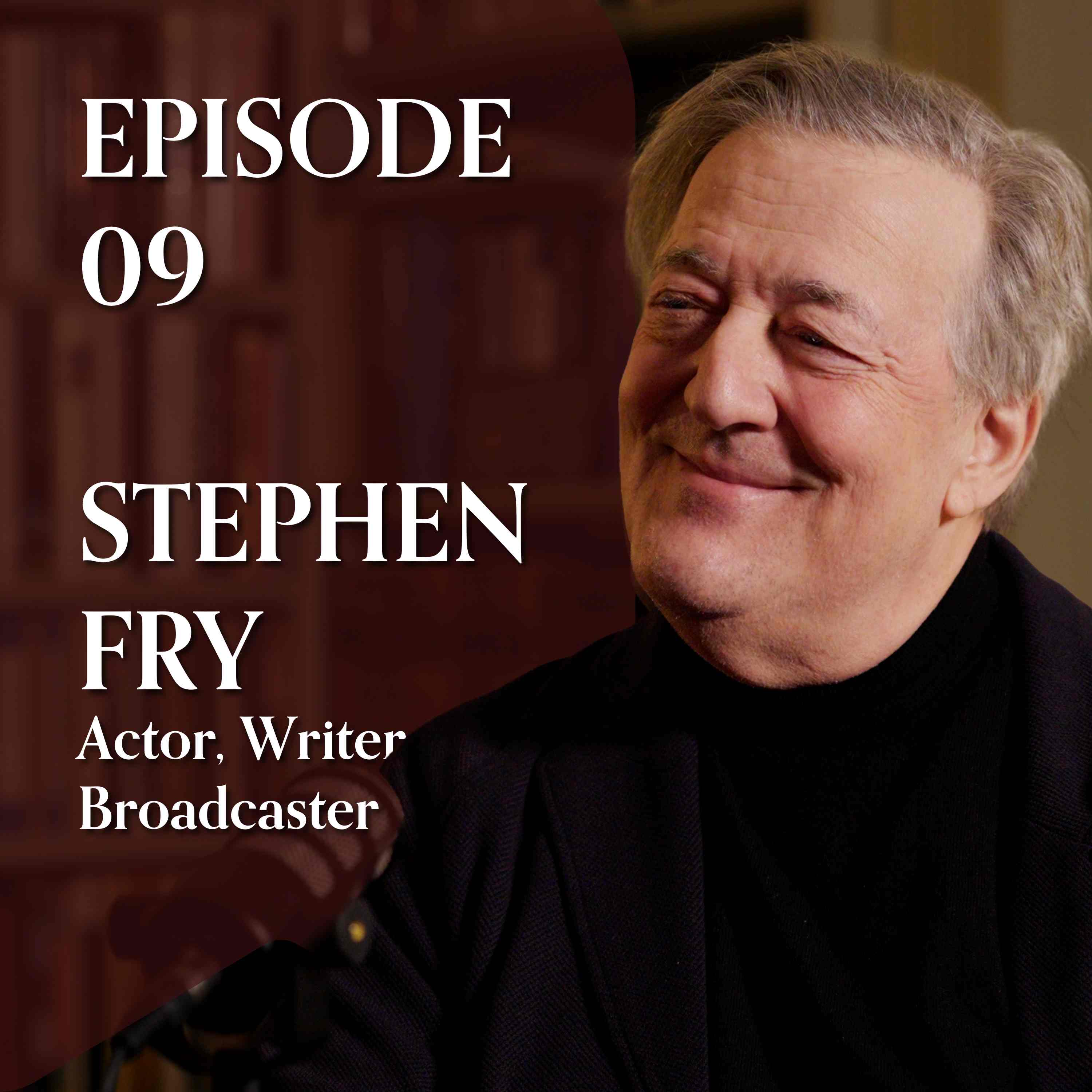
S1 · E9 · 7 Oct 2026 · 1 hr 8 min
E9 - There Is No Perfect Word | with Stephen Fry
What if words can never mean exactly what we want them to mean? Stephen Fry has spent a lifetime exploring language: writing it, performing it, studying its history, and delighting in its strange contradictions. In this final episode of Season One, we sit down with Stephen to explore what words can and perhaps cannot do. We begin with “happy”, a word Stephen traces back to hap, meaning chance or what happens. From there, the conversation opens into a much bigger question: if language is metaphorical, and words can never map perfectly onto the things they describe, how do we ever understand…
-
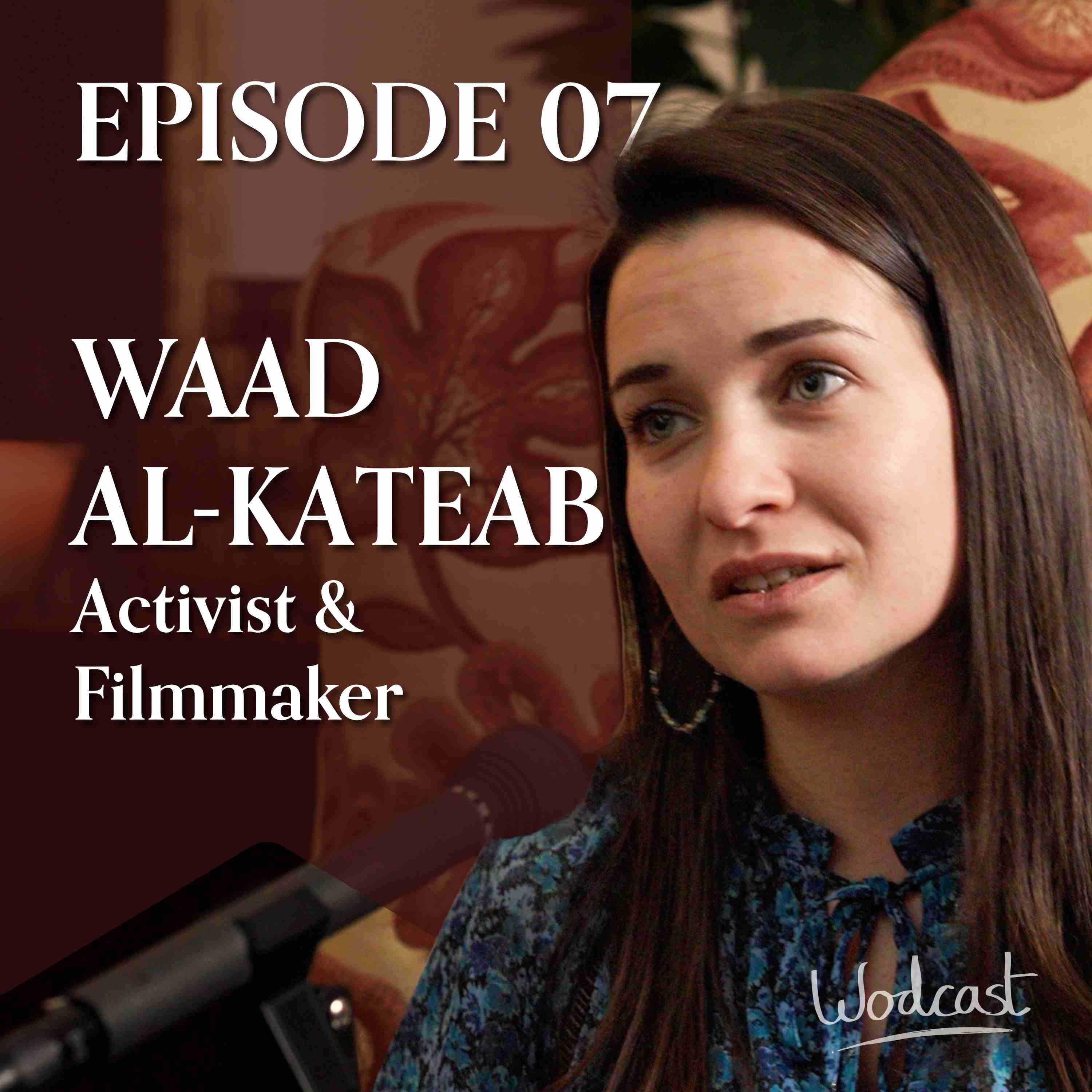
S1 · E7 · 9 Sep 2026 · 57 min
E7 - What Does Freedom Really Mean? | with Waad Al-Kateab
What does freedom really mean when you have spent part of life without it? Today, the Wodcast sits down with Waad Al-Kateab journalist, filmmaker and activist for a deeply personal conversation about freedom, home, family, language, community and the power of imagining a different future. Waad grew up in Syria under the Assad regime and began documenting life in Aleppo during the Syrian revolution. Her extraordinary archive became For Sama, the acclaimed documentary that brought the realities of war, motherhood, love and survival to audiences around the world. In this conversation, she…
-

S1 · E6 · 26 Aug 2026 · 48 min
E6 - What If Surrender Is a Form of Creation? | with Nick Mulvey
What if surrender isn't the opposite of creation, but part of it? Today, the Wodcast sits down with musician and songwriter Nick Mulvey for a wide-ranging conversation about words, music, faith, creativity and the things that can only be felt beyond language. Nick arrives with the word “yield” a word that can mean both to produce and to surrender. From this apparent contradiction, the conversation opens into a deeper exploration of creativity, control and what happens when we stop trying to do everything ourselves. Nick reflects on the role surrender has played in his own life, and why he…
-
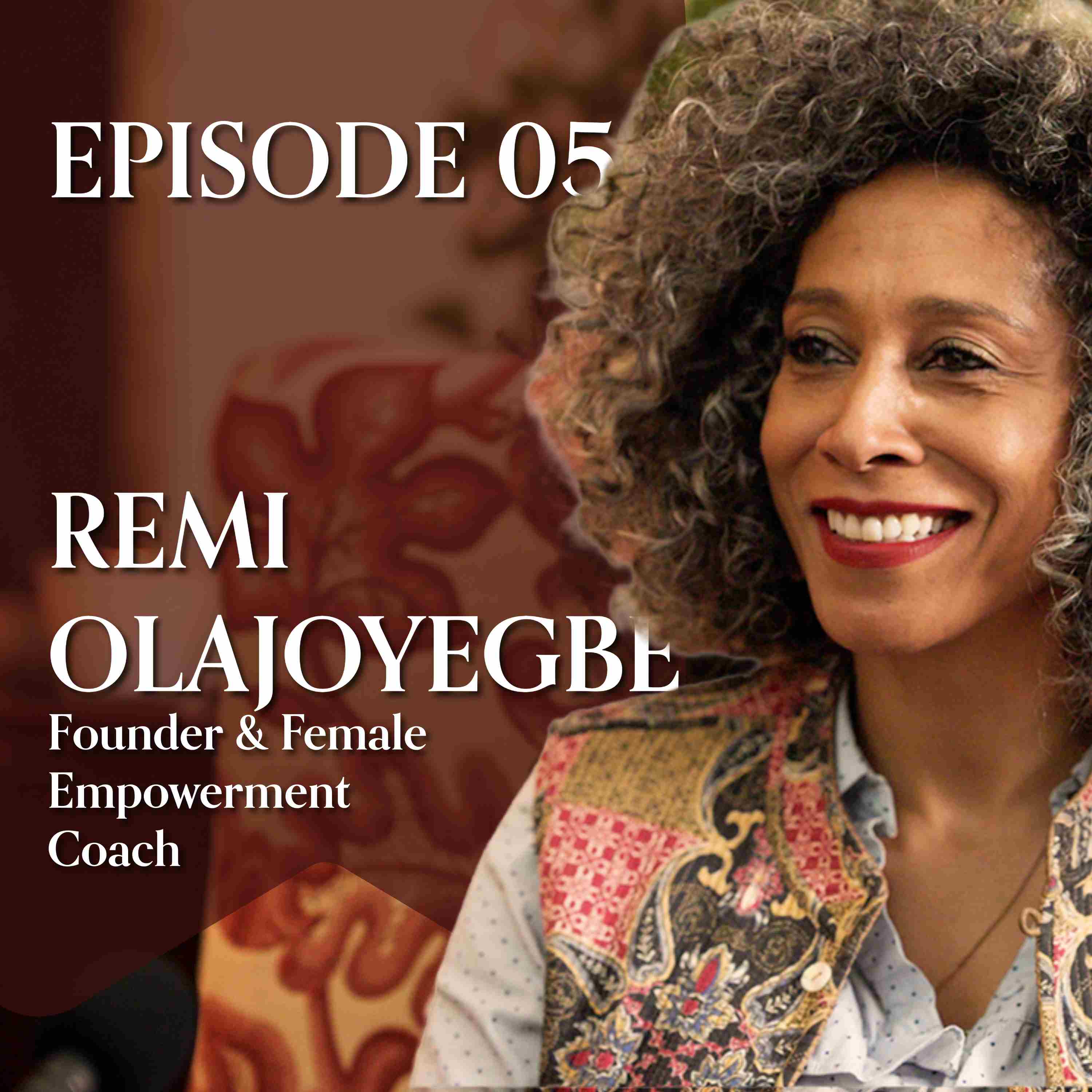
S1 · E5 · 12 Aug 2026 · 1 hr 1 min
E5 - Isumataq: Where wisdom reveals itself | with Remi Olajoyegbe
What lies in the silence between who we have learned to be and who we are becoming? Today, the Wodcast sits down with Remi Olajoyegbe, founder, female empowerment coach, business leader, co-founder of Medicine Festival and founder of the Isumataq Collective, for a deeply personal conversation about success, transformation, grief and what it means to live and lead from a place of wholeness. Having built a highly successful career in investment banking, Remi reflects on what she calls “the void of success”: reaching the milestones, ticking the boxes and receiving the external validation, while…
-
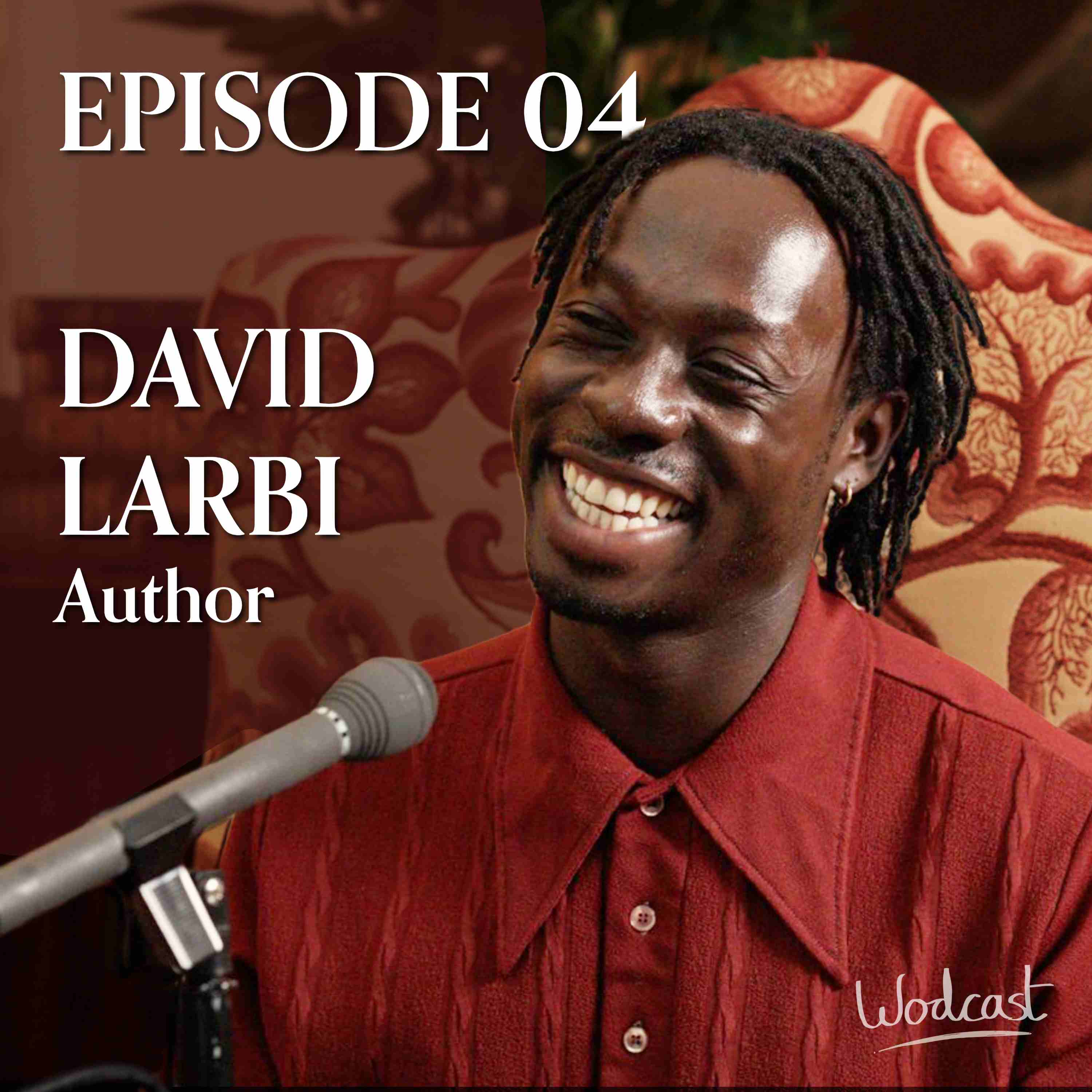
S1 · E4 · 29 Jul 2026 · 1 hr
E4 - The Courage to Be Frequently Happy | with David Larbi
What does it take to become Frequently Happy? Today, the Wodcast sits down with David Larbi, poet, bestselling author of Frequently Happy, and one of the UK's most thoughtful voices on joy, creativity and emotional wellbeing, for a deeply reflective conversation about poetry, presence and the courage it takes to live authentically. Together they explore why happiness begins with contentment, the relationship between creativity and self-discovery, and how words can help us better understand our emotional landscape. Along the way, they discuss burnout, boundaries, the importance of silence in…
-
S1 · E3 · 15 Jul 2026 · 1 hr 10 min
E3 - Can You Make Empathy Illegal? | with Professor David Nutt
What happens when language becomes more powerful than evidence? Today, the Wodcast sits down with Professor David Nutt, one of the world's leading neuropsychopharmacologist, psychiatrists and consciousness researchers, for a thought-provoking exploration of language, consciousness and the extraordinary power of words to shape how we think, feel and act. Together they discuss the origins of the word psychedelic, why MDMA was originally called empathy, how language has influenced public perception and policy, and what happens when words become more powerful than evidence. Along the way, they…
-
S1 · E2 · 1 Jul 2026 · 1 hr 12 min
E2 - Why Romance Needs to Come Back | with Hak Baker
What if romance wasn't just about falling in love? In this conversation of the Wodcast, musician, songwriter and poet Hak Baker joins Benjamin Aston and Mabel Evans for a wide-ranging exploration of romance, brotherhood, community and the courage it takes to change. Together they discuss the forgotten meaning of romance, why transformation is rarely a solitary act, and the idea of slaying the dragon within - the lifelong battle to confront our fears, ego and destructive patterns. Through stories of growing up in East London, finding his voice through music, and building communities rooted in…
-
S1 · E1 · 17 Jun 2026 · 1 hr 25 min
E1 - When Faith and Doubt Hold Hands | with Elif Shafak
What happens when faith and doubt learn to dance together? In this opening conversation of the Wodcast, bestselling novelist Elif Shafak joins Benjamin Aston and Mabel Evans for a wide-ranging exploration of language, love, storytelling and the search for wisdom in a noisy world. Together they discuss the ancient meanings hidden inside words, why different cultures understand love in different ways, the forgotten goddess of writing, the importance of oral storytelling, and what Elif calls "inner democracy" the practice of making space for the many voices within ourselves. Drawing on her…
-
S1 · E1 · 12 Jun 2026 · 1 min
Season One with Stephen Fry, Elif Shafak & More
In Season One of the Wodcast, we sit down with novelist Elif Shafak, musician Hak Baker, Professor David Nutt, writer David Larbi, founder and coach Remi Olayjoyegbe, musician Nick Mulvey, filmmaker Waad Al-Kateab, lyricist Tim Rice, and writer, actor, and broadcaster Stephen Fry. Across nine conversations, we explore the words that have shaped their lives, the language that has influenced their thinking, and the stories they carry with them.
-

S1 · E1 · 6 Jun 2026 · 1 min
Welcome to the Wodcast with Mabel Evans & Benjamin Aston
Welcome to the Wodcast where every word carries a world inside it. The Wodcast is a podcast exploring the words that shape our lives, cultures, relationships, and imagination. Hosted by Benjamin Aston and Mabel Evans, each episode unfolds into conversations, stories, ideas, and perspectives from writers, thinkers, artists, and cultural voices. From love and belonging to courage, grief, joy, identity, and everything in between, the Wodcast invites you to slow down and look more closely at the language that shapes how we see ourselves and one another.

Take it with you
The Melo app keeps playing with the screen off, works in the car and on your watch, wakes you to your station, and browses the whole catalogue offline. Free, no ads, no account.