Season 1, Episode 3 · Wodcast
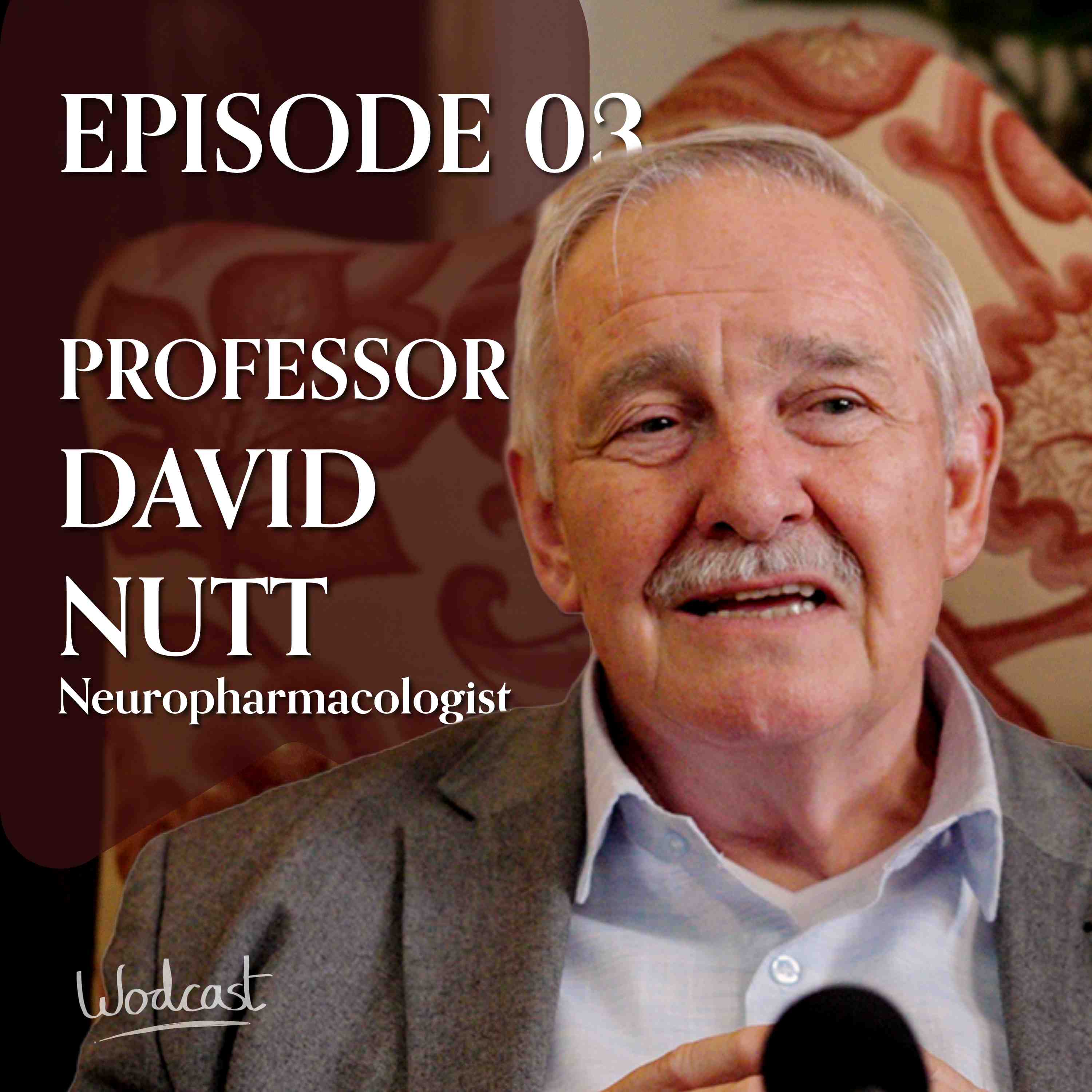
E3 - Can You Make Empathy Illegal? | with Professor David Nutt
15 Jul 2026 · 1 hr 10 min
Season 1, Episode 3 · Wodcast
15 Jul 2026 · 1 hr 10 min
What happens when language becomes more powerful than evidence? Today, the Wodcast sits down with Professor David Nutt, one of the world's leading neuropsychopharmacologist, psychiatrists and consciousness researchers, for a thought-provoking exploration of language, consciousness and the extraordinary power of words to shape how we think, feel and act. Together they discuss the origins of the word psychedelic, why MDMA was originally called empathy, how language has influenced public perception and policy, and what happens when words become more powerful than evidence. Along the way, they…
Welcome to the Wattcast, where we explore the power and beauty of words. We're your hosts. I'm Ben. And I'm Mabel. And today, we have the privilege to sit down with neuropsychopharmacologist, Professor David Nutt. Enjoy the episode. Professor David Nutt, welcome to the WODcast, where we explore the power and beauty of words. You are one of Britain's most influential and controversial scientists, and have co-founded the world's first Centre for Psychedelic Research at Imperial College London.
You have published more than 500 research papers and authored over 40 books. One of them has inspired me to write my thesis in this field. And you were famously sacked as the government's chief drug advisor after publishing research showing that horse riding is more dangerous than ecstasy. Thank you for being here. Well, good to be here too. Thank you, Dave. Thank you for the invite. And to kick things off, I'm bringing with me a quote by Rudyard Kipling.
Words are, of course, the most powerful drug used by mankind. And I was hoping to hear your thoughts on this quote. Well, thanks. I didn't know it. It makes a lot of sense. Absolutely, yes. And of course, I mean, I guess you know the particular consequences of that quote. Of course. In what way? Well, he persuaded his promotion of the First World War. he was part of the effort to get people to sign up to fight, led to his son signing up to fight. His son then actually shouldn't have fought because he wasn't fit enough, but he managed to lie his way into an Irish regiment who were more lenient on the health criteria, was sent to the Western Front, disappeared, has never been found. And when Kipping went to find him, It was difficult, but they eventually let him go because he was still hugely influential in the sort of British media at the time. He discovered the horrors of the war and really regretted campaigning for the promotion of the war. It became quite anti-war after that. So he was seduced and his family was destroyed by his own verbal skills.
I had no idea. The dangers of words. Yes. There's a wonderful book, actually interestingly, by a Dutch writer on this very topic. That's how I know about this. It's reflecting on Kipling's mistake. Okay. Wow. And do you know whether he's published his famous poem, If, later? Well, I think if is after, and I think it is him reflecting on the fact that you shouldn't believe anything you read. Yeah, because they are powerful, those words. And that's Britain's favourite poem, you know that. Yes, I think I did read that somewhere. And I understand why. There's a beautiful poem. Yes. It brings the goosebumps or truth bumps to the skin. I like that. I've learned several things. Truth bumps. Truth bumps. Actually coined by Mabel, or I've learned it from Mabel. Oh, come on. And I do believe you brought a word with you today. I have. Yes, it's psychedelic. Psychedelic. What does it mean?
Well, it's a Greek word. I think it's a created word. It was created by a man called Humphrey Osmond, who was one of the pioneers of the use of psychedelics for therapy. He was a psychiatrist. And it means mind manifesting, psyche being the mind, and dalesos or whatever means showing. Okay. And you bought this book because it's also your specialty. It's what you've been researching over the last years. Yes, I've been working on psychedelics for the last 20 years. Yeah.
discovered that as most people who have used them, including some very famous writers, particularly, of course, Aldous Huxley and also Albert Hoffman, that psychedelics do have a very different effect on the... on the brain and the mind than almost any other drug. Not only different, but also much more useful. And our research has helped understand how they work in the brain, how they do manifest the mind and also how you can then use it, use them. You can use the science to justify therapy. I mean, maybe we'll come onto that in a little while, but.
But I just delayed lay it down. When I started studying psychedelics 20 years ago, I never anticipated them becoming a revolution in mental health treatment. Yeah. I was just interested in what the state was. But it turns out the state also has therapeutic value. And that translation from the science of the state to the therapy was facilitated by the fact that the changes in the brain we saw with psychedelics reversed the changes in the brain that we knew to exist previously in disorders like depression.
And that was always known? Or has that like this knowledge? Did that come about throughout your career, that the health properties of psychedelics? Well, subsequently, having done this research, I began to read more about psychedelics. Yes. And discovered that obviously, there was a lot known in the 50s and 60s about the therapeutic utility of psychedelics. But obviously no one knew how they worked in the brain. It was our research which showed they changed brain circuits that are interestingly over engaged in depression. Most people think depression is a disorder in which you lose the ability to feel.
In fact, it turns out that is not true. And it wasn't us that discovered that, actually. It was some other brain images who showed paradoxically that there are parts of the brain which are overactive in depression. Until then, everyone thought, well, you just lose the positive bit of the brain. It turns out that depression, as had been described previously by writers, particularly Thomas Carlyle, I'll come to that in a minute, Depression is a disorder that is imposed on the brain. It's a part of the brain which is actually driving the sense of dread and hopelessness. There's an overactive, there's a depression center in the brain. It makes you depressed. Why that would be is still a bit of an unknown.
But one thing for sure, psychedelics switch that off, which is why people almost immediately lift from their depression when you give them a psychedelic. And we could show that that part of the brain was switched off and that in healthy volunteers who were not depressed. So we said, well, hang on. Maybe we can switch it off in people who are depressed. And that turned out to be the case. So is it fair to say that if you are depressed, you're kind of like stuck in a loop? Absolutely. And psychedelic gets you out of it for a bit or... Forever sometimes. Forever sometimes. So it disrupts that, the node. There's a node. Yeah.
I suppose, you know, you know, the heart has a little place, a pacemaker. There's a pacemaker of mood in the brain, which drives depression. And you can you can image it. And it's been imaged and known about really for the last 30 years. And we know pretty much all treatments of depression, whether it's like talking therapy. or whether it's something like ECT, or whether it's antidepressants, or even placebo. We know all the therapies that work dampen down that activity in that part of the brain. So if you get better on placebo, that brain region is less active. And that was a great insight, which actually then led people to try to switch off that part of the brain using surgery.
Because, you know, there are, it's called, you know, basically it's deep brain stimulation. You can put electrodes in the brain, very commonly used in Parkinson's disease to stop people trembling. I mean, hundreds of thousands of people with Parkinson's disease have electrodes in their brain, which are continually active to help control their disorder. So the technology is there. And this woman called Helen Mayberg, her great breakthrough was to say, hang on, there's another bit of the brain which causes depression. We switch that off.
And she persuaded these neurosurgeons who, by that point, were very good at putting little electrodes in the rain, switched it off. And as people were in that kind of surgery, you're awake. And she was on the table, put the electrode in, turn on the current. And for some people, the depression literally lifted there and then. It's extraordinary. So the word psychedelics... It holds for a lot of people a lot of negative connotation. And what you're saying, as I understand it, Dave, is that the science has shown us its positive effect on mental health disorders, eating disorders, you know, many, many different forms of PTSD and trauma. Where and why is this word? Why does it still hold so much weight and perhaps negative connotation to people?
Well, because people have lied about it systematically since the 1950s. Right. And the reason people have created the fear of psychedelics... And actually, there's a worse word, which I'll mention now, but hopefully never again. Okay. And that's hallucinogen. Okay. And if you ever... I will mention it a few times in this part of the conversation. But never again. In this conversation, it's really important. And it's really important. Yeah. Because if you see the word hallucinogen used...
You can guarantee that the person who's using that word is telling you these drugs are bad and dangerous. Let me give you an example. So three years ago, we published the only study still ever been done comparing a psychedelic, in this case, magic mushroom juice, psilocybin, with the best psychedelic. antidepressant we have, the most selective serotonin reuptake inhibitor called escitalopram. He published his paper in the leading medical journal in the world, the New England Journal of Medicine. And for reasons I don't fully understand, they got an editorial written by someone who had spent the last 50 years of her life campaigning to keep psychedelics illegal.
And that editorial was outrageous. I think she used the word hallucinogen like 20 times in 600 words. It was all about these are dangerous, dangerous. You have hallucinations, that's schizophrenia, you're going to go mad. So psychedelics was actually brought in to make more sense of the experience. Because the hallucinations can be fun and interesting. But actually, they tell us... Not everyone has them as well. That's also true. Of course, not everyone has them. But...
people with psychosis have hallucinations. Yeah. Very clever. Yeah, absolutely. So we're trying to eliminate the word hallucinogen. Psychedelic, there was a lot of debate. There was the most, I think probably the most remarkable Tina Party in history happened in 1953. And it was Osman, the doctor, who was using LSD and had LSD from Sando. He got together with a woman called Betty Eisner, who was rich and therefore able to support research. Aldous Huxley, who'd previously only taken mescaline, Yeah. And I could work Bill Wilson. Bill Wilson founded Alcoholics Anonymous in 1933. And Wilson founded Alcoholics Anonymous because he had a trip. It wasn't an LSD trip. He was being given an experimental treatment for withdrawal called the Belladonna treatment, which can produce trips. It's like scoponamine.
Sometimes in ayahuasca ceremonies, people mix a bit of scoponamine with the ayahuasca to give more visuals. Anyway, he had a profound trip. He described it as like being on a mountain with an air balloon. a wind not of air but of spirit blowing through him. And the spirit blew away his addiction. But for the next 30 years, he couldn't, well, next 20 years, it was 20 years, he didn't know how to reliably induce that experience. And then he took LSD over that dinner party and realised that LSD could induce that sense of possibility that people could actually escape from being obsessed by the bottle.
And he then encouraged the use of psychedelics, particularly LSD in America. Six trials were conducted. They show that LSD, single dose of LSD, is three times more effective for treating people who are alcohol dependent than any treatment we have today. Three times. Three times. But we can't use it anymore because, of course, because psychedelics became banned because they were deemed as very dangerous drugs. And we can talk about the reasons for that in a minute if you want.
Well, fascinating to hear that AA has a history with psychedelics, or the foundation of it, and it's, of course, the addiction to alcohol. And then we spoke about depression, you're stuck in the loop, and I was wondering whether you could rephrase depression as almost like an addiction to negative self-talk, to, like, ruminating, to, like... Indeed, they are. I mean, the paradox we have now is how can a single drug like psilocybin or any psychedelic probably...
alter so many different disorders, which up till now have been defined differently. They've got different symptomatologies. They've got different treatments. And the point you make is exactly right. The characteristic of the disorders that psychedelics work on are the disorders in which people get locked into thought processes from which they cannot escape. And depressed people actually know... generally they know they're not worthless. They can become psychotic and then they can believe they're worthless and they can kill themselves. But generally depressed people know their thoughts are wrong, but they can't stop thinking them. They're in that thought rut. It's like it's a thought habit. Mm-hmm.
Many people who get addicted to drugs don't want to take the drug. Most people don't actually want to take drugs, but they can't stop. And psychedelics can break down the circuit which drives both either the craving or the drug seeking or the other reasons why people, the habits of drug taking. So we can break repetitive unwanted behaviors in the brain. Is that what they call neuroplasticity? Is there a connection to... Right. So it turns out that psychedelics change the way you think during the trip. And that in itself can be enormously liberating. I mean, that led Huxley to write many books. It led Hoffman to write all about his experiences. Those changes are very often enormously empowering and they're enduring.
People say, well, I wonder why they're enduring. Is it just a memory? And partly as a result of our work in depression, preclinical scientists said, well, hang on, what is actually going on? Okay, so people are having a trip, but can we see a biology in the brain? So they then started giving psychedelics to guinea pigs and hamsters and rodents and looking at their brains, and they discovered... After the trip, and we don't know what a rat is thinking during a trip. It just twitches its head a bit. But after the trip, you can look at the growth of parts of nerves. You can look at the growth of dendrites, the little outgrowths on nerves which connect with other nerves. You can look at synapses, the connecting connections between different nerves. And there are more of them.
And that is what we call neuroplasticity. So psychedelics make your brain essentially have more information gathering power because information in the brain is obviously communicated through the number of connections we have. And that seems to last a while. And it may last forever. It's just extraordinary. I remember when we've spoken about this before, Dave, together, I sort of observed this war on drugs, as it's called, as one of the greatest injustices of our time. Because there are, I mean, even this word drugs, I know you both are scientist based and you use the word drugs. Is it not a war on certain plants?
I find it hard to connect to the word drugs in this context. No, absolutely. We think of the war on drugs as having started in, you know, it started actually with the war on cannabis in the 1930s, but then it became magnified by the Nixon war on drugs when he was trying to get elected in 68, and that was a deliberate ploy. to deflect attention from the war on the Viet Cong to the war on people who were going to vote for the Democrats, who were defined as drug users, hippies and black people. But it goes back a long way, long before that. In fact, the first real war on drugs actually started with the conquest, or the, I'm not quite sure what the right term is, but the invasion of South America by the Portuguese and the Spanish.
Only indigenous peoples' land who were using mescaline, right? Is that correct? Yes, so what happened was, you know, you send the soldiers in first, but you send the priests in quite soon after. And the soldiers discovered that people were using mescaline products that they didn't understand. They were using mescaline derived drinks. They were using DMT drizings. We call it ayahuasca. They were using mushrooms. And there was actually quite a sophisticated literature on this. So the first thing the Christians did was to destroy the literature.
Destroy it. And systematically. And it's got interesting analogies we'll talk about in a minute with the UN conventions. I'll come back to that. So in the 1500s, they tried to wipe out any knowledge. I think there's no systematic account that persists to this day of the use. But obviously there's indigenous use and indigenous use persisted. Why do they want to do that? It was a very petty thing. The main reason was obviously they wanted them to become Christian because otherwise their souls wouldn't go to heaven. And they were starting teaching them the Christian narrative, which was, as you would do to an unsophisticated, well, even these days, even the sophisticated churchgoers are taught about Adam and Eve. So you talk about originality in Adam and Eve and you talk about the apple and all that. And you talk about the serpent, right?
And of course, in Christian mythology, the serpent is the bad guy. The serpent tells Eve to give Adam the forbidden apple, which, by the way, was actually a mushroom. We'll come back to that. That was a magic mushroom. Seriously? Come back to that. Well, it's a different kind of mushroom. It's Amanita muscaris, not psilocybin. But anyway, that's another story. Anyway, so basically, you're telling the indigenous peoples of what became Brazil. and Peru, et cetera, about the serpents. They say, hang on, wait, wait, no, you've got it wrong. In our religion, under ayahuasca, the serpent takes us to heaven. It's the pathway to heaven.
And so that had to go because, you know, it was completely antithetical to the Christians. So they tried to destroy that too. And so that was the first war on drugs and almost succeeded, at least until recently. There's been a bit of a... But who calls it drugs, to my point about the word? Yeah. Because, like, is that a war on drugs or is it the war on consciousness, on knowledge, on plants, on the earth? Yeah, it's a war on people thinking differently.
And that's why psychedelics got banned. Psychedelics got banned in the 1960s, early 70s, because people who took psychedelics decided they didn't want to fight in Vietnam. Actually, there's this amazing photograph of an anti-war protest, which I use in my talks. Drop acid, not bombs. And I think, boy, if anyone had listened, you know, the world today would be such a different place if we hadn't continued to rely on bombs. And actually, it's almost worse now, isn't it?
I mean, now, you know, there's almost no debate about it. Everything's bombs. But then people were protesting against bombing the shit out of Cambodia and Laos. And they couldn't stop war protests then. But they could ban the acid, which they thought was fueling the war protest. It wasn't. Most people who are anti-war weren't taking LSD. But they could do something. And one of the reasons drugs get banned is because it's easy. What's not banning a drug? Well, you're doing something. Well, I banned a drug, you know. Most people don't use drugs apart from alcohol, so they don't care. They don't care if you ban a drug that these hippies use. So what? You know, we don't like hippies anyway. We don't like their clothes, et cetera. So banning drugs is very easy, but it's very hard to rescind. The ban, the 1971 ban on psychedelics, has never been rescinded by any country in the world.
And how come, I understand that this started in the US, how come Europe just followed blindly and... Ah. And I guess, yeah. The good news is that Switzerland didn't. Do you know he's from Switzerland? He loves Switzerland. I'm very proud to be. You should be. You absolutely should be. You should be proud because the Swiss were the... I think you did sign up to the UN conventions. Okay. In fact, every country in the world signed up to the UN conventions in 71, except North Korea. But they've never done any useful research on these trades. Everyone signed up. Why did everyone sign up to it? Well...
there are two reasons for that the first is that the un control sorry the un was controlled by america america was funding most of the un i mean the building is in new york first and the other building the actual the war on drugs building by the way you may not know this the war on drugs building is an equally large building maybe even bigger in vienna and that's where the un office of At the edge of the iron curtain, they built this enormous complex to stop drugs. And that was basically to give employment to the Austrians, who were...
They were teetering in the end. It wasn't clear whether Austria would come west or stay east. So eventually they negotiated Austria to come this side of the Iron Curtain and then put a huge investment in UN facilities there in order to keep it as a Western ally. Anyway, so you've got the UN being controlled by the US. And the UN said this. Why would you disagree? If you disagree with the US, well, they won't fund you. Every law on drugs in Britain until 2016 was made at the behest of the US. We always did what they told us.
We don't know what the other deal was. We presume, you know, you do what you're saying. Well, we'll invest, you know, we'll build a nuclear base for submarines up in Scotland, etc. Anyway, so the U.S. controlled everything. But really intriguingly, I really want people to read, just a couple of weeks ago, a new paper was published by some Swedish researchers. And they went back, and this is a huge exercise, they went back to the UN repository of data. They went back to all the minutes of the meetings. And they came to this rather kind of terrifying conclusion. The US weren't the bad guys. The US wanted control, but the US wanted control.
the conventions to allow indigenous use, because in America, peyote was already established for one of the indigenous churches. So they wanted indigenous use kept, and they wanted research allowed. Russia, you can imagine, would be particularly against any kind of liberation of thought, and France, Russia and France, argued that these drugs should never be allowed for anything. So now I'm telling people, actually, the Americans, they initiated, they started the problem, but actually in the end, thankfully, they did allow the possibility for research, which is what has allowed us to do research. And they did allow for indigenous use, which is why it's still, you know, drugs like ayahuasca and mushrooms are still being used in Latin and South America.
So it is, you can tie it to the funding that Europe relied on from the US, which is why they followed the laws. Yeah. To part. I think there was a fear at the time. Yeah. That psychedelics would change everything. I mean, it clearly changed art. Yes. It clearly changed music. Yeah. It was clearly changing people's attitudes. It was changing society. And I think we kind of all know that the establishment, whether it's a supposed liberal democracy or whether it's a communist dictatorship or whatever, establishments don't want to change. And they didn't want the threat of change. They kind of enjoyed the music, and a lot of them would have enjoyed using psychedelics. But they wanted to preserve the status quo, and so they just locked it down. Yeah.
But can I get back to your point you made? This is the worst censorship of research and clinical therapy in the history of the world. There has never been a censorship that has been so broad and so damaging. As right now. Yeah, it's gone on. I mean, 1971, everyone signed up to it. As I say, no country has broken from the convention. Some countries are getting around the convention. But most countries... use the convention to do nothing. That's what we do. We say, well, we signed up to the convention, until the convention changes. We're not going to change, knowing full well the convention will never change.
Because it won't. Because Russia, China, Malaysia, Indonesia, India will not change because they're taking a completely moral position on drugs. And they'd rather execute people than actually have drugs available even for medical use. So we have to get around it. And that's one of the big challenges we have at present. Some countries have. You're allowed to do it for research. And if you do it, if you use it for research to heal people, that's still research. It sounds like, as you mentioned, the beginning of the war on drugs or those plants started with religious... Yeah.
I guess, clash. Yeah. And I do wonder, because of course in the Christian belief, we have alcohol very much embedded in the ceremony. Absolutely. And I guess the thought experiment of what would it be like if other... substances would be ingrained in our culture. And you mentioned Adam and Eve. I was curious to hear a bit more about that. So there is a theory, which I think is quite compelling, that we're pretty certain the early Christians used Amanita muscaris, which is the classic Father Christmas mushroom.
Well, actually, now I don't know. What's a Father Christmas mushroom? Why is Father Christmas on red and white? Red, exactly. It's red with white spots. So I think if modern, I don't know if any of your listeners would watch Super Mario Brothers, but when they go to mushroom land, the mushroom is a mushroom, a red cat. It's all coded in the culture, isn't it? Absolutely. It's older. So clever, that. So Super Mario changing his size, his height, his dimensions after taking a mushroom is connected to… That's right. Well, those mushrooms, those are the mushrooms, yes, of Alice in Wonderland. Oh, of course. So the mushroom, well, sorry, we presume that the mushroom she took that made her grow big and small was Ammonitomus. Because that's what it does.
And it's a very different kind of pharmacology to the psychedelics we have talked about, our work on the serotonin system. This works on the GABA system and work on a particular subtype of the GABA system, particularly in the visual cortex, to produce these distortions of size, as in the Super Mario, as in Alice in Wonderland. But those mushrooms were quite... Those particular mushrooms grow in the wild only in association with cedar trees. And so they grew around the Mediterranean coastline in the cedar forests of Lebanon and Turkey and Syria and that. So they were harvested there. And they were used by the early Christians to produce resilience. Resilience? Yeah, because that particular – this is a different kind of – you don't have a trip, but they're like a kind of – they're like an anxiolytic – Some people believe the reason that the early Christians could sustain being torn to pieces by lions in the Colosseum was because they were using Amanita to dampen down their fear. Wow. As well as having obviously a very strong belief that they were going to a better place. So for a few hundred years, there's reasonable data that early Christians came together with these Amanita mushrooms. Wow.
And they were probably used till about the 12th century because there are frescoes in the 11th century in Italy and in France where Adam and Eve are not eating apples. They are eating mushrooms. They are eating mushrooms. There was, in the 1200s, there was a massive rising up of what you might call real Christians. Christians wanted to believe. They were modeling themselves on Jesus, no shoes, poverty. They were called the Arbigenians. And they were trying to take back control from the church. And by that point, the church had become a massive establishment. You had popes in Rome. You had popes sometimes in France.
And, you know, they could see the church was actually not what Jesus would have wanted. So they came, they tried to, there was a massive uprising of, you know, we want real Christianity. What happened? Well, the French government and the Catholic Church just killed them with the crusade. They just wiped them out. completely wipe them out. And then they decided to destroy all the images of the mushrooms. Seriously, they just, you know, it's, to rewrite history. And they almost succeeded, but now we know, you know, there are 30 to 40 examples of where these images of the original apple tree was. And of course it couldn't have been an apple because we know that the evolution of apples occurred after that time. Apples were kind of, were Romans essentially made apples because they brought apples from the Middle East and took them around Europe. So apples are creation post-post-post-post. It's re-storytelling, isn't it? It's rewriting story. And this is what the terrifying thing is about psychedelics. Yeah. Discovering this recent insight that it was the French and the Russians wanted to eliminate...
All knowledge, all use. That was an attempt to eliminate knowledge because the knowledge is too dangerous. And I find that extraordinary chilling. It's extremely chilling. I mean, the injustice of depriving people from knowledge that could help their mental, physical, spiritual well-being and the fact that this is still happening today. And you say we're in a very extremely bad moment for it. Is there a word that comes to mind with how you feel about the state of the campaign to reschedule psychedelics? The banning was vindictive. I mean, that is a word I often use. Vindictive. I mean, it's a bit like...
destroying book. I mean, I presume books have been destroyed, haven't they? I mean, well, I think I see one over there. I see, I see a Rushdie. You know, we, even today, you know, there are books which are just too challenging, particularly to religious orthodoxies and to some extent political orthodoxies. You know, so, yeah, but this was, but generally banning books doesn't have such a bad impact on, on, on health and medicine. I'm, I don't know, maybe you could have a thought experiment. Maybe there were books that actually have changed the course of medicine, which had they been banned, could have had a very deleterious effect. But how do you think about that one? We're going to take a moment from the episode to tell you about today's sponsor, Nirvana Brewery.
Nirvana is such a fantastic word. Most people think it means paradise or bliss. However, that's not quite the whole story. Nirvana comes from the Sanskrit nirvan, which is a concatenated word made up of nir, which means out, and va, which means to blow. So next time you hear nirvana, think of a candle being blown out. So you could say that the word is defined by what is taken away rather than what is present. Exactly. And that's also what the Buddhist philosophy talks about. The release from craving, the release from the endless cycle of wanting more. Peace through subtraction. I would say that's a rather radical way to brew a beer. And Nirvana Brewery is East London based, independent and female founded. And delicious. And delicious. Yeah, we had it during our crew lunch.
We can recommend. Okay, back to the episode. I was actually going to loop back to the beginning, the intro, where we spoke about ecstasy. Yes. Ah, that's a really clever question. Well, you heard the question before I said it, so maybe... Yeah. Why is it called ecstasy? Why is it called ecstasy? That's the big question. Because it sells better. better than when when when ecstasy was first rediscovered by a man called Sasha Shulgin he was he was making a whole range of amphetamines he was a chemist why was he making amphetamines he was making amphetamines because the Americans had banned amphetamines having used amphetamines to win the Second World War they then decided that then when people started to use them and have fun I got abandoned them So they banned amphetamine sulfate and they banned methamphetamine, accepted medicines. And then people started to find other amphetamines that weren't banned, so they started banning those. So in order to find out what the white powder was, you had to have samples of all the different possible amphetamines. So Sasha's going away, making these different amphetamines, testing them on himself, writing notes about them. And then he makes this one, which had been made...
70 years before as a possible precursor to another kind of medicine, but never used, which is called MDMA. And he makes this and he takes it and he says, wow, this is different. This actually is different from the amphetamines I've taken before. It doesn't make me up. It makes me kind of a bit more alert, but a bit more chilled, very much in the moment. and very clear in my thinking. So this is a unique drug, he said. And so he got his wife, who was a therapist, to try it. And she said, wow, this is amazing, because now I love you again.
I don't know if she actually said that, but the implication... She said, this is amazing. We should be using this as couples counselling because, you know, she was healing people or trying to heal couples who'd fallen apart. And it was widely used by couples counsellors to promote marriages, say, getting together better. And it was called empathy because that's what it does. It generates empathy. Wait, MDMA was called empathy? Yeah. And if the name hadn't changed, it would still be legal today. Oh, wow. But after... If the name hadn't changed, you'd believe it would still be legal? Yeah. Well, can you make empathy illegal? Well, exactly. Wow. You can't... Empathy's a good thing. It is. Yeah, so you have to...
ecstasy is not there well what happened let me let me fill the i don't think the intention was to get you banned the intention of changing the name was to make it more appealing so basically it came out of the west coast where the therapists were using it shogin was making it um a club owner i mean dallas hang on this is interesting we've got a legal amphetamine Come, guys, we've got a legal amphetamine. Let's invent a new form of behaviour. Oh, let's invent a rave. Okay, so people, what are you taking? We're taking empathy. I prefer alcohol, thanks. Oh, no, this is ecstasy. Take this and you'll get ecstatic. And to some extent, ecstasy does produce a kind of ecstasy. It's not quite the same as a religious ecstasy. But anyway, so the name has changed, ecstasy. And then you have two terrible, terrible new words.
you have ecstasy and you have raves and politicians there are other things politicians and and newspaper owners hate they hate young people having ecstasy i've never had this experience why are these people having this experience and i've never had we've got to stop that and raves what the hell's a rave you know what's wrong with just getting drunk in the pub And I think the drinks industry also started saying, hang on, guys, this is not good. People are stopping drinking. Your tax revenue is going to go down because – so we had the Rave Act. We had it happen in America. We had it in Britain effectively too. So you had this bizarre situation actually where the governments wanted to ban ecstasy.
and they didn't know they wanted to ban it because it was causing kids to have well it was allowing kids to have fun uh and they went to the police and said this is you know we should ban this and the police in britain said oh we're stupid we love raves it's the only time we ever go anywhere and people hug us seriously she said we don't we we actually said that the police said that so what did they do They changed the police. No way. Actually, I watched it happen because I was on the ACMD for 10 years and I watched the police, the police that were pro-raves and said, great, much better to police a rave because you don't get beaten up than a bar where you get beaten up. You know, alcohol is associated with over half of all violent crime in Britain.
And you could see crime falling, alcohol use falling with rapes. So the police said, no, no. And they said, no, you don't want it. So they brought in the right kind of policeman. They said, oh, we've got to ban this because the government want it banned. But how could you ban something that wasn't harmful? Well, two things happened. The first thing was that they started saying, well, people were concerned. If newspaper editors are concerned... That's an example of public concern. And by the way, this is exactly what happened to facilitate the ban of psychedelics back in the 60s. Before the ban was brought into place, newspaper editors were persuaded to publish articles saying how dangerous LSD was. LSD made me give birth to a frog. LSD. LSD fed gorilla rapes actress. Completely, I mean, total fiction. Total fiction. But...
drugs can be banned because of social concern or health concerns. With MDMA, it was quite difficult to actually argue social concerns other than raves were big things. So, you know, they tried to come up with harms. And harms were created, myths were created about the harms. Studies were done, wrong studies were done, studies, even using the wrong drug. That's what we've heard about, the one where they gave supposedly MDMA to mice, and it was methamphetamine, right? It was worse than that. They gave it to monkeys. To monkeys, yeah. They did a study where they said, we're going to replicate a rave. With monkeys.
You got it. We're going to, I think they say, they're up all night. They're putting him in a room all night, flashing lights with ecstasy. And we're playing a lot of heavy rock music, which is stupid because people, they don't have heavy rock music. I mean, they didn't even play the right music. They wanted music that would disturb the monkeys. And of course, afterwards, half the monkeys were nearly dead and their brains were damaged. And then they published this proof that ecstasy damages your brain.
And a lot of us said, well, hang on a second. If this were the case, then you'd have a lot of ambulances outside clubs and raves. We're not seeing anyone coming out with this kind of brain damage. So, but the paper was published and there was a lot of criticism of it. And then eventually the people that funded it, the American government, were forced to go back and check what they'd done. And they'd given the wrong drug. They'd given crystal meth instead of MDMA, which is 10 times more potent.
And there was a retraction. A retraction was a little piece, deeply in another journal subsequently. But that's an example of how... data are collected to support the policy decision. And it's, you know, the science of drug policy is the worst, almost the worst science. It's probably only exceeded by the science of differences between different ethnic groups in terms of intelligence. It's horrifically bad science because it's all done to generate evidence to fulfil a political decision. That's shocking to hear.
I know. I mean, it's shocking, but it's also not because I can see why they've created all these false narratives and lies. Because as you've shown us with the sciences, we can experience ourselves. They are mind altering medicines that completely transform us to think for ourselves, to be well of mind and body. And that doesn't work for a lot of agendas. That's what's really interesting about Huxley. Because people say, oh, Huxley, he wrote about Soma. He wrote about Brave New World. And he was in favor of controlling the mind. And Brave New World is an allegory on how you can control the mind. When I talk about it now, I say the reality was either Soma, which is obviously the drug in Brave New World, which is keeping the drones into control, that was probably alcohol.
because in countries like russia today it is russia controls its population by making keeping them all drunk all the time you know so they don't basically they they can't reorganize the opposite and they killed the opposition as well but so that was the point he was making that psychology could be used for control and then he took mescaline And he realized, actually, pharmacology could be rather useful. And then he took LSD. And, of course, because he was such a phenomenal communicator, an extraordinarily clever man, and unlike Hoffman, who was stuck in a Swiss drug company, he could actually...
kind of travel the world and and his brother got the nobel prize for physiology so you know he was a very you know he came from probably the most intellectually able family in history of the world so he he was a phenomenal protagonist for for opening your mind And that's Albert Hoffman you mentioned. The Hoffman was the Hoffman that discovered LSD, yeah, who wrote about it. Swiss pharmacist, right? Yes, that's right. And I think he mentioned that in the same year that LSD was found, the atomic bomb was... That's right, in 1943. Yeah, that's right. Dropped and...
You drew a parallel there. Yeah, absolutely. I mean, that was the turning point. And we could have gone one way and we could have gone the other way. Well, at least we haven't dropped many more bombs since then. But we certainly haven't gone down the opportunities, the road that the opportunities of psychedelics offered us, which Hoffman was very supportive of. Hoffman used probably non-psychedetic doses, what we would call sort of midi doses, sort of neuroplastic doses for most of his life.
He lived to 102. He did? Yeah, absolutely. The first British psychiatrist to take LSD, a guy called Joel Elkes. He was an amazing man. He escaped from the Nazis as a teenager through Lithuania. Became professor of the first and probably the last professor of experimental psychiatry ever in Britain in the 1950s. Because even I'm not that. And he took LSD and he said, wow. I think I know how this works. I think this works with serotonin, and I think he's opening my mind and changing sensory perceptions and all that. And he lived to 103. So I can't guarantee the early use of psychedelics can ensure that you make 100. But it does counter the argument that psychedelics destroy your brain. Yeah, that's ridiculous.
So you've been working in this field for over two decades. And I know that you're in the Psychedelic Action Task Force. I know there's a lot of very clear goals now to try and get psychedelics rescheduled. Could you just speak to that so we can kind of understand what is the current state and what are you working on? So we've talked a lot about the UN conventions controlling these drugs, right? And both MDMA and psychedelics are controlled under what's called Schedule I of the UN Convention. Schedule I says this. Three lies. These drugs are very dangerous. And we know they're not. Because in the 1950s and 60s, 40,000 patients...
were treated with psychedelics, mostly LSD. The leading psychiatrists at the time used them. They were the first medicines in psychiatry. In a way, they defined the discipline of psychiatry as a science, as opposed to being before then, we just locked people up and sedated them. So they clearly weren't dangerous. The second thing was they had no medical value of it. that couldn't be replicated by antidepressants or benzos, which was clearly not true. But that was a convenient myth put out by the pharma industry because they wanted daily dosing. They didn't want people to get better after a single dose. And the third myth...
was that they were addictive. We know they weren't because of the work that eventually was done with LSD for alcoholism, but also LSD for heroin addiction. There was one study that showed much better outcomes from a single LSD trip in heroin addicts than any treatment we have ever achieved since, other than treatments which keep people addicted, like buprenorphine. So three lies. Each of them is wrong. We've 20 years ago, we started reviewing the safety. And when we looked at the historic data and all the other data using modern analytical techniques, we published a paper at Lancet in 2010 showing that psychedelics, LSD, magic mushrooms and MDMA are amongst the least harmful of all drugs, even when used recreationally.
And that's why I got sacked by the government, because I said, hang on, guys, this tells you that the Retreative Drugs Act is wrong. So that was the first thing. And that's been replicated now in Europe. European Department of Justice repeated that study, came to the same conclusions. Australian experts, New Zealand experts, Canadian experts, American experts. Yeah. All experts of drug harm say these drugs are amongst the least harmful, even when used recreationally. That's the first thing. So that you can't argue against that. You can't say they're harmful. Clinical utility, well, we've clearly shown that previously. Now, in research studies, which are really complex and difficult to do because of the regulations, the scheduling, we've shown that they're actually effective. And now, and we've also now using them to treat addiction. So they can't, and they're not addictive if you can treat addiction. So we've kind of cracked that.
But what we haven't cracked is the changing the law. They're still in Schedule 1. Now, what does that mean? That means that it takes me two years to get permission for every study I do. At least two years. Because of the bureaucracy. There's a bureaucracy at the level of getting the drug, the bureaucracy at the level of importing the drug, bureaucracy at the level of dispensing the drug, bureaucracy of restoring the drug, etc. And then, sadly and irritatingly, the previous prime minister called May, Theresa May, decided she was going to add an extra burden that if we wanted to do clinical work with the drug, we had to get an extra license, even though we had ethical permission, sponsorship and permission from the medicines authority.
She never told us why. I think it was just another blocking attempt. That's extra license, which takes at least a year to get. So basically, the scheduling completely, well, it almost, it's almost destroyed research. I mean, you know, there's a, you know, you know, a lot of research is going on, but most of it's not going on in Britain. Because some other countries have more rational approaches. But we've pioneered, we did the first ever study in 2012, published in 2016, of a magic mushroom trip lifting treatment-resistant depression. The absolute revolution of 40 companies working in this space now. But we've never got any other money from the government to pursue this.
Despite all the evidence. I mean, this is the sort of classic, this interesting contrast with Switzerland. In Switzerland, you know, they have been able to work with psychedelics for quite a long time. Yes. They haven't collected the data appropriately, which is unfortunate, but at least you're allowed to use it. In Britain, you know, but you never really discovered scientifically that you could, clinically that was being used, but you didn't really do the science. We did the science, as it were.
But now we're way off the pace because most of the work, most of the treatment work is being done by drug companies rather than, and they're not English drug companies. So it's a classic example of, you know, we make the breakthrough and then it happens elsewhere. And that's because our regulations are unchanged since the 1970s and because the people that make the decision... are in a place called the Home Office. And the Home Office is where the police are controlled. So the Home Office is about saying no. The Home Office has two roles. Putting people in... Well, it doesn't put people in a brilliant way, but it says no to people coming into this country. It basically... And it says no to drugs. That's what it does. In most countries, in Switzerland, in Britain's example...
Controlled drugs are drugs. So they're under the people that look after drugs, which are the Department of Health. That's where they should be. That's where they are in most countries. So what we're trying to do in this country now, and thankfully, the Department of Health has now realized. It's seeing research, which should be done in this country, being done elsewhere. One of the worst examples. We know one of the... Real values, particularly very much a necessary target for psychedelic therapy is end of life care. And a company three years ago said, we want to do a study of end of life care in Britain. And they went to a private company, which is fine. Because, you know, it was going to be a clinical trial.
And after two years, the company could not get its permission to do this. So they just took the study to Australia. And eventually that got through to the Department of Health. They said, hang on, we want the NHS to be a hotbed of research. And it's not, and we explained to them why it wasn't. So they convened a meeting, and I can remember it was December the 18th last year. I thought we're gonna have a breakthrough, the Department of Health talking to the Home Office, change the regulation so we can use these drugs for research. And they said, we'd have something to you by Easter. Well, we haven't. And so knowing, as I have known for a very long time, but we've been around this cycle before with medical cannabis. When cannabis was made of medicine in 2018, We started doing, facilitating, my charity, Drug Science, started facilitating access to medical cannabis. And the government rang me up and said, you know, why are you doing that? And I said, well, because until you make it available on the NHS, someone's got to do it. He said, oh, no, don't worry. We're going to do lots of research. We're going to show it works. They've never, ever, I think they've written a protocol. Yeah.
And what's that? That's seven years. So I kind of suspected things weren't going to change. So in parallel, I've been working with a guy called Alex Adams to set up this manifesto group to lobby the government, to actually embarrass them into change. And now we've got nearly 200 signatures. We've got at least 20 professors of psychiatry. We've got two FRSs. We've got five Fmedsci's. saying you've got to change it this is just unless you change the scheduling and the regulations british research is going to die and patients are going to die because currently patients are going to places into the netherlands where they can get the truffles they're going to spain where you can do underground ayahuasca or they're spending even more money and going to costa rica or mexico or south america And you've addressed the end-of-life care. The end-of-life care, that's one of the other things. I've managed to get some funding from a philanthropist to take 20 women who have recovered from cancer. So they're not necessarily dying, but they're cancer survivors who are in a situation where many cancer survivors are now, because cancer treatment is getting better. So they kind of got rid of the cancer as it was diagnosed.
but they don't know if they're cured. And that puts them in a really, a very difficult position. They don't know what to do. Do they kind of prepare for death or do they go on and live their lives? And it's a huge mental tension. And because some of them have in their own hands started to seek out psychedelic therapy, particularly in the Netherlands, and because one of my... top therapists, Laura McDonald, who, having left my group, went to the Netherlands to set up retreats for women in this situation, because she's a cancer survivor. And her life was transformed by psychotetics. She went from being nearly dead...
to being a trained psychiatrist and she'll say you can listen to her podcast and she's remarkable so we've got these narratives of women who have essentially turned their lives around after cancer with psychedelics so we've got funding from our patron uh if i've got tony gallagher to send 20 women to a retreat in the netherlands in august and we're going to film it wow because i want the british public to see what they're missing Yeah, I wonder how much public opinion does play into this. Well, we know public opinion is generally favorable. Okay. But we know that the mail, the telegraph, the express, the tones, even the guardians sometimes are not very positive. And that's the problem. And the government is...
Well, you saw the utter, reprehensible approach that Labour took in the Manchester by-election. Did you see that when the Greens suggested we might have a new policy on drugs, a decriminalisation policy, what Labour did was put up adverts on vans and they drove around Manchester saying, if you vote Green... They're going to make your daughter a prostitute and your son a drug addict. It was beyond disgusting. And thankfully they lost. I mean, I think actually maybe that's the wake-up call. Because the population, this is just ridiculous. This is so ridiculous.
But then, of course, you have a slight problem. You know, you have the prime minister who's put more people in prison in Britain for drug offences than anyone in history because he's the head of the Crown Prosecution Service. So he's got a legacy which is not ideal. It just changed a lot. Yeah. It sounds like through your work and also the Psychedelic Action Task Force Committee, you're collecting the signatures to sway, hopefully, the policies to make progress there. And I was wondering for maybe the broader public, if there is a reason for hope, like maybe a word that we can hold on to instead of the vindictive, maybe flip and look forward. What would you hope to maybe see in the next years? Oregon.
Oregon. As in, in the US. So the US state of Oregon... Yes, Oregon. ...five years ago voted to allow access to magic mushrooms in controlled settings, licensed settings, for people who wanted to use them for wellness. They're not licensed as a medicine, but they're licensed for wellness. Wow. Which I think is really very clever, because I... We don't have much research on it, but hopefully we'll get it out of the Oregon experiment. But anecdotally, most people who take mushrooms, we've surveyed thousands of people who've done retreats. And the vast majority find that the effect was beneficial and enduring.
and it improves well-being. So maybe well-being is the word. Well-being. Well-being. Being well. I mean, that's something we hope, I mean, we wish on each other, right? Yeah. Being well. Some people do. Same people do. Same people. So, yeah, so the Oregon experiment is a facet, and it's also now been followed up, Colorado, New Mexico, of both countries. Yeah, and Oakland, right, has a decrim movement, decriminalised nature. Yeah, that was a Mexican invention. So, yeah, this is an interesting anecdote I've forgotten about.
When we first started, after we started publishing our first papers in about 2012 on what psychedelics do in the brain, an American guy wrote to me. He said, look, I've got a thing called cluster headaches. Cluster headaches are the most severe pain. They're rare in women, but when women get them. cluster headaches are worse than pregnancy. They have a very high suicide rate, because if you can't treat them, it's like 15, 20% of people commit suicide. And psychedelics are powerful. So people have known historically that psychedelics can work for cluster headaches. And this guy said, you know, I've moved to Mexico. Now I can grow my own mushrooms and treat my cluster headaches because I could never get the, in those days, 20 years ago, couldn't get the stuff in the States.
Because about 20 years ago, Mexico changed the law, which basically said, if it grows naturally, it's legal. Which I think is a kind of rational kind of law. And you laugh. But Australia, interestingly, 20 years ago did the opposite. Australia changed their law so that you were not allowed to grow indigenous plants that made DMT in your gardens, in case you were soaking it. I mean, so I think it was so absurd that no one, you know, it couldn't be enforced. But even before then, I don't know if you've read Michael Pollan's book. How to Change Your Mind. Well, that one, which is super, but the subsequent one was my... Was Consciousness. Not the new one. I haven't read that yet. Okay. But the one in between is called Your Brain on Drugs. Haven't read that one. Haven't read it. Brain on Foods, is it? Or Plants. Your Brain on Plants, that's right.
He got into this field way before his psychedelic book. Yeah. Because he was a gardener and a food writer. And in the, I think in the 70s, he was growing puppies. Oh. Ornamental puppies. Okay. Okay. They make heroin, don't they? They make opium. And he was visited one day by the Drug Enforcement Agency. And he said, those poppers are illegal. He said, don't be stupid. He said, no, no, those poppers are illegal. Okay. And because you could actually get the milk out of them and make opium. And he said that is totally what he was. So he was working for Harper's magazine at the time. And he wrote an article saying, I want the law to be changed. I want to be allowed to grow poppies. And there was quite a big debate for several years. There was a standoff between Harper's and the DEA about this.
And then I think Harper's in the end gave up and he gave up and he stopped growing puppies. And then he took psychedelics, wrote his book, How to Change Your Mind, which is a phenomenal book. And then decided he'd come back and now he's famous and influential. Let's take on. And so now he's taking on this ban of puppy growing. It's also like he's on a longer, it takes him maybe a bit longer, but he will get hopefully his poppies in his garden. Well, it is completely ridiculous because it's so difficult. Frankly, it's almost, but I saw that, funnily enough, when I was a doctor in Oxford 30 years ago.
There was a... We had the police... Someone reported the fact there were wild poppies growing near a psychiatric hospital. And the police came and cut them down. Did they arrest the poppies? Yeah, that's what they should have done. Absolutely. Had the walking march. Caged the poppies up. But similar to Michael, you're also on a year long journey to hopefully reschedule psilocybin and other psychedelics. And I guess to wrap things up, you've been not, I think fighting has got a negative connotation, but you've been campaigning for something very beautiful for 30, how many years has it been?
Obviously, I've been interested in drugs all my life because my PhD was on pharmacology. But I think about 1994, I was asked to join the first Home Office working group on ecstasy because there were some reports of deaths on people using ecstasy. And my old professor, David Graham Smith, was the chair of the AC&D at the time. He convened a committee of experts and... of which i was one because i knew about the pharmacology of these drugs and we had our first meeting in the in the home office which should have been a lesson to me because it was like going into prison but and i at that meeting people started talking about what we could do about ecstasy and we having researched why people were dying it was absolutely clear why people would die and they were dying because they were overheating While dancing and all... Yeah, exactly, hypothermia. So we said, well, why are they overheating? And then we found out what was happening was that the clubs obviously were hot and people were dancing. But worse, the clubs were turning off the water. Yeah. And they turned off the water in the toilets as well because they were forcing people to go to the bar to drink alcohol. Oh, God.
And the one thing we did, which still resonates today, the reason you go anywhere in Britain, any restaurant or bar, you can always have tap water. Yes. It's because we said they must make tap water freely available, free in any place. So that, and we also recommended, but we couldn't compel the use of cool-out, chill-out rooms. But those two pieces of advice virtually stopped exorcist deaths. So I thought, wow, now, so government's listening. We're doing sensible things. Wow. And then they said, would I like to join the ACMD?
And I said, well, I said, yeah, I'd be happy to do that, but on one proviso, that we apply rationality to everything, not just to death for ecstasy. And they said, sure. And that was the Blair government. And it was a time of, you know, we had a guy called Blunkett, who was a Home Secretary, called a liberal, sensible Home Secretary. So she said, yeah. So I joined on the condition that over the next five years, we would set up a system for rationally appraising the harms of drugs. On a scale I developed, a nine-point scale, which has now been improved. And over five years, we did that. And we published the first paper in the Lancers in 2007, which showed absolutely clearly that the drug laws were not evidence-based.
And then from then on, it's been downhill. Because they've taken no notice. There are drugs which are now illegal. We didn't even consider nitrous oxide. Why would you consider nitrous oxide? Because it's virtually harmless, unless you've changed the law to make it harmful, which is what they've done now. But... so that's that's my hit that's the history so that's how it started and you brought back free tap water to clubs in britain so thank you for that we had no idea that was you well it wasn't just me well you and the team and we do have a cupcake because today it is your Oh, fun. Happy birthday to you. Happy birthday to you. Happy birthday to you. Thank you so much. That's really fun. Happy birthday to you.
You have discreetly not mentioned how old I am, but I can tell everyone I'm 75. Today, which we just discovered. Yeah. And my ambition is to make 80. Yes. If I do, get me back. We support you with that. We enjoy to have you back. Yeah. It's a privilege to have you here on your birthday as well, Dave. So thank you. Well, what a great thing to do. on your first day I mean yeah it's a good thing you're doing I'm so thrilled thank you before you go we just have one last question yes which we finish all our episodes with which is if there was one word that you wanted to be remembered by what would that word be that's a good one you need you should give me warning for that trustworthy that's beautiful trustworthy I think you can pretty much – so the charity I set up, Drug Science, when I was sacked by the government, it's called The Truth About Drugs. And I think, you know, the – maybe truthful or trustworthy, one or the other, truthful. Maybe truthful is even better because, you know, we say drug science is the truth about drugs uncontaminated by politics or economic thought.
Well, thank you for being such a trustworthy source of knowledge and information. And for campaigning for this really important piece of work. Thank you for supporting us now. Feel free to sign up. We will. She's running a manifesto. You haven't told people that. No, no, no, no. She's part of the... I'm part of the psychedelic... She's actually why I'm in a manifesto. She said it out before me. No, I mean, I was just invited by Alex. And it's been a joy to work on it because I believe so strongly in the...
Thank you for joining and thank you Professor David Nutt for sharing all these insights around words and how they have shaped drug policy, what role history has played and religion. And I think one piece that keeps coming back is a spirit blowing addiction away. I think that was such a wonderful moment. That was so beautiful, yeah. What stood out to you? Yeah. I just saw an episode filled with so much knowledge and information and wisdom. And I loved learning that the guy that founded AA did so after an LSD trip. And I think that says a lot about the inspiration available to us when we're given the medicines to help us heal and recover from very, very deep pain, trauma and addiction. So I just salute Professor David Nutt for the incredible work he does.
And also, I'd just like to caveat by saying that in this episode, we are not giving any medical advice. This is all a conversation. Please consult a doctor if you do have any mental health illnesses. Yes, we are simply exploring the power and beauty of words. And what stood out to me is how... ecstasy also known as mdma was originally called empathy and then they rebranded it so they could sell more in the nightclubs which i guess goes to show how powerful and influential words can be and yeah what goes afterwards i guess actions actions to speak louder than words and we do have a call to action for you We would really appreciate if you could subscribe and follow and comment and like our Wodcast on all the socials. We have an Instagram channel. We have a Substack, LinkedIn, YouTube, Spotify, and it really means a lot because it will allow us to keep going and also to host live events. Yeah, we're very excited about the live events where we'll be gathering people based around one word.
We'd also love to know more about your words. So please feel free to comment words from the episode that inspired you, words that you'd like us to explore in future episodes, or maybe a word you'd like us to consider doing an event around. Yeah. And I guess that leaves us with the, we'll see you next Wednesday. Bye.
Transcript supplied by the publisher with the episode.
by Into the Words · English · Arts & Books
The Wodcast is a fortnightly podcast exploring the words that shape our lives, cultures, relationships, and imagination. Hosted by Benjamin Aston and Mabel Evans, each episode unfolds into conversations, stories, ideas, and perspectives from writers, thinkers, artists, and cultural voices. From love

S1 · E6 · 26 Aug 2026 · 48 min
What if surrender isn't the opposite of creation, but part of it? Today, the Wodcast sits down with musician and songwriter Nick Mulvey for a wide-ranging conversation about words, music, faith, creativity and the things that can only be felt beyond language. Nick arrives with the word “yield” a word that can mean both to produce and to surrender. From this apparent contradiction, the conversation opens into a deeper exploration of creativity, control and what happens when we stop trying to do everything ourselves. Nick reflects on the role surrender has played in his own life, and why he…
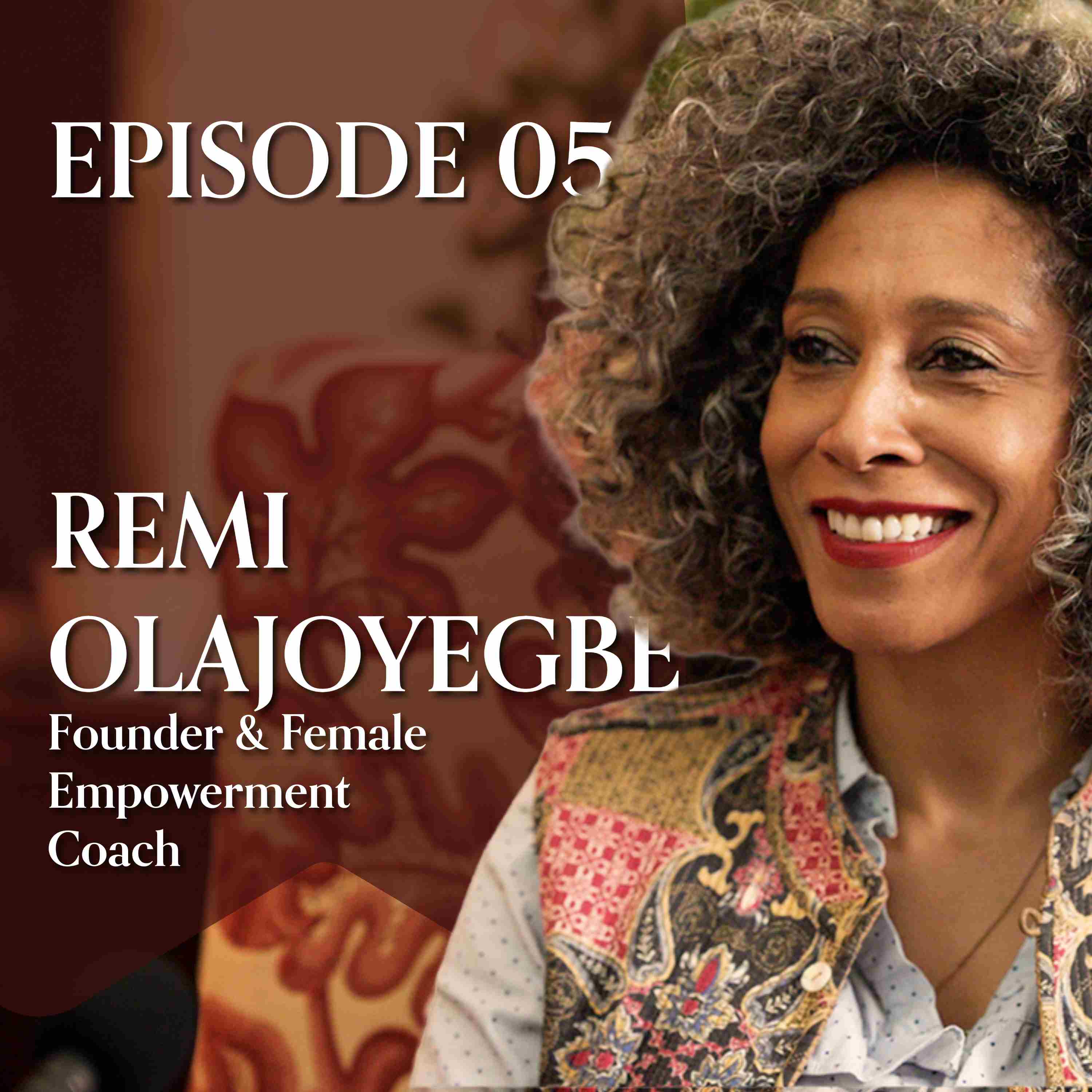
S1 · E5 · 12 Aug 2026 · 1 hr 1 min
What lies in the silence between who we have learned to be and who we are becoming? Today, the Wodcast sits down with Remi Olajoyegbe, founder, female empowerment coach, business leader, co-founder of Medicine Festival and founder of the Isumataq Collective, for a deeply personal conversation about success, transformation, grief and what it means to live and lead from a place of wholeness. Having built a highly successful career in investment banking, Remi reflects on what she calls “the void of success”: reaching the milestones, ticking the boxes and receiving the external validation, while…
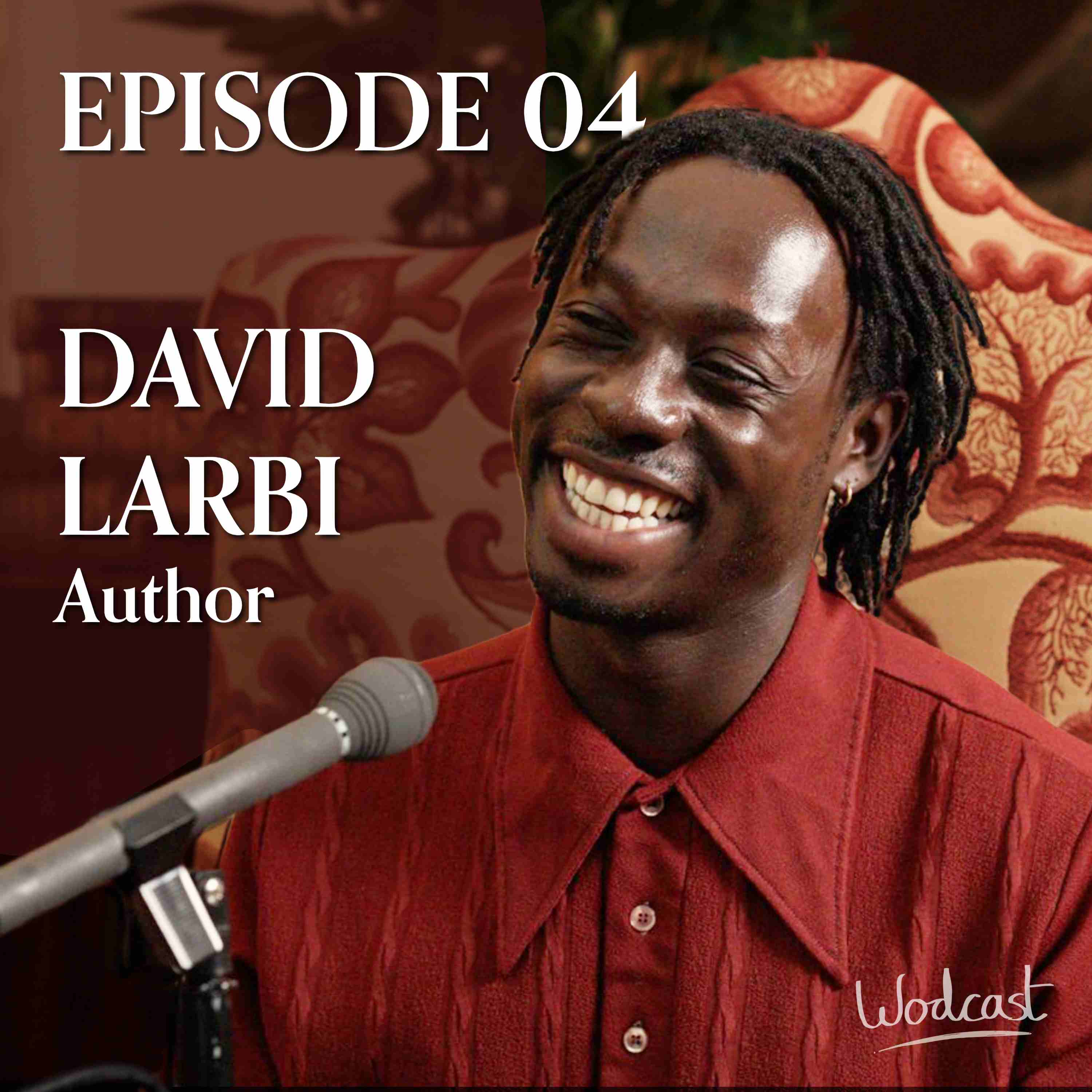
S1 · E4 · 29 Jul 2026 · 1 hr
What does it take to become Frequently Happy? Today, the Wodcast sits down with David Larbi, poet, bestselling author of Frequently Happy, and one of the UK's most thoughtful voices on joy, creativity and emotional wellbeing, for a deeply reflective conversation about poetry, presence and the courage it takes to live authentically. Together they explore why happiness begins with contentment, the relationship between creativity and self-discovery, and how words can help us better understand our emotional landscape. Along the way, they discuss burnout, boundaries, the importance of silence in…
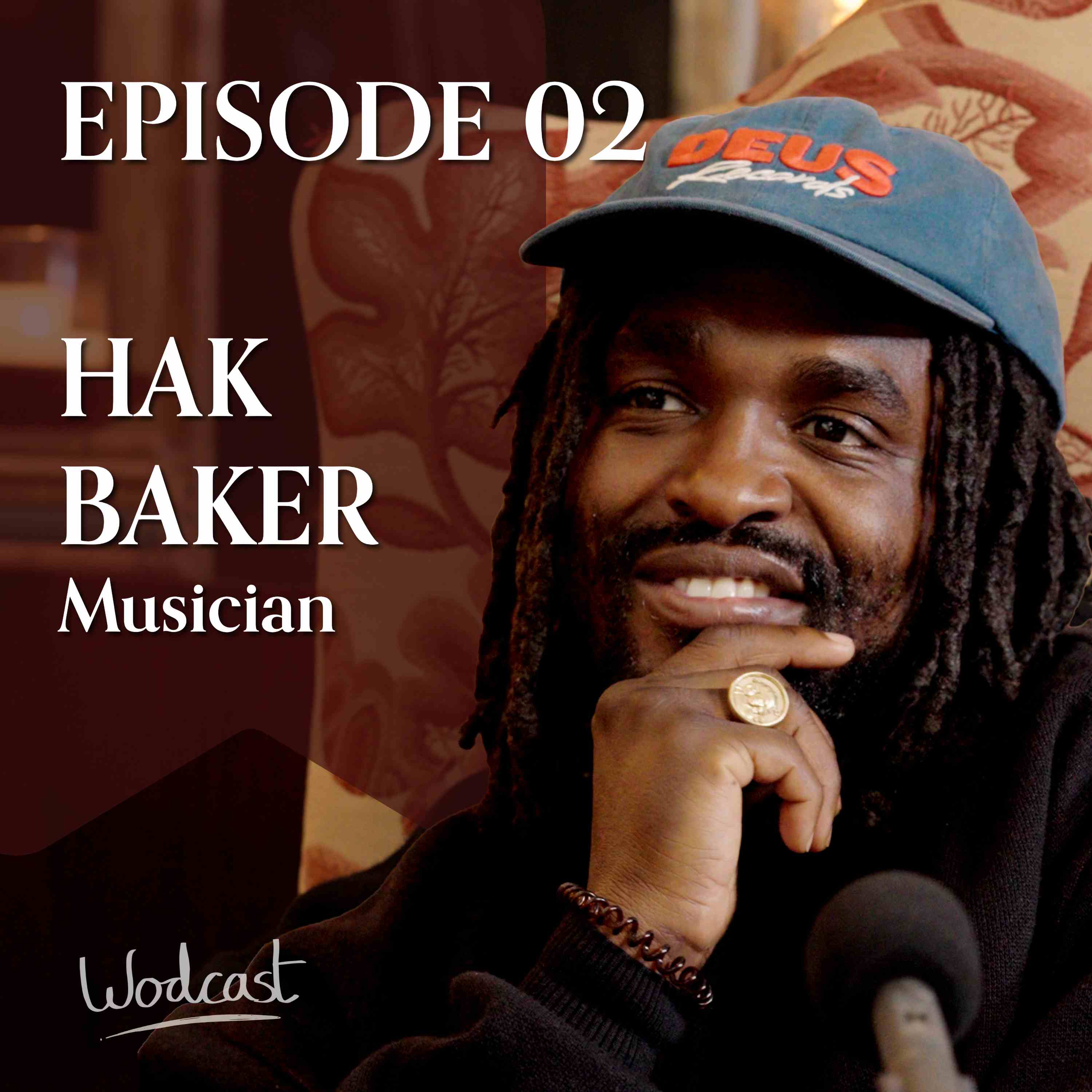
S1 · E2 · 1 Jul 2026 · 1 hr 12 min
What if romance wasn't just about falling in love? In this conversation of the Wodcast, musician, songwriter and poet Hak Baker joins Benjamin Aston and Mabel Evans for a wide-ranging exploration of romance, brotherhood, community and the courage it takes to change. Together they discuss the forgotten meaning of romance, why transformation is rarely a solitary act, and the idea of slaying the dragon within - the lifelong battle to confront our fears, ego and destructive patterns. Through stories of growing up in East London, finding his voice through music, and building communities rooted in…

S1 · E1 · 17 Jun 2026 · 1 hr 25 min
What happens when faith and doubt learn to dance together? In this opening conversation of the Wodcast, bestselling novelist Elif Shafak joins Benjamin Aston and Mabel Evans for a wide-ranging exploration of language, love, storytelling and the search for wisdom in a noisy world. Together they discuss the ancient meanings hidden inside words, why different cultures understand love in different ways, the forgotten goddess of writing, the importance of oral storytelling, and what Elif calls "inner democracy" the practice of making space for the many voices within ourselves. Drawing on her…
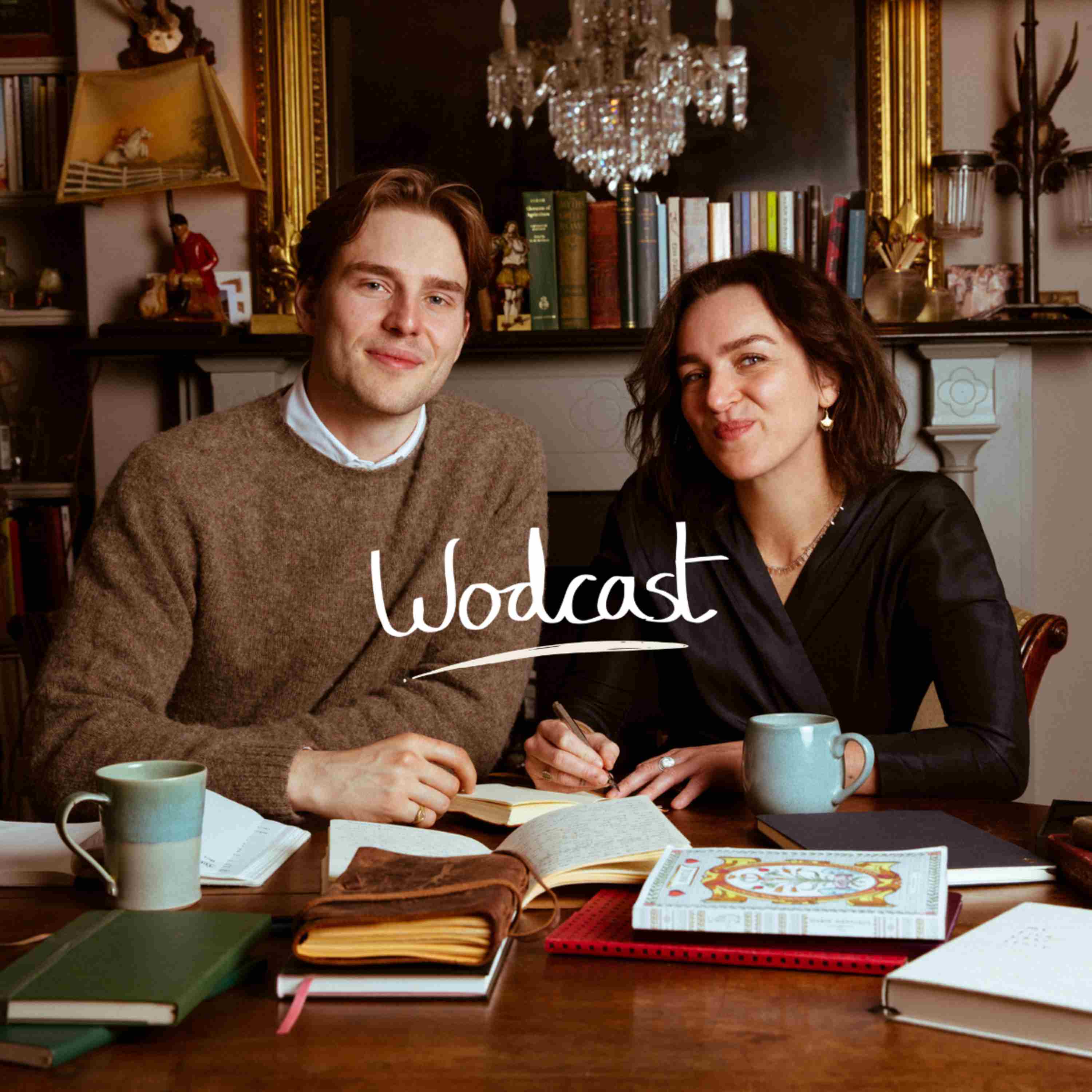
S1 · E1 · 12 Jun 2026 · 1 min
In Season One of the Wodcast, we sit down with novelist Elif Shafak, musician Hak Baker, Professor David Nutt, writer David Larbi, founder and coach Remi Olayjoyegbe, musician Nick Mulvey, filmmaker Waad Al-Kateab, lyricist Tim Rice, and writer, actor, and broadcaster Stephen Fry. Across nine conversations, we explore the words that have shaped their lives, the language that has influenced their thinking, and the stories they carry with them.

S1 · E9 · 7 Oct 2026 · 1 hr 8 minNew
What if words can never mean exactly what we want them to mean? Stephen Fry has spent a lifetime exploring language: writing it, performing it, studying its history, and delighting in its strange contradictions. In this final episode of Season One, we sit down with Stephen to explore what words can and perhaps cannot do. We begin with “happy”, a word Stephen traces back to hap, meaning chance or what happens. From there, the conversation opens into a much bigger question: if language is metaphorical, and words can never map perfectly onto the things they describe, how do we ever understand…
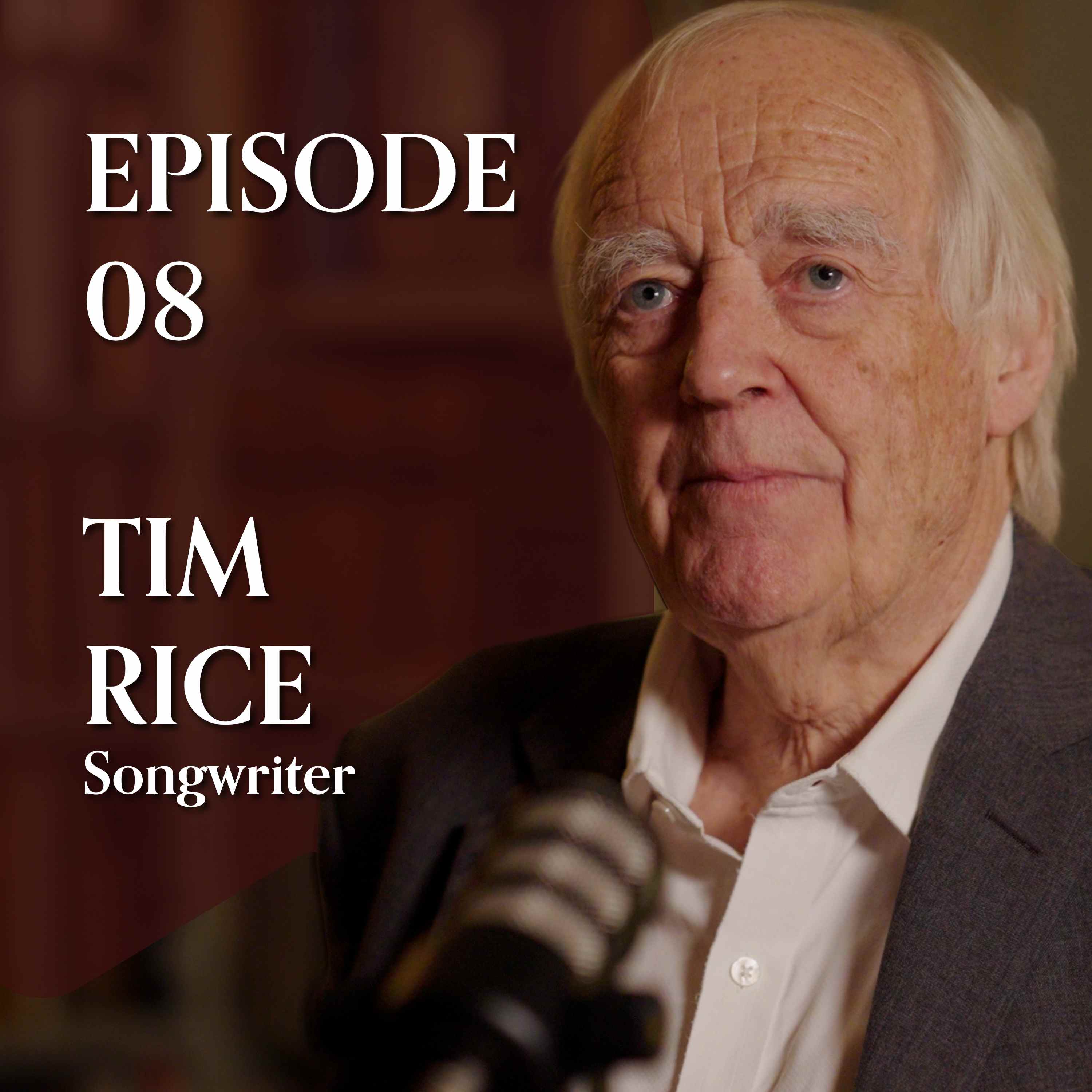
S1 · E8 · 23 Sep 2026 · 57 min
Today, Wodcast sits down with Sir Tim Rice one of the world's most celebrated lyricists and one of only a small number of people to have won an Emmy, Grammy, Oscar and Tony, for a wide-ranging conversation about words, songwriting, storytelling and the strange alchemy of turning language into something that lasts. From Jesus Christ Superstar, Evita and Chess to The Lion King and Aladdin, Tim has written some of the most recognisable lyrics of the last half-century. But this conversation is less about the hits themselves and more about what happens inside the words: how a lyric comes…

S1 · E7 · 9 Sep 2026 · 57 min
What does freedom really mean when you have spent part of life without it? Today, the Wodcast sits down with Waad Al-Kateab journalist, filmmaker and activist for a deeply personal conversation about freedom, home, family, language, community and the power of imagining a different future. Waad grew up in Syria under the Assad regime and began documenting life in Aleppo during the Syrian revolution. Her extraordinary archive became For Sama, the acclaimed documentary that brought the realities of war, motherhood, love and survival to audiences around the world. In this conversation, she…

S1 · E1 · 6 Jun 2026 · 1 min
Welcome to the Wodcast where every word carries a world inside it. The Wodcast is a podcast exploring the words that shape our lives, cultures, relationships, and imagination. Hosted by Benjamin Aston and Mabel Evans, each episode unfolds into conversations, stories, ideas, and perspectives from writers, thinkers, artists, and cultural voices. From love and belonging to courage, grief, joy, identity, and everything in between, the Wodcast invites you to slow down and look more closely at the language that shapes how we see ourselves and one another.

The Melo app keeps playing with the screen off, works in the car and on your watch, wakes you to your station, and browses the whole catalogue offline. Free, no ads, no account.